

Who gets to define African art? The artist who creates it, the institution that exhibits it, the market that categorizes it, the collector who preserves it or history, which has already decided how it should be seen?
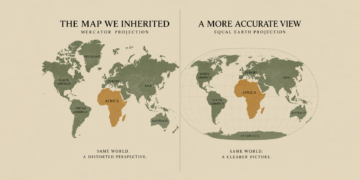
For generations, Morocco, like much of Africa, has been photographed, painted, studied, collected and interpreted from the outside. Colonial photography, Orientalist imagery, ethnographic documentation and, later, certain media representations have built a visual vocabulary through which our cultures became legible to the world.
That vocabulary did not remain outside us. Repeated images become expectations, and expectations shape the way we see ourselves. When a culture is continually framed through someone else’s gaze, producing its own images and narratives is no longer a preference. It becomes an act of self-definition.
African art is still too often approached through two opposing but equally reductive lenses. One is exoticism, reducing Africa to color, ornament, landscape and folklore. The other is miserabilism, reducing Africa to conflict, poverty, migration and trauma. In one, difference becomes spectacle. In the other, suffering becomes identity. I reject both.
Africa does not need to be romanticized to be valued, nor reduced to suffering to be meaningful. Our realities hold beauty and rupture, memory and reinvention, intimacy and universality. We are not subjects waiting to be interpreted. We are producers of meaning.
Moroccan Cubism was born from this conviction.
We Are the Crossroads
We are not at a crossroads. We are the crossroads.
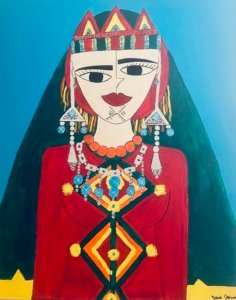
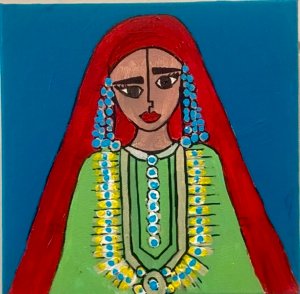
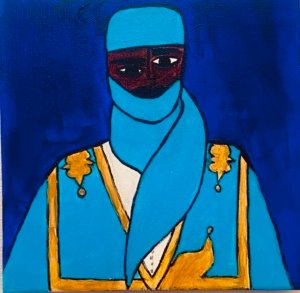
European Cubism broke down form to reveal multiple perspectives. The Moroccan soul has always perceived multiplicity within unity. Moroccan Cubism brings these two visions into conversation. It is a contemporary artistic movement founded in Morocco, rooted in Africa and built around three pillars, memory, identity and territory.
Its first act is to reject an opposition between geometry and the organic. Geometry is the structure of tradition, while the organic is the blood of memory. In Moroccan Cubism, the zellige and the hand that lays it become one. The rigor of the line and the fluidity of henna embrace. The hierarchy between intellect and spirit is abolished.
Its second act is to reverse the purpose of fragmentation. Western Cubism fragmented to analyze. Moroccan Cubism fragments to gather. Each fragment becomes a mirror reflecting another facet of who we are, Amazigh, Arab, African, Mediterranean and citizens of the world. Unity does not require uniformity. It emerges from the richness and complexity of the whole.
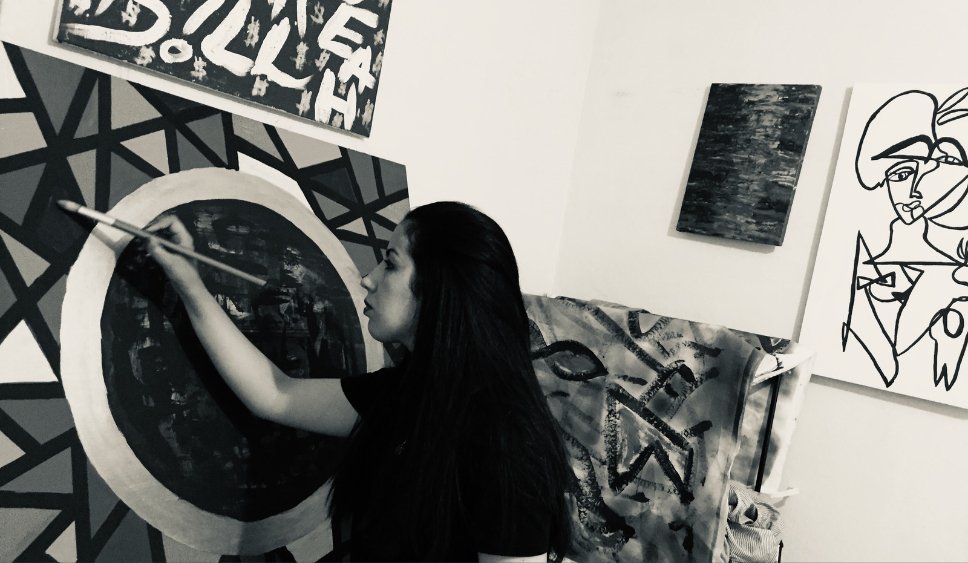
The canvas itself becomes a site of excavation. We layer the colors of spices over the gray of concrete, ancestral patterns over digital photography and desert sand into acrylic. This art does not merely represent. It exhumes, revealing traces of the past that continue to inhabit the present.
Moroccan Cubism also seeks to re-enchant modernity. A certain vision of modernity was built by distancing itself from narrative, the sacred and transmission. Moroccan Cubism brings the spirituality of patterns, the power of symbols and the warmth of oral transmission into contemporary visual language. It seeks to reconcile the avant-garde with what came before us without renouncing what remains to be invented.
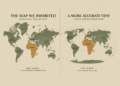
The territory it maps cannot be found on a map. It is the inner landscape of hybrid identity, where belonging can be multiple. Moroccan Cubism gives form to this complexity, to being fully rooted in the present while remaining deeply inhabited by history.
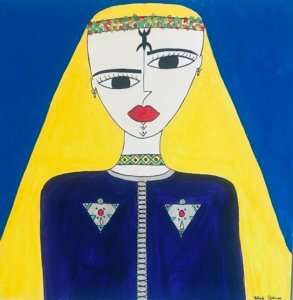
This is why Moroccan Cubism is not a European language decorated with Moroccan motifs. It does not become “Moroccan” through the addition of symbols or ornaments. It begins with our own realities and seeks forms capable of carrying their full complexity.
Its Name is Deliberate
Historical Cubism profoundly transformed Western modern art at a time when European artists were encountering African objects, largely through unequal colonial systems of circulation and collection. This history cannot be reduced to a simple question of influence, but Africa’s place in the construction of modern visual culture was never peripheral.
Moroccan Cubism enters this conversation from another position. It seeks neither to reverse the direction of influence nor establish a new hierarchy. It claims the freedom to participate in art history as a producer of contemporary language rather than merely as a source of reference.
Being visible, however, does not mean being the author of one’s own narrative.
African artists are increasingly present in galleries, museums, fairs and collections, and that presence matters. But representation cannot be measured solely by the number of works hanging on walls. It must also include the power to produce concepts, name movements, build critical vocabularies and propose new ways of understanding contemporary art.
We should not simply occupy a place in art history. We should participate in writing it.
More Than Representation
Self-representation is not isolation. Cultural exchange has always shaped art, and dialogue with Europe, Asia, the Americas and the rest of the world remains essential. The question is whether we can enter that dialogue with the full complexity of who we are.
There is no single Africa and, therefore, no single African aesthetic. The continent and its diasporas encompass a multitude of languages, spiritualities, geographies, inheritances and histories of movement and reconstruction.
Moroccan Cubism is therefore not merely a style. It is a position toward the world, a way of seeing that chooses connection where others see fracture. To those seeking to reconcile different inheritances, this movement extends a hand. To those who believe art has exhausted its paths, it proposes another territory to explore.
It is in this spirit that I conceived Moroccan Cubism, through artistic, philosophical and intellectual research, as an open movement. A movement enters history when it grows beyond the voice that initiated it and becomes a space where others can create, think and build.
I invite African artists, thinkers, writers, researchers, entrepreneurs, collectors and members of the diaspora to discover Moroccan Cubism, read its manifesto, engage with its principles, collaborate and bring their own voices to it.
The aim is not to reproduce an aesthetic or imitate an existing visual language. It is to bring forth new creations, ideas and perspectives from our histories, territories, inheritances and experiences. A movement comes alive when many voices can enrich it without having to resemble one another.
Its openness rests on clear foundations, including self-representation; memory, identity and territory; the rejection of exoticism and miserabilism; and the conviction that African realities can produce artistic thought rather than merely provide subjects for art.
Moroccan Cubism also affirms its independence. It is an apolitical movement driven by creation, thought, culture and transmission. This independence allows different voices to meet and collaborate without being confined by an ideology or a single interpretation of Africa.
It does not seek to create one African voice. It seeks to make space for many.
Who Writes Art History?
No movement is built by artists alone. Artists create, thinkers contextualize, writers document, researchers preserve knowledge, institutions exhibit and entrepreneurs build structures. Collectors, too, help determine what endures.
Collecting African art therefore goes beyond acquisition. To collect is also to preserve. The choices made today by African collectors and members of the diaspora will help determine which works, archives and movements remain accessible to future generations. If we want to participate in writing our cultural history, preserving what we create is as essential as creating it.
I summarize this vision in three sentences.
From Morocco. Rooted in Africa. For the world.
From Morocco, because this is where the movement was born.
Rooted in Africa, because Morocco’s histories belong to a broader African geography while also being shaped by Amazigh heritage and Mediterranean connections.
For the world, because being rooted should never become a form of confinement. Memory, belonging, love, loss and displacement do not stop at borders. Our stories can be deeply rooted in their territories while carrying universal resonance.
Moroccan Cubism does not ask permission to enter an existing narrative, nor does it seek to replace one. It proposes that we create our own languages, name our own movements, build our own archives and take our full place in the art histories being written today.
Perhaps the future of African art is not only about being seen. It is also about becoming the authors of how we will be told, understood and remembered.
So, to the African artist who creates, the thinker who questions, the researcher who documents, the collector who preserves, the entrepreneur who builds and every member of the diaspora who carries a part of this history, our place is not only in the narratives others write about Africa. It is also in the ones we choose to write ourselves.
Moroccan Cubism is one voice in this history. Let us make room for many more.
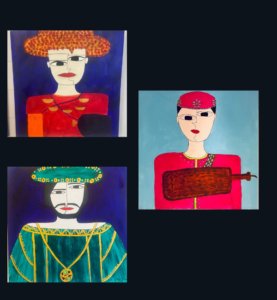
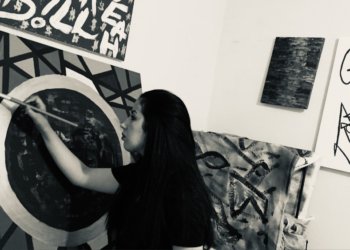
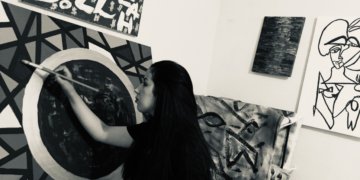
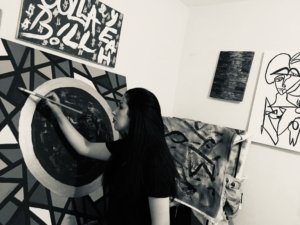
*Artwork credit: All artworks featured in this article are original works by Chaimaa Mellouki*