

Bantu Gazette

Bantu Gazette
  • Policy & Governance
  • Development & Impact
  • Business, Trade & Economy
  • Energy
  • Changemakers
  • Culture & Identity
  • Perspectives
  • Magazine
Menu
  • Black Frame Studio
  • Magazine

Benin Turns the ‘Door of No Return’ Into a Door of Return for the African Diaspora

Ouidah’s commemoration of the transatlantic slave trade is taking on new meaning as Benin combines remembrance with a pathway to citizenship for descendants of Africans taken from the continent

Benin Turns the ‘Door of No Return’ Into a Door of Return for the African Diaspora

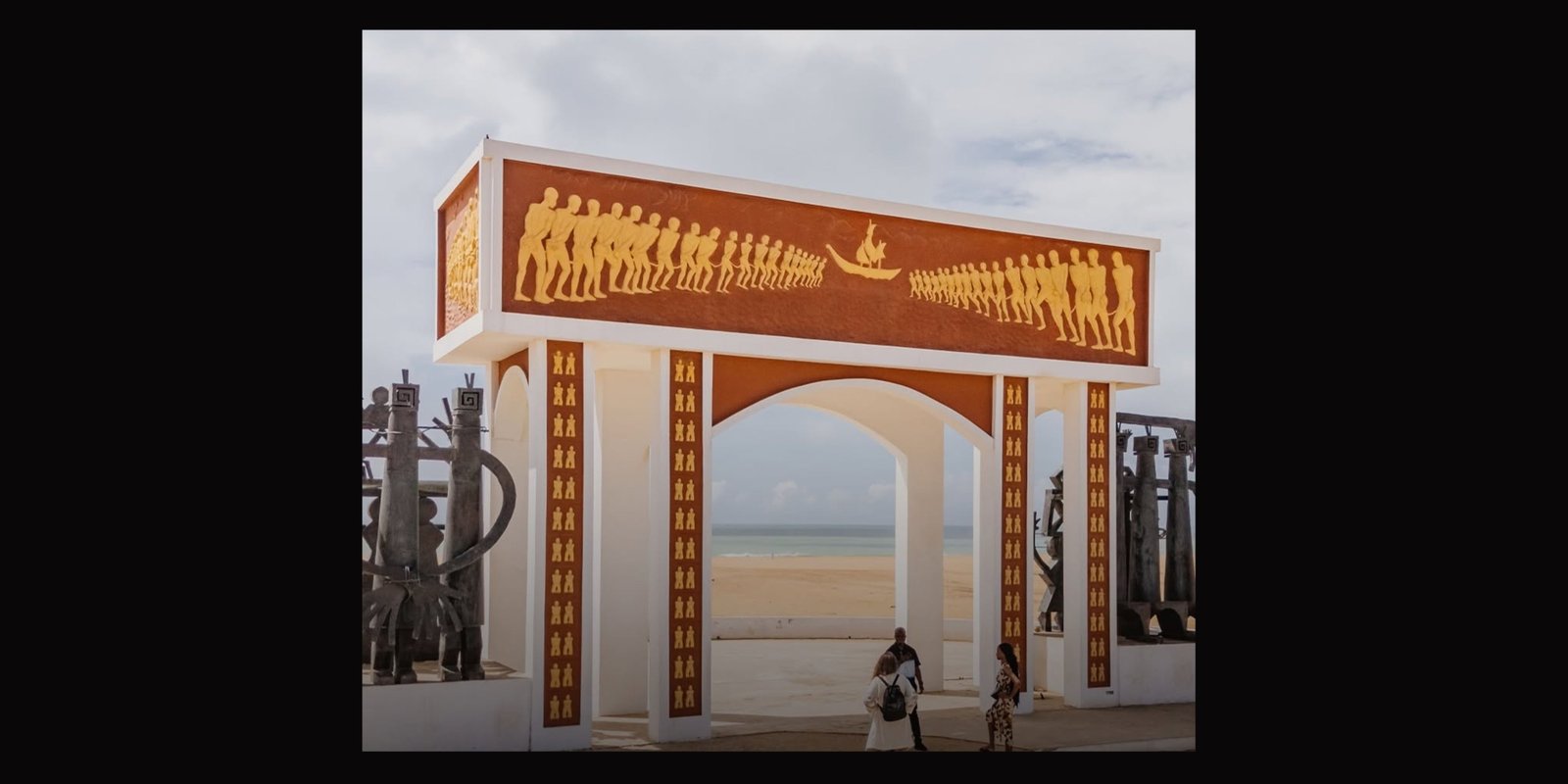
Door of No Return, Ouidah, Benin

Felix Tihby Felix Tih
August 24, 2026
Reading Time: 2 mins read

Benin Turns the ‘Door of No Return’ Into a Door of Return for the African Diaspora

Ouidah’s commemoration of the transatlantic slave trade is taking on new meaning as Benin combines remembrance with a pathway to citizenship for descendants of Africans taken from the continent

Benin Turns the ‘Door of No Return’ Into a Door of Return for the African Diaspora

Door of No Return, Ouidah, Benin

Benin Turns the ‘Door of No Return’ Into a Door of Return for the African Diaspora

Door of No Return, Ouidah, Benin

Felix Tihby Felix Tih
August 26, 2026
Reading Time: 2 mins read

OUIDAH, Benin

On a stretch of Benin’s Atlantic coast long associated with the forced departure of enslaved Africans, the country is seeking to give the idea of return a new and increasingly tangible meaning.

Benin marked the International Day for the Remembrance of the Slave Trade and its Abolition in Ouidah on Sunday Aug. 23 under the theme “From the Door of No Return to the Door of Return.”

The program combined remembrance with efforts to rebuild connections between Africa and descendants of people displaced through the transatlantic slave trade.

The International Day for the Remembrance of the Slave Trade and its Abolition is observed each year on Aug. 23. The date commemorates the uprising that began in Saint-Domingue, present-day Haiti, during the night of Aug. 22-23, 1791, and ultimately led to the Haitian Revolution and contributed to the abolition of the transatlantic slave trade.

The symbolism is particularly powerful in Ouidah, a coastal city that was one of the major embarkation points for enslaved Africans transported across the Atlantic. Today, the Door of No Return stands near the coast as a memorial to those who were taken away.

Through the commemoration, Benin is reaffirming its commitment to preserving and passing on the memory of the slave trade while encouraging people of African descent in the diaspora to reconnect with their roots.

This year’s commemoration sought to turn that history toward reconnection.

Activities included a memorial walk along routes associated with enslaved people, conferences on history and return, discussions about colonial-era cultural objects and restitution, cultural events, and a ceremony for the presentation of citizenship documents to people of African descent who have become Beninese nationals.

The citizenship component is part of a broader policy adopted by Benin to strengthen ties with the African diaspora.

Under a 2024 law, Benin created a route to recognition of nationality for people of African descent who can establish that an ancestor from sub-Saharan Africa was deported from the continent through the slave trade. The government subsequently launched the My Afro Origins platform to facilitate the process.

In May, Benin’s Justice Ministry formally presented nationality certificates to 22 people of African descent, describing the initiative as a means of restoring an official connection between the country and people returning to their ancestral roots.

For Ouidah, the idea of a “Door of Return” therefore carries both historical and contemporary significance.

The city’s Door of No Return recalls an era in which Africans crossed the Atlantic under coercion with little prospect of returning home. Benin is now using citizenship, heritage and cultural reconnection to create a route in the opposite direction.

Benin’s approach places the African diaspora at the center of that remembrance. It also raises a broader question for African countries with deep historical connections to the transatlantic slave trade: How can remembrance become a foundation for stronger relationships with millions of people of African descent around the world?

In Ouidah, Benin is beginning to offer one answer by transforming the symbolism of a place long associated with forced departure.

The Door of No Return remains a memorial to those who were taken away, but it is increasingly being paired with a new idea, a door of return for their descendants.


 

Get the inside Story

Stay informed on the stories shaping Africa’s future. Get breaking news, in-depth analysis, opinions and exclusive insights from across the continent delivered to your inbox, free and unfiltered.


Get in touch for more:
Felix Tih
Editorial Director, Bantu Gazette
WhatsApp
LinkedIn
X (Twitter)
Instagram

Related Posts

Botswana Explores Culinary Heritage as Part of Tourism Development Goals
Culture & Identity

Botswana Explores Culinary Heritage as Part of Tourism Development Goals

November 24, 2026
Cameroon’s Écrans Noirs Festival Reaches 30th Edition, Carries Founder’s Legacy Forward
Culture & Identity

Cameroon’s Écrans Noirs Festival Reaches 30th Edition, Carries Founder’s Legacy Forward

November 21, 2026
East Africa Puts its Heritage at the Heart of AFCON 2027 Logo
Culture & Identity

East Africa Puts its Heritage at the Heart of AFCON 2027 Logo

November 23, 2026
From the Cape Flats, ‘We Ubuntu’ Imagines an Africa Held Together by Hope
Culture & Identity

From the Cape Flats, ‘We Ubuntu’ Imagines an Africa Held Together by Hope

November 6, 2026
Who Gets to Define African Art? Moroccan Cubism and the Right to Self-Representation
Culture & Identity

Who Gets to Define African Art? Moroccan Cubism and the Right to Self-Representation

October 27, 2026
When Inheritance Becomes Hierarchy
Culture & Identity

When Inheritance Becomes Hierarchy

October 27, 2026

Most Recent

Kenya Opens Government Debt Market to Global Investors Through Clearstream Link
Business, Trade & Economy

Which Financial Institutions Can Put Africa’s Growing Capital to Work?

by Emily Awuor Oyugi
November 24, 2026
0

More development finance is being channeled through African financial institutions, but the institutions safest for DFIs to lend to are...

Read moreDetails
Botswana Explores Culinary Heritage as Part of Tourism Development Goals

Botswana Explores Culinary Heritage as Part of Tourism Development Goals

November 24, 2026
Nigeria’s World Cup-Winning Coach Reveals How He Built a Champion Team

Nigeria’s World Cup-Winning Coach Reveals How He Built a Champion Team

November 24, 2026
Cameroon’s Écrans Noirs Festival Reaches 30th Edition, Carries Founder’s Legacy Forward

Cameroon’s Écrans Noirs Festival Reaches 30th Edition, Carries Founder’s Legacy Forward

November 21, 2026
East Africa Puts its Heritage at the Heart of AFCON 2027 Logo

East Africa Puts its Heritage at the Heart of AFCON 2027 Logo

November 23, 2026
Ethiopia’s Capital Gains Modern Roads, EV Charging, Cycling Lanes in Urban Upgrade

Ethiopia’s Capital Gains Modern Roads, EV Charging, Cycling Lanes in Urban Upgrade

November 23, 2026
Botswana and Côte d’Ivoire Move to Lift Trade From Below $1 Million

Botswana and Côte d’Ivoire Move to Lift Trade From Below $1 Million

November 20, 2026
Kenya Opens Government Debt Market to Global Investors Through Clearstream Link
Business, Trade & Economy

Which Financial Institutions Can Put Africa’s Growing Capital to Work?

by Emily Awuor Oyugi
Reading Time: 5 mins read
November 24, 2026
0

More development finance is being channeled through African financial institutions, but the institutions safest for DFIs to lend to are...

Read moreDetails
Botswana Explores Culinary Heritage as Part of Tourism Development Goals
Culture & Identity

Botswana Explores Culinary Heritage as Part of Tourism Development Goals

by Sethunya Marang Motoutwane
Reading Time: 2 mins read
November 24, 2026
0

At a forum in Gaborone, chefs and tourism leaders explored how Botswana’s traditional foods could attract visitors, support producers and...

Read moreDetails
Nigeria’s World Cup-Winning Coach Reveals How He Built a Champion Team
Sports

Nigeria’s World Cup-Winning Coach Reveals How He Built a Champion Team

by Doyinsola Ibidunni
Reading Time: 3 mins read
November 24, 2026
0

Akeem Busari took charge of Nigeria's U-17 women's team in April; seven months later, his Flamingos beat Japan 2-1 in...

Read moreDetails

Benin Turns the ‘Door of No Return’ Into a Door of Return for the African Diaspora

Ouidah’s commemoration of the transatlantic slave trade is taking on new meaning as Benin combines remembrance with a pathway to citizenship for descendants of Africans taken from the continent

Benin Turns the ‘Door of No Return’ Into a Door of Return for the African Diaspora

Door of No Return, Ouidah, Benin

OUIDAH, Benin

On a stretch of Benin’s Atlantic coast long associated with the forced departure of enslaved Africans, the country is seeking to give the idea of return a new and increasingly tangible meaning.

Benin marked the International Day for the Remembrance of the Slave Trade and its Abolition in Ouidah on Sunday Aug. 23 under the theme “From the Door of No Return to the Door of Return.”

The program combined remembrance with efforts to rebuild connections between Africa and descendants of people displaced through the transatlantic slave trade.

The International Day for the Remembrance of the Slave Trade and its Abolition is observed each year on Aug. 23. The date commemorates the uprising that began in Saint-Domingue, present-day Haiti, during the night of Aug. 22-23, 1791, and ultimately led to the Haitian Revolution and contributed to the abolition of the transatlantic slave trade.

The symbolism is particularly powerful in Ouidah, a coastal city that was one of the major embarkation points for enslaved Africans transported across the Atlantic. Today, the Door of No Return stands near the coast as a memorial to those who were taken away.

Through the commemoration, Benin is reaffirming its commitment to preserving and passing on the memory of the slave trade while encouraging people of African descent in the diaspora to reconnect with their roots.

This year’s commemoration sought to turn that history toward reconnection.

Activities included a memorial walk along routes associated with enslaved people, conferences on history and return, discussions about colonial-era cultural objects and restitution, cultural events, and a ceremony for the presentation of citizenship documents to people of African descent who have become Beninese nationals.

The citizenship component is part of a broader policy adopted by Benin to strengthen ties with the African diaspora.

Under a 2024 law, Benin created a route to recognition of nationality for people of African descent who can establish that an ancestor from sub-Saharan Africa was deported from the continent through the slave trade. The government subsequently launched the My Afro Origins platform to facilitate the process.

In May, Benin’s Justice Ministry formally presented nationality certificates to 22 people of African descent, describing the initiative as a means of restoring an official connection between the country and people returning to their ancestral roots.

For Ouidah, the idea of a “Door of Return” therefore carries both historical and contemporary significance.

The city’s Door of No Return recalls an era in which Africans crossed the Atlantic under coercion with little prospect of returning home. Benin is now using citizenship, heritage and cultural reconnection to create a route in the opposite direction.

Benin’s approach places the African diaspora at the center of that remembrance. It also raises a broader question for African countries with deep historical connections to the transatlantic slave trade: How can remembrance become a foundation for stronger relationships with millions of people of African descent around the world?

In Ouidah, Benin is beginning to offer one answer by transforming the symbolism of a place long associated with forced departure.

The Door of No Return remains a memorial to those who were taken away, but it is increasingly being paired with a new idea, a door of return for their descendants.

 

Benin Turns the ‘Door of No Return’ Into a Door of Return for the African Diaspora

Ouidah’s commemoration of the transatlantic slave trade is taking on new meaning as Benin combines remembrance with a pathway to citizenship for descendants of Africans taken from the continent

Benin Turns the ‘Door of No Return’ Into a Door of Return for the African Diaspora

Door of No Return, Ouidah, Benin

Felix Tihby Felix Tih
August 24, 2026

OUIDAH, Benin

On a stretch of Benin’s Atlantic coast long associated with the forced departure of enslaved Africans, the country is seeking to give the idea of return a new and increasingly tangible meaning.

Benin marked the International Day for the Remembrance of the Slave Trade and its Abolition in Ouidah on Sunday Aug. 23 under the theme “From the Door of No Return to the Door of Return.”

The program combined remembrance with efforts to rebuild connections between Africa and descendants of people displaced through the transatlantic slave trade.

The International Day for the Remembrance of the Slave Trade and its Abolition is observed each year on Aug. 23. The date commemorates the uprising that began in Saint-Domingue, present-day Haiti, during the night of Aug. 22-23, 1791, and ultimately led to the Haitian Revolution and contributed to the abolition of the transatlantic slave trade.

The symbolism is particularly powerful in Ouidah, a coastal city that was one of the major embarkation points for enslaved Africans transported across the Atlantic. Today, the Door of No Return stands near the coast as a memorial to those who were taken away.

Through the commemoration, Benin is reaffirming its commitment to preserving and passing on the memory of the slave trade while encouraging people of African descent in the diaspora to reconnect with their roots.

This year’s commemoration sought to turn that history toward reconnection.

Activities included a memorial walk along routes associated with enslaved people, conferences on history and return, discussions about colonial-era cultural objects and restitution, cultural events, and a ceremony for the presentation of citizenship documents to people of African descent who have become Beninese nationals.

The citizenship component is part of a broader policy adopted by Benin to strengthen ties with the African diaspora.

Under a 2024 law, Benin created a route to recognition of nationality for people of African descent who can establish that an ancestor from sub-Saharan Africa was deported from the continent through the slave trade. The government subsequently launched the My Afro Origins platform to facilitate the process.

In May, Benin’s Justice Ministry formally presented nationality certificates to 22 people of African descent, describing the initiative as a means of restoring an official connection between the country and people returning to their ancestral roots.

For Ouidah, the idea of a “Door of Return” therefore carries both historical and contemporary significance.

The city’s Door of No Return recalls an era in which Africans crossed the Atlantic under coercion with little prospect of returning home. Benin is now using citizenship, heritage and cultural reconnection to create a route in the opposite direction.

Benin’s approach places the African diaspora at the center of that remembrance. It also raises a broader question for African countries with deep historical connections to the transatlantic slave trade: How can remembrance become a foundation for stronger relationships with millions of people of African descent around the world?

In Ouidah, Benin is beginning to offer one answer by transforming the symbolism of a place long associated with forced departure.

The Door of No Return remains a memorial to those who were taken away, but it is increasingly being paired with a new idea, a door of return for their descendants.

 

Get the inside Story

Stay informed on the stories shaping Africa’s future. Get breaking news, in-depth analysis, opinions and exclusive insights from across the continent delivered to your inbox, free and unfiltered.


Get in touch for more:
Felix Tih
Editorial Director, Bantu Gazette
WhatsApp
LinkedIn
X (Twitter)
Instagram

Related Posts

Botswana Explores Culinary Heritage as Part of Tourism Development Goals

Botswana Explores Culinary Heritage as Part of Tourism Development Goals

by Sethunya Marang Motoutwane
November 24, 2026
0

...

Cameroon’s Écrans Noirs Festival Reaches 30th Edition, Carries Founder’s Legacy Forward

Cameroon’s Écrans Noirs Festival Reaches 30th Edition, Carries Founder’s Legacy Forward

by Marina Bisse
November 21, 2026
0

...

East Africa Puts its Heritage at the Heart of AFCON 2027 Logo

East Africa Puts its Heritage at the Heart of AFCON 2027 Logo

by Doyinsola Ibidunni
November 20, 2026
0

...

From the Cape Flats, ‘We Ubuntu’ Imagines an Africa Held Together by Hope

From the Cape Flats, ‘We Ubuntu’ Imagines an Africa Held Together by Hope

by Sethunya Marang Motoutwane
November 6, 2026
0

...

Who Gets to Define African Art? Moroccan Cubism and the Right to Self-Representation

Who Gets to Define African Art? Moroccan Cubism and the Right to Self-Representation

by Chaimaa Mellouki
October 12, 2026
0

...

When Inheritance Becomes Hierarchy

When Inheritance Becomes Hierarchy

by Munira Bonnet
September 29, 2026
0

...

Kenya Opens Government Debt Market to Global Investors Through Clearstream Link
Business, Trade & Economy

Which Financial Institutions Can Put Africa’s Growing Capital to Work?

by Emily Awuor Oyugi
Reading Time: 5 mins read
November 24, 2026
0

More development finance is being channeled through African financial institutions, but the institutions safest for DFIs to lend to are...

Read moreDetails
Botswana Explores Culinary Heritage as Part of Tourism Development Goals

Botswana Explores Culinary Heritage as Part of Tourism Development Goals

by Sethunya Marang Motoutwane
November 24, 2026
0

At a forum in Gaborone, chefs and tourism leaders explored how Botswana’s traditional foods could attract visitors, support producers and...

Nigeria’s World Cup-Winning Coach Reveals How He Built a Champion Team

Nigeria’s World Cup-Winning Coach Reveals How He Built a Champion Team

by Doyinsola Ibidunni
November 23, 2026
0

Akeem Busari took charge of Nigeria's U-17 women's team in April; seven months later, his Flamingos beat Japan 2-1 in...

Cameroon’s Écrans Noirs Festival Reaches 30th Edition, Carries Founder’s Legacy Forward

Cameroon’s Écrans Noirs Festival Reaches 30th Edition, Carries Founder’s Legacy Forward

by Marina Bisse
November 21, 2026
0

The African film festival runs Nov. 21-28 in Yaoundé and Douala, six months after founder Bassek Ba Kobhio died.

East Africa Puts its Heritage at the Heart of AFCON 2027 Logo

East Africa Puts its Heritage at the Heart of AFCON 2027 Logo

by Doyinsola Ibidunni
November 20, 2026
0

CAF and co-hosts Kenya, Tanzania and Uganda unveil a shield-inspired emblem for AFCON PAMOJA 2027, the first Africa Cup of...

Next Post
Entrepreneurs Battle for Top 10 Spots in Africa’s Business Heroes

Entrepreneurs Battle for Top 10 Spots in Africa’s Business Heroes

Ghana’s Bad-Loan Problem is Becoming a Financial-Stability Story

Ghana’s Bad-Loan Problem is Becoming a Financial-Stability Story

Kagame Urges African Countries to Take Active Role in Shaping AI Future

Kagame Urges African Countries to Take Active Role in Shaping AI Future

Kenya Approves First Locally Domiciled Exchange Traded Fund

Kenya Approves First Locally Domiciled Exchange Traded Fund

Bantu Gazette is a pioneering news platform that champions Africa's development, culture, and heritage. We spotlight the continent's successes, address its challenges, and provide insightful coverage of events that shape its future.

Bantu Gazette is a pioneering news platform that champions Africa's development, culture, and heritage. We spotlight the continent's successes, address its challenges, and provide insightful coverage of events that shape its future.

Our Platforms

  • Bantu Magazine
  • Bantu Brief
  • Black Frame Studio

Our Services

  • Bantu Agency
  • Advertise
  • Partnerships

Our Services

  • Editorial Director
  • Opportunities
  • Contact
Bantu Gazette
  • Energy & Trade
  • Finance
  • Health
  • Politics & Economy
  • Technology
  • Environment
  • Feature
  • Opinion
  • Changemakers
  • Tourism & Culture
  • Magazine