

Bantu Gazette

Bantu Gazette
  • Policy & Governance
  • Development & Impact
  • Business, Trade & Economy
  • Energy
  • Changemakers
  • Culture & Identity
  • Perspectives
  • Magazine
Menu
  • Black Frame Studio
  • Magazine

Ghana’s Bad-Loan Problem is Becoming a Financial-Stability Story

Banks are repairing their balance sheets as the economy recovers, but an 18% nonperforming-loan ratio remains a threat to credit growth and financial stability.

Ghana’s Bad-Loan Problem is Becoming a Financial-Stability Story

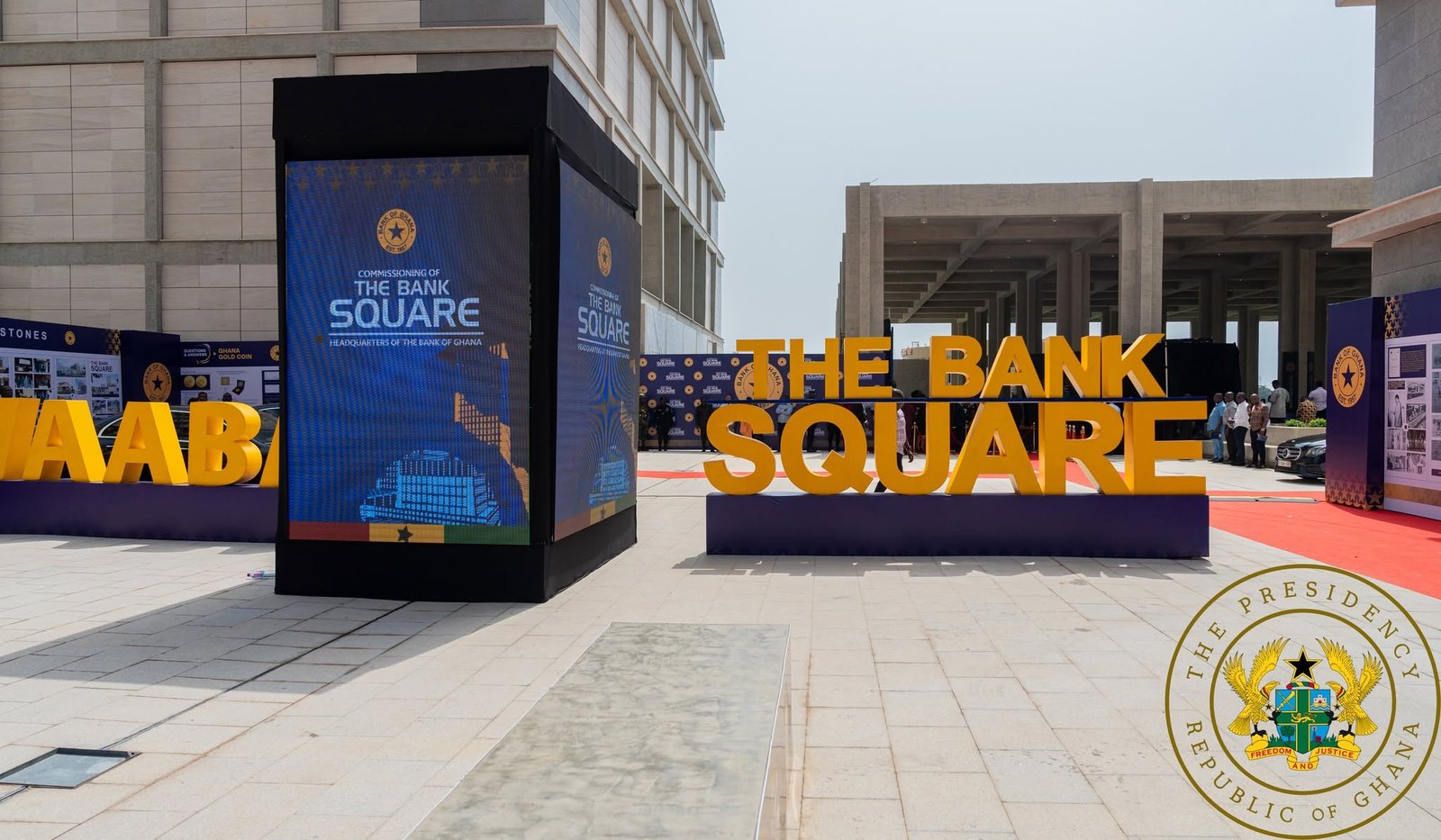
Bank of Ghana. The Bank Square

Felix Tihby Felix Tih
August 24, 2026
Reading Time: 3 mins read

Ghana’s Bad-Loan Problem is Becoming a Financial-Stability Story

Banks are repairing their balance sheets as the economy recovers, but an 18% nonperforming-loan ratio remains a threat to credit growth and financial stability.

Ghana’s Bad-Loan Problem is Becoming a Financial-Stability Story

Bank of Ghana. The Bank Square

Ghana’s Bad-Loan Problem is Becoming a Financial-Stability Story

Bank of Ghana. The Bank Square

Felix Tihby Felix Tih
August 24, 2026
Reading Time: 3 mins read

ACCRA

Ghana’s banks are recovering alongside the broader economy, but a stubborn stock of bad loans risks becoming a drag on the next phase of the country’s rebound.

The Bank of Ghana warned Monday that elevated nonperforming loans can weaken lending, profitability, liquidity and solvency, potentially threatening financial stability.

The central bank is pressing lenders to strengthen credit-risk management and clean up their balance sheets as it steps up oversight of the financial system.

The industry’s nonperforming-loan ratio fell to 18% in April from 23.6% a year earlier, according to the central bank. The improvement has come alongside stronger profitability, capital levels and credit growth, but bad loans remain high enough for policymakers to identify credit risk as a key vulnerability.

The regulator wants financial institutions to reduce NPL ratios to 10% or less by the end of 2026. Banks with particularly elevated levels can face restrictions on dividend payments and bonuses as authorities push lenders to repair asset quality.

The effort adds another dimension to Ghana’s economic stabilization drive.

On Aug. 21, the Bank of Ghana approved a new foreign-exchange operations framework designed to make its interventions in the currency market more predictable while preserving a flexible, market-determined exchange rate.

Together, the measures underscore the central bank’s challenge: consolidating Ghana’s improving macroeconomic position while tackling weaknesses in the financial system that could constrain growth.

Lower inflation, stronger foreign-exchange reserves and a firmer cedi have helped restore confidence after the economic crisis that erupted in 2022.

But banks carrying large stocks of distressed loans face a different constraint. Poor asset quality can make lenders more cautious about extending credit just as businesses seek financing to invest and expand.

That makes the health of bank balance sheets increasingly important to Ghana’s recovery. A stronger currency and lower inflation can improve the economic backdrop, but the benefits may take longer to reach businesses and households if lenders remain burdened by problem loans.

From Crisis to Recovery

Ghana entered a severe economic and financial crisis in 2022 after years of mounting fiscal and debt pressures were compounded by external shocks. The country lost access to international capital markets as debt climbed to 92.4% of gross domestic product, inflation surged and the cedi depreciated sharply.

The government subsequently embarked on a sweeping debt restructuring and secured an International Monetary Fund-backed program aimed at restoring fiscal and debt sustainability.

By 2025, the restructuring was largely complete, with negotiations continuing over remaining external commercial debt representing less than 5% of total pre-restructuring debt, according to the World Bank.

The economic picture has since improved markedly. Real GDP expanded 5.8% in 2024 and 6% in 2025, supported by services and a recovery in agriculture. Strong gold exports helped produce a current-account surplus in 2025, while foreign-exchange reserves rose to more than 5.7 months of import cover and the cedi strengthened.

Headline inflation slowed to 3.3% in February 2026, helped by the currency’s appreciation and tighter fiscal and monetary policy. The government also recorded a primary fiscal surplus of 2.5%, exceeding its 1.5% target, according to the World Bank.

Those gains have shifted the focus from crisis management toward making the recovery durable. For the banking industry, that means turning stronger capital and profitability into healthier loan books.

Bringing the NPL ratio closer to the central bank’s 10% target would give lenders more room to extend credit without taking on excessive risk.

Failure to make that adjustment could leave bad loans as a lingering constraint on investment and growth even as Ghana’s headline economic indicators improve.

For Ghana, the durability of stabilization may hinge as much on cleaning up loan books as on taming inflation or stabilizing the cedi.

With the cedi now ranking among the strongest currencies in Africa, Ghana’s ability to turn healthier bank balance sheets into sustained credit growth will be a decisive test of its recovery.

Get the inside Story

Stay informed on the stories shaping Africa’s future. Get breaking news, in-depth analysis, opinions and exclusive insights from across the continent delivered to your inbox, free and unfiltered.


Get in touch for more:
Felix Tih
Editorial Director, Bantu Gazette
WhatsApp
LinkedIn
X (Twitter)
Instagram

Related Posts

Entrepreneurs Battle for Top 10 Spots in Africa’s Business Heroes
Business, Trade & Economy

Entrepreneurs Battle for Top 10 Spots in Africa’s Business Heroes

August 24, 2026
Africa Wants to Turn Diaspora Money into Investment
Development & Impact

Africa Wants to Turn Diaspora Money into Investment

August 23, 2026
Ghana, Côte d’Ivoire Raise Alarm Over Cocoa Substitutes in Chocolate Products
Business, Trade & Economy

Ghana, Côte d’Ivoire Raise Alarm Over Cocoa Substitutes in Chocolate Products

August 16, 2026
SADC’s Critical Minerals Can Power Africa’s Structural Transformation
Development & Impact

SADC’s Critical Minerals Can Power Africa’s Structural Transformation

August 22, 2026
Intra-African Trade Holds the Key to Fertilizer Access Across the Continent
Business, Trade & Economy

Rwanda’s Agricultural Export Revenue Surpasses $1 Billion in 2025-26

August 16, 2026
Namibia Deepens Regional Ties Through Trade and Energy
Business, Trade & Economy

Namibia President Presses Mining Industry to Deliver Jobs, Drive Investment

August 12, 2026

Most Recent

Ghana’s Bad-Loan Problem is Becoming a Financial-Stability Story
Business, Trade & Economy

Ghana’s Bad-Loan Problem is Becoming a Financial-Stability Story

by Felix Tih
August 24, 2026
0

Banks are repairing their balance sheets as the economy recovers, but an 18% nonperforming-loan ratio remains a threat to credit...

Read moreDetails
Entrepreneurs Battle for Top 10 Spots in Africa’s Business Heroes

Entrepreneurs Battle for Top 10 Spots in Africa’s Business Heroes

August 24, 2026
Benin Turns the ‘Door of No Return’ Into a Door of Return for the African Diaspora

Benin Turns the ‘Door of No Return’ Into a Door of Return for the African Diaspora

August 24, 2026
Addis Ababa ‘Walks the Talk’ Ahead of Major African Health Meeting

Addis Ababa ‘Walks the Talk’ Ahead of Major African Health Meeting

August 24, 2026
Benin School Championships Showcase Youth Talent in Sports, Culture

Benin School Championships Showcase Youth Talent in Sports, Culture

August 24, 2026
Africa Wants to Turn Diaspora Money into Investment

Africa Wants to Turn Diaspora Money into Investment

August 23, 2026
Angélique Kidjo Becomes First African Artist Honored with Hollywood Walk of Fame Star

Angélique Kidjo Becomes First African Artist Honored with Hollywood Walk of Fame Star

August 22, 2026
Ghana’s Bad-Loan Problem is Becoming a Financial-Stability Story
Business, Trade & Economy

Ghana’s Bad-Loan Problem is Becoming a Financial-Stability Story

by Felix Tih
Reading Time: 3 mins read
August 24, 2026
0

Banks are repairing their balance sheets as the economy recovers, but an 18% nonperforming-loan ratio remains a threat to credit...

Read moreDetails
Entrepreneurs Battle for Top 10 Spots in Africa’s Business Heroes
Business, Trade & Economy

Entrepreneurs Battle for Top 10 Spots in Africa’s Business Heroes

by Waceke Nganga
Reading Time: 1 min read
August 24, 2026
0

20 entrepreneurs from 12 African countries pitched their businesses in Nairobi, seeking Top 10 spots and a place in the...

Read moreDetails
Benin Turns the ‘Door of No Return’ Into a Door of Return for the African Diaspora
Culture & Identity

Benin Turns the ‘Door of No Return’ Into a Door of Return for the African Diaspora

by Felix Tih
Reading Time: 2 mins read
August 24, 2026
0

Ouidah’s commemoration of the transatlantic slave trade is taking on new meaning as Benin combines remembrance with a pathway to...

Read moreDetails

Ghana’s Bad-Loan Problem is Becoming a Financial-Stability Story

Banks are repairing their balance sheets as the economy recovers, but an 18% nonperforming-loan ratio remains a threat to credit growth and financial stability.

Ghana’s Bad-Loan Problem is Becoming a Financial-Stability Story

Bank of Ghana. The Bank Square

ACCRA

Ghana’s banks are recovering alongside the broader economy, but a stubborn stock of bad loans risks becoming a drag on the next phase of the country’s rebound.

The Bank of Ghana warned Monday that elevated nonperforming loans can weaken lending, profitability, liquidity and solvency, potentially threatening financial stability.

The central bank is pressing lenders to strengthen credit-risk management and clean up their balance sheets as it steps up oversight of the financial system.

The industry’s nonperforming-loan ratio fell to 18% in April from 23.6% a year earlier, according to the central bank. The improvement has come alongside stronger profitability, capital levels and credit growth, but bad loans remain high enough for policymakers to identify credit risk as a key vulnerability.

The regulator wants financial institutions to reduce NPL ratios to 10% or less by the end of 2026. Banks with particularly elevated levels can face restrictions on dividend payments and bonuses as authorities push lenders to repair asset quality.

The effort adds another dimension to Ghana’s economic stabilization drive.

On Aug. 21, the Bank of Ghana approved a new foreign-exchange operations framework designed to make its interventions in the currency market more predictable while preserving a flexible, market-determined exchange rate.

Together, the measures underscore the central bank’s challenge: consolidating Ghana’s improving macroeconomic position while tackling weaknesses in the financial system that could constrain growth.

Lower inflation, stronger foreign-exchange reserves and a firmer cedi have helped restore confidence after the economic crisis that erupted in 2022.

But banks carrying large stocks of distressed loans face a different constraint. Poor asset quality can make lenders more cautious about extending credit just as businesses seek financing to invest and expand.

That makes the health of bank balance sheets increasingly important to Ghana’s recovery. A stronger currency and lower inflation can improve the economic backdrop, but the benefits may take longer to reach businesses and households if lenders remain burdened by problem loans.

From Crisis to Recovery

Ghana entered a severe economic and financial crisis in 2022 after years of mounting fiscal and debt pressures were compounded by external shocks. The country lost access to international capital markets as debt climbed to 92.4% of gross domestic product, inflation surged and the cedi depreciated sharply.

The government subsequently embarked on a sweeping debt restructuring and secured an International Monetary Fund-backed program aimed at restoring fiscal and debt sustainability.

By 2025, the restructuring was largely complete, with negotiations continuing over remaining external commercial debt representing less than 5% of total pre-restructuring debt, according to the World Bank.

The economic picture has since improved markedly. Real GDP expanded 5.8% in 2024 and 6% in 2025, supported by services and a recovery in agriculture. Strong gold exports helped produce a current-account surplus in 2025, while foreign-exchange reserves rose to more than 5.7 months of import cover and the cedi strengthened.

Headline inflation slowed to 3.3% in February 2026, helped by the currency’s appreciation and tighter fiscal and monetary policy. The government also recorded a primary fiscal surplus of 2.5%, exceeding its 1.5% target, according to the World Bank.

Those gains have shifted the focus from crisis management toward making the recovery durable. For the banking industry, that means turning stronger capital and profitability into healthier loan books.

Bringing the NPL ratio closer to the central bank’s 10% target would give lenders more room to extend credit without taking on excessive risk.

Failure to make that adjustment could leave bad loans as a lingering constraint on investment and growth even as Ghana’s headline economic indicators improve.

For Ghana, the durability of stabilization may hinge as much on cleaning up loan books as on taming inflation or stabilizing the cedi.

With the cedi now ranking among the strongest currencies in Africa, Ghana’s ability to turn healthier bank balance sheets into sustained credit growth will be a decisive test of its recovery.

Ghana’s Bad-Loan Problem is Becoming a Financial-Stability Story

Banks are repairing their balance sheets as the economy recovers, but an 18% nonperforming-loan ratio remains a threat to credit growth and financial stability.

Ghana’s Bad-Loan Problem is Becoming a Financial-Stability Story

Bank of Ghana. The Bank Square

Felix Tihby Felix Tih
August 24, 2026

ACCRA

Ghana’s banks are recovering alongside the broader economy, but a stubborn stock of bad loans risks becoming a drag on the next phase of the country’s rebound.

The Bank of Ghana warned Monday that elevated nonperforming loans can weaken lending, profitability, liquidity and solvency, potentially threatening financial stability.

The central bank is pressing lenders to strengthen credit-risk management and clean up their balance sheets as it steps up oversight of the financial system.

The industry’s nonperforming-loan ratio fell to 18% in April from 23.6% a year earlier, according to the central bank. The improvement has come alongside stronger profitability, capital levels and credit growth, but bad loans remain high enough for policymakers to identify credit risk as a key vulnerability.

The regulator wants financial institutions to reduce NPL ratios to 10% or less by the end of 2026. Banks with particularly elevated levels can face restrictions on dividend payments and bonuses as authorities push lenders to repair asset quality.

The effort adds another dimension to Ghana’s economic stabilization drive.

On Aug. 21, the Bank of Ghana approved a new foreign-exchange operations framework designed to make its interventions in the currency market more predictable while preserving a flexible, market-determined exchange rate.

Together, the measures underscore the central bank’s challenge: consolidating Ghana’s improving macroeconomic position while tackling weaknesses in the financial system that could constrain growth.

Lower inflation, stronger foreign-exchange reserves and a firmer cedi have helped restore confidence after the economic crisis that erupted in 2022.

But banks carrying large stocks of distressed loans face a different constraint. Poor asset quality can make lenders more cautious about extending credit just as businesses seek financing to invest and expand.

That makes the health of bank balance sheets increasingly important to Ghana’s recovery. A stronger currency and lower inflation can improve the economic backdrop, but the benefits may take longer to reach businesses and households if lenders remain burdened by problem loans.

From Crisis to Recovery

Ghana entered a severe economic and financial crisis in 2022 after years of mounting fiscal and debt pressures were compounded by external shocks. The country lost access to international capital markets as debt climbed to 92.4% of gross domestic product, inflation surged and the cedi depreciated sharply.

The government subsequently embarked on a sweeping debt restructuring and secured an International Monetary Fund-backed program aimed at restoring fiscal and debt sustainability.

By 2025, the restructuring was largely complete, with negotiations continuing over remaining external commercial debt representing less than 5% of total pre-restructuring debt, according to the World Bank.

The economic picture has since improved markedly. Real GDP expanded 5.8% in 2024 and 6% in 2025, supported by services and a recovery in agriculture. Strong gold exports helped produce a current-account surplus in 2025, while foreign-exchange reserves rose to more than 5.7 months of import cover and the cedi strengthened.

Headline inflation slowed to 3.3% in February 2026, helped by the currency’s appreciation and tighter fiscal and monetary policy. The government also recorded a primary fiscal surplus of 2.5%, exceeding its 1.5% target, according to the World Bank.

Those gains have shifted the focus from crisis management toward making the recovery durable. For the banking industry, that means turning stronger capital and profitability into healthier loan books.

Bringing the NPL ratio closer to the central bank’s 10% target would give lenders more room to extend credit without taking on excessive risk.

Failure to make that adjustment could leave bad loans as a lingering constraint on investment and growth even as Ghana’s headline economic indicators improve.

For Ghana, the durability of stabilization may hinge as much on cleaning up loan books as on taming inflation or stabilizing the cedi.

With the cedi now ranking among the strongest currencies in Africa, Ghana’s ability to turn healthier bank balance sheets into sustained credit growth will be a decisive test of its recovery.

Get the inside Story

Stay informed on the stories shaping Africa’s future. Get breaking news, in-depth analysis, opinions and exclusive insights from across the continent delivered to your inbox, free and unfiltered.


Get in touch for more:
Felix Tih
Editorial Director, Bantu Gazette
WhatsApp
LinkedIn
X (Twitter)
Instagram

Related Posts

Entrepreneurs Battle for Top 10 Spots in Africa’s Business Heroes

Entrepreneurs Battle for Top 10 Spots in Africa’s Business Heroes

by Waceke Nganga
August 24, 2026
0

...

Africa Wants to Turn Diaspora Money into Investment

Africa Wants to Turn Diaspora Money into Investment

by Felix Tih
August 21, 2026
0

...

Ghana, Côte d’Ivoire Raise Alarm Over Cocoa Substitutes in Chocolate Products

Ghana, Côte d’Ivoire Raise Alarm Over Cocoa Substitutes in Chocolate Products

by Felix Tih
August 15, 2026
0

...

SADC’s Critical Minerals Can Power Africa’s Structural Transformation

SADC’s Critical Minerals Can Power Africa’s Structural Transformation

by Claver Gatete
August 14, 2026
0

...

Intra-African Trade Holds the Key to Fertilizer Access Across the Continent

Rwanda’s Agricultural Export Revenue Surpasses $1 Billion in 2025-26

by Amani Mwakalebela
August 14, 2026
0

...

Namibia Deepens Regional Ties Through Trade and Energy

Namibia President Presses Mining Industry to Deliver Jobs, Drive Investment

by Bantu Gazette
August 9, 2026
0

...

Ghana’s Bad-Loan Problem is Becoming a Financial-Stability Story
Business, Trade & Economy

Ghana’s Bad-Loan Problem is Becoming a Financial-Stability Story

by Felix Tih
Reading Time: 3 mins read
August 24, 2026
0

Banks are repairing their balance sheets as the economy recovers, but an 18% nonperforming-loan ratio remains a threat to credit...

Read moreDetails
Entrepreneurs Battle for Top 10 Spots in Africa’s Business Heroes

Entrepreneurs Battle for Top 10 Spots in Africa’s Business Heroes

by Waceke Nganga
August 24, 2026
0

20 entrepreneurs from 12 African countries pitched their businesses in Nairobi, seeking Top 10 spots and a place in the...

Benin Turns the ‘Door of No Return’ Into a Door of Return for the African Diaspora

Benin Turns the ‘Door of No Return’ Into a Door of Return for the African Diaspora

by Felix Tih
August 24, 2026
0

Ouidah’s commemoration of the transatlantic slave trade is taking on new meaning as Benin combines remembrance with a pathway to...

Addis Ababa ‘Walks the Talk’ Ahead of Major African Health Meeting

Addis Ababa ‘Walks the Talk’ Ahead of Major African Health Meeting

by Felix Tih
August 23, 2026
0

Ministers, athletes, children and residents walk through Addis Ababa to promote healthier lives as Africa's health leaders gather for a...

Benin School Championships Showcase Youth Talent in Sports, Culture

Benin School Championships Showcase Youth Talent in Sports, Culture

by Marina Bisse
August 22, 2026
0

The 25th National Primary School Championships brought young athletes from across Benin to Djougou for four days of competition and...

Bantu Gazette is a pioneering news platform that champions Africa's development, culture, and heritage. We spotlight the continent's successes, address its challenges, and provide insightful coverage of events that shape its future.

Bantu Gazette is a pioneering news platform that champions Africa's development, culture, and heritage. We spotlight the continent's successes, address its challenges, and provide insightful coverage of events that shape its future.

Our Platforms

  • Bantu Magazine
  • Bantu Brief
  • Black Frame Studio

Our Services

  • Bantu Agency
  • Advertise
  • Partnerships

Our Services

  • Editorial Director
  • Opportunities
  • Contact

Bantu Gazette is a pioneering news platform that champions Africa's development, culture, and heritage. We spotlight the continent's successes, address its challenges, and provide insightful coverage of events that shape its future.

Our Platforms

  • Bantu Magazine
  • Bantu Brief
  • Black Frame Studio

Our Services

  • Bantu Agency
  • Advertise
  • Partnerships

Our Services

  • Editorial Director
  • Opportunities
  • Contact
Bantu Gazette
  • Energy & Trade
  • Finance
  • Health
  • Politics & Economy
  • Technology
  • Environment
  • Feature
  • Opinion
  • Changemakers
  • Tourism & Culture
  • Magazine