
BAGRÉ, Burkina Faso
On farmland at Bagré, a combine harvester moving through a maize field and a newly commissioned rice mill offer two sides of Burkina Faso’s effort to reshape its agricultural system.
Prime Minister Rimtalba Jean Emmanuel Ouédraogo visited the area on Oct. 20 to launch mechanized maize harvesting on land operated by state-owned Faso Agropoles, known as SOFA, and inaugurate a government-funded rice processing plant.
The projects are part of an attempt to link higher agricultural production with faster harvesting and more domestic processing, as the government pursues its goal of greater food self-sufficiency.
SOFA is cultivating 300 hectares across its sites in the Nakambé agropole. In a media release, the Prime Ministry said it launched the mechanized harvest on a demonstration plot covering more than 70 hectares.
The combine harvester used at Bagré was among the agricultural equipment President Ibrahim Traoré made available to the rural sector in June 2025. Technical officials cited in the statement said the machine can harvest about 10 hectares in eight to 10 hours.
Beyond reducing the physical burden of harvesting, the equipment is intended to limit post-harvest losses and clear farmland more quickly for another crop.
The government wants irrigated areas under controlled water management to eventually support as many as three production cycles a year.
“To achieve the ambitious goals we have set for ourselves in food self-sufficiency, we need to modernize farming practices and equipment,” Ouédraogo said.
The prime minister said mechanization should extend beyond land preparation.
Equipment distributed by the government has already supported agricultural mechanization brigades that provide free or subsidized plowing services in municipalities, he said, adding that producers also need enough capacity to bring expanded harvests in on time.
From Harvest to Processing
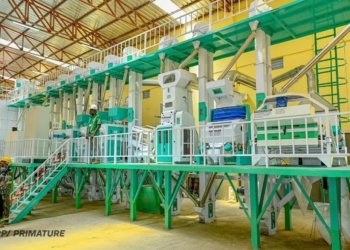
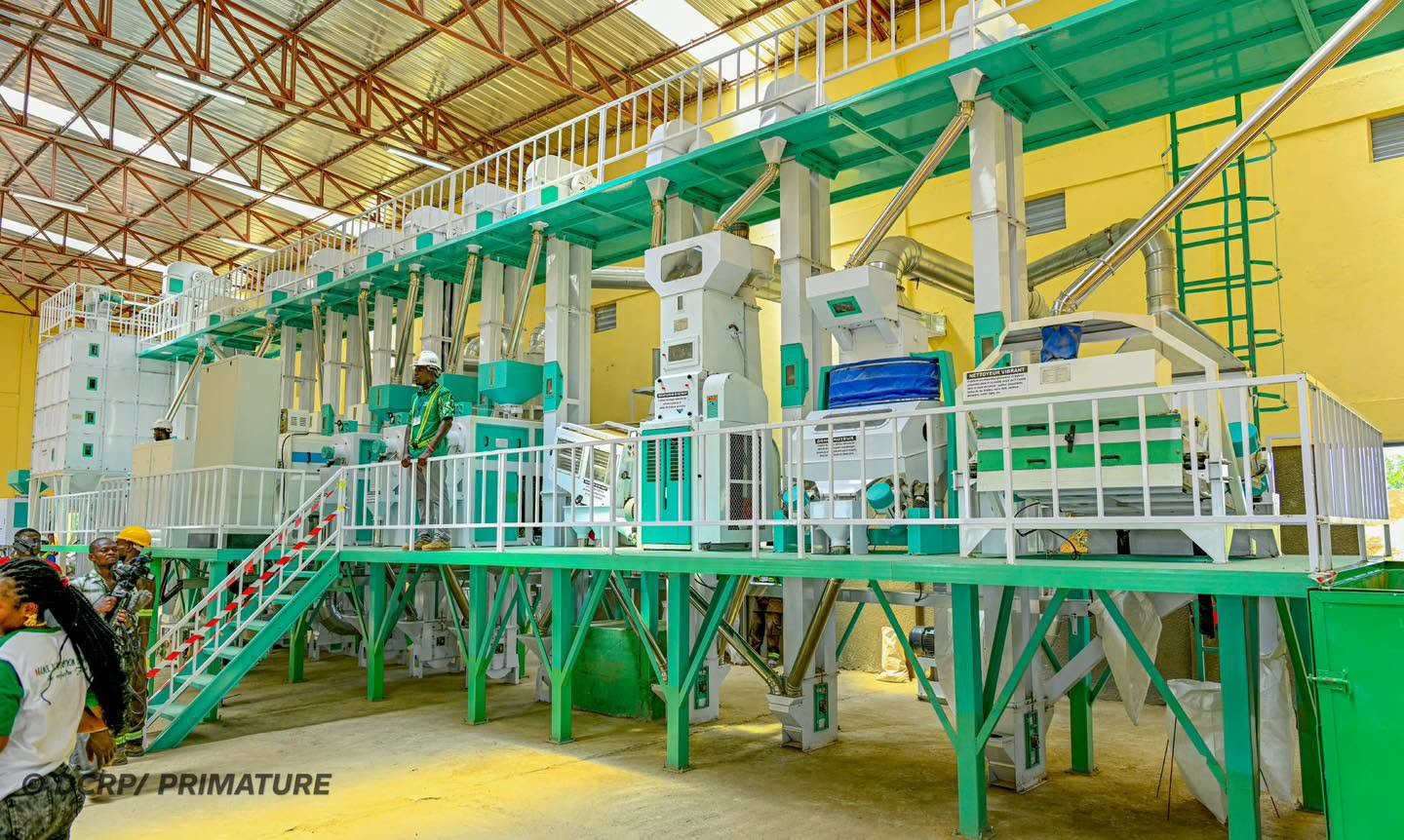
A few steps further along the agricultural chain, the new Bagré rice mill is designed to address another constraint.
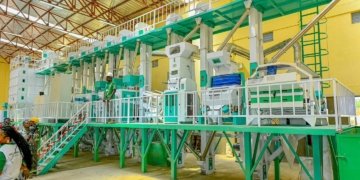
The state-funded facility, also managed by SOFA, can process 100 metric tons of paddy rice a day.
Its production line cleans the harvested rice, removes stones and other foreign material, separates husks and remaining paddy, and then whitens and water-polishes the grain.
The mill also has optical sorting equipment to remove discolored grains and foreign material, as well as machinery to separate whole grains from broken rice.
Automated weighing, bagging and bag-closing equipment complete the processing line.
The government expects the facility to help process paddy rice stocks accumulated through state purchases directly from producers, easing constraints on milling while creating an outlet for locally grown crops.
Ouédraogo told residents that food self-sufficiency is part of the government’s broader vision of national sovereignty.
He also reiterated Traoré’s position that expanding farm production should be accompanied by industrial processing that captures more value from domestic harvests.
The government plans to continue establishing processing plants alongside agropoles in different parts of the country, according to the Prime Ministry.
At Bagré, that strategy is visible in machinery serving different stages of the agricultural cycle, from getting crops out of the field faster to turning part of the harvest into a finished food product.
The government’s challenge is to make the connection between the two durable, ensuring that investment in expanded production is matched by the harvesting and processing capacity needed to handle what farmers grow.