
Bantu Gazette

Bantu Gazette
  • Policy & Governance
  • Development & Impact
  • Business, Trade & Economy
  • Energy
  • Changemakers
  • Culture & Identity
  • Perspectives
  • Magazine
Menu
  • Black Frame Studio
  • Magazine

ATTS2026 | Africa’s Power Reform Push Turns to Private Capital, Regional Trade

Ministerial panel calls for cost-reflective tariffs, stronger regional power markets and greater private-sector participation to improve the financial viability of Africa’s electricity systems.

ATTS2026 | Africa’s Power Reform Push Turns to Private Capital, Regional Trade
Felix Tihby Felix Tih
October 29, 2026
Reading Time: 2 mins read

ATTS2026 | Africa’s Power Reform Push Turns to Private Capital, Regional Trade

Ministerial panel calls for cost-reflective tariffs, stronger regional power markets and greater private-sector participation to improve the financial viability of Africa’s electricity systems.

ATTS2026 | Africa’s Power Reform Push Turns to Private Capital, Regional Trade
Felix Tihby Felix Tih
October 29, 2026
Reading Time: 2 mins read

Cotonou, Benin

African governments need to accelerate electricity-market reforms, attract more private capital and deepen regional power trading if the continent is to overcome persistent supply gaps and financially weak utilities, speakers at the Africa Think Tank Summit said on Thursday.

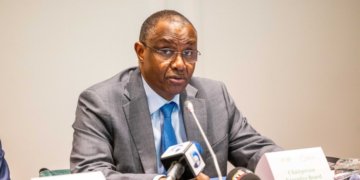
The discussion took place during the high-level panel, “Political Leadership for Power Sector Reform – Challenges, Trade-Offs, and Accountability,” which examined how governments can balance political control, private-sector participation, regional integration and accountability while expanding electricity access.

Convened by the African Capacity Building Foundation, the 12th Africa Think Tank Summit, taking place Oct. 28-30 in Cotonou, Benin, brings together ministers, policymakers, think tanks and development partners. The summit is being held under the theme, “From Energy Access to Economic Transformation: Practical Policy Pathways for Power Sector Viability, Growth and Reform in Africa.”

Panelists said fragmented national approaches have raised costs, discouraged investment and left many state-owned utilities unable to finance the infrastructure needed to meet growing demand. They called for stronger political leadership, tariffs that better reflect the cost of electricity and greater transparency in the management of utilities and regulators.

Tanzania was cited as an example of a country gradually opening its electricity industry. Reforms introduced in 2015 allowed greater private participation in generation and distribution, while transmission remains under state control because of its strategic importance.

Private producers now include large companies generating more than 189 megawatts, medium-sized operators producing more than 59 megawatts and smaller producers contributing about 2.21 megawatts, according to figures presented during the panel. More than 100 companies are licensed to participate in distribution.

Tanzania’s installed capacity has risen to about 4,650 megawatts from 2,461 megawatts following completion of the Julius Nyerere Hydropower Project. Peak demand is about 2,271 megawatts, leaving surplus capacity that the country is seeking to sell to neighboring markets through regional power pools.

That surplus illustrates the case for deeper regional integration, speakers said. Excess electricity in one market could offset shortages elsewhere, lowering the need for countries to build costly reserve capacity independently.

The Sovereignty Question

National sovereignty remains a major obstacle to regional integration, panelists said, as governments often prioritize domestic control even when cross-border infrastructure and pooled generation could reduce costs and improve reliability.

Benin continues to depend heavily on electricity imports, including supplies from Nigeria and Ghana, while the Communauté Électrique du Bénin, which manages transmission infrastructure for Benin and Togo, is undergoing restructuring.

Senegal has pursued regional cooperation through shared hydropower projects and an agreement with Mauritania on offshore gas resources spanning their maritime border.

The panel also highlighted the risks of poorly structured private-sector participation. Ghana’s electricity-distribution concession collapsed in 2019 after problems involving payment guarantees, resulting in losses of more than $190 million, speakers said.

Nigeria, meanwhile, has moved toward more cost-reflective pricing. In 2024, the government introduced its Band A tariff for customers receiving at least 20 hours of electricity a day.

Panelists said politically suppressed tariffs are among the biggest threats to utility finances. When prices fail to cover costs, governments absorb the gap through subsidies, guarantees and debt, while consumers often turn to expensive diesel generation.

Speakers also proposed an independently verified annual scorecard to assess utilities and regulators, saying stronger accountability could reduce policy reversals and improve investor confidence.

The broader message was that Africa’s power challenge is no longer only about adding generation. Governments must also build financially viable utilities, stronger regional markets and credible regulatory systems capable of attracting private investment while protecting the public interest.

Get the inside Story

Stay informed on the stories shaping Africa’s future. Get breaking news, in-depth analysis, opinions and exclusive insights from across the continent delivered to your inbox, free and unfiltered.


Get in touch for more:
Felix Tih
Editorial Director, Bantu Gazette
WhatsApp
LinkedIn
X (Twitter)
Instagram

Related Posts

ACBF Governors Put Implementation at the Heart of Capacity-Building Agenda
Development & Impact

ACBF Governors Put Implementation at the Heart of Capacity-Building Agenda

October 29, 2026
Burkina Faso Links Mechanized Harvests to a New Push for Local Food Processing
Development & Impact

Burkina Faso Links Mechanized Harvests to a New Push for Local Food Processing

October 27, 2026
Ethiopia’s Abiy Rallies Youth to Enroll in Free Coding Courses as Country Targets 7 Million Coders By 2026
Development & Impact

Africa’s AI Promise Depends on the Basics, World Bank Says

October 23, 2026
Across Borders, Young Africans Turn Skills into Workplace Experience
Development & Impact

Across Borders, Young Africans Turn Skills into Workplace Experience

October 23, 2026
What Africa’s Leading Women Would Tell Their Younger Selves
Development & Impact

What Africa’s Leading Women Would Tell Their Younger Selves

October 21, 2026
F1 Returns to Africa as Rwanda Lands 10-Year Grand Prix Deal
Development & Impact

F1 Returns to Africa as Rwanda Lands 10-Year Grand Prix Deal

October 15, 2026

Most Recent

ATTS2026 | Africa’s Power Reform Push Turns to Private Capital, Regional Trade
Development & Impact

ATTS2026 | Africa’s Power Reform Push Turns to Private Capital, Regional Trade

by Felix Tih
October 29, 2026
0

Ministerial panel calls for cost-reflective tariffs, stronger regional power markets and greater private-sector participation to improve the financial viability of...

Read moreDetails
ACBF Governors Put Implementation at the Heart of Capacity-Building Agenda

ACBF Governors Put Implementation at the Heart of Capacity-Building Agenda

October 29, 2026
Burkina Faso Links Mechanized Harvests to a New Push for Local Food Processing

Burkina Faso Links Mechanized Harvests to a New Push for Local Food Processing

October 27, 2026
Dangote IPO Gives Botswana a Bigger Role in Southern African Markets

Dangote IPO Gives Botswana a Bigger Role in Southern African Markets

October 29, 2026
Rwanda Coffee Sells for Record $452 Per Kilogram at Online Auction

Rwanda Coffee Sells for Record $452 Per Kilogram at Online Auction

October 27, 2026
Evidence, Citizens Key to Africa’s Green Energy Transition

Evidence, Citizens Key to Africa’s Green Energy Transition

October 21, 2026
Ethiopia’s Abiy Rallies Youth to Enroll in Free Coding Courses as Country Targets 7 Million Coders By 2026

Africa’s AI Promise Depends on the Basics, World Bank Says

October 23, 2026
ATTS2026 | Africa’s Power Reform Push Turns to Private Capital, Regional Trade
Development & Impact

ATTS2026 | Africa’s Power Reform Push Turns to Private Capital, Regional Trade

by Felix Tih
Reading Time: 2 mins read
October 29, 2026
0

Ministerial panel calls for cost-reflective tariffs, stronger regional power markets and greater private-sector participation to improve the financial viability of...

Read moreDetails
ACBF Governors Put Implementation at the Heart of Capacity-Building Agenda
Development & Impact

ACBF Governors Put Implementation at the Heart of Capacity-Building Agenda

by Felix Tih
Reading Time: 3 mins read
October 29, 2026
0

The foundation’s Board of Governors reviewed institutional performance, financing and rising demand for ACBF services as the Africa Think Tank...

Read moreDetails
Burkina Faso Links Mechanized Harvests to a New Push for Local Food Processing
Development & Impact

Burkina Faso Links Mechanized Harvests to a New Push for Local Food Processing

by Aissatou Fall
Reading Time: 2 mins read
October 27, 2026
0

West African country expands farm mechanization and local processing at Bagré in a push to boost output, cut losses and...

Read moreDetails

ATTS2026 | Africa’s Power Reform Push Turns to Private Capital, Regional Trade

Ministerial panel calls for cost-reflective tariffs, stronger regional power markets and greater private-sector participation to improve the financial viability of Africa’s electricity systems.

ATTS2026 | Africa’s Power Reform Push Turns to Private Capital, Regional Trade

Cotonou, Benin

African governments need to accelerate electricity-market reforms, attract more private capital and deepen regional power trading if the continent is to overcome persistent supply gaps and financially weak utilities, speakers at the Africa Think Tank Summit said on Thursday.

The discussion took place during the high-level panel, “Political Leadership for Power Sector Reform – Challenges, Trade-Offs, and Accountability,” which examined how governments can balance political control, private-sector participation, regional integration and accountability while expanding electricity access.

Convened by the African Capacity Building Foundation, the 12th Africa Think Tank Summit, taking place Oct. 28-30 in Cotonou, Benin, brings together ministers, policymakers, think tanks and development partners. The summit is being held under the theme, “From Energy Access to Economic Transformation: Practical Policy Pathways for Power Sector Viability, Growth and Reform in Africa.”

Panelists said fragmented national approaches have raised costs, discouraged investment and left many state-owned utilities unable to finance the infrastructure needed to meet growing demand. They called for stronger political leadership, tariffs that better reflect the cost of electricity and greater transparency in the management of utilities and regulators.

Tanzania was cited as an example of a country gradually opening its electricity industry. Reforms introduced in 2015 allowed greater private participation in generation and distribution, while transmission remains under state control because of its strategic importance.

Private producers now include large companies generating more than 189 megawatts, medium-sized operators producing more than 59 megawatts and smaller producers contributing about 2.21 megawatts, according to figures presented during the panel. More than 100 companies are licensed to participate in distribution.

Tanzania’s installed capacity has risen to about 4,650 megawatts from 2,461 megawatts following completion of the Julius Nyerere Hydropower Project. Peak demand is about 2,271 megawatts, leaving surplus capacity that the country is seeking to sell to neighboring markets through regional power pools.

That surplus illustrates the case for deeper regional integration, speakers said. Excess electricity in one market could offset shortages elsewhere, lowering the need for countries to build costly reserve capacity independently.

The Sovereignty Question

National sovereignty remains a major obstacle to regional integration, panelists said, as governments often prioritize domestic control even when cross-border infrastructure and pooled generation could reduce costs and improve reliability.

Benin continues to depend heavily on electricity imports, including supplies from Nigeria and Ghana, while the Communauté Électrique du Bénin, which manages transmission infrastructure for Benin and Togo, is undergoing restructuring.

Senegal has pursued regional cooperation through shared hydropower projects and an agreement with Mauritania on offshore gas resources spanning their maritime border.

The panel also highlighted the risks of poorly structured private-sector participation. Ghana’s electricity-distribution concession collapsed in 2019 after problems involving payment guarantees, resulting in losses of more than $190 million, speakers said.

Nigeria, meanwhile, has moved toward more cost-reflective pricing. In 2024, the government introduced its Band A tariff for customers receiving at least 20 hours of electricity a day.

Panelists said politically suppressed tariffs are among the biggest threats to utility finances. When prices fail to cover costs, governments absorb the gap through subsidies, guarantees and debt, while consumers often turn to expensive diesel generation.

Speakers also proposed an independently verified annual scorecard to assess utilities and regulators, saying stronger accountability could reduce policy reversals and improve investor confidence.

The broader message was that Africa’s power challenge is no longer only about adding generation. Governments must also build financially viable utilities, stronger regional markets and credible regulatory systems capable of attracting private investment while protecting the public interest.
ATTS2026 | Africa’s Power Reform Push Turns to Private Capital, Regional Trade

Ministerial panel calls for cost-reflective tariffs, stronger regional power markets and greater private-sector participation to improve the financial viability of Africa’s electricity systems.

ATTS2026 | Africa’s Power Reform Push Turns to Private Capital, Regional Trade
Felix Tihby Felix Tih
October 29, 2026

Cotonou, Benin

African governments need to accelerate electricity-market reforms, attract more private capital and deepen regional power trading if the continent is to overcome persistent supply gaps and financially weak utilities, speakers at the Africa Think Tank Summit said on Thursday.

The discussion took place during the high-level panel, “Political Leadership for Power Sector Reform – Challenges, Trade-Offs, and Accountability,” which examined how governments can balance political control, private-sector participation, regional integration and accountability while expanding electricity access.

Convened by the African Capacity Building Foundation, the 12th Africa Think Tank Summit, taking place Oct. 28-30 in Cotonou, Benin, brings together ministers, policymakers, think tanks and development partners. The summit is being held under the theme, “From Energy Access to Economic Transformation: Practical Policy Pathways for Power Sector Viability, Growth and Reform in Africa.”

Panelists said fragmented national approaches have raised costs, discouraged investment and left many state-owned utilities unable to finance the infrastructure needed to meet growing demand. They called for stronger political leadership, tariffs that better reflect the cost of electricity and greater transparency in the management of utilities and regulators.

Tanzania was cited as an example of a country gradually opening its electricity industry. Reforms introduced in 2015 allowed greater private participation in generation and distribution, while transmission remains under state control because of its strategic importance.

Private producers now include large companies generating more than 189 megawatts, medium-sized operators producing more than 59 megawatts and smaller producers contributing about 2.21 megawatts, according to figures presented during the panel. More than 100 companies are licensed to participate in distribution.

Tanzania’s installed capacity has risen to about 4,650 megawatts from 2,461 megawatts following completion of the Julius Nyerere Hydropower Project. Peak demand is about 2,271 megawatts, leaving surplus capacity that the country is seeking to sell to neighboring markets through regional power pools.

That surplus illustrates the case for deeper regional integration, speakers said. Excess electricity in one market could offset shortages elsewhere, lowering the need for countries to build costly reserve capacity independently.

The Sovereignty Question

National sovereignty remains a major obstacle to regional integration, panelists said, as governments often prioritize domestic control even when cross-border infrastructure and pooled generation could reduce costs and improve reliability.

Benin continues to depend heavily on electricity imports, including supplies from Nigeria and Ghana, while the Communauté Électrique du Bénin, which manages transmission infrastructure for Benin and Togo, is undergoing restructuring.

Senegal has pursued regional cooperation through shared hydropower projects and an agreement with Mauritania on offshore gas resources spanning their maritime border.

The panel also highlighted the risks of poorly structured private-sector participation. Ghana’s electricity-distribution concession collapsed in 2019 after problems involving payment guarantees, resulting in losses of more than $190 million, speakers said.

Nigeria, meanwhile, has moved toward more cost-reflective pricing. In 2024, the government introduced its Band A tariff for customers receiving at least 20 hours of electricity a day.

Panelists said politically suppressed tariffs are among the biggest threats to utility finances. When prices fail to cover costs, governments absorb the gap through subsidies, guarantees and debt, while consumers often turn to expensive diesel generation.

Speakers also proposed an independently verified annual scorecard to assess utilities and regulators, saying stronger accountability could reduce policy reversals and improve investor confidence.

The broader message was that Africa’s power challenge is no longer only about adding generation. Governments must also build financially viable utilities, stronger regional markets and credible regulatory systems capable of attracting private investment while protecting the public interest.

Get the inside Story

Stay informed on the stories shaping Africa’s future. Get breaking news, in-depth analysis, opinions and exclusive insights from across the continent delivered to your inbox, free and unfiltered.


Get in touch for more:
Felix Tih
Editorial Director, Bantu Gazette
WhatsApp
LinkedIn
X (Twitter)
Instagram

Related Posts

ACBF Governors Put Implementation at the Heart of Capacity-Building Agenda

ACBF Governors Put Implementation at the Heart of Capacity-Building Agenda

by Felix Tih
October 28, 2026
0

...

Burkina Faso Links Mechanized Harvests to a New Push for Local Food Processing

Burkina Faso Links Mechanized Harvests to a New Push for Local Food Processing

by Aissatou Fall
October 27, 2026
0

...

Ethiopia’s Abiy Rallies Youth to Enroll in Free Coding Courses as Country Targets 7 Million Coders By 2026

Africa’s AI Promise Depends on the Basics, World Bank Says

by Mary Oduor
October 21, 2026
0

...

Across Borders, Young Africans Turn Skills into Workplace Experience

Across Borders, Young Africans Turn Skills into Workplace Experience

by Edith Augustine
October 21, 2026
0

...

What Africa’s Leading Women Would Tell Their Younger Selves

What Africa’s Leading Women Would Tell Their Younger Selves

by Felix Tih
October 16, 2026
0

...

F1 Returns to Africa as Rwanda Lands 10-Year Grand Prix Deal

F1 Returns to Africa as Rwanda Lands 10-Year Grand Prix Deal

by Doyinsola Ibidunni
October 13, 2026
0

...

ATTS2026 | Africa’s Power Reform Push Turns to Private Capital, Regional Trade
Development & Impact

ATTS2026 | Africa’s Power Reform Push Turns to Private Capital, Regional Trade

by Felix Tih
Reading Time: 2 mins read
October 29, 2026
0

Ministerial panel calls for cost-reflective tariffs, stronger regional power markets and greater private-sector participation to improve the financial viability of...

Read moreDetails
ACBF Governors Put Implementation at the Heart of Capacity-Building Agenda

ACBF Governors Put Implementation at the Heart of Capacity-Building Agenda

by Felix Tih
October 28, 2026
0

The foundation’s Board of Governors reviewed institutional performance, financing and rising demand for ACBF services as the Africa Think Tank...

Burkina Faso Links Mechanized Harvests to a New Push for Local Food Processing

Burkina Faso Links Mechanized Harvests to a New Push for Local Food Processing

by Aissatou Fall
October 27, 2026
0

West African country expands farm mechanization and local processing at Bagré in a push to boost output, cut losses and...

Dangote IPO Gives Botswana a Bigger Role in Southern African Markets

Dangote IPO Gives Botswana a Bigger Role in Southern African Markets

by Maureen Amogelang Garetshoge
October 27, 2026
0

Botswana is hosting Southern African access to Dangote’s refinery IPO, giving the BSE a chance to deepen trading links and...

Rwanda Coffee Sells for Record $452 Per Kilogram at Online Auction

Rwanda Coffee Sells for Record $452 Per Kilogram at Online Auction

by Amani Mwakalebela
October 23, 2026
0

A top Rwandan coffee lot drew buyers from Asia, the Middle East and the United States, underscoring growing demand for...

Bantu Gazette is a pioneering news platform that champions Africa's development, culture, and heritage. We spotlight the continent's successes, address its challenges, and provide insightful coverage of events that shape its future.

Bantu Gazette is a pioneering news platform that champions Africa's development, culture, and heritage. We spotlight the continent's successes, address its challenges, and provide insightful coverage of events that shape its future.

Our Platforms

  • Bantu Magazine
  • Bantu Brief
  • Black Frame Studio

Our Services

  • Bantu Agency
  • Advertise
  • Partnerships

Our Services

  • Editorial Director
  • Opportunities
  • Contact
Bantu Gazette
  • Energy & Trade
  • Finance
  • Health
  • Politics & Economy
  • Technology
  • Environment
  • Feature
  • Opinion
  • Changemakers
  • Tourism & Culture
  • Magazine