
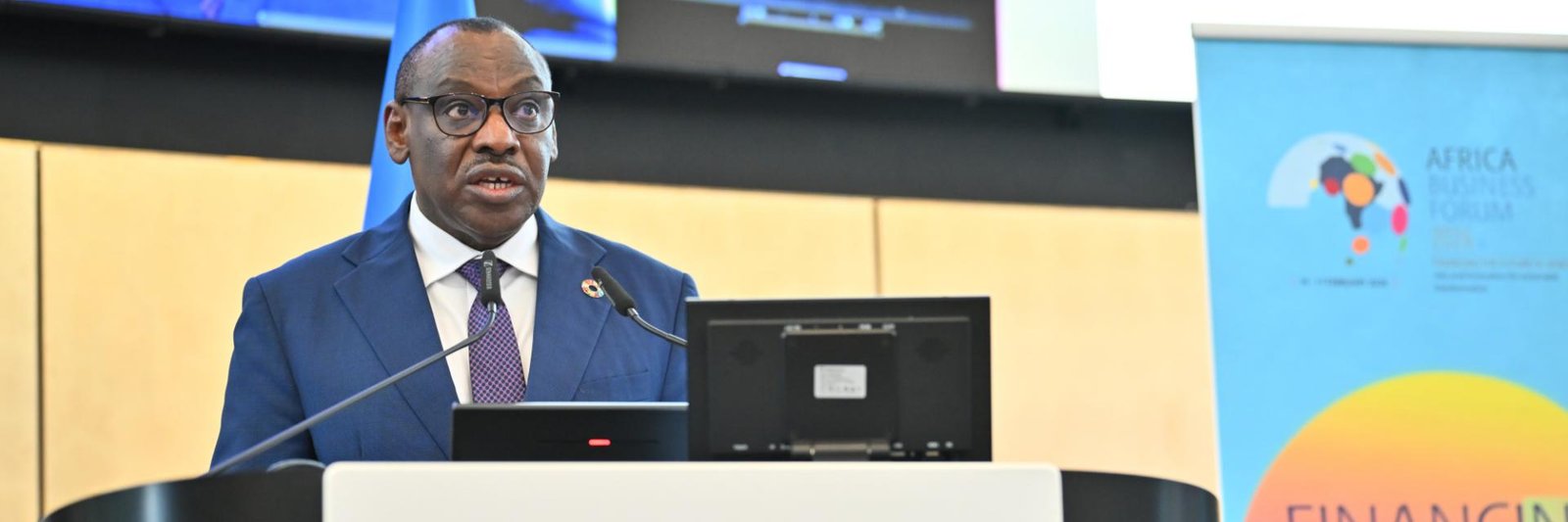

Africa needs stronger mechanisms to channel investment into jobs and innovation, Executive Secretary of the United Nations Economic Commission for Africa (ECA) Claver Gatete said Monday at the ninth Africa Business Forum in Addis Ababa, where leaders examined financing strategies to support industrial growth and employment.
African leaders, investors and development institutions meet at the forum Feb. 16-17. The event, convened by the ECA, explores how available capital can connect more effectively with bankable African projects and accelerate economic transformation.
Gatete said global economic shifts, climate disruptions and technological change are reshaping investment patterns.
“Global capital has not disappeared. It has simply become more selective,” he said, pointing to investor preference for scale, policy stability and future market demand.
He added that Africa’s expanding workforce, urban growth and digital adoption position the continent as a major emerging market.
Implementation of the African Continental Free Trade Area, or AfCFTA, featured prominently in discussions.
Gatete said the agreement aims to create a single market of more than 1.5 billion people, supporting regional value chains, industrial production and cross-border trade.
He cited examples of industrial expansion, including cocoa processing in Côte d’Ivoire, automotive manufacturing growth in Morocco and rising digital payments activity in Ethiopia.
These developments indicate gradual movement toward higher-value production sectors. Gatete said financing gaps persist, including infrastructure funding shortages, illicit financial flows and limited project preparation capacity.
“We must scale domestic capital and deploy innovative financing instruments. Digitized tax systems, broader tax bases and improved compliance can expand fiscal space,” the UN official said.
Africa holds more than $1.1 trillion in domestic institutional capital that could support long-term investment if mobilized effectively.
Forum discussions stressed policy coordination, stronger financial markets, trade implementation, and investment in skills and innovation as priorities for sustained economic transformation across Africa.