

Community-run learning centers are helping displaced children return to education, rebuild skills, and regain a sense of stability.
In Cameroon’s South-West region, where schools once rang with the sounds of children, silence has taken hold. Yet as the crisis grinds on, education is slowly returning to places that had lost it.
The broader conflict between government forces and separatists from the English-speaking minority (North West and South West Regions) began in 2016 and has claimed more than 6,500 lives.
At least 584,000 people have been displaced within the country, with another 73,000 seeking refuge in Nigeria.
The United Nations estimates that 1.8 million of the four million people living in Cameroon’s Anglophone regions now require humanitarian aid. Among them, some 250,000 children remain affected by school closures.
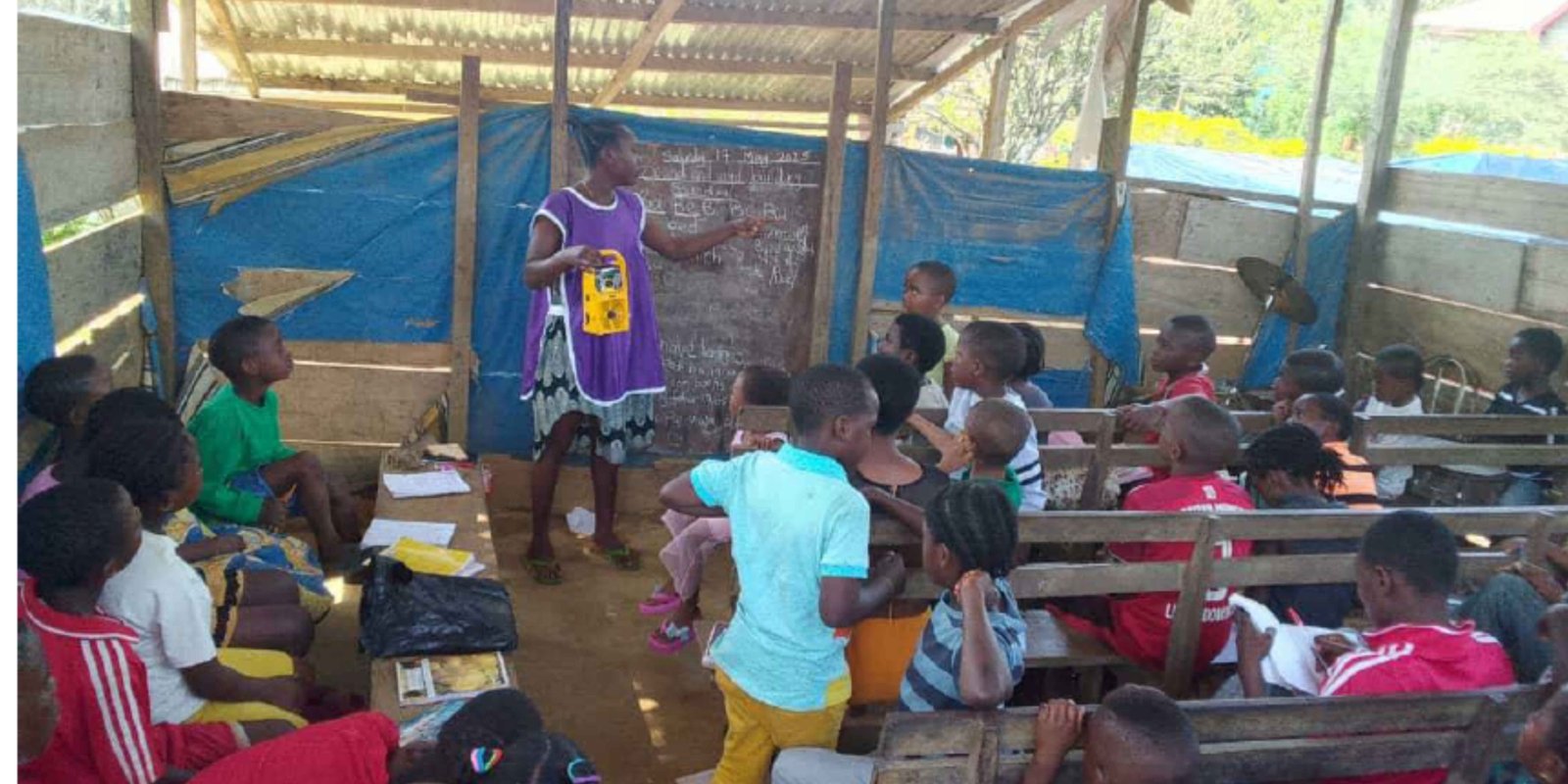
In Kumba I Municipal Council, more than 2,500 children are back in class, not in formal schools, but in makeshift centers known as Temporary Learning Spaces.
Built within local neighborhoods, these centers are helping revive learning in areas where education systems have collapsed.
The initiative is led by the Authentique Memorial Empowerment Foundation, with support from UNESCO and Education Cannot Wait.
Lessons take place in tents, wooden shelters, and open-air classrooms, using chalkboards, radios, and shared tablets. It’s far from conventional, but it’s delivering results.
A Classroom in a Cassava Field
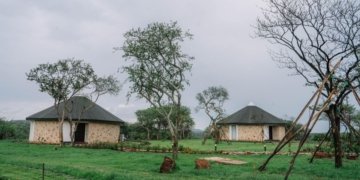
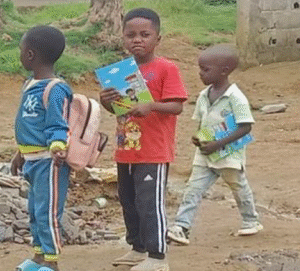
In communities such as Cassava Farm I and Njembe Ekemue, children walk uphill every morning to reach their learning spaces. Some had been out of school for years.
“My 12-year-old son had been out of school for five years,” said a mother in Kumba. “He lost his ability to speak English clearly. Now, he’s confident and learning again.”
With many schools abandoned or turned into military posts, these informal centers have become the only option. Girls make up more than 60 percent of the learners reached, a reflection of local efforts to prioritize girls’ return to education.
More Than Lessons
Makamba Rose, 15, had also stopped attending school. This year, she joined a learning center in Kake I. Her favorite subject is energy.
“We used batteries to light a bulb,” she said. “That made me feel smart. Now, I know I’m ready for secondary school.”
Her experience reflects a wider pattern. Many students, once isolated by conflict and displacement, are now reconnecting with learning. Community facilitators help children rebuild foundational literacy and numeracy.
They also guide students through emotional recovery, creating classrooms that feel safe again.
“Learners now communicate more confidently,” said one facilitator. “They participate more in class, and their reading has improved.”
Community Involvement
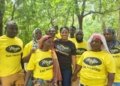
Local support has been central to the program’s growth. More than 40 community figures, quarter heads, pastors, and parent representatives help coordinate activities in Kumba I.
Word spreads through town criers, church announcements, and printed handbills, reaching families who might otherwise be left out.
“Facilitators are doing an amazing job,” said a local leader in Njembe Ekemue. “We see real progress in how the children speak and behave.”
Families contribute where they can, from offering classroom space to encouraging their children to attend regularly.
Pathways Back to School
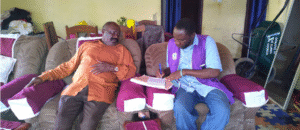
The initiative also supports families looking to re-enroll children in formal education. Through the Help Internally Displaced Children Attend School program, 85 parents have received information and assistance for school reentry. This includes meals, supplies, and help with fees.
Technology is playing a growing role. Video lessons shown on shared tablets have helped maintain student interest and improve retention.
“The children love the tablets,” said one facilitator. “They focus more and remember better.”
Staying the Course
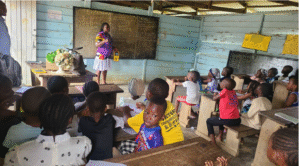
The gains have not come easily. Seasonal flooding, insecurity, and limited staffing have disrupted learning in some centers. In response, the program has adapted schedules, increased outreach, and expanded facilitator training.
“This is not a temporary fix,” said Ebai Fredrick Basil, a national training officer with the Institute for Global Peace and Conflict Management. “It shows what education can look like, even in crisis.”
In a region where classrooms once fell silent, communities are finding ways to bring back learning, steadily, quietly, and with purpose.
As Rose put it, “This program gave me the chance to believe in myself. I will never forget it.”
The experience in Kumba I stands as a compelling example of resilience and community spirit. It demonstrates that Alternative Education is a sustainable pathway towards inclusion, recovery, and hope.
In every lesson taught and every child who dares to dream again, the community is reminded that even in crisis, education remains one of the most powerful tools for rebuilding lives and shaping a better future.
KUMBA, Cameroon
Reported by Ebai Fredrick Basil, National Training officer, Institute For Global Peace and Conflict Management (IGPCM) Nigeria – Cameroon Chapter