
Bantu Gazette

Bantu Gazette
  • Energy & Trade
  • Finance
  • Health
  • Politics & Economy
  • Technology
  • Environment
  • Feature
  • Opinion
  • Changemakers
  • Tourism & Culture
  • Sports
  • Magazine
Menu
  • Black Frame Studio
  • Magazine

Alternative Education Rebuilds Hope in Cameroon’s South West

In Cameroon’s conflict-hit South-West, alternative education offers displaced children a path back to learning, safety, and belonging

Alternative Education Rebuilds Hope in Cameroon’s South West

Temporary Learning Space (AMEF Field Documentation)

Ebai Fredrick Basilby Ebai Fredrick Basil
December 23, 2025
Reading Time: 3 mins read

Alternative Education Rebuilds Hope in Cameroon’s South West

In Cameroon’s conflict-hit South-West, alternative education offers displaced children a path back to learning, safety, and belonging

Alternative Education Rebuilds Hope in Cameroon’s South West

Temporary Learning Space (AMEF Field Documentation)

Alternative Education Rebuilds Hope in Cameroon’s South West

Temporary Learning Space (AMEF Field Documentation)

Ebai Fredrick Basilby Ebai Fredrick Basil
December 31, 2025
Reading Time: 3 mins read

Community-run learning centers are helping displaced children return to education, rebuild skills, and regain a sense of stability.

In Cameroon’s South-West region, where schools once rang with the sounds of children, silence has taken hold. Yet as the crisis grinds on, education is slowly returning to places that had lost it.

The broader conflict between government forces and separatists from the English-speaking minority (North West and South West Regions) began in 2016 and has claimed more than 6,500 lives.

At least 584,000 people have been displaced within the country, with another 73,000 seeking refuge in Nigeria.

The United Nations estimates that 1.8 million of the four million people living in Cameroon’s Anglophone regions now require humanitarian aid. Among them, some 250,000 children remain affected by school closures.

In Kumba I Municipal Council, more than 2,500 children are back in class, not in formal schools, but in makeshift centers known as Temporary Learning Spaces.

Built within local neighborhoods, these centers are helping revive learning in areas where education systems have collapsed.

The initiative is led by the Authentique Memorial Empowerment Foundation, with support from UNESCO and Education Cannot Wait.

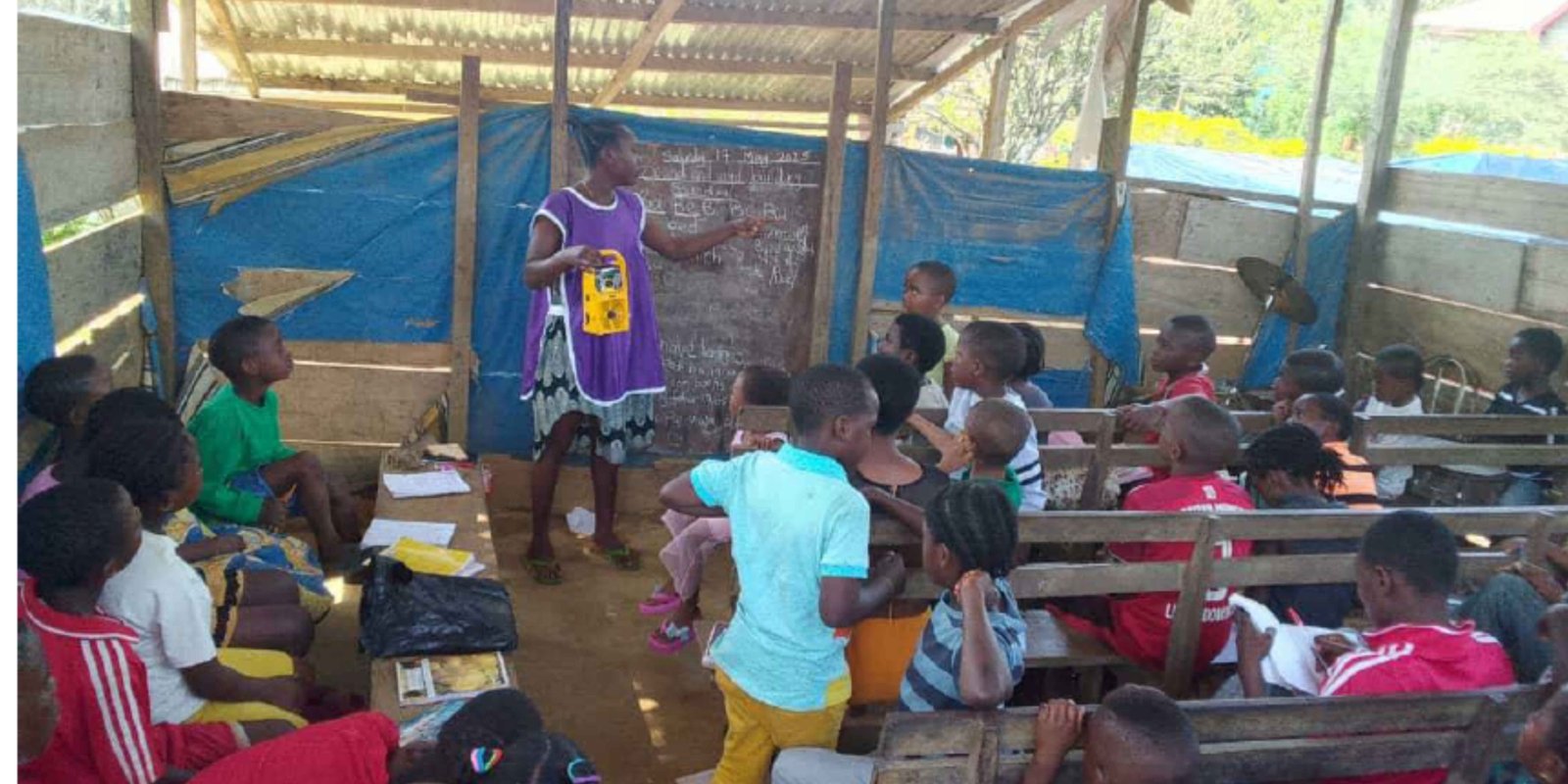
Lessons take place in tents, wooden shelters, and open-air classrooms, using chalkboards, radios, and shared tablets. It’s far from conventional, but it’s delivering results.
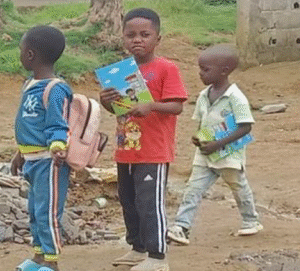
Children Walking to Hilltop Temporary Learning Space at Cassava Farm 1, Kumba I Municipal Council, South-West Region, Cameroon (AMEF Field Report,2025).

A Classroom in a Cassava Field

In communities such as Cassava Farm I and Njembe Ekemue, children walk uphill every morning to reach their learning spaces. Some had been out of school for years.

“My 12-year-old son had been out of school for five years,” said a mother in Kumba. “He lost his ability to speak English clearly. Now, he’s confident and learning again.”

With many schools abandoned or turned into military posts, these informal centers have become the only option. Girls make up more than 60 percent of the learners reached, a reflection of local efforts to prioritize girls’ return to education.
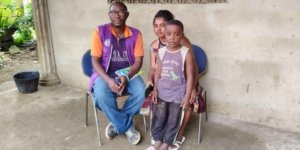
A parent shares how alternative education helped her son return to school. (AMEF Field Report, 2025)

More Than Lessons

Makamba Rose, 15, had also stopped attending school. This year, she joined a learning center in Kake I. Her favorite subject is energy.

“We used batteries to light a bulb,” she said. “That made me feel smart. Now, I know I’m ready for secondary school.”

Her experience reflects a wider pattern. Many students, once isolated by conflict and displacement, are now reconnecting with learning. Community facilitators help children rebuild foundational literacy and numeracy.

They also guide students through emotional recovery, creating classrooms that feel safe again.

“Learners now communicate more confidently,” said one facilitator. “They participate more in class, and their reading has improved.”

Community Involvement

Local support has been central to the program’s growth. More than 40 community figures, quarter heads, pastors, and parent representatives help coordinate activities in Kumba I.

Word spreads through town criers, church announcements, and printed handbills, reaching families who might otherwise be left out.

“Facilitators are doing an amazing job,” said a local leader in Njembe Ekemue. “We see real progress in how the children speak and behave.”

Families contribute where they can, from offering classroom space to encouraging their children to attend regularly.
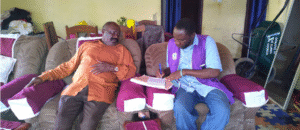
AMEF’s alternative education project coordinator speaks with the quarter head of Njembe Ekemue. (AMEF Interview, 2025)

Pathways Back to School

The initiative also supports families looking to re-enroll children in formal education. Through the Help Internally Displaced Children Attend School program, 85 parents have received information and assistance for school reentry. This includes meals, supplies, and help with fees.

Technology is playing a growing role. Video lessons shown on shared tablets have helped maintain student interest and improve retention.

“The children love the tablets,” said one facilitator. “They focus more and remember better.”

Staying the Course
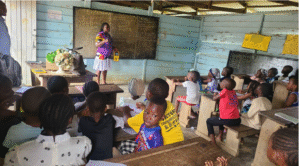
A teacher facilitates a lesson at the TLS at RONAPS on Ntokor Street, Kumba I Municipal Council. (AMEF Field Report, 2025)

The gains have not come easily. Seasonal flooding, insecurity, and limited staffing have disrupted learning in some centers. In response, the program has adapted schedules, increased outreach, and expanded facilitator training.

“This is not a temporary fix,” said Ebai Fredrick Basil, a national training officer with the Institute for Global Peace and Conflict Management. “It shows what education can look like, even in crisis.”

In a region where classrooms once fell silent, communities are finding ways to bring back learning, steadily, quietly, and with purpose.

As Rose put it, “This program gave me the chance to believe in myself. I will never forget it.”

The experience in Kumba I stands as a compelling example of resilience and community spirit. It demonstrates that Alternative Education is a sustainable pathway towards inclusion, recovery, and hope.

In every lesson taught and every child who dares to dream again, the community is reminded that even in crisis, education remains one of the most powerful tools for rebuilding lives and shaping a better future.


KUMBA, Cameroon

Reported by Ebai Fredrick Basil, National Training officer, Institute For Global Peace and Conflict Management (IGPCM) Nigeria – Cameroon Chapter



Get the inside Story

Stay informed on the stories shaping Africa’s future. Get breaking news, in-depth analysis, opinions and exclusive insights from across the continent delivered to your inbox, free and unfiltered.


Get in touch for more:
Felix Tih
Editorial Director, Bantu Gazette
WhatsApp
LinkedIn
X (Twitter)
Instagram

Related Posts

Ethiopia’s Bale Mountains Open New Paths in Sustainable Tourism
Feature

Ethiopia’s Bale Mountains Open New Paths in Sustainable Tourism

November 3, 2025
Feature

Community Action Helps Eliminate Neglected Tropical Diseases

July 16, 2025
Feature

School Feeding Program Brings Hope to Drought-Hit Zimbabwe Communities

January 5, 2025
Hope and Recovery Bloom in Uganda’s Kyangwali Refugee Camp
Feature

Hope and Recovery Bloom in Uganda’s Kyangwali Refugee Camp

January 3, 2025
Men and Boys Stand Against Female Genital Mutilation in Egypt
Feature

Men and Boys Stand Against Female Genital Mutilation in Egypt

January 2, 2025
Environment

COMMENTARY: Gabon’s Forestry Economy at a Crossroads

July 16, 2025

Most Recent

Dakar’s Streets Overflow as Lions of Teranga Parade African Cup of Nations Trophy
Sports

Dakar’s Streets Overflow as Lions of Teranga Parade African Cup of Nations Trophy

by Aissatou Fall
January 20, 2026
0

Dakar’s streets erupted in jubilation Tuesday as Senegal’s national soccer team, the Lions of Teranga, paraded their newly won African...

Read moreDetails
Nigeria Backs Reforms to Spur Job Creation, Regional Growth

Nigeria Backs Reforms to Spur Job Creation, Regional Growth

January 20, 2026
Rwanda Defence Force Engineers Begin Joint Housing Repairs in Jamaica

Rwanda Defence Force Engineers Begin Joint Housing Repairs in Jamaica

January 20, 2026
Ethiopia to Host COP 32 After Securing African Support in Belém

Ethiopia Clears Fourth Review as Economic Reforms Exceed Targets

January 20, 2026
Liberia’s Infrastructure Push Spotlights Digital Connectivity

Liberia’s Infrastructure Push Spotlights Digital Connectivity

January 20, 2026

South Africa’s President Approves Pay Increase for Public Office Bearers

January 20, 2026
Could Morocco Cite CAF Rules to Challenge AFCON Final Result?

Could Morocco Cite CAF Rules to Challenge AFCON Final Result?

January 19, 2026
Dakar’s Streets Overflow as Lions of Teranga Parade African Cup of Nations Trophy
Sports

Dakar’s Streets Overflow as Lions of Teranga Parade African Cup of Nations Trophy

by Aissatou Fall
Reading Time: 1 min read
January 20, 2026
0

Dakar’s streets erupted in jubilation Tuesday as Senegal’s national soccer team, the Lions of Teranga, paraded their newly won African...

Read moreDetails
Nigeria Backs Reforms to Spur Job Creation, Regional Growth
Politics & Economy

Nigeria Backs Reforms to Spur Job Creation, Regional Growth

by Felix Tih
Reading Time: 2 mins read
January 20, 2026
0

Unlocking sustainable growth in Africa depends on how effectively policy reform, private capital and regional integration are aligned to create...

Read moreDetails
Rwanda Defence Force Engineers Begin Joint Housing Repairs in Jamaica
Politics & Economy

Rwanda Defence Force Engineers Begin Joint Housing Repairs in Jamaica

by Jane Mukami
Reading Time: 1 min read
January 20, 2026
0

Engineers from the Rwanda Defence Force have begun joint reconstruction work with counterparts from the Jamaica Defence Force in Montego...

Read moreDetails

Alternative Education Rebuilds Hope in Cameroon’s South West

In Cameroon’s conflict-hit South-West, alternative education offers displaced children a path back to learning, safety, and belonging

Alternative Education Rebuilds Hope in Cameroon’s South West

Temporary Learning Space (AMEF Field Documentation)

Community-run learning centers are helping displaced children return to education, rebuild skills, and regain a sense of stability.

In Cameroon’s South-West region, where schools once rang with the sounds of children, silence has taken hold. Yet as the crisis grinds on, education is slowly returning to places that had lost it.

The broader conflict between government forces and separatists from the English-speaking minority (North West and South West Regions) began in 2016 and has claimed more than 6,500 lives.

At least 584,000 people have been displaced within the country, with another 73,000 seeking refuge in Nigeria.

The United Nations estimates that 1.8 million of the four million people living in Cameroon’s Anglophone regions now require humanitarian aid. Among them, some 250,000 children remain affected by school closures.

In Kumba I Municipal Council, more than 2,500 children are back in class, not in formal schools, but in makeshift centers known as Temporary Learning Spaces.

Built within local neighborhoods, these centers are helping revive learning in areas where education systems have collapsed.

The initiative is led by the Authentique Memorial Empowerment Foundation, with support from UNESCO and Education Cannot Wait.

Lessons take place in tents, wooden shelters, and open-air classrooms, using chalkboards, radios, and shared tablets. It’s far from conventional, but it’s delivering results.

Children Walking to Hilltop Temporary Learning Space at Cassava Farm 1, Kumba I Municipal Council, South-West Region, Cameroon (AMEF Field Report,2025).

A Classroom in a Cassava Field

In communities such as Cassava Farm I and Njembe Ekemue, children walk uphill every morning to reach their learning spaces. Some had been out of school for years.

“My 12-year-old son had been out of school for five years,” said a mother in Kumba. “He lost his ability to speak English clearly. Now, he’s confident and learning again.”

With many schools abandoned or turned into military posts, these informal centers have become the only option. Girls make up more than 60 percent of the learners reached, a reflection of local efforts to prioritize girls’ return to education.

A parent shares how alternative education helped her son return to school. (AMEF Field Report, 2025)

More Than Lessons

Makamba Rose, 15, had also stopped attending school. This year, she joined a learning center in Kake I. Her favorite subject is energy.

“We used batteries to light a bulb,” she said. “That made me feel smart. Now, I know I’m ready for secondary school.”

Her experience reflects a wider pattern. Many students, once isolated by conflict and displacement, are now reconnecting with learning. Community facilitators help children rebuild foundational literacy and numeracy.

They also guide students through emotional recovery, creating classrooms that feel safe again.

“Learners now communicate more confidently,” said one facilitator. “They participate more in class, and their reading has improved.”

Community Involvement

Local support has been central to the program’s growth. More than 40 community figures, quarter heads, pastors, and parent representatives help coordinate activities in Kumba I.

Word spreads through town criers, church announcements, and printed handbills, reaching families who might otherwise be left out.

“Facilitators are doing an amazing job,” said a local leader in Njembe Ekemue. “We see real progress in how the children speak and behave.”

Families contribute where they can, from offering classroom space to encouraging their children to attend regularly.

AMEF’s alternative education project coordinator speaks with the quarter head of Njembe Ekemue. (AMEF Interview, 2025)

Pathways Back to School

The initiative also supports families looking to re-enroll children in formal education. Through the Help Internally Displaced Children Attend School program, 85 parents have received information and assistance for school reentry. This includes meals, supplies, and help with fees.

Technology is playing a growing role. Video lessons shown on shared tablets have helped maintain student interest and improve retention.

“The children love the tablets,” said one facilitator. “They focus more and remember better.”

Staying the Course

A teacher facilitates a lesson at the TLS at RONAPS on Ntokor Street, Kumba I Municipal Council. (AMEF Field Report, 2025)

The gains have not come easily. Seasonal flooding, insecurity, and limited staffing have disrupted learning in some centers. In response, the program has adapted schedules, increased outreach, and expanded facilitator training.

“This is not a temporary fix,” said Ebai Fredrick Basil, a national training officer with the Institute for Global Peace and Conflict Management. “It shows what education can look like, even in crisis.”

In a region where classrooms once fell silent, communities are finding ways to bring back learning, steadily, quietly, and with purpose.

As Rose put it, “This program gave me the chance to believe in myself. I will never forget it.”

The experience in Kumba I stands as a compelling example of resilience and community spirit. It demonstrates that Alternative Education is a sustainable pathway towards inclusion, recovery, and hope.

In every lesson taught and every child who dares to dream again, the community is reminded that even in crisis, education remains one of the most powerful tools for rebuilding lives and shaping a better future.


KUMBA, Cameroon

Reported by Ebai Fredrick Basil, National Training officer, Institute For Global Peace and Conflict Management (IGPCM) Nigeria – Cameroon Chapter



Alternative Education Rebuilds Hope in Cameroon’s South West

In Cameroon’s conflict-hit South-West, alternative education offers displaced children a path back to learning, safety, and belonging

Alternative Education Rebuilds Hope in Cameroon’s South West

Temporary Learning Space (AMEF Field Documentation)

Ebai Fredrick Basilby Ebai Fredrick Basil
December 23, 2025

Community-run learning centers are helping displaced children return to education, rebuild skills, and regain a sense of stability.

In Cameroon’s South-West region, where schools once rang with the sounds of children, silence has taken hold. Yet as the crisis grinds on, education is slowly returning to places that had lost it.

The broader conflict between government forces and separatists from the English-speaking minority (North West and South West Regions) began in 2016 and has claimed more than 6,500 lives.

At least 584,000 people have been displaced within the country, with another 73,000 seeking refuge in Nigeria.

The United Nations estimates that 1.8 million of the four million people living in Cameroon’s Anglophone regions now require humanitarian aid. Among them, some 250,000 children remain affected by school closures.

In Kumba I Municipal Council, more than 2,500 children are back in class, not in formal schools, but in makeshift centers known as Temporary Learning Spaces.

Built within local neighborhoods, these centers are helping revive learning in areas where education systems have collapsed.

The initiative is led by the Authentique Memorial Empowerment Foundation, with support from UNESCO and Education Cannot Wait.

Lessons take place in tents, wooden shelters, and open-air classrooms, using chalkboards, radios, and shared tablets. It’s far from conventional, but it’s delivering results.

Children Walking to Hilltop Temporary Learning Space at Cassava Farm 1, Kumba I Municipal Council, South-West Region, Cameroon (AMEF Field Report,2025).

A Classroom in a Cassava Field

In communities such as Cassava Farm I and Njembe Ekemue, children walk uphill every morning to reach their learning spaces. Some had been out of school for years.

“My 12-year-old son had been out of school for five years,” said a mother in Kumba. “He lost his ability to speak English clearly. Now, he’s confident and learning again.”

With many schools abandoned or turned into military posts, these informal centers have become the only option. Girls make up more than 60 percent of the learners reached, a reflection of local efforts to prioritize girls’ return to education.

A parent shares how alternative education helped her son return to school. (AMEF Field Report, 2025)

More Than Lessons

Makamba Rose, 15, had also stopped attending school. This year, she joined a learning center in Kake I. Her favorite subject is energy.

“We used batteries to light a bulb,” she said. “That made me feel smart. Now, I know I’m ready for secondary school.”

Her experience reflects a wider pattern. Many students, once isolated by conflict and displacement, are now reconnecting with learning. Community facilitators help children rebuild foundational literacy and numeracy.

They also guide students through emotional recovery, creating classrooms that feel safe again.

“Learners now communicate more confidently,” said one facilitator. “They participate more in class, and their reading has improved.”

Community Involvement

Local support has been central to the program’s growth. More than 40 community figures, quarter heads, pastors, and parent representatives help coordinate activities in Kumba I.

Word spreads through town criers, church announcements, and printed handbills, reaching families who might otherwise be left out.

“Facilitators are doing an amazing job,” said a local leader in Njembe Ekemue. “We see real progress in how the children speak and behave.”

Families contribute where they can, from offering classroom space to encouraging their children to attend regularly.

AMEF’s alternative education project coordinator speaks with the quarter head of Njembe Ekemue. (AMEF Interview, 2025)

Pathways Back to School

The initiative also supports families looking to re-enroll children in formal education. Through the Help Internally Displaced Children Attend School program, 85 parents have received information and assistance for school reentry. This includes meals, supplies, and help with fees.

Technology is playing a growing role. Video lessons shown on shared tablets have helped maintain student interest and improve retention.

“The children love the tablets,” said one facilitator. “They focus more and remember better.”

Staying the Course

A teacher facilitates a lesson at the TLS at RONAPS on Ntokor Street, Kumba I Municipal Council. (AMEF Field Report, 2025)

The gains have not come easily. Seasonal flooding, insecurity, and limited staffing have disrupted learning in some centers. In response, the program has adapted schedules, increased outreach, and expanded facilitator training.

“This is not a temporary fix,” said Ebai Fredrick Basil, a national training officer with the Institute for Global Peace and Conflict Management. “It shows what education can look like, even in crisis.”

In a region where classrooms once fell silent, communities are finding ways to bring back learning, steadily, quietly, and with purpose.

As Rose put it, “This program gave me the chance to believe in myself. I will never forget it.”

The experience in Kumba I stands as a compelling example of resilience and community spirit. It demonstrates that Alternative Education is a sustainable pathway towards inclusion, recovery, and hope.

In every lesson taught and every child who dares to dream again, the community is reminded that even in crisis, education remains one of the most powerful tools for rebuilding lives and shaping a better future.


KUMBA, Cameroon

Reported by Ebai Fredrick Basil, National Training officer, Institute For Global Peace and Conflict Management (IGPCM) Nigeria – Cameroon Chapter


Get the inside Story

Stay informed on the stories shaping Africa’s future. Get breaking news, in-depth analysis, opinions and exclusive insights from across the continent delivered to your inbox, free and unfiltered.


Get in touch for more:
Felix Tih
Editorial Director, Bantu Gazette
WhatsApp
LinkedIn
X (Twitter)
Instagram

Related Posts

Ethiopia’s Bale Mountains Open New Paths in Sustainable Tourism

Ethiopia’s Bale Mountains Open New Paths in Sustainable Tourism

by Felix Tih
October 27, 2025
0

...

Community Action Helps Eliminate Neglected Tropical Diseases

by Sandra Ndang
January 30, 2025
0

...

School Feeding Program Brings Hope to Drought-Hit Zimbabwe Communities

by Bantu Gazette
January 5, 2025
0

...

Hope and Recovery Bloom in Uganda’s Kyangwali Refugee Camp

Hope and Recovery Bloom in Uganda’s Kyangwali Refugee Camp

by Bantu Gazette
January 3, 2025
0

...

Men and Boys Stand Against Female Genital Mutilation in Egypt

Men and Boys Stand Against Female Genital Mutilation in Egypt

by Bantu Gazette
January 2, 2025
0

...

COMMENTARY: Gabon’s Forestry Economy at a Crossroads

by Felix Tih
December 26, 2024
0

...

Dakar’s Streets Overflow as Lions of Teranga Parade African Cup of Nations Trophy
Sports

Dakar’s Streets Overflow as Lions of Teranga Parade African Cup of Nations Trophy

by Aissatou Fall
Reading Time: 1 min read
January 20, 2026
0

Dakar’s streets erupted in jubilation Tuesday as Senegal’s national soccer team, the Lions of Teranga, paraded their newly won African...

Read moreDetails
Nigeria Backs Reforms to Spur Job Creation, Regional Growth

Nigeria Backs Reforms to Spur Job Creation, Regional Growth

by Felix Tih
January 20, 2026
0

Unlocking sustainable growth in Africa depends on how effectively policy reform, private capital and regional integration are aligned to create...

Rwanda Defence Force Engineers Begin Joint Housing Repairs in Jamaica

Rwanda Defence Force Engineers Begin Joint Housing Repairs in Jamaica

by Jane Mukami
January 20, 2026
0

Engineers from the Rwanda Defence Force have begun joint reconstruction work with counterparts from the Jamaica Defence Force in Montego...

Ethiopia to Host COP 32 After Securing African Support in Belém

Ethiopia Clears Fourth Review as Economic Reforms Exceed Targets

by Maraki Desta
January 20, 2026
0

Ethiopia has completed the fourth joint review of its economic reform program, with results surpassing expectations and unlocking $261 million...

Liberia’s Infrastructure Push Spotlights Digital Connectivity

Liberia’s Infrastructure Push Spotlights Digital Connectivity

by Seraphine Biyogo
January 20, 2026
0

President Joseph Nyuma Boakai has called for coordinated investment in Liberia’s infrastructure, including digital systems, during the opening of the...

Next Post
Sahel Bloc Launches Regional Investment Bank in Bamako

Sahel Bloc Launches Regional Investment Bank in Bamako

The Weaver Bird Strategy: How Small States Are Building Intra-African Trade

The Weaver Bird Strategy: How Small States Are Building Intra-African Trade

South Africa’s Motsepe Re-Elected as African Football Chief

African Football Body Introduces Yearly Nations League for Top Teams

Morocco Puts Infrastructure on Display at Africa Cup of Nations

Morocco Puts Infrastructure on Display at Africa Cup of Nations

Bantu Gazette is a pioneering news platform that champions Africa's development, culture, and heritage. We spotlight the continent's successes, address its challenges, and provide insightful coverage of events that shape its future.

Bantu Gazette is a pioneering news platform that champions Africa's development, culture, and heritage. We spotlight the continent's successes, address its challenges, and provide insightful coverage of events that shape its future.

Our Platforms

  • Bantu Magazine
  • Bantu Brief
  • Black Frame Studio

Our Services

  • Bantu Agency
  • Advertise
  • Partnerships

Our Services

  • Editorial Director
  • Opportunities
  • Contact

Bantu Gazette is a pioneering news platform that champions Africa's development, culture, and heritage. We spotlight the continent's successes, address its challenges, and provide insightful coverage of events that shape its future.

Our Platforms

  • Bantu Magazine
  • Bantu Brief
  • Black Frame Studio

Our Services

  • Bantu Agency
  • Advertise
  • Partnerships

Our Services

  • Editorial Director
  • Opportunities
  • Contact
Bantu Gazette
  • Energy & Trade
  • Finance
  • Health
  • Politics & Economy
  • Technology
  • Environment
  • Feature
  • Opinion
  • Changemakers
  • Tourism & Culture
  • Magazine