

Bantu Gazette

Bantu Gazette
  • Energy & Trade
  • Finance
  • Health
  • Politics & Economy
  • Technology
  • Environment
  • Feature
  • Opinion
  • Changemakers
  • Tourism & Culture
  • Magazine
Menu
  • Black Frame Studio
  • Magazine

Ballots and Diversity: Electoral Power in a Changing Africa

How Africa’s diverse electorates can use the power of the vote to demand accountability, reject division, and shape a more unified future

Ballots and Diversity: Electoral Power in a Changing Africa
Vitalis Manjongby Vitalis Manjong
September 23, 2025
Reading Time: 5 mins read

Ballots and Diversity: Electoral Power in a Changing Africa

How Africa’s diverse electorates can use the power of the vote to demand accountability, reject division, and shape a more unified future

Ballots and Diversity: Electoral Power in a Changing Africa
Vitalis Manjongby Vitalis Manjong
December 7, 2025
Reading Time: 5 mins read

Africa has often found itself in the headlines for the wrong reasons during and after elections, with disputed results, post-election violence, and democratic backsliding that undermine the continent’s progress.

In 2007, Kenya teetered on the edge of chaos as ethnic politics turned neighbor against neighbor. Sadly, this was not an isolated incident. From West to East, the continent’s diversity, often seen as a strength, has often been twisted into a tool for ideological battles, ethnic mobilization, vote buying and clientelism.

As countries like Cameroon, Ivory Coast, the Central African Republic, Malawi, Seychelles, and Tanzania go to the polls before the end of 2025, the stakes could not be higher. The ballot box remains one of the most powerful tools Africans have to shape their future. How that power is used or misused will determine whether elections become a bridge to unity or a trigger for division.

Diversity has long been manipulated as a divide-and-rule tactic. Citizens must understand the real power of a single vote and how it can be used to reward good leadership and punish bad governance.

Elections Sit at the Heart of Democracy

Elections give people the chance to choose leaders who will make decisions and policies on their behalf. For citizens to choose leaders who are accountable, they need to be well-informed. They must ask whether their lives have improved and understand what each candidate stands for.

In much of Africa, however, politics is still shaped more by ethnicity and tribal loyalty than by ideas and policies. Ethnic identity offers an easy shortcut for voters, and politicians know how to exploit it.

Take Cameroon. The Anglophone crisis in the Northwest and Southwest regions has laid bare the divide between French- and English-speaking communities, deepening political grievances along ethnic lines.

Tribalism has also been used as a tool of exclusion, with opposition leader Maurice Kamto often sidelined. As the October 2025 election approaches, the contest is being framed less as a clash of visions and more as a showdown between Paul Biya’s Bulu group, in power since 1982, and Kamto’s Bamileke community.

This pattern repeats itself across the continent. In Kenya, politics has long revolved around the rivalry between Luos and Kikuyus. In Rwanda and Burundi, the Tutsi-Hutu divide has left deep scars. In Sudan and beyond, tensions between Arabs and Black Africans continue to fuel unrest. These divisions have been manipulated not only to sow discord but also to shape voting behavior.

Do Africa’s younger generations understand the power of one vote? Africa is changing, with young people increasingly educated and globally connected. Still, one core truth defines democracy. Each citizen has a single vote. The question is not whether you have that vote but how you choose to use it.

That single vote can be cast in many ways. You can give it to a candidate simply because they share your tribe or religion. You can sell it for cash, a bag of rice, a can of sardines, or the promise of a government job. Or, more meaningfully, you can cast it as a judgment based on what leaders have delivered and what they promise for the future.

Across much of Africa, voting has too often been reduced to ethnicity, patronage, and personal gain. Rather than using the ballot box to hold leaders accountable, many citizens fall back on identity politics or short-term benefits. The result is predictable: leaders win without presenting coherent manifestos or credible policies. Citizens then find it difficult to hold them accountable because their votes were never anchored in ideas to begin with.

Reclaiming the Vote Through Accountability and Action

History offers a clear reminder. In Kenya, it took opposition parties nearly a decade to unite against Daniel arap Moi’s entrenched regime. Why? Because party leaders focused on protecting tribal interests instead of rallying around a common political program. That failure allowed the government to exploit divisions and weaken the opposition, prolonging authoritarian rule. Without clear manifestos and shared platforms, opposition politics became a scramble for ethnic loyalty rather than a contest of ideas.

This is where the true power of a single vote comes in. When citizens read manifestos, demand clarity on policies, and vote based on vision rather than identity, they create the conditions for accountability. A vote grounded in policy forces leaders to serve the nation, not just their tribe or their patrons.

Africa’s rising generation has the education, the tools, and the civic awareness to make this shift. The question is whether they will use their votes to demand change or continue to surrender them to the old cycles of ethnicity and clientelism.

A single vote may seem small, but when cast wisely, it becomes the foundation of democratic accountability. The future of African democracy rests on meaningful elections and voters who choose progress over patronage.

We must begin to treat our vote as a powerful weapon, one that can reward good leadership and punish bad governance. When leaders act in their own interests or fail to deliver on their promises, citizens must be prepared to hold them accountable. However, this can only happen if voters have access to policy information, which is typically found in manifestos.

Every election year, we must assess the state of the nation and ask: Did our leaders deliver? Did they stop the war? Did they provide the free education they promised? Did they improve healthcare or infrastructure? Is my economic situation better? If it’s a first-time candidate, we must judge them by their education, work history, and character.

Ultimately, we must employ both prospective and retrospective judgment to select candidates who will serve the country with vision and reject those who rely on identity politics and clientelism.

We live in an era where information is readily available at our fingertips. No leader or party can hide their record. In a continent as diverse and vibrant as ours, our votes must not be traded for loyalty or tribe, but cast for those who deliver water, build roads, grow the economy, protect our security, and keep the lights on.

Leaders who stoke division weaken the very foundation of our future. Every election is our chance to reward courage and punish failure, to choose unity over division, progress over stagnation. As Ellen Johnson Sirleaf once said, “Ethnicity should enrich us; it should make us a unique people in our diversity and not be used to divide us.”

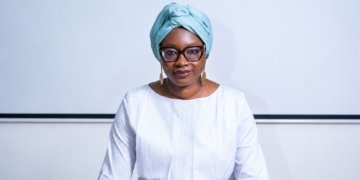


Vitalis Manjong


Vitalis Manjong
is a governance and policy expert who holds master’s degrees in international relations from Hacettepe University in Turkey and in governance, development, and public policy from the University of Sussex in England. He serves as executive director of SINEM Afrique Medical and has facilitated numerous workshops on governance, civic engagement, and entrepreneurship. His research focuses on policy and governance in post-conflict settings.

Get the inside Story

Stay informed on the stories shaping Africa’s future. Get breaking news, in-depth analysis, opinions and exclusive insights from across the continent delivered to your inbox, free and unfiltered.


Related Posts

Ethiopia’s Amhara Peace Pact Reflects a Broader Shift
Opinion

Ethiopia’s Amhara Peace Pact Reflects a Broader Shift

December 10, 2025
Ghana’s Cedi Rally Shows Path Forward for Emerging Markets
Opinion

Ghana’s Cedi Rally Shows Path Forward for Emerging Markets

August 5, 2025
Women's Fight for Equity in Africa's Energy Sector
Opinion

Women’s Fight for Equity in Africa’s Energy Sector

August 25, 2025
Beyond the Broken Promise of Education
Opinion

Beyond the Broken Promise of Education

August 5, 2025
Coding Our Own Future Ending digital dependency starts with mental sovereignty - Bantu Gazette
Opinion

Coding Our Own Future: Ending digital dependency starts with mental sovereignty

August 4, 2025
Young Innovators Are Ready : What it will take to scale youth-led solutions across the continent
Opinion

The Weight of Success: How Africa’s Trade Future Can Break Family Cycles

August 5, 2025

Most Recent

Kenya Appoints Young Tree Activist as Conservation Envoy
Environment

Kenya Appoints Young Tree Activist as Conservation Envoy

by Jane Mukami
December 16, 2025
0

President William Ruto on Monday appointed 22-year-old Truphena Muthoni as an ambassador for Kenya’s 15 Billion Tree Planting Campaign, recognizing...

Read moreDetails
Dangote Commits $688 Million to Support Education in Nigeria

Dangote Commits $688 Million to Support Education in Nigeria

December 14, 2025
Diana Orembe Wins Africa’s Business Heroes 2025 Top Prize

Diana Orembe Wins Africa’s Business Heroes 2025 Top Prize

December 13, 2025
West Africa to Cut Air Travel Costs from 2026

West Africa to Cut Air Travel Costs from 2026

December 10, 2025
Namibia Secures $10 Million for Green Hydrogen Project

Namibia Secures $10 Million for Green Hydrogen Project

December 10, 2025
Senegal Approves Payment for African Energy Bank

Senegal Approves Payment for African Energy Bank

December 14, 2025
African Trade Bloc Expands Digital, Legal Tools to Boost Integration

African Trade Bloc Expands Digital, Legal Tools to Boost Integration

December 10, 2025
Kenya Appoints Young Tree Activist as Conservation Envoy
Environment

Kenya Appoints Young Tree Activist as Conservation Envoy

by Jane Mukami
Reading Time: 1 mins read
December 16, 2025
0

President William Ruto on Monday appointed 22-year-old Truphena Muthoni as an ambassador for Kenya’s 15 Billion Tree Planting Campaign, recognizing...

Read moreDetails
Dangote Commits $688 Million to Support Education in Nigeria
Politics & Economy

Dangote Commits $688 Million to Support Education in Nigeria

by Aissatou Fall
Reading Time: 1 mins read
December 14, 2025
0

Africa’s richest man, Aliko Dangote, has pledged ₦1 trillion ($688 million) to fund education across Nigeria over the next decade,...

Read moreDetails
Diana Orembe Wins Africa’s Business Heroes 2025 Top Prize
Finance

Diana Orembe Wins Africa’s Business Heroes 2025 Top Prize

by Jane Mukami
Reading Time: 1 mins read
December 13, 2025
0

Diana Orembe, co-founder of Tanzania-based biotech startup NovFeed, has won the 7th edition of the Africa’s Business Heroes (ABH) Prize...

Read moreDetails

Ballots and Diversity: Electoral Power in a Changing Africa

How Africa’s diverse electorates can use the power of the vote to demand accountability, reject division, and shape a more unified future

Ballots and Diversity: Electoral Power in a Changing Africa

Africa has often found itself in the headlines for the wrong reasons during and after elections, with disputed results, post-election violence, and democratic backsliding that undermine the continent’s progress.

In 2007, Kenya teetered on the edge of chaos as ethnic politics turned neighbor against neighbor. Sadly, this was not an isolated incident. From West to East, the continent’s diversity, often seen as a strength, has often been twisted into a tool for ideological battles, ethnic mobilization, vote buying and clientelism.

As countries like Cameroon, Ivory Coast, the Central African Republic, Malawi, Seychelles, and Tanzania go to the polls before the end of 2025, the stakes could not be higher. The ballot box remains one of the most powerful tools Africans have to shape their future. How that power is used or misused will determine whether elections become a bridge to unity or a trigger for division.

Diversity has long been manipulated as a divide-and-rule tactic. Citizens must understand the real power of a single vote and how it can be used to reward good leadership and punish bad governance.

Elections Sit at the Heart of Democracy

Elections give people the chance to choose leaders who will make decisions and policies on their behalf. For citizens to choose leaders who are accountable, they need to be well-informed. They must ask whether their lives have improved and understand what each candidate stands for.

In much of Africa, however, politics is still shaped more by ethnicity and tribal loyalty than by ideas and policies. Ethnic identity offers an easy shortcut for voters, and politicians know how to exploit it.

Take Cameroon. The Anglophone crisis in the Northwest and Southwest regions has laid bare the divide between French- and English-speaking communities, deepening political grievances along ethnic lines.

Tribalism has also been used as a tool of exclusion, with opposition leader Maurice Kamto often sidelined. As the October 2025 election approaches, the contest is being framed less as a clash of visions and more as a showdown between Paul Biya’s Bulu group, in power since 1982, and Kamto’s Bamileke community.

This pattern repeats itself across the continent. In Kenya, politics has long revolved around the rivalry between Luos and Kikuyus. In Rwanda and Burundi, the Tutsi-Hutu divide has left deep scars. In Sudan and beyond, tensions between Arabs and Black Africans continue to fuel unrest. These divisions have been manipulated not only to sow discord but also to shape voting behavior.

Do Africa’s younger generations understand the power of one vote? Africa is changing, with young people increasingly educated and globally connected. Still, one core truth defines democracy. Each citizen has a single vote. The question is not whether you have that vote but how you choose to use it.

That single vote can be cast in many ways. You can give it to a candidate simply because they share your tribe or religion. You can sell it for cash, a bag of rice, a can of sardines, or the promise of a government job. Or, more meaningfully, you can cast it as a judgment based on what leaders have delivered and what they promise for the future.

Across much of Africa, voting has too often been reduced to ethnicity, patronage, and personal gain. Rather than using the ballot box to hold leaders accountable, many citizens fall back on identity politics or short-term benefits. The result is predictable: leaders win without presenting coherent manifestos or credible policies. Citizens then find it difficult to hold them accountable because their votes were never anchored in ideas to begin with.

Reclaiming the Vote Through Accountability and Action

History offers a clear reminder. In Kenya, it took opposition parties nearly a decade to unite against Daniel arap Moi’s entrenched regime. Why? Because party leaders focused on protecting tribal interests instead of rallying around a common political program. That failure allowed the government to exploit divisions and weaken the opposition, prolonging authoritarian rule. Without clear manifestos and shared platforms, opposition politics became a scramble for ethnic loyalty rather than a contest of ideas.

This is where the true power of a single vote comes in. When citizens read manifestos, demand clarity on policies, and vote based on vision rather than identity, they create the conditions for accountability. A vote grounded in policy forces leaders to serve the nation, not just their tribe or their patrons.

Africa’s rising generation has the education, the tools, and the civic awareness to make this shift. The question is whether they will use their votes to demand change or continue to surrender them to the old cycles of ethnicity and clientelism.

A single vote may seem small, but when cast wisely, it becomes the foundation of democratic accountability. The future of African democracy rests on meaningful elections and voters who choose progress over patronage.

We must begin to treat our vote as a powerful weapon, one that can reward good leadership and punish bad governance. When leaders act in their own interests or fail to deliver on their promises, citizens must be prepared to hold them accountable. However, this can only happen if voters have access to policy information, which is typically found in manifestos.

Every election year, we must assess the state of the nation and ask: Did our leaders deliver? Did they stop the war? Did they provide the free education they promised? Did they improve healthcare or infrastructure? Is my economic situation better? If it’s a first-time candidate, we must judge them by their education, work history, and character.

Ultimately, we must employ both prospective and retrospective judgment to select candidates who will serve the country with vision and reject those who rely on identity politics and clientelism.

We live in an era where information is readily available at our fingertips. No leader or party can hide their record. In a continent as diverse and vibrant as ours, our votes must not be traded for loyalty or tribe, but cast for those who deliver water, build roads, grow the economy, protect our security, and keep the lights on.

Leaders who stoke division weaken the very foundation of our future. Every election is our chance to reward courage and punish failure, to choose unity over division, progress over stagnation. As Ellen Johnson Sirleaf once said, “Ethnicity should enrich us; it should make us a unique people in our diversity and not be used to divide us.”


Vitalis Manjong


Vitalis Manjong
is a governance and policy expert who holds master’s degrees in international relations from Hacettepe University in Turkey and in governance, development, and public policy from the University of Sussex in England. He serves as executive director of SINEM Afrique Medical and has facilitated numerous workshops on governance, civic engagement, and entrepreneurship. His research focuses on policy and governance in post-conflict settings.

Ballots and Diversity: Electoral Power in a Changing Africa

How Africa’s diverse electorates can use the power of the vote to demand accountability, reject division, and shape a more unified future

Ballots and Diversity: Electoral Power in a Changing Africa
Vitalis Manjongby Vitalis Manjong
September 23, 2025

Africa has often found itself in the headlines for the wrong reasons during and after elections, with disputed results, post-election violence, and democratic backsliding that undermine the continent’s progress.

In 2007, Kenya teetered on the edge of chaos as ethnic politics turned neighbor against neighbor. Sadly, this was not an isolated incident. From West to East, the continent’s diversity, often seen as a strength, has often been twisted into a tool for ideological battles, ethnic mobilization, vote buying and clientelism.

As countries like Cameroon, Ivory Coast, the Central African Republic, Malawi, Seychelles, and Tanzania go to the polls before the end of 2025, the stakes could not be higher. The ballot box remains one of the most powerful tools Africans have to shape their future. How that power is used or misused will determine whether elections become a bridge to unity or a trigger for division.

Diversity has long been manipulated as a divide-and-rule tactic. Citizens must understand the real power of a single vote and how it can be used to reward good leadership and punish bad governance.

Elections Sit at the Heart of Democracy

Elections give people the chance to choose leaders who will make decisions and policies on their behalf. For citizens to choose leaders who are accountable, they need to be well-informed. They must ask whether their lives have improved and understand what each candidate stands for.

In much of Africa, however, politics is still shaped more by ethnicity and tribal loyalty than by ideas and policies. Ethnic identity offers an easy shortcut for voters, and politicians know how to exploit it.

Take Cameroon. The Anglophone crisis in the Northwest and Southwest regions has laid bare the divide between French- and English-speaking communities, deepening political grievances along ethnic lines.

Tribalism has also been used as a tool of exclusion, with opposition leader Maurice Kamto often sidelined. As the October 2025 election approaches, the contest is being framed less as a clash of visions and more as a showdown between Paul Biya’s Bulu group, in power since 1982, and Kamto’s Bamileke community.

This pattern repeats itself across the continent. In Kenya, politics has long revolved around the rivalry between Luos and Kikuyus. In Rwanda and Burundi, the Tutsi-Hutu divide has left deep scars. In Sudan and beyond, tensions between Arabs and Black Africans continue to fuel unrest. These divisions have been manipulated not only to sow discord but also to shape voting behavior.

Do Africa’s younger generations understand the power of one vote? Africa is changing, with young people increasingly educated and globally connected. Still, one core truth defines democracy. Each citizen has a single vote. The question is not whether you have that vote but how you choose to use it.

That single vote can be cast in many ways. You can give it to a candidate simply because they share your tribe or religion. You can sell it for cash, a bag of rice, a can of sardines, or the promise of a government job. Or, more meaningfully, you can cast it as a judgment based on what leaders have delivered and what they promise for the future.

Across much of Africa, voting has too often been reduced to ethnicity, patronage, and personal gain. Rather than using the ballot box to hold leaders accountable, many citizens fall back on identity politics or short-term benefits. The result is predictable: leaders win without presenting coherent manifestos or credible policies. Citizens then find it difficult to hold them accountable because their votes were never anchored in ideas to begin with.

Reclaiming the Vote Through Accountability and Action

History offers a clear reminder. In Kenya, it took opposition parties nearly a decade to unite against Daniel arap Moi’s entrenched regime. Why? Because party leaders focused on protecting tribal interests instead of rallying around a common political program. That failure allowed the government to exploit divisions and weaken the opposition, prolonging authoritarian rule. Without clear manifestos and shared platforms, opposition politics became a scramble for ethnic loyalty rather than a contest of ideas.

This is where the true power of a single vote comes in. When citizens read manifestos, demand clarity on policies, and vote based on vision rather than identity, they create the conditions for accountability. A vote grounded in policy forces leaders to serve the nation, not just their tribe or their patrons.

Africa’s rising generation has the education, the tools, and the civic awareness to make this shift. The question is whether they will use their votes to demand change or continue to surrender them to the old cycles of ethnicity and clientelism.

A single vote may seem small, but when cast wisely, it becomes the foundation of democratic accountability. The future of African democracy rests on meaningful elections and voters who choose progress over patronage.

We must begin to treat our vote as a powerful weapon, one that can reward good leadership and punish bad governance. When leaders act in their own interests or fail to deliver on their promises, citizens must be prepared to hold them accountable. However, this can only happen if voters have access to policy information, which is typically found in manifestos.

Every election year, we must assess the state of the nation and ask: Did our leaders deliver? Did they stop the war? Did they provide the free education they promised? Did they improve healthcare or infrastructure? Is my economic situation better? If it’s a first-time candidate, we must judge them by their education, work history, and character.

Ultimately, we must employ both prospective and retrospective judgment to select candidates who will serve the country with vision and reject those who rely on identity politics and clientelism.

We live in an era where information is readily available at our fingertips. No leader or party can hide their record. In a continent as diverse and vibrant as ours, our votes must not be traded for loyalty or tribe, but cast for those who deliver water, build roads, grow the economy, protect our security, and keep the lights on.

Leaders who stoke division weaken the very foundation of our future. Every election is our chance to reward courage and punish failure, to choose unity over division, progress over stagnation. As Ellen Johnson Sirleaf once said, “Ethnicity should enrich us; it should make us a unique people in our diversity and not be used to divide us.”



Vitalis Manjong


Vitalis Manjong
is a governance and policy expert who holds master’s degrees in international relations from Hacettepe University in Turkey and in governance, development, and public policy from the University of Sussex in England. He serves as executive director of SINEM Afrique Medical and has facilitated numerous workshops on governance, civic engagement, and entrepreneurship. His research focuses on policy and governance in post-conflict settings.

Get the inside Story

Stay informed on the stories shaping Africa’s future. Get breaking news, in-depth analysis, opinions and exclusive insights from across the continent delivered to your inbox, free and unfiltered.


Related Posts

Ethiopia’s Amhara Peace Pact Reflects a Broader Shift

Ethiopia’s Amhara Peace Pact Reflects a Broader Shift

by Felix Tih
December 7, 2025
0

...

Ghana’s Cedi Rally Shows Path Forward for Emerging Markets

Ghana’s Cedi Rally Shows Path Forward for Emerging Markets

by Godfred Nana Yaw Amoako
June 30, 2025
0

...

Women's Fight for Equity in Africa's Energy Sector

Women’s Fight for Equity in Africa’s Energy Sector

by Lydia Kapangila
May 5, 2025
0

...

Beyond the Broken Promise of Education

Beyond the Broken Promise of Education

by Bappa Eliane
May 5, 2025
0

...

Coding Our Own Future Ending digital dependency starts with mental sovereignty - Bantu Gazette

Coding Our Own Future: Ending digital dependency starts with mental sovereignty

by Angella Ndaka PhD
April 19, 2025
0

...

Young Innovators Are Ready : What it will take to scale youth-led solutions across the continent

The Weight of Success: How Africa’s Trade Future Can Break Family Cycles

by Nwokedi Ifeanyi Joseph
April 19, 2025
0

...

Kenya Appoints Young Tree Activist as Conservation Envoy
Environment

Kenya Appoints Young Tree Activist as Conservation Envoy

by Jane Mukami
Reading Time: 1 mins read
December 16, 2025
0

President William Ruto on Monday appointed 22-year-old Truphena Muthoni as an ambassador for Kenya’s 15 Billion Tree Planting Campaign, recognizing...

Read moreDetails
Dangote Commits $688 Million to Support Education in Nigeria

Dangote Commits $688 Million to Support Education in Nigeria

by Aissatou Fall
December 14, 2025
0

Africa’s richest man, Aliko Dangote, has pledged ₦1 trillion ($688 million) to fund education across Nigeria over the next decade,...

Diana Orembe Wins Africa’s Business Heroes 2025 Top Prize

Diana Orembe Wins Africa’s Business Heroes 2025 Top Prize

by Jane Mukami
December 13, 2025
0

Diana Orembe, co-founder of Tanzania-based biotech startup NovFeed, has won the 7th edition of the Africa’s Business Heroes (ABH) Prize...

West Africa to Cut Air Travel Costs from 2026

West Africa to Cut Air Travel Costs from 2026

by Samira Benhadda
December 10, 2025
0

The Economic Community of West African States (ECOWAS) has announced a major regional reform to reduce air travel costs across...

Namibia Secures $10 Million for Green Hydrogen Project

Namibia Secures $10 Million for Green Hydrogen Project

by Naledi Kgosi
December 10, 2025
0

The African Development Bank has approved a $10 million loan to support Namibia’s large-scale green hydrogen project, developed by Hyphen...

Next Post
Nigeria Revokes 1,200 Mineral Licenses to Improve Efficiency

Nigeria Revokes 1,200 Mineral Licenses to Improve Efficiency

Africa’s Think Tanks Step Up to Bridge Policy and Action

Africa's Think Tanks Step Up to Bridge Policy and Action

Cheering Crowds Reflect Rwanda’s Spirit at Cycling Worlds

Cheering Crowds Reflect Rwanda’s Spirit at Cycling Worlds

Botswana’s Boko Pushes for Stronger Intra-African Trade

Botswana’s Boko Pushes for Stronger Intra-African Trade

The editorial platform of Bantu Agency.

The editorial platform of Bantu Agency.

Our Platforms

  • Bantu Magazine
  • Bantu Brief
  • Black Frame Studio

Our Services

  • Bantu Agency
  • Advertise
  • Partnerships

Our Services

  • Editorial Director
  • Opportunities
  • Contact

The editorial platform of Bantu Agency.

Our Platforms

  • Bantu Magazine
  • Bantu Brief
  • Black Frame Studio

Our Services

  • Bantu Agency
  • Advertise
  • Partnerships

Our Services

  • Editorial Director
  • Opportunities
  • Contact
Bantu Gazette
  • Energy & Trade
  • Finance
  • Health
  • Politics & Economy
  • Technology
  • Environment
  • Feature
  • Opinion
  • Changemakers
  • Tourism & Culture
  • Magazine