

Bantu Gazette

Bantu Gazette
  • Energy & Trade
  • Finance
  • Health
  • Politics & Economy
  • Technology
  • Environment
  • Feature
  • Opinion
  • Changemakers
  • Tourism & Culture
  • Sports
  • Magazine
Menu
  • Black Frame Studio
  • Magazine

African Capital Must Lead Before Foreign Investment Will Follow

Dangote's refinery has given Africa the evidence it needs to rewrite the terms of its own investment story

African Capital Must Lead Before Foreign Investment Will Follow

Aliko Dangote

Felix Tihby Felix Tih
May 8, 2026
Reading Time: 4 mins read

African Capital Must Lead Before Foreign Investment Will Follow

Dangote's refinery has given Africa the evidence it needs to rewrite the terms of its own investment story

African Capital Must Lead Before Foreign Investment Will Follow

Aliko Dangote

African Capital Must Lead Before Foreign Investment Will Follow

Aliko Dangote

Felix Tihby Felix Tih
May 8, 2026
Reading Time: 4 mins read

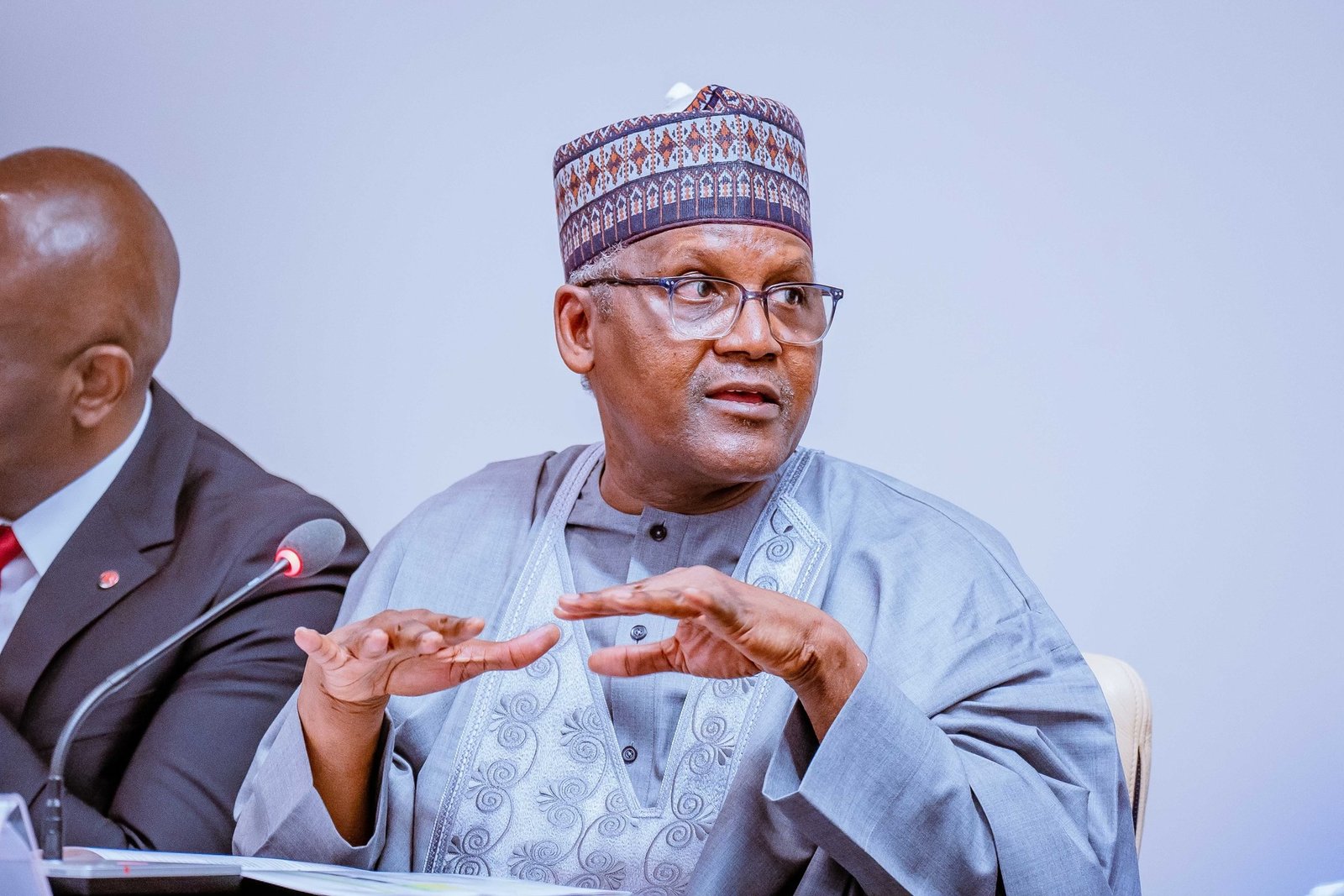
Nigerian industrialist and Africa’s richest man, Aliko Dangote, made a confession at the International Finance Corporation’s Washington headquarters that deserved considerably more attention than it received.

In a conversation published by the IFC on May 5, Africa’s most consequential industrialist told IFC Managing Director Makhtar Diop that he had never seen crude oil in his life when he decided to build a refinery.

He had spent his career deliberately avoiding the sector because oil carried a reputation in Nigeria he had no interest in inheriting.

He entered the business after watching the continent import every refined petroleum product it consumed, and concluded that the situation was no longer tolerable.

Nigeria was exporting 2.4 million barrels of crude oil per day and bringing in every liter of refined fuel it needed.

Every bottle of cooking gas, every drop of jet fuel, every tin of petrol came from abroad.

The trading companies and major multinational corporations told anyone who raised the subject that an African company would never change this equation.

The Refinery That Changed the Argument

Dangote announced his refinery plans in 2013, began construction at the Lekki Free Zone outside Lagos in 2016, and commissioned the facility in May 2023 after a $20 billion investment that stands as the largest single private-sector industrial development in African history.

The refinery received its first crude cargo in December 2023 and began full operations in January 2024.

It has now operated at 650,000 barrels per day for two consecutive months and has been tested at 661,000 barrels per day, exceeding its nameplate capacity.

The corporations that publicly predicted its failure were wrong, and Dangote said so at the IFC without apology.

The refinery’s technical performance matters less, in the long run, than the sequence of decisions that produced it.

Dangote moved first, committed his own capital, absorbed the reputational and financial risk across a decade of construction delays and skepticism, and proved the model.

The IFC followed with capital and institutional credibility, and the relationship deepened into something more durable than a financing transaction.

That sequence is the structural argument Africa’s private sector has not yet absorbed at scale.

Africa’s Capital Is the Missing Catalyst

African industrial transformation depends on African capital moving before external validation arrives.

Foreign investors operate within established risk frameworks, and a market without an African anchor does not register as an opportunity in those frameworks. Dangote made this point with precision at the IFC.

He said he now carries influence at global investment forums because he has demonstrated what is possible on the continent, and that the credibility came from the investment, not from the advocacy.

The cocoa sector demonstrates how costly the alternative sequence has been.

According to the Habari Network, Africa supplies more than two-thirds of the world’s raw cocoa beans and captures less than 10% of the global chocolate industry’s revenue, an industry worth an estimated $130 billion annually.

An October 2024 analysis by The Monday Economist, drawing on industry supply chain data, found that cocoa farmers receive approximately 6.6% of the retail price of a chocolate bar, while processors, manufacturers, and distributors retain the substantial remainder.

A 2024 analysis by One Africa Markets, drawing on Ivorian government data, found that each ton processed locally generates an estimated $900 to $1,200 more in value than exporting it raw.

The economics of processing have been visible and well-documented for decades.

African private capital has moved into cocoa processing at a fraction of the scale the opportunity demands, and the reason runs deeper than financing constraints alone.

The dominant pattern across the sector reflects the same risk calculus Dangote described in himself before he committed to the refinery, a preference for the established trade over the transformative investment.

Intra-African Trade Provides the Market, Capital Must Build the Supply

The AfCFTA changes the demand-side conditions around this calculus in ways that African industrialists have not yet fully priced into their investment decisions.

According to Afreximbank’s 2025 African Trade Report, intra‑African trade reached $220.3 billion in 2024, a 12.4% increase, driven by the ongoing rollout of the agreement.

The UN Economic Commission for Africa projects that intra-African trade could grow by more than 400% by 2045 if the agreement is fully implemented.

A market of that scale, covering 1.4 billion people within a single continental framework, is large enough to anchor major industrial investments without requiring external demand to justify them.

African industrialists who process commodities domestically and sell into a growing continental market can build the business case using the existing demand data.

What remains is the commitment of African capital at the scale the opportunity genuinely requires.

Dangote’s planned listing of Dangote Industries is the most concrete test of this argument currently in motion.

He described at the IFC a structure designed to distribute dividend income in dollars to African shareholders, across multiple currencies, with the deliberate purpose of demonstrating that African industrial assets generate stable, dollar-denominated returns.

The Listing Carries an Argument Beyond its Financial Mechanics

Dangote wants African savers to hold shares in the industries that process the continent’s resources, pay dividends into African accounts, and reinvest within the continent rather than directing private savings toward European real estate and offshore accounts.

According to the TRALAC Trade Law Center, citing World Bank and UNECA research published in 2025, full AfCFTA implementation could create 17.9 million new jobs and lift up to 50 million people out of extreme poverty, with income growth reaching $450 billion by 2035.

Those projections rest on a prior condition that the data does not always make explicit, namely that African companies must process African commodities, African capital must anchor the investment, and African investors must hold the assets that generate the returns.

The projections describe a world that African industrial commitment must first build.

The IFC’s conduct in its relationship with Dangote shows what becomes available once African commitment is established.

When Dangote’s group moved to repay its lenders early, the IFC redirected its portion into the fertilizer plant rather than accepting exit.

A development institution choosing to remain invested in an African industrial expansion, rather than recovering its capital, represents a qualitatively different kind of partnership from the one development finance usually produces.

That relationship became possible because an African industrialist had already demonstrated, over ten years and $20 billion, the seriousness of the enterprise.

Africa has the resources, population, and market to support industrial transformation at scale.

Dangote resolved the sequencing problem for himself, at enormous personal risk, in a sector he had deliberately avoided throughout his career, and the continent now has its most powerful investment argument in a generation.

The question is which African industrialists will look at what their countries and neighbors still import, decide that the situation is intolerable, and build the thing that replaces it.

Get the inside Story

Stay informed on the stories shaping Africa’s future. Get breaking news, in-depth analysis, opinions and exclusive insights from across the continent delivered to your inbox, free and unfiltered.


Get in touch for more:
Felix Tih
Editorial Director, Bantu Gazette
WhatsApp
LinkedIn
X (Twitter)
Instagram

Related Posts

As Africa Asserts Resource Sovereignty, Europe Responds with Fortified Borders
Opinion

As Africa Asserts Resource Sovereignty, Europe Responds with Fortified Borders

April 7, 2026
African Leaders Must Rewire Their Strategic Thinking to Unlock AfCFTA’s Full Potential
Opinion

African Leaders Must Rewire Their Strategic Thinking to Unlock AfCFTA’s Full Potential

April 2, 2026
Beyond Applause at Davos, Africa Demands Action
Opinion

Beyond Applause at Davos, Africa Demands Action

February 7, 2026
The Weaver Bird Strategy: How Small States Are Building Intra-African Trade
Opinion

The Weaver Bird Strategy: How Small States Are Building Intra-African Trade

February 11, 2026
Ethiopia’s Amhara Peace Pact Reflects a Broader Shift
Opinion

Ethiopia’s Amhara Peace Pact Reflects a Broader Shift

December 10, 2025
Ballots and Diversity: Electoral Power in a Changing Africa
Opinion

Ballots and Diversity: Electoral Power in a Changing Africa

December 7, 2025

Most Recent

African Capital Must Lead Before Foreign Investment Will Follow
Opinion

African Capital Must Lead Before Foreign Investment Will Follow

by Felix Tih
May 8, 2026
0

Nigerian industrialist and Africa's richest man, Aliko Dangote, made a confession at the International Finance Corporation's Washington headquarters that deserved...

Read moreDetails
Damang Mine Delivers First 110 Kilograms of Gold to Ghana’s National Reserves

Damang Mine Delivers First 110 Kilograms of Gold to Ghana’s National Reserves

May 8, 2026
The Father of Ethio-Jazz Takes His Farewell Bow

The Father of Ethio-Jazz Takes His Farewell Bow

May 7, 2026
African Governments Adopt Declaration Calling for Urgent Action on Sustainable Development

African Governments Adopt Declaration Calling for Urgent Action on Sustainable Development

May 7, 2026
Ethiopia’s Flagship Dam Doubles Power Output, Supplies Half of Country’s Electricity

Ethiopia’s Flagship Dam Doubles Power Output, Supplies Half of Country’s Electricity

May 7, 2026
Nigeria Courts Trillions in Global Capital as Tinubu Pitches Paris Investors

Nigeria Courts Trillions in Global Capital as Tinubu Pitches Paris Investors

May 6, 2026
Morocco Targets 1.7 Million Jobs, 20% GDP Gain Through Private Sector Reform

Morocco Targets 1.7 Million Jobs, 20% GDP Gain Through Private Sector Reform

May 5, 2026
African Capital Must Lead Before Foreign Investment Will Follow
Opinion

African Capital Must Lead Before Foreign Investment Will Follow

by Felix Tih
Reading Time: 4 mins read
May 8, 2026
0

Nigerian industrialist and Africa's richest man, Aliko Dangote, made a confession at the International Finance Corporation's Washington headquarters that deserved...

Read moreDetails
Damang Mine Delivers First 110 Kilograms of Gold to Ghana’s National Reserves
Politics & Economy

Damang Mine Delivers First 110 Kilograms of Gold to Ghana’s National Reserves

by Aissatou Fall
Reading Time: 2 mins read
May 8, 2026
0

Damang Gold Mine sold the entirety of its first production output, approximately 110 kilograms of gold valued at $11.8 million,...

Read moreDetails
The Father of Ethio-Jazz Takes His Farewell Bow
Feature

The Father of Ethio-Jazz Takes His Farewell Bow

by Kalkidan Negash
Reading Time: 3 mins read
May 7, 2026
0

ADDIS ABABA The lights caught the brass section first, and then Mulatu Astatke, 82 years old, walked to the center...

Read moreDetails

African Capital Must Lead Before Foreign Investment Will Follow

Dangote's refinery has given Africa the evidence it needs to rewrite the terms of its own investment story

African Capital Must Lead Before Foreign Investment Will Follow

Aliko Dangote

Nigerian industrialist and Africa’s richest man, Aliko Dangote, made a confession at the International Finance Corporation’s Washington headquarters that deserved considerably more attention than it received.

In a conversation published by the IFC on May 5, Africa’s most consequential industrialist told IFC Managing Director Makhtar Diop that he had never seen crude oil in his life when he decided to build a refinery.

He had spent his career deliberately avoiding the sector because oil carried a reputation in Nigeria he had no interest in inheriting.

He entered the business after watching the continent import every refined petroleum product it consumed, and concluded that the situation was no longer tolerable.

Nigeria was exporting 2.4 million barrels of crude oil per day and bringing in every liter of refined fuel it needed.

Every bottle of cooking gas, every drop of jet fuel, every tin of petrol came from abroad.

The trading companies and major multinational corporations told anyone who raised the subject that an African company would never change this equation.

The Refinery That Changed the Argument

Dangote announced his refinery plans in 2013, began construction at the Lekki Free Zone outside Lagos in 2016, and commissioned the facility in May 2023 after a $20 billion investment that stands as the largest single private-sector industrial development in African history.

The refinery received its first crude cargo in December 2023 and began full operations in January 2024.

It has now operated at 650,000 barrels per day for two consecutive months and has been tested at 661,000 barrels per day, exceeding its nameplate capacity.

The corporations that publicly predicted its failure were wrong, and Dangote said so at the IFC without apology.

The refinery’s technical performance matters less, in the long run, than the sequence of decisions that produced it.

Dangote moved first, committed his own capital, absorbed the reputational and financial risk across a decade of construction delays and skepticism, and proved the model.

The IFC followed with capital and institutional credibility, and the relationship deepened into something more durable than a financing transaction.

That sequence is the structural argument Africa’s private sector has not yet absorbed at scale.

Africa’s Capital Is the Missing Catalyst

African industrial transformation depends on African capital moving before external validation arrives.

Foreign investors operate within established risk frameworks, and a market without an African anchor does not register as an opportunity in those frameworks. Dangote made this point with precision at the IFC.

He said he now carries influence at global investment forums because he has demonstrated what is possible on the continent, and that the credibility came from the investment, not from the advocacy.

The cocoa sector demonstrates how costly the alternative sequence has been.

According to the Habari Network, Africa supplies more than two-thirds of the world’s raw cocoa beans and captures less than 10% of the global chocolate industry’s revenue, an industry worth an estimated $130 billion annually.

An October 2024 analysis by The Monday Economist, drawing on industry supply chain data, found that cocoa farmers receive approximately 6.6% of the retail price of a chocolate bar, while processors, manufacturers, and distributors retain the substantial remainder.

A 2024 analysis by One Africa Markets, drawing on Ivorian government data, found that each ton processed locally generates an estimated $900 to $1,200 more in value than exporting it raw.

The economics of processing have been visible and well-documented for decades.

African private capital has moved into cocoa processing at a fraction of the scale the opportunity demands, and the reason runs deeper than financing constraints alone.

The dominant pattern across the sector reflects the same risk calculus Dangote described in himself before he committed to the refinery, a preference for the established trade over the transformative investment.

Intra-African Trade Provides the Market, Capital Must Build the Supply

The AfCFTA changes the demand-side conditions around this calculus in ways that African industrialists have not yet fully priced into their investment decisions.

According to Afreximbank’s 2025 African Trade Report, intra‑African trade reached $220.3 billion in 2024, a 12.4% increase, driven by the ongoing rollout of the agreement.

The UN Economic Commission for Africa projects that intra-African trade could grow by more than 400% by 2045 if the agreement is fully implemented.

A market of that scale, covering 1.4 billion people within a single continental framework, is large enough to anchor major industrial investments without requiring external demand to justify them.

African industrialists who process commodities domestically and sell into a growing continental market can build the business case using the existing demand data.

What remains is the commitment of African capital at the scale the opportunity genuinely requires.

Dangote’s planned listing of Dangote Industries is the most concrete test of this argument currently in motion.

He described at the IFC a structure designed to distribute dividend income in dollars to African shareholders, across multiple currencies, with the deliberate purpose of demonstrating that African industrial assets generate stable, dollar-denominated returns.

The Listing Carries an Argument Beyond its Financial Mechanics

Dangote wants African savers to hold shares in the industries that process the continent’s resources, pay dividends into African accounts, and reinvest within the continent rather than directing private savings toward European real estate and offshore accounts.

According to the TRALAC Trade Law Center, citing World Bank and UNECA research published in 2025, full AfCFTA implementation could create 17.9 million new jobs and lift up to 50 million people out of extreme poverty, with income growth reaching $450 billion by 2035.

Those projections rest on a prior condition that the data does not always make explicit, namely that African companies must process African commodities, African capital must anchor the investment, and African investors must hold the assets that generate the returns.

The projections describe a world that African industrial commitment must first build.

The IFC’s conduct in its relationship with Dangote shows what becomes available once African commitment is established.

When Dangote’s group moved to repay its lenders early, the IFC redirected its portion into the fertilizer plant rather than accepting exit.

A development institution choosing to remain invested in an African industrial expansion, rather than recovering its capital, represents a qualitatively different kind of partnership from the one development finance usually produces.

That relationship became possible because an African industrialist had already demonstrated, over ten years and $20 billion, the seriousness of the enterprise.

Africa has the resources, population, and market to support industrial transformation at scale.

Dangote resolved the sequencing problem for himself, at enormous personal risk, in a sector he had deliberately avoided throughout his career, and the continent now has its most powerful investment argument in a generation.

The question is which African industrialists will look at what their countries and neighbors still import, decide that the situation is intolerable, and build the thing that replaces it.

African Capital Must Lead Before Foreign Investment Will Follow

Dangote's refinery has given Africa the evidence it needs to rewrite the terms of its own investment story

African Capital Must Lead Before Foreign Investment Will Follow

Aliko Dangote

Felix Tihby Felix Tih
May 8, 2026

Nigerian industrialist and Africa’s richest man, Aliko Dangote, made a confession at the International Finance Corporation’s Washington headquarters that deserved considerably more attention than it received.

In a conversation published by the IFC on May 5, Africa’s most consequential industrialist told IFC Managing Director Makhtar Diop that he had never seen crude oil in his life when he decided to build a refinery.

He had spent his career deliberately avoiding the sector because oil carried a reputation in Nigeria he had no interest in inheriting.

He entered the business after watching the continent import every refined petroleum product it consumed, and concluded that the situation was no longer tolerable.

Nigeria was exporting 2.4 million barrels of crude oil per day and bringing in every liter of refined fuel it needed.

Every bottle of cooking gas, every drop of jet fuel, every tin of petrol came from abroad.

The trading companies and major multinational corporations told anyone who raised the subject that an African company would never change this equation.

The Refinery That Changed the Argument

Dangote announced his refinery plans in 2013, began construction at the Lekki Free Zone outside Lagos in 2016, and commissioned the facility in May 2023 after a $20 billion investment that stands as the largest single private-sector industrial development in African history.

The refinery received its first crude cargo in December 2023 and began full operations in January 2024.

It has now operated at 650,000 barrels per day for two consecutive months and has been tested at 661,000 barrels per day, exceeding its nameplate capacity.

The corporations that publicly predicted its failure were wrong, and Dangote said so at the IFC without apology.

The refinery’s technical performance matters less, in the long run, than the sequence of decisions that produced it.

Dangote moved first, committed his own capital, absorbed the reputational and financial risk across a decade of construction delays and skepticism, and proved the model.

The IFC followed with capital and institutional credibility, and the relationship deepened into something more durable than a financing transaction.

That sequence is the structural argument Africa’s private sector has not yet absorbed at scale.

Africa’s Capital Is the Missing Catalyst

African industrial transformation depends on African capital moving before external validation arrives.

Foreign investors operate within established risk frameworks, and a market without an African anchor does not register as an opportunity in those frameworks. Dangote made this point with precision at the IFC.

He said he now carries influence at global investment forums because he has demonstrated what is possible on the continent, and that the credibility came from the investment, not from the advocacy.

The cocoa sector demonstrates how costly the alternative sequence has been.

According to the Habari Network, Africa supplies more than two-thirds of the world’s raw cocoa beans and captures less than 10% of the global chocolate industry’s revenue, an industry worth an estimated $130 billion annually.

An October 2024 analysis by The Monday Economist, drawing on industry supply chain data, found that cocoa farmers receive approximately 6.6% of the retail price of a chocolate bar, while processors, manufacturers, and distributors retain the substantial remainder.

A 2024 analysis by One Africa Markets, drawing on Ivorian government data, found that each ton processed locally generates an estimated $900 to $1,200 more in value than exporting it raw.

The economics of processing have been visible and well-documented for decades.

African private capital has moved into cocoa processing at a fraction of the scale the opportunity demands, and the reason runs deeper than financing constraints alone.

The dominant pattern across the sector reflects the same risk calculus Dangote described in himself before he committed to the refinery, a preference for the established trade over the transformative investment.

Intra-African Trade Provides the Market, Capital Must Build the Supply

The AfCFTA changes the demand-side conditions around this calculus in ways that African industrialists have not yet fully priced into their investment decisions.

According to Afreximbank’s 2025 African Trade Report, intra‑African trade reached $220.3 billion in 2024, a 12.4% increase, driven by the ongoing rollout of the agreement.

The UN Economic Commission for Africa projects that intra-African trade could grow by more than 400% by 2045 if the agreement is fully implemented.

A market of that scale, covering 1.4 billion people within a single continental framework, is large enough to anchor major industrial investments without requiring external demand to justify them.

African industrialists who process commodities domestically and sell into a growing continental market can build the business case using the existing demand data.

What remains is the commitment of African capital at the scale the opportunity genuinely requires.

Dangote’s planned listing of Dangote Industries is the most concrete test of this argument currently in motion.

He described at the IFC a structure designed to distribute dividend income in dollars to African shareholders, across multiple currencies, with the deliberate purpose of demonstrating that African industrial assets generate stable, dollar-denominated returns.

The Listing Carries an Argument Beyond its Financial Mechanics

Dangote wants African savers to hold shares in the industries that process the continent’s resources, pay dividends into African accounts, and reinvest within the continent rather than directing private savings toward European real estate and offshore accounts.

According to the TRALAC Trade Law Center, citing World Bank and UNECA research published in 2025, full AfCFTA implementation could create 17.9 million new jobs and lift up to 50 million people out of extreme poverty, with income growth reaching $450 billion by 2035.

Those projections rest on a prior condition that the data does not always make explicit, namely that African companies must process African commodities, African capital must anchor the investment, and African investors must hold the assets that generate the returns.

The projections describe a world that African industrial commitment must first build.

The IFC’s conduct in its relationship with Dangote shows what becomes available once African commitment is established.

When Dangote’s group moved to repay its lenders early, the IFC redirected its portion into the fertilizer plant rather than accepting exit.

A development institution choosing to remain invested in an African industrial expansion, rather than recovering its capital, represents a qualitatively different kind of partnership from the one development finance usually produces.

That relationship became possible because an African industrialist had already demonstrated, over ten years and $20 billion, the seriousness of the enterprise.

Africa has the resources, population, and market to support industrial transformation at scale.

Dangote resolved the sequencing problem for himself, at enormous personal risk, in a sector he had deliberately avoided throughout his career, and the continent now has its most powerful investment argument in a generation.

The question is which African industrialists will look at what their countries and neighbors still import, decide that the situation is intolerable, and build the thing that replaces it.

Get the inside Story

Stay informed on the stories shaping Africa’s future. Get breaking news, in-depth analysis, opinions and exclusive insights from across the continent delivered to your inbox, free and unfiltered.


Get in touch for more:
Felix Tih
Editorial Director, Bantu Gazette
WhatsApp
LinkedIn
X (Twitter)
Instagram

Related Posts

As Africa Asserts Resource Sovereignty, Europe Responds with Fortified Borders

As Africa Asserts Resource Sovereignty, Europe Responds with Fortified Borders

by Monica Brown
April 6, 2026
0

...

African Leaders Must Rewire Their Strategic Thinking to Unlock AfCFTA’s Full Potential

African Leaders Must Rewire Their Strategic Thinking to Unlock AfCFTA’s Full Potential

by Monica Brown
April 2, 2026
0

...

Beyond Applause at Davos, Africa Demands Action

Beyond Applause at Davos, Africa Demands Action

by Monica Brown
January 28, 2026
0

...

The Weaver Bird Strategy: How Small States Are Building Intra-African Trade

The Weaver Bird Strategy: How Small States Are Building Intra-African Trade

by Bukelwa Maphanga
December 24, 2025
0

...

Ethiopia’s Amhara Peace Pact Reflects a Broader Shift

Ethiopia’s Amhara Peace Pact Reflects a Broader Shift

by Felix Tih
December 7, 2025
0

...

Ballots and Diversity: Electoral Power in a Changing Africa

Ballots and Diversity: Electoral Power in a Changing Africa

by Vitalis Manjong
September 23, 2025
0

...

African Capital Must Lead Before Foreign Investment Will Follow
Opinion

African Capital Must Lead Before Foreign Investment Will Follow

by Felix Tih
Reading Time: 4 mins read
May 8, 2026
0

Nigerian industrialist and Africa's richest man, Aliko Dangote, made a confession at the International Finance Corporation's Washington headquarters that deserved...

Read moreDetails
Damang Mine Delivers First 110 Kilograms of Gold to Ghana’s National Reserves

Damang Mine Delivers First 110 Kilograms of Gold to Ghana’s National Reserves

by Aissatou Fall
May 8, 2026
0

Damang Gold Mine sold the entirety of its first production output, approximately 110 kilograms of gold valued at $11.8 million,...

The Father of Ethio-Jazz Takes His Farewell Bow

The Father of Ethio-Jazz Takes His Farewell Bow

by Kalkidan Negash
May 7, 2026
0

ADDIS ABABA The lights caught the brass section first, and then Mulatu Astatke, 82 years old, walked to the center...

African Governments Adopt Declaration Calling for Urgent Action on Sustainable Development

African Governments Adopt Declaration Calling for Urgent Action on Sustainable Development

by Jane Mukami
May 7, 2026
0

ADDIS ABABA African governments, experts and civil society have adopted the Addis Ababa Declaration on Turning the Tide, calling for...

Ethiopia’s Flagship Dam Doubles Power Output, Supplies Half of Country’s Electricity

Ethiopia’s Flagship Dam Doubles Power Output, Supplies Half of Country’s Electricity

by Kalkidan Negash
May 6, 2026
0

The Grand Ethiopian Renaissance Dam (GERD) generated 13,778 gigawatt-hours of electricity in the first nine months of its operational year,...

Bantu Gazette is a pioneering news platform that champions Africa's development, culture, and heritage. We spotlight the continent's successes, address its challenges, and provide insightful coverage of events that shape its future.

Bantu Gazette is a pioneering news platform that champions Africa's development, culture, and heritage. We spotlight the continent's successes, address its challenges, and provide insightful coverage of events that shape its future.

Our Platforms

  • Bantu Magazine
  • Bantu Brief
  • Black Frame Studio

Our Services

  • Bantu Agency
  • Advertise
  • Partnerships

Our Services

  • Editorial Director
  • Opportunities
  • Contact

Bantu Gazette is a pioneering news platform that champions Africa's development, culture, and heritage. We spotlight the continent's successes, address its challenges, and provide insightful coverage of events that shape its future.

Our Platforms

  • Bantu Magazine
  • Bantu Brief
  • Black Frame Studio

Our Services

  • Bantu Agency
  • Advertise
  • Partnerships

Our Services

  • Editorial Director
  • Opportunities
  • Contact
Bantu Gazette
  • Energy & Trade
  • Finance
  • Health
  • Politics & Economy
  • Technology
  • Environment
  • Feature
  • Opinion
  • Changemakers
  • Tourism & Culture
  • Magazine