

Bantu Gazette

Bantu Gazette
  • Energy & Trade
  • Finance
  • Health
  • Politics & Economy
  • Technology
  • Environment
  • Feature
  • Opinion
  • Changemakers
  • Tourism & Culture
  • Sports
  • Magazine
Menu
  • Black Frame Studio
  • Magazine

As Africa Asserts Resource Sovereignty, Europe Responds with Fortified Borders

Europe has encoded its response to a shifting global order in legislation, and what has passed in the last two years deserves careful reading

As Africa Asserts Resource Sovereignty, Europe Responds with Fortified Borders

EP Plenary Session - Voting session

Monica Brownby Monica Brown
April 6, 2026
Reading Time: 4 mins read

As Africa Asserts Resource Sovereignty, Europe Responds with Fortified Borders

Europe has encoded its response to a shifting global order in legislation, and what has passed in the last two years deserves careful reading

As Africa Asserts Resource Sovereignty, Europe Responds with Fortified Borders

EP Plenary Session - Voting session

As Africa Asserts Resource Sovereignty, Europe Responds with Fortified Borders

EP Plenary Session - Voting session

Monica Brownby Monica Brown
April 7, 2026
Reading Time: 4 mins read

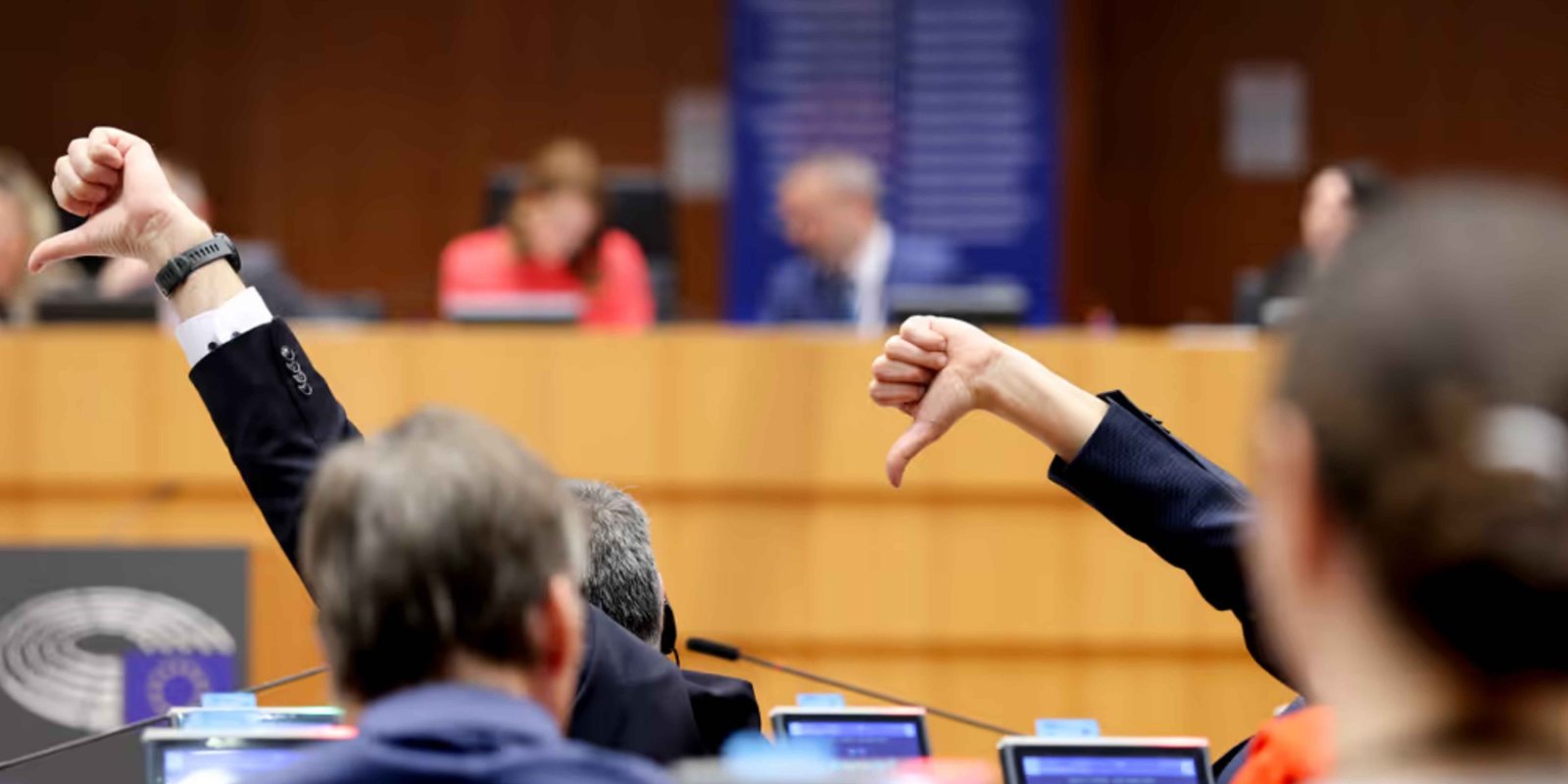
On March 26, 2026, the European Parliament voted 389 to 206 to advance a sweeping Return Regulation that will fundamentally reshape how the bloc manages migration enforcement.

The vote followed the adoption of the Pact on Migration and Asylum in May 2024, a ten-piece legislative package covering border screening, asylum procedures, and emergency protocols.

Taken together, these two frameworks represent the most comprehensive hardening of European immigration enforcement in a generation, and African diasporas across the continent are right to read them with strategic precision.

The mechanics of the Return Regulation are worth examining in detail. Non-EU nationals who receive a return order and fail to cooperate with authorities can now be detained for up to 24 months, with the detention period further extended by judicial order in security cases.

The regulation also establishes so-called “return hubs,” offshore processing facilities in third countries, through which EU member states place asylum seekers in environments where human rights oversight becomes structurally weakened.

Entry bans, once capped at ten years, can now be made permanent for individuals designated as security risks.

The expansion of Eurodac, the EU’s biometric migration database, further compounds this enforcement posture, with the system now collecting facial images, copies of identity documents, and personal data from children as young as 6.

What Europe has constructed is a high-technology enforcement architecture designed to eliminate the gap between a return decision and its execution, a gap that, according to EU Commission data, currently affects three in four irregular migrants issued return orders, and that has historically been the space where millions of diaspora members lived and worked.

This architecture arrives at a precise moment in the global conversation about Africa’s resources and economic agency, and that timing carries analytical weight.

Africa’s Resource Sovereignty Agenda

African nations hold approximately 30% of the world’s critical mineral reserves. The Democratic Republic of Congo produces around 70% of global cobalt, South Africa accounts for 75% of platinum group metals, and Guinea holds roughly 25% of global bauxite reserves.

As global demand for lithium, cobalt, copper, and rare earth elements accelerates with the green transition, the African Union launched its African Green Minerals Strategy in December 2024, a framework designed to keep mineral processing on African soil and shift the continent away from its historical role as a raw material exporter.

Namibia banned the export of unprocessed critical minerals in 2023, and the 2025 G20 Johannesburg Summit formalized this direction through the G20 Critical Minerals Framework, which reframed mineral access as a driver of inclusive growth rather than purely a supply-security concern for importing nations.

African governments and institutions are seeking to renegotiate this relationship from a position of increasing material leverage, and European policy circles are fully aware of that reality.

The same logic that drives Africa’s mineral sovereignty agenda also informs growing continental calls for a formal accounting of the long-term economic consequences of colonialism.

These are structural demands, grounded in traceable data, and they are reshaping the terms on which African nations engage their traditional partners.

Geopolitics at the Intersection of Migration and Minerals

The question worth examining is why Europe’s most aggressive migration enforcement legislation has arrived precisely as Africa’s economic bargaining position has strengthened.

The European Commission framed the migration pact as a technical fix, with Commission President Ursula von der Leyen telling lawmakers it would deliver a European solution to migration through secured borders and more efficient processing.

The constructed regulatory framework serves as a mechanism with broader geopolitical utility, capable of being applied with different levels of intensity depending on how cooperative a sending country is in readmission negotiations.

The EU’s Critical Raw Materials Act, adopted in 2024 to reduce European dependence on Chinese mineral supply chains, makes the strategic logic explicit.

Europe needs African minerals for its green transition, and it is simultaneously constructing the most sophisticated migration enforcement system in its history.

African policymakers would be remiss to treat these two developments as unrelated.

For diaspora communities, the implications are deeply personal.

An enforcement order issued in one EU country is now enforceable across the entire Schengen zone through mutual recognition of return decisions, and an entire generation of African-born children will enter adulthood already catalogued in a system built for enforcement purposes.

These are the stated design objectives of legislation that has already cleared both the European Parliament and the Council of the European Union.

African governments hold a genuine negotiating asset in this environment. Readmission agreements, which determine whether EU return decisions can be practically enforced, require cooperation from countries of origin, and that cooperation carries real value.

African states that approach it as leverage rather than obligation are better positioned to extract meaningful concessions on trade access, mineral processing investment, and diaspora protections.

The African Union’s Green Minerals Strategy and the G20 Critical Minerals Framework provide the institutional foundations for exactly that kind of coordinated, interest-based diplomacy.

The realignment underway concerns who control the resources that will power the next half-century of the global economy, and whether Africa’s contribution to that transition will be compensated on terms the continent itself has shaped.

The instruments exist, the leverage is real, and the institutional frameworks are in place.

The question is whether African leadership will meet this moment with the strategic intent it demands or allow it to pass without a collective answer.

Africa’s leaders must decide whether to wield this leverage with intent or risk watching history repeat itself.

Monica Brown writes on African economic strategy and continental development.


Monica Brown


Monica Brown
is a Pan-African executive, author, and social justice advocate committed to unlocking Africa’s full leadership and innovation potential. She currently serves as Chief Operating Officer of SAMDA Incorporated, where she leads inclusive economic development and community empowerment initiatives.

Get the inside Story

Stay informed on the stories shaping Africa’s future. Get breaking news, in-depth analysis, opinions and exclusive insights from across the continent delivered to your inbox, free and unfiltered.


Get in touch for more:
Felix Tih
Editorial Director, Bantu Gazette
WhatsApp
LinkedIn
X (Twitter)
Instagram

Related Posts

African Leaders Must Rewire Their Strategic Thinking to Unlock AfCFTA’s Full Potential
Opinion

African Leaders Must Rewire Their Strategic Thinking to Unlock AfCFTA’s Full Potential

April 2, 2026
Beyond Applause at Davos, Africa Demands Action
Opinion

Beyond Applause at Davos, Africa Demands Action

February 7, 2026
The Weaver Bird Strategy: How Small States Are Building Intra-African Trade
Opinion

The Weaver Bird Strategy: How Small States Are Building Intra-African Trade

February 11, 2026
Ethiopia’s Amhara Peace Pact Reflects a Broader Shift
Opinion

Ethiopia’s Amhara Peace Pact Reflects a Broader Shift

December 10, 2025
Ballots and Diversity: Electoral Power in a Changing Africa
Opinion

Ballots and Diversity: Electoral Power in a Changing Africa

December 7, 2025
Ghana’s Cedi Rally Shows Path Forward for Emerging Markets
Opinion

Ghana’s Cedi Rally Shows Path Forward for Emerging Markets

August 5, 2025

Most Recent

Lesotho Launches Five-Year Industrial Strategy Targeting 50,000 Jobs
Politics & Economy

Lesotho Launches Five-Year Industrial Strategy Targeting 50,000 Jobs

by Naledi Kgosi
April 16, 2026
0

The Lesotho National Development Corporation has launched its Letsema Strategy 2026-2031, outlining a five-year plan to accelerate industrial growth and...

Read moreDetails
Gabon Bans Broiler Chicken Imports to Boost Local Output

Gabon Bans Broiler Chicken Imports to Boost Local Output

April 15, 2026
Morocco’s Olive Harvest Hits Record 2 Million Tons Amid Heavy Rainfall

Morocco’s Olive Harvest Hits Record 2 Million Tons Amid Heavy Rainfall

April 14, 2026
Benin Finance Minister Wadagni Wins Presidency in Landslide

Benin Finance Minister Wadagni Wins Presidency in Landslide

April 14, 2026

AU, Côte d’Ivoire Launch Continental Education Accountability Framework

April 13, 2026
Kenya Manufacturers Warn Logistics Costs Undercut Intra-African Trade Gains

Kenya Manufacturers Warn Logistics Costs Undercut Intra-African Trade Gains

April 13, 2026
Liberia Cabinet Adopts Infrastructure Roadmap, Monrovia Redevelopment Plan

Liberia Cabinet Adopts Infrastructure Roadmap, Monrovia Redevelopment Plan

April 13, 2026
Lesotho Launches Five-Year Industrial Strategy Targeting 50,000 Jobs
Politics & Economy

Lesotho Launches Five-Year Industrial Strategy Targeting 50,000 Jobs

by Naledi Kgosi
Reading Time: 2 mins read
April 16, 2026
0

The Lesotho National Development Corporation has launched its Letsema Strategy 2026-2031, outlining a five-year plan to accelerate industrial growth and...

Read moreDetails
Gabon Bans Broiler Chicken Imports to Boost Local Output
Africa

Gabon Bans Broiler Chicken Imports to Boost Local Output

by Marcelo Edjang
Reading Time: 1 min read
April 15, 2026
0

Gabon’s government has set a January 2027 deadline to ban all broiler chicken imports as it pushes to build a...

Read moreDetails
Morocco’s Olive Harvest Hits Record 2 Million Tons Amid Heavy Rainfall
Africa

Morocco’s Olive Harvest Hits Record 2 Million Tons Amid Heavy Rainfall

by Samira Benhadda
Reading Time: 1 min read
April 14, 2026
0

Morocco recorded a harvest of 2 million tons of olives in the current agricultural season, a 111% increase over the...

Read moreDetails

As Africa Asserts Resource Sovereignty, Europe Responds with Fortified Borders

Europe has encoded its response to a shifting global order in legislation, and what has passed in the last two years deserves careful reading

As Africa Asserts Resource Sovereignty, Europe Responds with Fortified Borders

EP Plenary Session - Voting session

On March 26, 2026, the European Parliament voted 389 to 206 to advance a sweeping Return Regulation that will fundamentally reshape how the bloc manages migration enforcement.

The vote followed the adoption of the Pact on Migration and Asylum in May 2024, a ten-piece legislative package covering border screening, asylum procedures, and emergency protocols.

Taken together, these two frameworks represent the most comprehensive hardening of European immigration enforcement in a generation, and African diasporas across the continent are right to read them with strategic precision.

The mechanics of the Return Regulation are worth examining in detail. Non-EU nationals who receive a return order and fail to cooperate with authorities can now be detained for up to 24 months, with the detention period further extended by judicial order in security cases.

The regulation also establishes so-called “return hubs,” offshore processing facilities in third countries, through which EU member states place asylum seekers in environments where human rights oversight becomes structurally weakened.

Entry bans, once capped at ten years, can now be made permanent for individuals designated as security risks.

The expansion of Eurodac, the EU’s biometric migration database, further compounds this enforcement posture, with the system now collecting facial images, copies of identity documents, and personal data from children as young as 6.

What Europe has constructed is a high-technology enforcement architecture designed to eliminate the gap between a return decision and its execution, a gap that, according to EU Commission data, currently affects three in four irregular migrants issued return orders, and that has historically been the space where millions of diaspora members lived and worked.

This architecture arrives at a precise moment in the global conversation about Africa’s resources and economic agency, and that timing carries analytical weight.

Africa’s Resource Sovereignty Agenda

African nations hold approximately 30% of the world’s critical mineral reserves. The Democratic Republic of Congo produces around 70% of global cobalt, South Africa accounts for 75% of platinum group metals, and Guinea holds roughly 25% of global bauxite reserves.

As global demand for lithium, cobalt, copper, and rare earth elements accelerates with the green transition, the African Union launched its African Green Minerals Strategy in December 2024, a framework designed to keep mineral processing on African soil and shift the continent away from its historical role as a raw material exporter.

Namibia banned the export of unprocessed critical minerals in 2023, and the 2025 G20 Johannesburg Summit formalized this direction through the G20 Critical Minerals Framework, which reframed mineral access as a driver of inclusive growth rather than purely a supply-security concern for importing nations.

African governments and institutions are seeking to renegotiate this relationship from a position of increasing material leverage, and European policy circles are fully aware of that reality.

The same logic that drives Africa’s mineral sovereignty agenda also informs growing continental calls for a formal accounting of the long-term economic consequences of colonialism.

These are structural demands, grounded in traceable data, and they are reshaping the terms on which African nations engage their traditional partners.

Geopolitics at the Intersection of Migration and Minerals

The question worth examining is why Europe’s most aggressive migration enforcement legislation has arrived precisely as Africa’s economic bargaining position has strengthened.

The European Commission framed the migration pact as a technical fix, with Commission President Ursula von der Leyen telling lawmakers it would deliver a European solution to migration through secured borders and more efficient processing.

The constructed regulatory framework serves as a mechanism with broader geopolitical utility, capable of being applied with different levels of intensity depending on how cooperative a sending country is in readmission negotiations.

The EU’s Critical Raw Materials Act, adopted in 2024 to reduce European dependence on Chinese mineral supply chains, makes the strategic logic explicit.

Europe needs African minerals for its green transition, and it is simultaneously constructing the most sophisticated migration enforcement system in its history.

African policymakers would be remiss to treat these two developments as unrelated.

For diaspora communities, the implications are deeply personal.

An enforcement order issued in one EU country is now enforceable across the entire Schengen zone through mutual recognition of return decisions, and an entire generation of African-born children will enter adulthood already catalogued in a system built for enforcement purposes.

These are the stated design objectives of legislation that has already cleared both the European Parliament and the Council of the European Union.

African governments hold a genuine negotiating asset in this environment. Readmission agreements, which determine whether EU return decisions can be practically enforced, require cooperation from countries of origin, and that cooperation carries real value.

African states that approach it as leverage rather than obligation are better positioned to extract meaningful concessions on trade access, mineral processing investment, and diaspora protections.

The African Union’s Green Minerals Strategy and the G20 Critical Minerals Framework provide the institutional foundations for exactly that kind of coordinated, interest-based diplomacy.

The realignment underway concerns who control the resources that will power the next half-century of the global economy, and whether Africa’s contribution to that transition will be compensated on terms the continent itself has shaped.

The instruments exist, the leverage is real, and the institutional frameworks are in place.

The question is whether African leadership will meet this moment with the strategic intent it demands or allow it to pass without a collective answer.

Africa’s leaders must decide whether to wield this leverage with intent or risk watching history repeat itself.

Monica Brown writes on African economic strategy and continental development.



Monica Brown


Monica Brown
is a Pan-African executive, author, and social justice advocate committed to unlocking Africa’s full leadership and innovation potential. She currently serves as Chief Operating Officer of SAMDA Incorporated, where she leads inclusive economic development and community empowerment initiatives.

As Africa Asserts Resource Sovereignty, Europe Responds with Fortified Borders

Europe has encoded its response to a shifting global order in legislation, and what has passed in the last two years deserves careful reading

As Africa Asserts Resource Sovereignty, Europe Responds with Fortified Borders

EP Plenary Session - Voting session

Monica Brownby Monica Brown
April 6, 2026

On March 26, 2026, the European Parliament voted 389 to 206 to advance a sweeping Return Regulation that will fundamentally reshape how the bloc manages migration enforcement.

The vote followed the adoption of the Pact on Migration and Asylum in May 2024, a ten-piece legislative package covering border screening, asylum procedures, and emergency protocols.

Taken together, these two frameworks represent the most comprehensive hardening of European immigration enforcement in a generation, and African diasporas across the continent are right to read them with strategic precision.

The mechanics of the Return Regulation are worth examining in detail. Non-EU nationals who receive a return order and fail to cooperate with authorities can now be detained for up to 24 months, with the detention period further extended by judicial order in security cases.

The regulation also establishes so-called “return hubs,” offshore processing facilities in third countries, through which EU member states place asylum seekers in environments where human rights oversight becomes structurally weakened.

Entry bans, once capped at ten years, can now be made permanent for individuals designated as security risks.

The expansion of Eurodac, the EU’s biometric migration database, further compounds this enforcement posture, with the system now collecting facial images, copies of identity documents, and personal data from children as young as 6.

What Europe has constructed is a high-technology enforcement architecture designed to eliminate the gap between a return decision and its execution, a gap that, according to EU Commission data, currently affects three in four irregular migrants issued return orders, and that has historically been the space where millions of diaspora members lived and worked.

This architecture arrives at a precise moment in the global conversation about Africa’s resources and economic agency, and that timing carries analytical weight.

Africa’s Resource Sovereignty Agenda

African nations hold approximately 30% of the world’s critical mineral reserves. The Democratic Republic of Congo produces around 70% of global cobalt, South Africa accounts for 75% of platinum group metals, and Guinea holds roughly 25% of global bauxite reserves.

As global demand for lithium, cobalt, copper, and rare earth elements accelerates with the green transition, the African Union launched its African Green Minerals Strategy in December 2024, a framework designed to keep mineral processing on African soil and shift the continent away from its historical role as a raw material exporter.

Namibia banned the export of unprocessed critical minerals in 2023, and the 2025 G20 Johannesburg Summit formalized this direction through the G20 Critical Minerals Framework, which reframed mineral access as a driver of inclusive growth rather than purely a supply-security concern for importing nations.

African governments and institutions are seeking to renegotiate this relationship from a position of increasing material leverage, and European policy circles are fully aware of that reality.

The same logic that drives Africa’s mineral sovereignty agenda also informs growing continental calls for a formal accounting of the long-term economic consequences of colonialism.

These are structural demands, grounded in traceable data, and they are reshaping the terms on which African nations engage their traditional partners.

Geopolitics at the Intersection of Migration and Minerals

The question worth examining is why Europe’s most aggressive migration enforcement legislation has arrived precisely as Africa’s economic bargaining position has strengthened.

The European Commission framed the migration pact as a technical fix, with Commission President Ursula von der Leyen telling lawmakers it would deliver a European solution to migration through secured borders and more efficient processing.

The constructed regulatory framework serves as a mechanism with broader geopolitical utility, capable of being applied with different levels of intensity depending on how cooperative a sending country is in readmission negotiations.

The EU’s Critical Raw Materials Act, adopted in 2024 to reduce European dependence on Chinese mineral supply chains, makes the strategic logic explicit.

Europe needs African minerals for its green transition, and it is simultaneously constructing the most sophisticated migration enforcement system in its history.

African policymakers would be remiss to treat these two developments as unrelated.

For diaspora communities, the implications are deeply personal.

An enforcement order issued in one EU country is now enforceable across the entire Schengen zone through mutual recognition of return decisions, and an entire generation of African-born children will enter adulthood already catalogued in a system built for enforcement purposes.

These are the stated design objectives of legislation that has already cleared both the European Parliament and the Council of the European Union.

African governments hold a genuine negotiating asset in this environment. Readmission agreements, which determine whether EU return decisions can be practically enforced, require cooperation from countries of origin, and that cooperation carries real value.

African states that approach it as leverage rather than obligation are better positioned to extract meaningful concessions on trade access, mineral processing investment, and diaspora protections.

The African Union’s Green Minerals Strategy and the G20 Critical Minerals Framework provide the institutional foundations for exactly that kind of coordinated, interest-based diplomacy.

The realignment underway concerns who control the resources that will power the next half-century of the global economy, and whether Africa’s contribution to that transition will be compensated on terms the continent itself has shaped.

The instruments exist, the leverage is real, and the institutional frameworks are in place.

The question is whether African leadership will meet this moment with the strategic intent it demands or allow it to pass without a collective answer.

Africa’s leaders must decide whether to wield this leverage with intent or risk watching history repeat itself.

Monica Brown writes on African economic strategy and continental development.



Monica Brown


Monica Brown
is a Pan-African executive, author, and social justice advocate committed to unlocking Africa’s full leadership and innovation potential. She currently serves as Chief Operating Officer of SAMDA Incorporated, where she leads inclusive economic development and community empowerment initiatives.

Get the inside Story

Stay informed on the stories shaping Africa’s future. Get breaking news, in-depth analysis, opinions and exclusive insights from across the continent delivered to your inbox, free and unfiltered.


Get in touch for more:
Felix Tih
Editorial Director, Bantu Gazette
WhatsApp
LinkedIn
X (Twitter)
Instagram

Related Posts

African Leaders Must Rewire Their Strategic Thinking to Unlock AfCFTA’s Full Potential

African Leaders Must Rewire Their Strategic Thinking to Unlock AfCFTA’s Full Potential

by Monica Brown
April 2, 2026
0

...

Beyond Applause at Davos, Africa Demands Action

Beyond Applause at Davos, Africa Demands Action

by Monica Brown
January 28, 2026
0

...

The Weaver Bird Strategy: How Small States Are Building Intra-African Trade

The Weaver Bird Strategy: How Small States Are Building Intra-African Trade

by Bukelwa Maphanga
December 24, 2025
0

...

Ethiopia’s Amhara Peace Pact Reflects a Broader Shift

Ethiopia’s Amhara Peace Pact Reflects a Broader Shift

by Felix Tih
December 7, 2025
0

...

Ballots and Diversity: Electoral Power in a Changing Africa

Ballots and Diversity: Electoral Power in a Changing Africa

by Vitalis Manjong
September 23, 2025
0

...

Ghana’s Cedi Rally Shows Path Forward for Emerging Markets

Ghana’s Cedi Rally Shows Path Forward for Emerging Markets

by Godfred Nana Yaw Amoako
June 30, 2025
0

...

Lesotho Launches Five-Year Industrial Strategy Targeting 50,000 Jobs
Politics & Economy

Lesotho Launches Five-Year Industrial Strategy Targeting 50,000 Jobs

by Naledi Kgosi
Reading Time: 2 mins read
April 16, 2026
0

The Lesotho National Development Corporation has launched its Letsema Strategy 2026-2031, outlining a five-year plan to accelerate industrial growth and...

Read moreDetails
Gabon Bans Broiler Chicken Imports to Boost Local Output

Gabon Bans Broiler Chicken Imports to Boost Local Output

by Marcelo Edjang
April 15, 2026
0

Gabon’s government has set a January 2027 deadline to ban all broiler chicken imports as it pushes to build a...

Morocco’s Olive Harvest Hits Record 2 Million Tons Amid Heavy Rainfall

Morocco’s Olive Harvest Hits Record 2 Million Tons Amid Heavy Rainfall

by Samira Benhadda
April 14, 2026
0

Morocco recorded a harvest of 2 million tons of olives in the current agricultural season, a 111% increase over the...

Benin Finance Minister Wadagni Wins Presidency in Landslide

Benin Finance Minister Wadagni Wins Presidency in Landslide

by Felix Tih
April 14, 2026
0

Romuald Wadagni, the technocrat who spent a decade reshaping Benin’s public finances, has won the country’s presidential election after securing...

AU, Côte d’Ivoire Launch Continental Education Accountability Framework

by Aissatou Fall
April 13, 2026
0

The African Union Commission and Côte d'Ivoire have launched a national Spotlight report on foundational learning, positioning the country as...

Next Post
Togo Adopts New Competition, Consumer Protection Law to Modernize Economic Framework

Togo Adopts New Competition, Consumer Protection Law to Modernize Economic Framework

Benin Army Deploys Free Medical Care in Northern Communities Under Operation Mirador

Benin Army Deploys Free Medical Care in Northern Communities Under Operation Mirador

Ethiopia Overhauls Visa Framework to Attract Long-Term Investors

Ethiopia Overhauls Visa Framework to Attract Long-Term Investors

Rwanda Coffee Export Earnings Reach Record $150 Million in 2025

Uganda’s Coffee Exports hit $2.5 Billion in Year to February 2026

Bantu Gazette is a pioneering news platform that champions Africa's development, culture, and heritage. We spotlight the continent's successes, address its challenges, and provide insightful coverage of events that shape its future.

Bantu Gazette is a pioneering news platform that champions Africa's development, culture, and heritage. We spotlight the continent's successes, address its challenges, and provide insightful coverage of events that shape its future.

Our Platforms

  • Bantu Magazine
  • Bantu Brief
  • Black Frame Studio

Our Services

  • Bantu Agency
  • Advertise
  • Partnerships

Our Services

  • Editorial Director
  • Opportunities
  • Contact

Bantu Gazette is a pioneering news platform that champions Africa's development, culture, and heritage. We spotlight the continent's successes, address its challenges, and provide insightful coverage of events that shape its future.

Our Platforms

  • Bantu Magazine
  • Bantu Brief
  • Black Frame Studio

Our Services

  • Bantu Agency
  • Advertise
  • Partnerships

Our Services

  • Editorial Director
  • Opportunities
  • Contact
Bantu Gazette
  • Energy & Trade
  • Finance
  • Health
  • Politics & Economy
  • Technology
  • Environment
  • Feature
  • Opinion
  • Changemakers
  • Tourism & Culture
  • Magazine