


The Ethiopian Electric Utility (EEU) and the Kenya Power and Lighting Company (KPLC) have signed a cross-border electricity supply agreement designed to strengthen bilateral electricity trade, improve power access for border communities and accelerate East Africa’s energy integration.
The agreement builds on an already significant energy relationship, with Ethiopia supplying about 10% to 11% of Kenya’s daily electricity consumption, making it Kenya’s second-largest electricity supplier after state-owned generator KenGen.
Among Kenya’s imported electricity, Ethiopia accounts for roughly 83%, with Uganda and Tanzania providing the remainder.
The agreement was signed by EEU CEO Getu Geremew and KPLC Managing Director and CEO Dr. Joseph Siror, the EEU said in a media statement on Saturday.
Under the new terms, Kenya Power will purchase electricity from Ethiopia at a rate of $0.15 per kilowatt-hour, plus a monthly demand charge of $6.30 per kilowatt.
Speaking at the signing ceremony, Getu said the agreement demonstrates what neighboring countries can achieve through cooperation, adding that a more interconnected power network will support sustainable economic growth and shared prosperity across East Africa.
Siror said the deal will strengthen not only electricity supply but also economic cooperation and peace between the two countries, with border communities expected to benefit directly.
Beyond bilateral cooperation, the agreement adds momentum to efforts to expand the Eastern Africa Power Pool, which aims to create a more integrated regional electricity market, improve grid reliability and support economic growth.
GERD Powers Ethiopia’s Regional Energy Strategy
The latest deal is the product of decades of investment that have positioned Ethiopia as one of Africa’s leading renewable energy producers.
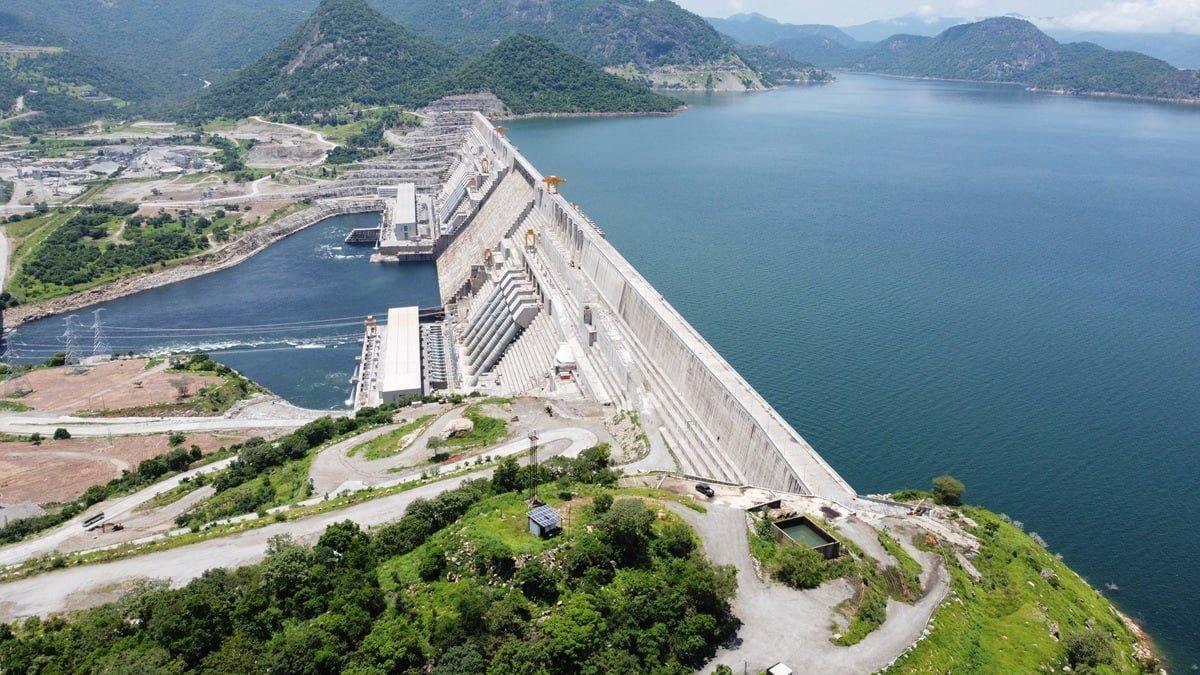
Central to that transformation is the Grand Ethiopian Renaissance Dam (GERD), which has more than doubled the country’s installed electricity generation capacity over the past seven years, from 4,462 megawatts to 9,752 megawatts.
Ethiopia also possesses an estimated 45,000 megawatts of hydropower potential, alongside significant wind and geothermal resources.
Ethiopia recently assumed the rotating chairmanship of the Eastern Africa Power Pool Council of Ministers while continuing to host the organization’s General Secretariat in Addis Ababa.
Regional officials have also confirmed progress on governance reforms and transmission infrastructure needed to support expanded cross-border electricity trade.
The country’s regional ambitions have been reinforced by major transmission projects, particularly the Ethiopia-Kenya High-Voltage Direct Current interconnector.
Stretching 1,045 kilometers between Wolayta Sodo and Suswa, the $1.26 billion transmission line can carry up to 2,000 megawatts of electricity, providing Kenya with greater access to lower-cost renewable power.
Ethiopian hydropower has become an increasingly attractive option for Kenya as it seeks affordable alternatives to expensive thermal generation. Imports from Ethiopia have helped reduce electricity costs while supporting cleaner energy across the region.
Growing electricity exports are also boosting Ethiopia’s export earnings. Supported by energy, agriculture and mining exports, the country generated a record $10.7 billion in export revenue during the most recent fiscal year, a 29% increase from the previous year.
Beyond Kenya, Ethiopia continues exporting electricity to Djibouti and Sudan, while power sales to Tanzania have begun through Kenya’s transmission network.
Negotiations are also advancing with South Sudan, and feasibility studies are underway for a future interconnection with Somalia.
Ethiopia is steadily transforming from a domestic power producer into a strategic energy hub, strengthening economic integration and reinforcing its role as a cornerstone of East Africa’s emerging electricity market.