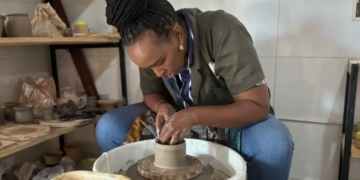

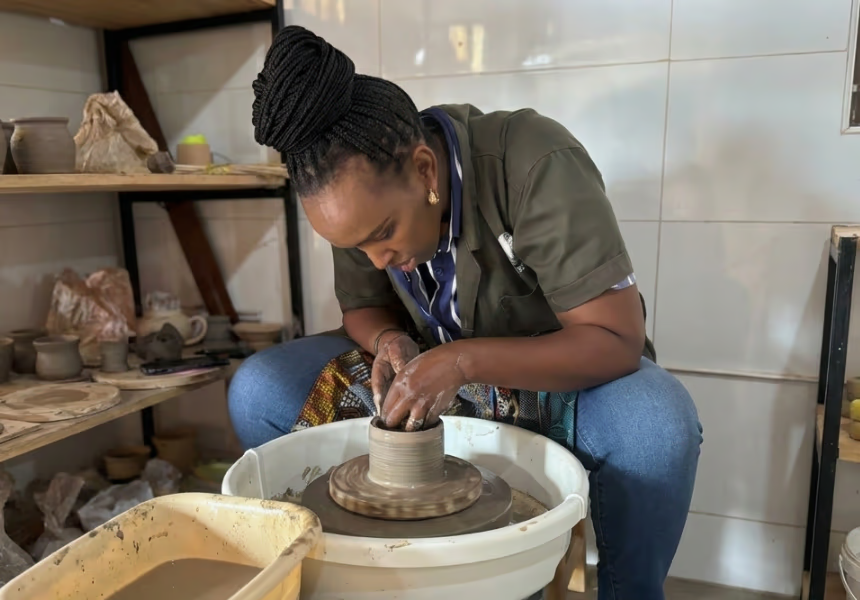

On a quiet morning in Kigali, the steady rhythm of spinning pottery wheels fills a small creative centre as visitors shape bowls and cups from soft clay while artisans guide their hands.
Many are tourists trying the craft for the first time, laughing as their clay wobbles and collapses on the wheel before being shaped again.
At the centre of the activity is Delphine Kamasiga, a 42-year-old entrepreneur who founded the Pottery Café, a space where visitors can try pottery and painting while local craftspeople find new opportunities.
Kamasiga began working with local potters in 2016 after noticing that many artisans lived far from the city and struggled to reach customers.
“I’ve been working with local potters since 2016,” Kamasiga said. “When I started, it was just collecting what they do because I found their work beautiful, but they were far from the city.”
What began as a small effort to collect and sell pottery has grown into a lively studio and café in the heart of Kigali where visitors can try the craft, drink coffee served in locally made cups and meet the artisans behind the work.
The centre now employs about 20 staff members, with some working in the café and others teaching visitors how to shape clay on the wheel.
From the beginning, Kamasiga said the idea was about more than selling pottery.
She wanted to bring potters’ work closer to Kigali’s urban market while introducing more people to the craft.
“When we started, few people knew about these items,” she said, explaining that many customers initially saw pottery mainly as decoration rather than everyday tableware.
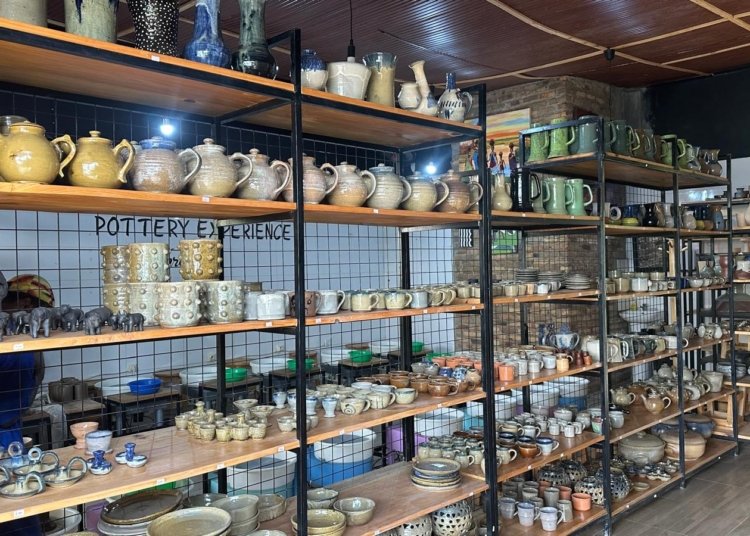
Over time that perception began to change. Partnerships with coffee shops and the government’s promotion of “Made in Rwanda” products helped increase demand for locally made goods.
Today the café attracts families, tourists and school groups eager to try pottery.
Some classes arrive with more than a dozen students, prompting the team to expand activities to include painting workshops alongside pottery sessions.
Beyond the visitors, the centre has also become a place of learning for young artisans.
Ishimwe Mutoni Diane, a 21-year-old potter, discovered her interest in clay as a child and later studied fine and plastic arts in secondary school.
After graduating, she searched for a place to continue practising the craft and eventually found Kamasiga’s centre.
“I love pottery so much,” Diane said.
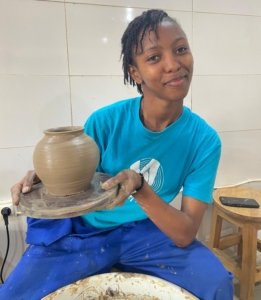
Working at the centre has helped her improve her artistic skills and build confidence interacting with visitors from different backgrounds. She hopes that one day the experience will lead her to start a business of her own.
“My future is to have my own company,” she said.
The centre also supports experienced artisans whose livelihoods depend on the craft. For some workers, pottery has been part of family traditions for generations.
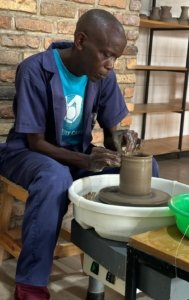
Martin Mbaraga, 58, learned the trade from his parents and has practised it since childhood.
“I like what I do because it’s something I’ve known since I was young,” he said.
The work has helped improve life for his family.
“Now my child is in school, and we have electricity at home,” he said. “I even have a smartphone. My life is good.”
Stories like these reflect a broader shift in Rwanda’s creative economy, where local crafts are gaining recognition and value.
Initiatives encouraging people to buy and use locally made products have helped artisans find new markets.
Across the studio, another group gathers around the pottery wheels, slowly shaping clay into cups and bowls as artisans guide their hands.
“I love what I do,” Kamasiga said, as the wheels continue to spin and another group begins discovering the craft for the first time.