

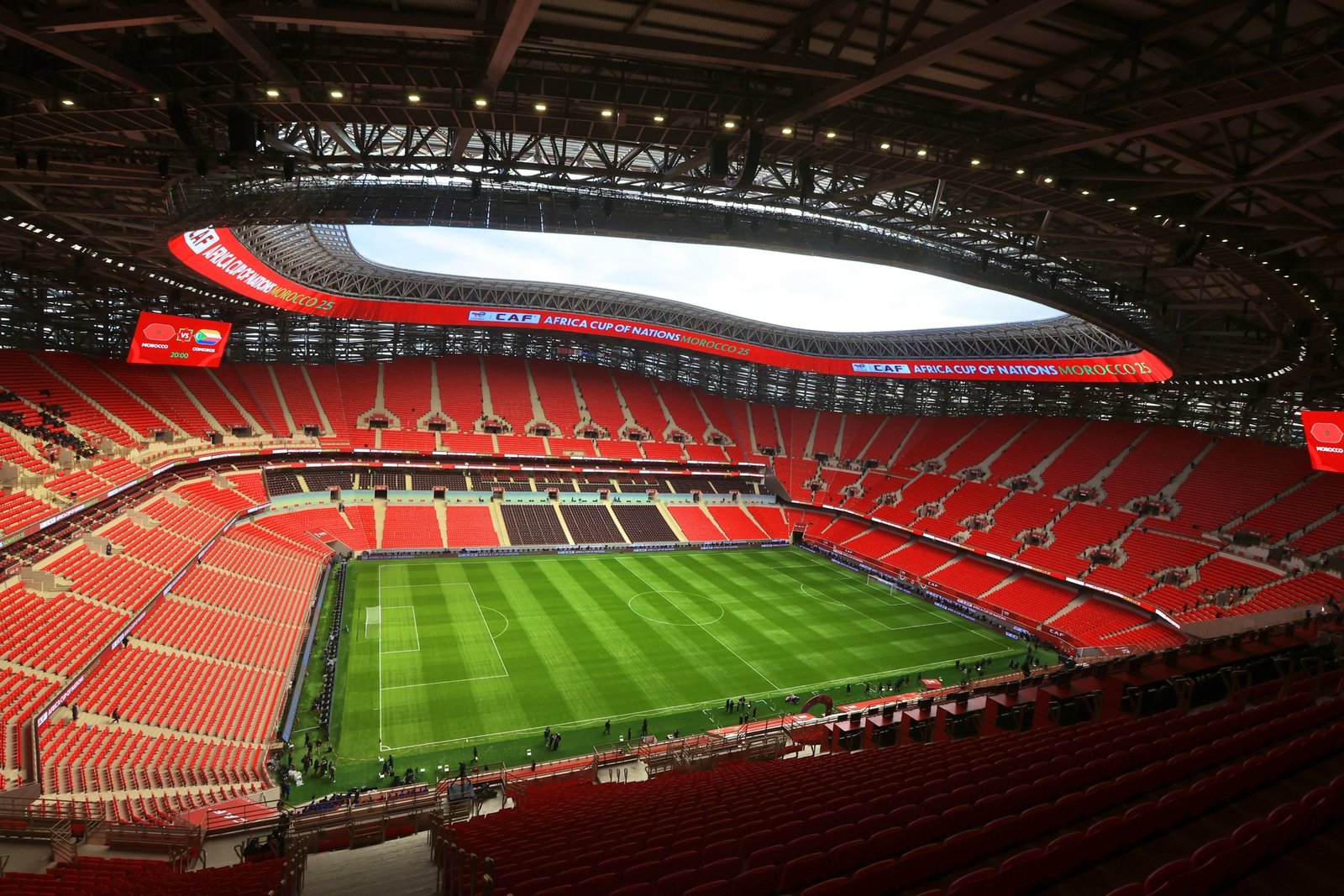

Morocco relied on advanced underground drainage technology to keep matches playable at the Africa Cup of Nations despite unusually heavy rainfall, according to officials and technical reports.
With forecasts predicting continued rain through the end of the group stage of the 2025 Africa Cup of Nations, organizers highlighted the SubAir drainage system at Prince Moulay Abdellah Stadium in Rabat as critical to maintaining pitch quality.
The technology allowed matches to proceed without major disruption, including the tournament’s opening game between Morocco and the Comoros.
Several stadiums across the country experienced heavy rainfall during the first week of competition, an uncommon occurrence for a nation that has faced prolonged drought in recent years.
While the rain affected access and movement for spectators, playing surfaces remained largely unaffected.
Prince Moulay Abdellah Stadium, which underwent a complete renovation ahead of the tournament, uses the SubAir system to regulate water levels beneath the turf.
The system rapidly removes excess moisture while maintaining soil aeration and stabilizing ground temperature.
Conditions at the stadium contrasted sharply with those during the 2014 FIFA Club World Cup, when waterlogged pitches disrupted play and forced manual water removal. Those methods have since been replaced by the automated SubAir network.
The system consists of interlocking plastic units installed beneath the playing surface that collect, filter and store rainwater. Technical documentation indicates it can hold between 600,000 and 1.12 million liters while ensuring consistent drainage.
Specialized reports say Prince Moulay Abdellah Stadium is the first venue in Africa equipped with the SubAir system.
Tunisian national team coach Sami Trabelsi praised pitch conditions following Tunisia’s victory over Uganda at Rabat’s Olympic Stadium. He said the field remained in excellent condition after several hours of rainfall, allowing his team to play its preferred style.
Tournament organizers say the infrastructure upgrades demonstrate Morocco’s readiness to host major continental sporting events despite increasingly unpredictable weather patterns.