

ADDIS ABABA
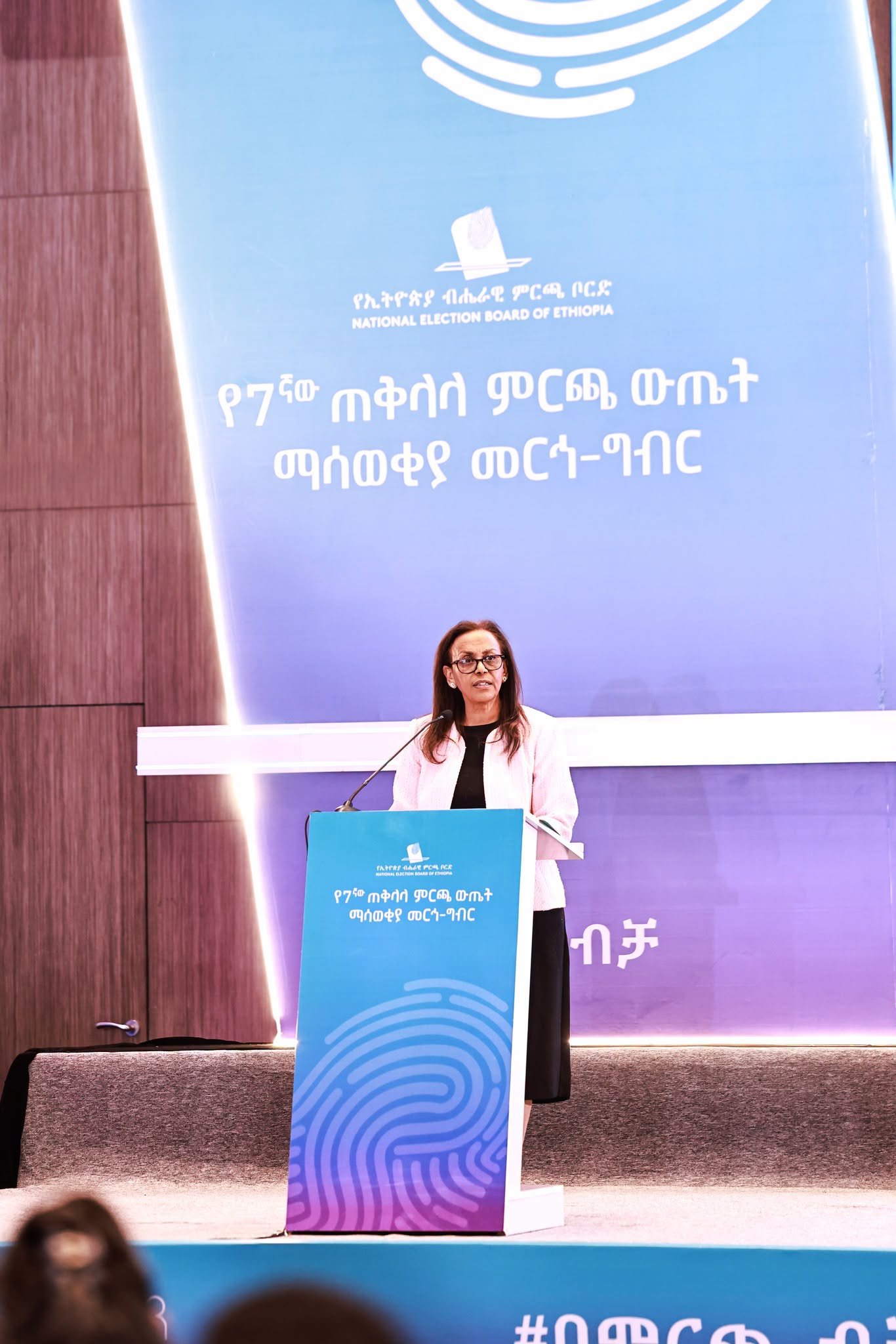
Ethiopia’s ruling Prosperity Party (PP) secured another parliamentary majority after winning 438 seats in the House of Peoples’ Representatives in the country’s seventh general election, according to official results announced Sunday by the National Election Board of Ethiopia (NEBE).
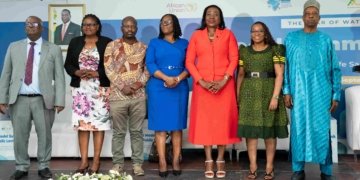
The official certification took place during a formal ceremony attended by senior government officials, including Federal Democratic Republic of Ethiopia (FDRE) President Taye Atske Selassie and NEBE Chairperson Melatwork Hailu.
Under Ethiopia’s electoral framework, the party that wins a majority in the House of Peoples’ Representatives is tasked with forming the federal government.
Prime Minister Abiy Ahmed, who has served as Ethiopia’s prime minister since 2018 and leads the Prosperity Party, has pursued economic reforms and expanded digital government and financial services initiatives during his tenure.
The election covered 1,139 constituencies, including 501 federal parliamentary seats and 638 regional council seats.
In addition to its federal victory, the Prosperity Party also won majorities in several regional councils, securing 523 seats in Oromia, 257 seats in Amhara and 214 seats in the Somali region.
The remaining federal parliamentary seats were distributed among opposition parties and independent candidates.
Ethiopian Citizens for Social Justice (Ezema) won 13 seats, followed by independent candidates with eight and the National Movement of Amhara (NAMA) with six.
The Ethiopian Federal Democratic Unity Forum (Medrek), the Amhara Democratic Power Movement and the Freedom and Equality Party each secured three seats, while the Coalition for Ethiopian Unity Party won two.
Other parties, including the Ogaden National Liberation Front (ONLF), the Afar People’s Party and regional democratic groups, won one seat each.
NEBE Deputy Chairperson Tesfaye Niway announced that vote recounts will be conducted in 10 federal parliamentary constituencies and three regional council constituencies because of tabulation issues.
The board also ordered repeat voting in six parliamentary constituencies and seven regional council constituencies, most of them located in the Somali region.
Melatwork said the seventh general election was funded and administered entirely through domestic capacity, unlike previous electoral cycles.
She also highlighted efforts to improve inclusivity, noting strong participation by women and persons with disabilities.
Election officials also highlighted operational improvements during the electoral process.
Of Ethiopia’s 54 million registered voters, about 5 million voters and candidates used the board’s digital registration platform. Polling stations remained open from 6 a.m. until midnight on election day.
Local civil society organizations provided real-time feedback on polling irregularities, while the Ethiopian Human Rights Commission (EHRC) monitored the broader electoral environment.
International observer missions from the African Union (AU) and the Intergovernmental Authority on Development (IGAD) were also deployed to observe the process.
Election Conducted Amid Security Challenges
The election concluded amid ongoing political and security pressures. Regional violence, logistical blockades and security threats prevented voting from taking place in several constituencies during the initial stages of the electoral cycle.
Opposition groups have previously expressed concerns about the fairness of the broader political environment and the absence of full cross-regional participation.
During his keynote address, President Taye praised citizens for demonstrating what he described as strong social values and for contributing to a peaceful political culture.
He also delivered a warning to armed groups and political actors operating outside the electoral process.
“The lesson of modern democracy is peace, and its language is elections,” President Taye said. “Those who long to seize power outside of the electoral process must realize they are on an unviable path.”
Election authorities also faced challenges related to misinformation and disinformation.
Melatwork said the spread of false and misleading information complicated the board’s work during the election period.
“The circulation of misinformation and deliberate disinformation challenged the Board,” she said. “The Board has been continuously providing information to maintain public trust and ensure that accurate information is delivered on time.”
The result further consolidates the Prosperity Party’s political dominance.
The party was formed in 2019 through the merger of ethnic-based parties that had been part of the former ruling coalition.
It went on to win its first decisive parliamentary majority in 2021 and has now secured another commanding victory.