


Bantu Gazette

Bantu Gazette
  • Energy & Trade
  • Finance
  • Health
  • Politics & Economy
  • Technology
  • Environment
  • Feature
  • Opinion
  • Changemakers
  • Tourism & Culture
  • Sports
  • Magazine
Menu
  • Black Frame Studio
  • Magazine

African Leaders Must Rewire Their Strategic Thinking to Unlock AfCFTA’s Full Potential

The continent's landmark trade agreement demands a shift from competitive instinct to continental strategy.

African Leaders Must Rewire Their Strategic Thinking to Unlock AfCFTA’s Full Potential

Africa

Monica Brownby Monica Brown
April 2, 2026
Reading Time: 4 mins read

African Leaders Must Rewire Their Strategic Thinking to Unlock AfCFTA’s Full Potential

The continent's landmark trade agreement demands a shift from competitive instinct to continental strategy.

African Leaders Must Rewire Their Strategic Thinking to Unlock AfCFTA’s Full Potential

Africa

African Leaders Must Rewire Their Strategic Thinking to Unlock AfCFTA’s Full Potential

Africa

Monica Brownby Monica Brown
April 2, 2026
Reading Time: 4 mins read

The numbers make the case for African economic integration better than any political speech can. Full implementation of the African Continental Free Trade Area (AfCFTA) could boost the continent’s income by $450 billion, lift 30 million people out of extreme poverty, and raise wages faster for women than for men, according to the World Bank.

The United Nations Economic Commission for Africa (UNECA) projects that meticulous implementation by 2045 could increase Africa’s GDP by $141 billion and intra-African trade by $276 billion.

Intra-African trade grew 12.4% in 2024, reaching $220.3 billion, reflecting the early impact of the AfCFTA in easing trade between African countries, according to Afreximbank.

Rwanda began trading with Ghana by exporting packaged coffee and has since diversified into tea, avocado oil and honey, while Tanzania has traded coffee with Algeria and sisal fiber to Nigeria, moving beyond raw commodity exports to more processed goods.

These trade relationships demonstrate what continental integration looks like in practice, and they represent only the earliest returns on an agreement whose full implementation remains years away.

Progress stalls nonetheless. Africa’s intra-regional trade accounts for only about 15% to 18% of total trade, compared with more than 60% in Asia and 70% in Europe.

The implementation gap is real, measurable and widening.

Blame is usually distributed across the familiar list: infrastructure deficits, nontariff barriers, currency fragmentation, weak customs harmonization.

These are legitimate constraints. They are also downstream of something harder to audit and far more consequential: the quality of the thinking that African leaders bring to the negotiating table, the boardroom and the cabinet meeting.

For most of the post-independence era, African economies were structured to compete with one another rather than complement one another.

They grew cotton, coffee and cocoa for the same buyers, in the same currencies, under the same commodity cycles.

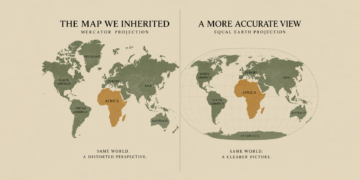
Borders carved from European conference tables in the 19th century became economic frontiers that persisted long after flags changed.

The business logic that followed, to protect your market, outprice your neighbor and guard your supply chain, was rational given those conditions. It is no longer rational now.

The AfCFTA asks executives and policymakers to do something cognitively demanding: to look at a firm in Lagos or Nairobi or Dakar and recognize a potential node in a continental value chain rather than a threat to be neutralized.

Competitive logic is faster and more familiar than collaborative logic, and it runs deeper in institutions built during decades of fragmentation.

Reorienting that logic requires deliberate strategic effort and, often, sustained pressure from political leadership.

This is a strategic design problem, and it carries commercial consequences.

Companies that treat AfCFTA primarily as a defensive trade story, focused on what they stand to lose from tariff reductions, will miss where value is actually accumulating.

Manufacturing, pharmaceuticals, digital services and agro-processing are the sectors positioned to capture the agreement’s most significant gains.

Under deep integration, intra-African exports would grow by 109% by 2035, led by manufactured goods. Those gains will not flow to firms still running a protectionist playbook from the previous century.

Executives who take the AfCFTA seriously are already reframing their strategic questions.

A pharmaceutical manufacturer in Morocco identifies a distribution partner in Côte d’Ivoire. A Kenyan logistics firm maps cold-chain infrastructure gaps across the East African Community corridor.

A South African industrial group assesses where to locate processing capacity relative to raw material sources within the Southern African Development Community.

These are commercially rational decisions made by leaders who have accepted that the continental market is the unit of strategy, not the national one.

Governments carry a corresponding obligation. Countries must streamline customs procedures, digitize border processes and improve logistics systems.

That work is technical and unglamorous, and it cannot be deferred without cost.

As of October 2024, 37 member states had submitted their tariff schedules, a meaningful step that remains far short of the reform depth required across services, digital trade, investment and competition policy.

At the 2025 Africa Integration Report launch, African Union officials stressed the gap between the continent’s integration ambition and on-the-ground realities, noting that realizing AfCFTA’s full promise requires accelerating protocol ratification, strengthening value-chain cooperation and significantly scaling infrastructure and digital connectivity. Political will shapes all three.

Leaders who have updated their strategic frameworks will push harder for the institutional conditions that make continental trade viable.

Leaders who still manage their borders as moats will resist those conditions, at cost to their own firms and to the broader project of African economic integration.

The AfCFTA will not implement itself. The treaty text, the tariff schedules and the Guided Trade Initiative pilots are instruments, not outcomes.

What converts policy into trade is the judgment of the people running African businesses and governments, and that judgment is being tested now.

The borders that were drawn without African consent do not have to be maintained by African minds.

Monica Brown writes on African economic strategy and continental development.



Monica Brown


Monica Brown
is a Pan-African executive, author, and social justice advocate committed to unlocking Africa’s full leadership and innovation potential. She currently serves as Chief Operating Officer of SAMDA Incorporated, where she leads inclusive economic development and community empowerment initiatives.

Get the inside Story

Stay informed on the stories shaping Africa’s future. Get breaking news, in-depth analysis, opinions and exclusive insights from across the continent delivered to your inbox, free and unfiltered.


Get in touch for more:
Felix Tih
Editorial Director, Bantu Gazette
WhatsApp
LinkedIn
X (Twitter)
Instagram

Related Posts

World-Class Port Operator Pledges $600 Million Investment in Nigeria
Politics & Economy

World-Class Port Operator Pledges $600 Million Investment in Nigeria

May 17, 2026
Ethiopia Export Earnings Surge to $8.7 Billion in Ten Months
Politics & Economy

Ethiopia Export Earnings Surge to $8.7 Billion in Ten Months

May 17, 2026
South Africa Allocates $1.7 Billion to Road Agency for Network Expansion
Politics & Economy

South Africa Allocates $1.7 Billion to Road Agency for Network Expansion

May 13, 2026
Kenya, Tanzania Agree to Scrap Non-Tariff Barriers to Boost Trade
Politics & Economy

Kenya, Tanzania Agree to Scrap Non-Tariff Barriers to Boost Trade

May 9, 2026
African Capital Must Lead Before Foreign Investment Will Follow
Opinion

African Capital Must Lead Before Foreign Investment Will Follow

May 8, 2026
Damang Mine Delivers First 110 Kilograms of Gold to Ghana’s National Reserves
Politics & Economy

Damang Mine Delivers First 110 Kilograms of Gold to Ghana’s National Reserves

May 8, 2026

Most Recent

AI Expansion Targets Health and Education Systems in Rwanda
Technology

West Africa Bloc Turns to Artificial Intelligence for Digital Skills, Innovation

by Aissatou Fall
May 18, 2026
0

LOMÉ, Togo The Economic Community of West African States (ECOWAS) urged policymakers to prioritize digital skills and artificial intelligence alongside...

Read moreDetails
World-Class Port Operator Pledges $600 Million Investment in Nigeria

World-Class Port Operator Pledges $600 Million Investment in Nigeria

May 17, 2026
‘Never Miss an Opportunity to Tell Your Story’

‘Never Miss an Opportunity to Tell Your Story’

May 17, 2026
Rwanda Highlights Skills Development in Creative Economy Strategy

Rwanda Highlights Skills Development in Creative Economy Strategy

May 16, 2026
Ethiopia Export Earnings Surge to $8.7 Billion in Ten Months

Ethiopia Export Earnings Surge to $8.7 Billion in Ten Months

May 17, 2026
Liberia to Build its 1st Electrical Manufacturing Plant in $26M Deal with Kenyan Firm

Liberia to Build its 1st Electrical Manufacturing Plant in $26M Deal with Kenyan Firm

May 17, 2026
South Africa Allocates $1.7 Billion to Road Agency for Network Expansion

South Africa Allocates $1.7 Billion to Road Agency for Network Expansion

May 13, 2026
AI Expansion Targets Health and Education Systems in Rwanda
Technology

West Africa Bloc Turns to Artificial Intelligence for Digital Skills, Innovation

by Aissatou Fall
Reading Time: 1 min read
May 18, 2026
0

LOMÉ, Togo The Economic Community of West African States (ECOWAS) urged policymakers to prioritize digital skills and artificial intelligence alongside...

Read moreDetails
World-Class Port Operator Pledges $600 Million Investment in Nigeria
Politics & Economy

World-Class Port Operator Pledges $600 Million Investment in Nigeria

by Marina Bisse
Reading Time: 2 mins read
May 17, 2026
0

Investment to support Apapa port modernization following talks at Africa CEO Forum in Kigali

Read moreDetails
‘Never Miss an Opportunity to Tell Your Story’
Tourism & Culture

‘Never Miss an Opportunity to Tell Your Story’

by Bukelwa Maphanga
Reading Time: 5 mins read
May 17, 2026
0

Togolese author and Pan-Africanist Farouk Mintoiba uses literature, language and community leadership to reshape narratives about Africa

Read moreDetails

African Leaders Must Rewire Their Strategic Thinking to Unlock AfCFTA’s Full Potential

The continent's landmark trade agreement demands a shift from competitive instinct to continental strategy.

African Leaders Must Rewire Their Strategic Thinking to Unlock AfCFTA’s Full Potential

Africa

The numbers make the case for African economic integration better than any political speech can. Full implementation of the African Continental Free Trade Area (AfCFTA) could boost the continent’s income by $450 billion, lift 30 million people out of extreme poverty, and raise wages faster for women than for men, according to the World Bank.

The United Nations Economic Commission for Africa (UNECA) projects that meticulous implementation by 2045 could increase Africa’s GDP by $141 billion and intra-African trade by $276 billion.

Intra-African trade grew 12.4% in 2024, reaching $220.3 billion, reflecting the early impact of the AfCFTA in easing trade between African countries, according to Afreximbank.

Rwanda began trading with Ghana by exporting packaged coffee and has since diversified into tea, avocado oil and honey, while Tanzania has traded coffee with Algeria and sisal fiber to Nigeria, moving beyond raw commodity exports to more processed goods.

These trade relationships demonstrate what continental integration looks like in practice, and they represent only the earliest returns on an agreement whose full implementation remains years away.

Progress stalls nonetheless. Africa’s intra-regional trade accounts for only about 15% to 18% of total trade, compared with more than 60% in Asia and 70% in Europe.

The implementation gap is real, measurable and widening.

Blame is usually distributed across the familiar list: infrastructure deficits, nontariff barriers, currency fragmentation, weak customs harmonization.

These are legitimate constraints. They are also downstream of something harder to audit and far more consequential: the quality of the thinking that African leaders bring to the negotiating table, the boardroom and the cabinet meeting.

For most of the post-independence era, African economies were structured to compete with one another rather than complement one another.

They grew cotton, coffee and cocoa for the same buyers, in the same currencies, under the same commodity cycles.

Borders carved from European conference tables in the 19th century became economic frontiers that persisted long after flags changed.

The business logic that followed, to protect your market, outprice your neighbor and guard your supply chain, was rational given those conditions. It is no longer rational now.

The AfCFTA asks executives and policymakers to do something cognitively demanding: to look at a firm in Lagos or Nairobi or Dakar and recognize a potential node in a continental value chain rather than a threat to be neutralized.

Competitive logic is faster and more familiar than collaborative logic, and it runs deeper in institutions built during decades of fragmentation.

Reorienting that logic requires deliberate strategic effort and, often, sustained pressure from political leadership.

This is a strategic design problem, and it carries commercial consequences.

Companies that treat AfCFTA primarily as a defensive trade story, focused on what they stand to lose from tariff reductions, will miss where value is actually accumulating.

Manufacturing, pharmaceuticals, digital services and agro-processing are the sectors positioned to capture the agreement’s most significant gains.

Under deep integration, intra-African exports would grow by 109% by 2035, led by manufactured goods. Those gains will not flow to firms still running a protectionist playbook from the previous century.

Executives who take the AfCFTA seriously are already reframing their strategic questions.

A pharmaceutical manufacturer in Morocco identifies a distribution partner in Côte d’Ivoire. A Kenyan logistics firm maps cold-chain infrastructure gaps across the East African Community corridor.

A South African industrial group assesses where to locate processing capacity relative to raw material sources within the Southern African Development Community.

These are commercially rational decisions made by leaders who have accepted that the continental market is the unit of strategy, not the national one.

Governments carry a corresponding obligation. Countries must streamline customs procedures, digitize border processes and improve logistics systems.

That work is technical and unglamorous, and it cannot be deferred without cost.

As of October 2024, 37 member states had submitted their tariff schedules, a meaningful step that remains far short of the reform depth required across services, digital trade, investment and competition policy.

At the 2025 Africa Integration Report launch, African Union officials stressed the gap between the continent’s integration ambition and on-the-ground realities, noting that realizing AfCFTA’s full promise requires accelerating protocol ratification, strengthening value-chain cooperation and significantly scaling infrastructure and digital connectivity. Political will shapes all three.

Leaders who have updated their strategic frameworks will push harder for the institutional conditions that make continental trade viable.

Leaders who still manage their borders as moats will resist those conditions, at cost to their own firms and to the broader project of African economic integration.

The AfCFTA will not implement itself. The treaty text, the tariff schedules and the Guided Trade Initiative pilots are instruments, not outcomes.

What converts policy into trade is the judgment of the people running African businesses and governments, and that judgment is being tested now.

The borders that were drawn without African consent do not have to be maintained by African minds.

Monica Brown writes on African economic strategy and continental development.



Monica Brown


Monica Brown
is a Pan-African executive, author, and social justice advocate committed to unlocking Africa’s full leadership and innovation potential. She currently serves as Chief Operating Officer of SAMDA Incorporated, where she leads inclusive economic development and community empowerment initiatives.

African Leaders Must Rewire Their Strategic Thinking to Unlock AfCFTA’s Full Potential

The continent's landmark trade agreement demands a shift from competitive instinct to continental strategy.

African Leaders Must Rewire Their Strategic Thinking to Unlock AfCFTA’s Full Potential

Africa

Monica Brownby Monica Brown
April 2, 2026

The numbers make the case for African economic integration better than any political speech can. Full implementation of the African Continental Free Trade Area (AfCFTA) could boost the continent’s income by $450 billion, lift 30 million people out of extreme poverty, and raise wages faster for women than for men, according to the World Bank.

The United Nations Economic Commission for Africa (UNECA) projects that meticulous implementation by 2045 could increase Africa’s GDP by $141 billion and intra-African trade by $276 billion.

Intra-African trade grew 12.4% in 2024, reaching $220.3 billion, reflecting the early impact of the AfCFTA in easing trade between African countries, according to Afreximbank.

Rwanda began trading with Ghana by exporting packaged coffee and has since diversified into tea, avocado oil and honey, while Tanzania has traded coffee with Algeria and sisal fiber to Nigeria, moving beyond raw commodity exports to more processed goods.

These trade relationships demonstrate what continental integration looks like in practice, and they represent only the earliest returns on an agreement whose full implementation remains years away.

Progress stalls nonetheless. Africa’s intra-regional trade accounts for only about 15% to 18% of total trade, compared with more than 60% in Asia and 70% in Europe.

The implementation gap is real, measurable and widening.

Blame is usually distributed across the familiar list: infrastructure deficits, nontariff barriers, currency fragmentation, weak customs harmonization.

These are legitimate constraints. They are also downstream of something harder to audit and far more consequential: the quality of the thinking that African leaders bring to the negotiating table, the boardroom and the cabinet meeting.

For most of the post-independence era, African economies were structured to compete with one another rather than complement one another.

They grew cotton, coffee and cocoa for the same buyers, in the same currencies, under the same commodity cycles.

Borders carved from European conference tables in the 19th century became economic frontiers that persisted long after flags changed.

The business logic that followed, to protect your market, outprice your neighbor and guard your supply chain, was rational given those conditions. It is no longer rational now.

The AfCFTA asks executives and policymakers to do something cognitively demanding: to look at a firm in Lagos or Nairobi or Dakar and recognize a potential node in a continental value chain rather than a threat to be neutralized.

Competitive logic is faster and more familiar than collaborative logic, and it runs deeper in institutions built during decades of fragmentation.

Reorienting that logic requires deliberate strategic effort and, often, sustained pressure from political leadership.

This is a strategic design problem, and it carries commercial consequences.

Companies that treat AfCFTA primarily as a defensive trade story, focused on what they stand to lose from tariff reductions, will miss where value is actually accumulating.

Manufacturing, pharmaceuticals, digital services and agro-processing are the sectors positioned to capture the agreement’s most significant gains.

Under deep integration, intra-African exports would grow by 109% by 2035, led by manufactured goods. Those gains will not flow to firms still running a protectionist playbook from the previous century.

Executives who take the AfCFTA seriously are already reframing their strategic questions.

A pharmaceutical manufacturer in Morocco identifies a distribution partner in Côte d’Ivoire. A Kenyan logistics firm maps cold-chain infrastructure gaps across the East African Community corridor.

A South African industrial group assesses where to locate processing capacity relative to raw material sources within the Southern African Development Community.

These are commercially rational decisions made by leaders who have accepted that the continental market is the unit of strategy, not the national one.

Governments carry a corresponding obligation. Countries must streamline customs procedures, digitize border processes and improve logistics systems.

That work is technical and unglamorous, and it cannot be deferred without cost.

As of October 2024, 37 member states had submitted their tariff schedules, a meaningful step that remains far short of the reform depth required across services, digital trade, investment and competition policy.

At the 2025 Africa Integration Report launch, African Union officials stressed the gap between the continent’s integration ambition and on-the-ground realities, noting that realizing AfCFTA’s full promise requires accelerating protocol ratification, strengthening value-chain cooperation and significantly scaling infrastructure and digital connectivity. Political will shapes all three.

Leaders who have updated their strategic frameworks will push harder for the institutional conditions that make continental trade viable.

Leaders who still manage their borders as moats will resist those conditions, at cost to their own firms and to the broader project of African economic integration.

The AfCFTA will not implement itself. The treaty text, the tariff schedules and the Guided Trade Initiative pilots are instruments, not outcomes.

What converts policy into trade is the judgment of the people running African businesses and governments, and that judgment is being tested now.

The borders that were drawn without African consent do not have to be maintained by African minds.

Monica Brown writes on African economic strategy and continental development.



Monica Brown


Monica Brown
is a Pan-African executive, author, and social justice advocate committed to unlocking Africa’s full leadership and innovation potential. She currently serves as Chief Operating Officer of SAMDA Incorporated, where she leads inclusive economic development and community empowerment initiatives.

Get the inside Story

Stay informed on the stories shaping Africa’s future. Get breaking news, in-depth analysis, opinions and exclusive insights from across the continent delivered to your inbox, free and unfiltered.


Get in touch for more:
Felix Tih
Editorial Director, Bantu Gazette
WhatsApp
LinkedIn
X (Twitter)
Instagram

Related Posts

World-Class Port Operator Pledges $600 Million Investment in Nigeria

World-Class Port Operator Pledges $600 Million Investment in Nigeria

by Marina Bisse
May 17, 2026
0

...

Ethiopia Export Earnings Surge to $8.7 Billion in Ten Months

Ethiopia Export Earnings Surge to $8.7 Billion in Ten Months

by Kalkidan Negash
May 15, 2026
0

...

South Africa Allocates $1.7 Billion to Road Agency for Network Expansion

South Africa Allocates $1.7 Billion to Road Agency for Network Expansion

by Naledi Kgosi
May 13, 2026
0

...

Kenya, Tanzania Agree to Scrap Non-Tariff Barriers to Boost Trade

Kenya, Tanzania Agree to Scrap Non-Tariff Barriers to Boost Trade

by Jane Mukami
May 9, 2026
0

...

African Capital Must Lead Before Foreign Investment Will Follow

African Capital Must Lead Before Foreign Investment Will Follow

by Felix Tih
May 8, 2026
0

...

Damang Mine Delivers First 110 Kilograms of Gold to Ghana’s National Reserves

Damang Mine Delivers First 110 Kilograms of Gold to Ghana’s National Reserves

by Aissatou Fall
May 8, 2026
0

...

AI Expansion Targets Health and Education Systems in Rwanda
Technology

West Africa Bloc Turns to Artificial Intelligence for Digital Skills, Innovation

by Aissatou Fall
Reading Time: 1 min read
May 18, 2026
0

LOMÉ, Togo The Economic Community of West African States (ECOWAS) urged policymakers to prioritize digital skills and artificial intelligence alongside...

Read moreDetails
World-Class Port Operator Pledges $600 Million Investment in Nigeria

World-Class Port Operator Pledges $600 Million Investment in Nigeria

by Marina Bisse
May 17, 2026
0

Investment to support Apapa port modernization following talks at Africa CEO Forum in Kigali

‘Never Miss an Opportunity to Tell Your Story’

‘Never Miss an Opportunity to Tell Your Story’

by Bukelwa Maphanga
May 16, 2026
0

Togolese author and Pan-Africanist Farouk Mintoiba uses literature, language and community leadership to reshape narratives about Africa

Rwanda Highlights Skills Development in Creative Economy Strategy

Rwanda Highlights Skills Development in Creative Economy Strategy

by Jane Mukami
May 15, 2026
0

KIGALI Rwanda is investing in skills development as part of its strategy to expand the creative economy, with officials calling...

Ethiopia Export Earnings Surge to $8.7 Billion in Ten Months

Ethiopia Export Earnings Surge to $8.7 Billion in Ten Months

by Kalkidan Negash
May 15, 2026
0

Ethiopia’s export revenues rose 43% to $8.71 billion in the first ten months of the current fiscal year, beating the...

Next Post
Burkina Faso Patriotic Fund Raises $828 million in 3 Years, Surpassing Target

Burkina Faso Patriotic Fund Raises $828 million in 3 Years, Surpassing Target

Ghana Introduces Free Visa for All African Travelers Starting May 25

Ghana Introduces Free Visa for All African Travelers Starting May 25

Tunisia Plans Trans-Saharan Land Corridor to Open Sahel Trade Routes

Tunisia Plans Trans-Saharan Land Corridor to Open Sahel Trade Routes

Cameroon Far North Jobs Program Moves to Deployment

Cameroon Far North Jobs Program Moves to Deployment

Bantu Gazette is a pioneering news platform that champions Africa's development, culture, and heritage. We spotlight the continent's successes, address its challenges, and provide insightful coverage of events that shape its future.

Bantu Gazette is a pioneering news platform that champions Africa's development, culture, and heritage. We spotlight the continent's successes, address its challenges, and provide insightful coverage of events that shape its future.

Our Platforms

  • Bantu Magazine
  • Bantu Brief
  • Black Frame Studio

Our Services

  • Bantu Agency
  • Advertise
  • Partnerships

Our Services

  • Editorial Director
  • Opportunities
  • Contact

Bantu Gazette is a pioneering news platform that champions Africa's development, culture, and heritage. We spotlight the continent's successes, address its challenges, and provide insightful coverage of events that shape its future.

Our Platforms

  • Bantu Magazine
  • Bantu Brief
  • Black Frame Studio

Our Services

  • Bantu Agency
  • Advertise
  • Partnerships

Our Services

  • Editorial Director
  • Opportunities
  • Contact
Bantu Gazette
  • Energy & Trade
  • Finance
  • Health
  • Politics & Economy
  • Technology
  • Environment
  • Feature
  • Opinion
  • Changemakers
  • Tourism & Culture
  • Magazine