Bantu Gazette

Bantu Gazette
  • Policy & Governance
  • Development & Impact
  • Business, Trade & Economy
  • Energy
  • Changemakers
  • Culture & Identity
  • Perspectives
  • Magazine
Menu
  • Black Frame Studio
  • Magazine

Africa’s Critical Minerals Key to Trade and Sustainable Development

Marina Bisseby Marina Bisse
December 23, 2024
Reading Time: 3 mins read

Africa’s Critical Minerals Key to Trade and Sustainable Development

Marina Bisseby Marina Bisse
July 11, 2026
Reading Time: 3 mins read

ADDIS ABABA, Ethiopia (BG) – Africa’s wealth of critical minerals, including cobalt, lithium, and nickel, offers an unprecedented opportunity to drive intra-continental trade and sustainable development, according to a statement on Monday by the United Nations Economic Commission for Africa (ECA).

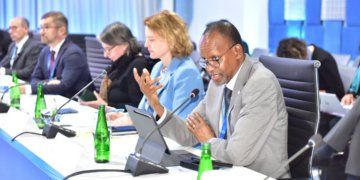
During an Expert Group Meeting (EGM) on Africa’s Critical Minerals in the Context of Trade Policy, hosted by the African Trade Policy Centre (ATPC) in Addis Ababa on December 16–17, experts emphasized that while Africa has robust strategies and policies to harness its mineral wealth, action is needed to realize the full potential of these resources.

ECA Deputy Executive Secretary Antonio Pedro called for Africa to capitalize on its political and economic integration to benefit from the global green energy transition.

“There is no reason why we should have a repeat of the scramble for Africa, especially at a time when greater political and economic integration has also taken place at the regional and continental levels,” said Pedro.

He highlighted continent-wide policies like the African Mining Vision (AMV), the African Commodity Strategy, and the African Green Minerals Strategy as tools to ensure equitable development of Africa’s resources.

Critical Minerals and the Green Transition

Research by the ECA reveals that global demand for critical minerals will surge as economies shift from fossil fuels to clean energy to meet net-zero emissions targets by 2050.

According to the statement, the transition is expected to require 3 billion tons of minerals and metals for renewable energy technologies like solar and wind.

Africa is home to 30% of the world’s critical mineral reserves, 55% of global cobalt reserves and nearly half of the world’s manganese. The Democratic Republic of Congo (DRC) alone supplies about 70% of the global cobalt market, a mineral essential for electric vehicle batteries.

Critical minerals, sought after for just energy transition, could power Africa’s development and sustainable future, noted the United Nations Conference on Trade and Development (UNCTAD), which also identified these resources as potential revenue generators for governments to combat poverty and finance development.

Industrialization and Revenue Potential

Pedro said that value addition to critical minerals could transform Africa into an industrialization hub.

This would boost sectors like e-mobility, create jobs, and position Africa as a competitive leader in green industrialization.

However, Africa currently generates only 40% of the revenue it could potentially collect from its mineral resources, underscoring the need for policy reforms and capacity building.

Leveraging AfCFTA for Regional Value Chains

The EGM emphasized the importance of leveraging Africa’s trade and integration programs, such as the African Continental Free Trade Area (AfCFTA), to build regional value chains.

The AfCFTA represents a market of 1.3 billion people and a combined GDP of over $3.4 trillion, but intra-African trade remains low, accounting for just 15% of total trade.

According to ECA, Africa’s commitment to trade-led economic integration should be leveraged to support the development of minerals-based regional and continental value chains and economic diversification.

Recommendations for Action

The meeting recommended conducting a baseline study to assess African minerals’ current use and trade and identify lessons from past commodity cycles.

It called for further research to develop actionable policy recommendations ensuring Africa retains maximum mineral wealth value.

With coordinated action and strengthened trade policies, Africa has the potential to harness its critical minerals not only for economic growth but also for sustainable development, paving the way for a more integrated and prosperous continent.


Get the inside Story

Stay informed on the stories shaping Africa’s future. Get breaking news, in-depth analysis, opinions and exclusive insights from across the continent delivered to your inbox, free and unfiltered.


Get in touch for more:
Felix Tih
Editorial Director, Bantu Gazette
WhatsApp
LinkedIn
X (Twitter)
Instagram

Related Posts

Uganda’s Kikazi Bets on Indigenous Foods and Intra-African Trade for Growth
Business, Trade & Economy

Uganda’s Kikazi Bets on Indigenous Foods and Intra-African Trade for Growth

October 21, 2026
Sub-Saharan Africa’s 4.5% Growth Masks a Wider Economic Divide
Business, Trade & Economy

Sub-Saharan Africa’s 4.5% Growth Masks a Wider Economic Divide

October 21, 2026
Southern Africa Bloc Seeks Private Capital to Tap 380 Million-Consumer Market
Business, Trade & Economy

Southern Africa Bloc Seeks Private Capital to Tap 380 Million-Consumer Market

October 17, 2026
Ethiopia Reports More Than $14.4 Million in Exports Under African Free Trade Area
Business, Trade & Economy

Gold, Coffee Surge Drives Ethiopia Export Revenue to $2.3 Billion as Refinery Opens

October 16, 2026
Natural Diamond Producers Sign Beijing Declaration to Boost Industry Ties With China
Business, Trade & Economy

Diamonds Power Botswana’s 8.7% Rebound as Pressure Builds for Broader Growth

October 16, 2026
Africa Launches Own Credit Rating Agency in Push to Reshape Risk Assessments
Business, Trade & Economy

Africa Launches Own Credit Rating Agency in Push to Reshape Risk Assessments

October 11, 2026

Most Recent

Ethiopia’s Abiy Rallies Youth to Enroll in Free Coding Courses as Country Targets 7 Million Coders By 2026
Development & Impact

Africa’s AI Promise Depends on the Basics, World Bank Says

by Mary Oduor
October 21, 2026
0

World Bank says AI can boost productivity and public services across Africa when power, connectivity, skills, data and capable institutions...

Read moreDetails
Across Borders, Young Africans Turn Skills into Workplace Experience

Across Borders, Young Africans Turn Skills into Workplace Experience

October 21, 2026
Uganda’s Kikazi Bets on Indigenous Foods and Intra-African Trade for Growth

Uganda’s Kikazi Bets on Indigenous Foods and Intra-African Trade for Growth

October 21, 2026
Confederation of African Football Raises Member Association Grants to Up to $700,000

Confederation of African Football Raises Member Association Grants to Up to $700,000

October 17, 2026
Sub-Saharan Africa’s 4.5% Growth Masks a Wider Economic Divide

Sub-Saharan Africa’s 4.5% Growth Masks a Wider Economic Divide

October 21, 2026
What Africa’s Leading Women Would Tell Their Younger Selves

What Africa’s Leading Women Would Tell Their Younger Selves

October 21, 2026
Southern Africa Bloc Seeks Private Capital to Tap 380 Million-Consumer Market

Southern Africa Bloc Seeks Private Capital to Tap 380 Million-Consumer Market

October 17, 2026
Ethiopia’s Abiy Rallies Youth to Enroll in Free Coding Courses as Country Targets 7 Million Coders By 2026
Development & Impact

Africa’s AI Promise Depends on the Basics, World Bank Says

by Mary Oduor
Reading Time: 3 mins read
October 21, 2026
0

World Bank says AI can boost productivity and public services across Africa when power, connectivity, skills, data and capable institutions...

Read moreDetails
Across Borders, Young Africans Turn Skills into Workplace Experience
Development & Impact

Across Borders, Young Africans Turn Skills into Workplace Experience

by Edith Augustine
Reading Time: 5 mins read
October 21, 2026
0

From finance and design to education and data, young Africans are gaining practical experience while helping organizations across the continent...

Read moreDetails
Uganda’s Kikazi Bets on Indigenous Foods and Intra-African Trade for Growth
Business, Trade & Economy

Uganda’s Kikazi Bets on Indigenous Foods and Intra-African Trade for Growth

by Sethunya Marang Motoutwane
Reading Time: 4 mins read
October 21, 2026
0

The Ugandan agro-processor wants to take millet and cassava into regional markets, where financing, logistics and certification still complicate cross-border...

Read moreDetails

Africa’s Critical Minerals Key to Trade and Sustainable Development

ADDIS ABABA, Ethiopia (BG) – Africa’s wealth of critical minerals, including cobalt, lithium, and nickel, offers an unprecedented opportunity to drive intra-continental trade and sustainable development, according to a statement on Monday by the United Nations Economic Commission for Africa (ECA).

During an Expert Group Meeting (EGM) on Africa’s Critical Minerals in the Context of Trade Policy, hosted by the African Trade Policy Centre (ATPC) in Addis Ababa on December 16–17, experts emphasized that while Africa has robust strategies and policies to harness its mineral wealth, action is needed to realize the full potential of these resources.

ECA Deputy Executive Secretary Antonio Pedro called for Africa to capitalize on its political and economic integration to benefit from the global green energy transition.

“There is no reason why we should have a repeat of the scramble for Africa, especially at a time when greater political and economic integration has also taken place at the regional and continental levels,” said Pedro.

He highlighted continent-wide policies like the African Mining Vision (AMV), the African Commodity Strategy, and the African Green Minerals Strategy as tools to ensure equitable development of Africa’s resources.

Critical Minerals and the Green Transition

Research by the ECA reveals that global demand for critical minerals will surge as economies shift from fossil fuels to clean energy to meet net-zero emissions targets by 2050.

According to the statement, the transition is expected to require 3 billion tons of minerals and metals for renewable energy technologies like solar and wind.

Africa is home to 30% of the world’s critical mineral reserves, 55% of global cobalt reserves and nearly half of the world’s manganese. The Democratic Republic of Congo (DRC) alone supplies about 70% of the global cobalt market, a mineral essential for electric vehicle batteries.

Critical minerals, sought after for just energy transition, could power Africa’s development and sustainable future, noted the United Nations Conference on Trade and Development (UNCTAD), which also identified these resources as potential revenue generators for governments to combat poverty and finance development.

Industrialization and Revenue Potential

Pedro said that value addition to critical minerals could transform Africa into an industrialization hub.

This would boost sectors like e-mobility, create jobs, and position Africa as a competitive leader in green industrialization.

However, Africa currently generates only 40% of the revenue it could potentially collect from its mineral resources, underscoring the need for policy reforms and capacity building.

Leveraging AfCFTA for Regional Value Chains

The EGM emphasized the importance of leveraging Africa’s trade and integration programs, such as the African Continental Free Trade Area (AfCFTA), to build regional value chains.

The AfCFTA represents a market of 1.3 billion people and a combined GDP of over $3.4 trillion, but intra-African trade remains low, accounting for just 15% of total trade.

According to ECA, Africa’s commitment to trade-led economic integration should be leveraged to support the development of minerals-based regional and continental value chains and economic diversification.

Recommendations for Action

The meeting recommended conducting a baseline study to assess African minerals’ current use and trade and identify lessons from past commodity cycles.

It called for further research to develop actionable policy recommendations ensuring Africa retains maximum mineral wealth value.

With coordinated action and strengthened trade policies, Africa has the potential to harness its critical minerals not only for economic growth but also for sustainable development, paving the way for a more integrated and prosperous continent.
Africa’s Critical Minerals Key to Trade and Sustainable Development

Marina Bisseby Marina Bisse
December 23, 2024

ADDIS ABABA, Ethiopia (BG) – Africa’s wealth of critical minerals, including cobalt, lithium, and nickel, offers an unprecedented opportunity to drive intra-continental trade and sustainable development, according to a statement on Monday by the United Nations Economic Commission for Africa (ECA).

During an Expert Group Meeting (EGM) on Africa’s Critical Minerals in the Context of Trade Policy, hosted by the African Trade Policy Centre (ATPC) in Addis Ababa on December 16–17, experts emphasized that while Africa has robust strategies and policies to harness its mineral wealth, action is needed to realize the full potential of these resources.

ECA Deputy Executive Secretary Antonio Pedro called for Africa to capitalize on its political and economic integration to benefit from the global green energy transition.

“There is no reason why we should have a repeat of the scramble for Africa, especially at a time when greater political and economic integration has also taken place at the regional and continental levels,” said Pedro.

He highlighted continent-wide policies like the African Mining Vision (AMV), the African Commodity Strategy, and the African Green Minerals Strategy as tools to ensure equitable development of Africa’s resources.

Critical Minerals and the Green Transition

Research by the ECA reveals that global demand for critical minerals will surge as economies shift from fossil fuels to clean energy to meet net-zero emissions targets by 2050.

According to the statement, the transition is expected to require 3 billion tons of minerals and metals for renewable energy technologies like solar and wind.

Africa is home to 30% of the world’s critical mineral reserves, 55% of global cobalt reserves and nearly half of the world’s manganese. The Democratic Republic of Congo (DRC) alone supplies about 70% of the global cobalt market, a mineral essential for electric vehicle batteries.

Critical minerals, sought after for just energy transition, could power Africa’s development and sustainable future, noted the United Nations Conference on Trade and Development (UNCTAD), which also identified these resources as potential revenue generators for governments to combat poverty and finance development.

Industrialization and Revenue Potential

Pedro said that value addition to critical minerals could transform Africa into an industrialization hub.

This would boost sectors like e-mobility, create jobs, and position Africa as a competitive leader in green industrialization.

However, Africa currently generates only 40% of the revenue it could potentially collect from its mineral resources, underscoring the need for policy reforms and capacity building.

Leveraging AfCFTA for Regional Value Chains

The EGM emphasized the importance of leveraging Africa’s trade and integration programs, such as the African Continental Free Trade Area (AfCFTA), to build regional value chains.

The AfCFTA represents a market of 1.3 billion people and a combined GDP of over $3.4 trillion, but intra-African trade remains low, accounting for just 15% of total trade.

According to ECA, Africa’s commitment to trade-led economic integration should be leveraged to support the development of minerals-based regional and continental value chains and economic diversification.

Recommendations for Action

The meeting recommended conducting a baseline study to assess African minerals’ current use and trade and identify lessons from past commodity cycles.

It called for further research to develop actionable policy recommendations ensuring Africa retains maximum mineral wealth value.

With coordinated action and strengthened trade policies, Africa has the potential to harness its critical minerals not only for economic growth but also for sustainable development, paving the way for a more integrated and prosperous continent.
Get the inside Story

Stay informed on the stories shaping Africa’s future. Get breaking news, in-depth analysis, opinions and exclusive insights from across the continent delivered to your inbox, free and unfiltered.


Get in touch for more:
Felix Tih
Editorial Director, Bantu Gazette
WhatsApp
LinkedIn
X (Twitter)
Instagram

Related Posts

Uganda’s Kikazi Bets on Indigenous Foods and Intra-African Trade for Growth

Uganda’s Kikazi Bets on Indigenous Foods and Intra-African Trade for Growth

by Sethunya Marang Motoutwane
October 19, 2026
0

...

Sub-Saharan Africa’s 4.5% Growth Masks a Wider Economic Divide

Sub-Saharan Africa’s 4.5% Growth Masks a Wider Economic Divide

by Kalkidan Negash
October 17, 2026
0

...

Southern Africa Bloc Seeks Private Capital to Tap 380 Million-Consumer Market

Southern Africa Bloc Seeks Private Capital to Tap 380 Million-Consumer Market

by Sethunya Marang Motoutwane
October 15, 2026
0

...

Ethiopia Reports More Than $14.4 Million in Exports Under African Free Trade Area

Gold, Coffee Surge Drives Ethiopia Export Revenue to $2.3 Billion as Refinery Opens

by Kalkidan Negash
October 15, 2026
0

...

Natural Diamond Producers Sign Beijing Declaration to Boost Industry Ties With China

Diamonds Power Botswana’s 8.7% Rebound as Pressure Builds for Broader Growth

by Maureen Amogelang Garetshoge
October 15, 2026
0

...

Africa Launches Own Credit Rating Agency in Push to Reshape Risk Assessments

Africa Launches Own Credit Rating Agency in Push to Reshape Risk Assessments

by Sethunya Marang Motoutwane
October 8, 2026
0

...

Ethiopia’s Abiy Rallies Youth to Enroll in Free Coding Courses as Country Targets 7 Million Coders By 2026
Development & Impact

Africa’s AI Promise Depends on the Basics, World Bank Says

by Mary Oduor
Reading Time: 3 mins read
October 21, 2026
0

World Bank says AI can boost productivity and public services across Africa when power, connectivity, skills, data and capable institutions...

Read moreDetails
Across Borders, Young Africans Turn Skills into Workplace Experience

Across Borders, Young Africans Turn Skills into Workplace Experience

by Edith Augustine
October 21, 2026
0

From finance and design to education and data, young Africans are gaining practical experience while helping organizations across the continent...

Uganda’s Kikazi Bets on Indigenous Foods and Intra-African Trade for Growth

Uganda’s Kikazi Bets on Indigenous Foods and Intra-African Trade for Growth

by Sethunya Marang Motoutwane
October 19, 2026
0

The Ugandan agro-processor wants to take millet and cassava into regional markets, where financing, logistics and certification still complicate cross-border...

Confederation of African Football Raises Member Association Grants to Up to $700,000

Confederation of African Football Raises Member Association Grants to Up to $700,000

by Doyinsola Ibidunni
October 17, 2026
0

The governing body is raising annual grants for 54 national associations while adding more money for regional competitions, clubs and...

Sub-Saharan Africa’s 4.5% Growth Masks a Wider Economic Divide

Sub-Saharan Africa’s 4.5% Growth Masks a Wider Economic Divide

by Kalkidan Negash
October 17, 2026
0

Ethiopia stands out with 9.2% growth as food and energy costs, constrained financing and limited fiscal space test lower-income economies.

Next Post

Malawi Tackles Gender Inequality, HIV Through Community-Led Interventions

Angola Boosts Energy Diversification with Major Gas Project Launch

2024 UNESCO Recognitions Highlight Africa’s Cultural and Educational Contributions

Eritrea Enhances Agricultural Sector in Gash Barka Region, a Pivotal Contributor to National Food Security

Bantu Gazette is a pioneering news platform that champions Africa's development, culture, and heritage. We spotlight the continent's successes, address its challenges, and provide insightful coverage of events that shape its future.

Bantu Gazette is a pioneering news platform that champions Africa's development, culture, and heritage. We spotlight the continent's successes, address its challenges, and provide insightful coverage of events that shape its future.

Our Platforms

  • Bantu Magazine
  • Bantu Brief
  • Black Frame Studio

Our Services

  • Bantu Agency
  • Advertise
  • Partnerships

Our Services

  • Editorial Director
  • Opportunities
  • Contact
Bantu Gazette
  • Energy & Trade
  • Finance
  • Health
  • Politics & Economy
  • Technology
  • Environment
  • Feature
  • Opinion
  • Changemakers
  • Tourism & Culture
  • Magazine