
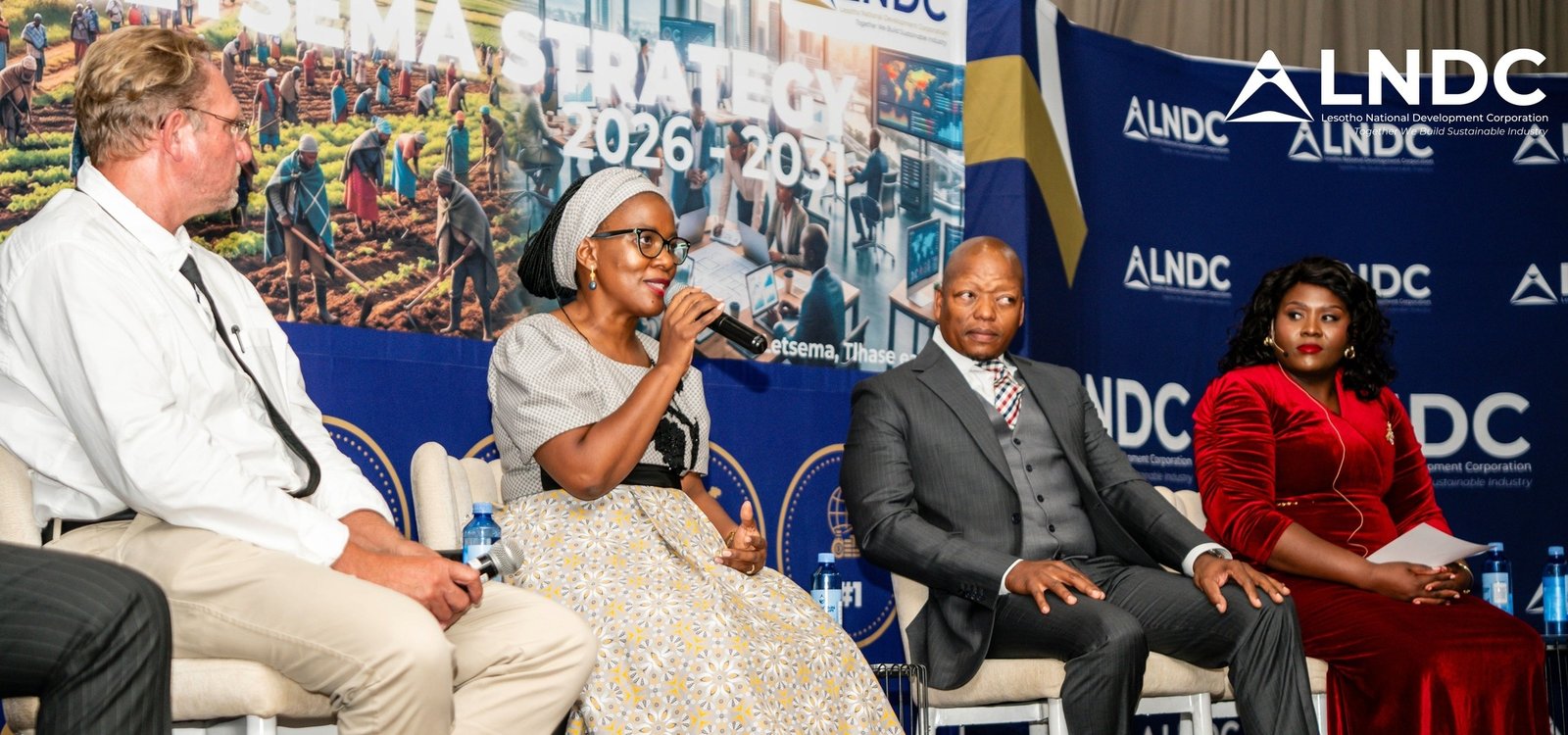

The Lesotho National Development Corporation has launched its Letsema Strategy 2026-2031, outlining a five-year plan to accelerate industrial growth and create 50,000 jobs in a country that recorded cumulative growth of 4% in the first three quarters of 2025.
The strategy was unveiled in the capital, Maseru, at an event attended by Cabinet ministers, industry leaders and development partners. “We launch not just a document but a national pathway toward economic transformation,” Deputy Prime Minister Justice Nthomeng Majara said, according to a media release by LNDC on April 12.
The strategy aims to transform Lesotho’s economy by 2031, with key targets including facilitating 50,000 new jobs, developing 100 Basotho industrialists, establishing five new industrial sectors and achieving 7% GDP per capita growth.
It rests on four pillars, driving industrial transformation, unlocking capital for growth, orchestrating the national industrial ecosystem and building delivery capabilities.
The framework positions LNDC as a central coordinator rather than a direct implementer, adopting what officials described as a “wholesale” approach to mobilizing partnerships and capital.
Trade, Industry and Business Development Minister Selibe Mochoboroane linked the strategy’s urgency to external trade pressures, citing the uncertain renewal of the African Growth and Opportunity Act as evidence that Lesotho must diversify its industrial base.
The strategy draws its name from the Sesotho concept of letsema, a tradition of collective labor toward a shared goal, framing national industrialization as a cooperative responsibility rather than a government mandate alone.
A high-level panel at the launch brought together representatives from Vodacom Lesotho, FNB Lesotho and the Lesotho Milling Co., among others, to discuss implementation pathways, access to finance and private sector participation.
Lesotho, a landlocked mountain kingdom of approximately 2.4 million people entirely surrounded by South Africa, recorded cumulative growth of 4% in the first three quarters of 2025 relative to the same period in 2024, driven by mining, hospitality and business services, according to the World Bank.