Bantu Gazette

Bantu Gazette
  • Policy & Governance
  • Development & Impact
  • Business, Trade & Economy
  • Energy
  • Changemakers
  • Culture & Identity
  • Perspectives
  • Magazine
Menu
  • Black Frame Studio
  • Magazine

Cameroonian Scholar Richard Munang Takes Helm of UN University Institute in Africa

Dr. Munang takes charge of UNU-INRA in Accra, bringing years of experience in climate action, environmental governance and sustainable development.

Cameroonian Scholar Richard Munang Takes Helm of UN University Institute in Africa
Felix Tihby Felix Tih
September 15, 2026
Reading Time: 4 mins read

Cameroonian Scholar Richard Munang Takes Helm of UN University Institute in Africa

Dr. Munang takes charge of UNU-INRA in Accra, bringing years of experience in climate action, environmental governance and sustainable development.

Cameroonian Scholar Richard Munang Takes Helm of UN University Institute in Africa
Felix Tihby Felix Tih
September 17, 2026
Reading Time: 4 mins read

ACCRA, Ghana

Cameroonian sustainability expert Richard Munang has taken office as director of the United Nations University Institute for Natural Resources in Africa, bringing nearly two decades of international experience in climate policy, environmental governance and sustainable development to the role.

Munang assumed office Monday, Sept. 14, as director of UNU-INRA in Accra, Ghana. The institute is the United Nations University’s only institute based in Africa and works across the continent on natural resource management and sustainable development.

His appointment puts the Cameroonian scholar at the helm of an institution focused on one of Africa’s most persistent development challenges: translating the continent’s vast natural wealth into greater economic and social benefits for its people.

In announcing the start of his tenure, Munang pointed to the gap between Africa’s natural resource wealth and the value the continent captures from those resources.

“Africa is not poor. Africa is undercounted,” Munang wrote in a LinkedIn post Monday.

Africa holds about 30% of the world’s mineral reserves, Munang said. He also cited West Africa’s cocoa industry as an example of the imbalance between natural resources and economic returns.

West Africa produces about 75% of the world’s cocoa, he said, but only about $10 billion of the roughly $200 billion generated annually by the global chocolate industry remains in the region.

“Of every euro paid for a chocolate bar, the farmer who grew the cocoa receives about seven cents,” Munang wrote.

He also highlighted illicit financial flows, saying close to $90 billion leaves Africa each year.

For Munang, addressing that imbalance requires more than cataloging Africa’s resources. It means improving the decisions governing how those resources are processed, financed and protected.

“What is undercounted is not geology. It is decisions. Who processes. Who adds value. Who enforces. Who finances,” he wrote. “Too often, those decisions are made without evidence in the room.”

Munang said providing that evidence is central to UNU-INRA’s mission.

From Cameroon to international environmental leadership

A Cameroonian national, Munang has spent more than 17 years working on environmental and sustainable development issues internationally, with field experience spanning more than 50 countries.

Before joining UNU-INRA, he was head of the Global Programme on Crimes that Affect the Environment at the United Nations Office on Drugs and Crime. There, he led work addressing illegal mining, logging and fishing, wildlife trafficking and crimes involving hazardous waste.

His work included using environmental information and law enforcement data to support investigations and prosecutions as well as decisions on investment and natural resource protection.

Before his UNODC role, Munang held several senior positions at the United Nations Environment Programme.

As head of UNEP’s Global Environment Monitoring Systems, he worked to strengthen monitoring of water, air and oceans and improve the delivery of environmental information to U.N. member states.

He previously served as deputy regional director of UNEP’s Regional Office for Africa, helping oversee programs covering the continent’s 54 countries.

Munang also served as UNEP’s Africa regional climate change coordinator, leading work on climate adaptation, clean energy, innovative financing and food security.

Across those roles, his work has focused on connecting scientific research with government policy, financing, standards and implementation.
Focus on African-led solutions

Munang has helped shape several climate and development initiatives across Africa.

They include the first Africa Adaptation Gap Report, which sought to strengthen the position of climate adaptation alongside mitigation in African climate policy, as well as climate-action entrepreneurship curricula for universities.

He also developed an approach known as “innovative volunteerism,” which focuses on equipping young people with skills to participate in climate-related enterprises.

United Nations University Rector and U.N. Under-Secretary-General Tshilidzi Marwala said Munang’s combination of scholarship and practical policy experience would be important to the university’s work in Africa.

“With decades of experience advancing solutions to interconnected sustainable development challenges, Dr. Munang’s depth of expertise includes a rare mix of scholarship, programming and implementation, underpinned by practical knowledge of what it takes to connect science to effective policy,” Marwala said when the appointment was announced in July.

“His leadership will be essential as UNU redoubles efforts to expand knowledge, partnerships and impact in Africa and the Global South.”

Munang is also an adjunct research professor at Western University in Canada, where his academic work covers climate resilience, planetary health, environmental risk and data-driven decision-making.

He has more than 100 publications, including peer-reviewed papers, books and book chapters.

Munang holds a doctorate in environmental change and policy from the University of Nottingham in the United Kingdom and an executive certificate in climate change and energy policymaking for the long term from Harvard Kennedy School at Harvard University in the United States.

‘I begin by listening’
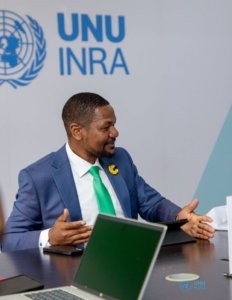
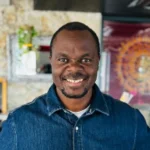
Dr. Richard Munang

As he starts his tenure in Accra, Munang has signaled that his initial focus will be on listening to UNU-INRA’s researchers, African governments and communities.

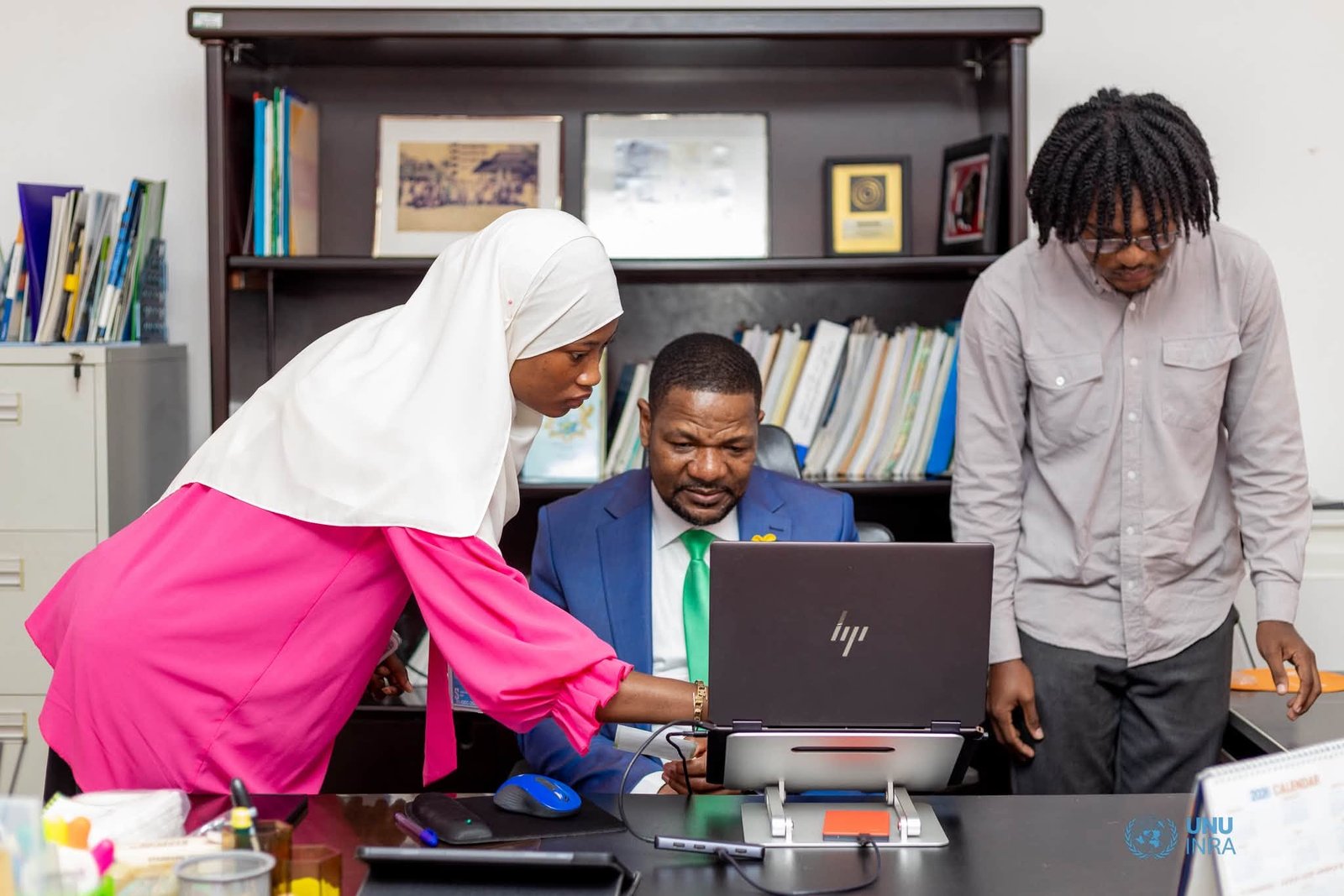
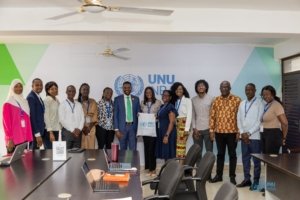
“This morning I met the UNU-INRA team in Accra,” he wrote Monday. “Their welcome, and the work already underway, are the foundation we build on.”

He said he would begin by listening “to our researchers, to the governments we serve, and to the communities whose lives this work must change.”

Munang also invoked a lesson from his grandmother to illustrate the importance he places on evidence and accounting for Africa’s resources.

“A man who does not count his harvest will always believe the barn is full,” he recalled her saying.

When his appointment was announced in July, Munang said Africa needed rigorous research that could translate its natural wealth into tangible development gains.

“Africa’s natural resources are the foundation of the continent’s future, and the need for rigorous, African-led science that is connected to policy and action has never been greater,” he said.

He pledged to work toward making UNU-INRA “a trusted evidence partner that helps Africa turn its natural wealth into sustainable and inclusive development.”

 

Get the inside Story

Stay informed on the stories shaping Africa’s future. Get breaking news, in-depth analysis, opinions and exclusive insights from across the continent delivered to your inbox, free and unfiltered.


Get in touch for more:
Felix Tih
Editorial Director, Bantu Gazette
WhatsApp
LinkedIn
X (Twitter)
Instagram

Related Posts

Mali’s Rokiatu Traoré wins United Nations Changemaker Award
Development & Impact

Mali’s Rokiatu Traoré wins United Nations Changemaker Award

November 4, 2026
Dakar 2026 opens in Senegal, bringing Olympic competition to Africa for first time
Development & Impact

Dakar 2026 opens in Senegal, bringing Olympic competition to Africa for first time

November 2, 2026
ATTS2026 | Africa’s Power Reform Push Turns to Private Capital, Regional Trade
Development & Impact

ATTS2026 | Africa’s Power Reform Push Turns to Private Capital, Regional Trade

November 2, 2026
ACBF Governors Put Implementation at the Heart of Capacity-Building Agenda
Development & Impact

ACBF Governors Put Implementation at the Heart of Capacity-Building Agenda

October 29, 2026
Burkina Faso Links Mechanized Harvests to a New Push for Local Food Processing
Development & Impact

Burkina Faso Links Mechanized Harvests to a New Push for Local Food Processing

November 1, 2026
Ethiopia’s Abiy Rallies Youth to Enroll in Free Coding Courses as Country Targets 7 Million Coders By 2026
Development & Impact

Africa’s AI Promise Depends on the Basics, World Bank Says

October 23, 2026

Most Recent

From the Cape Flats, ‘We Ubuntu’ Imagines an Africa Held Together by Hope
Culture & Identity

From the Cape Flats, ‘We Ubuntu’ Imagines an Africa Held Together by Hope

by Sethunya Marang Motoutwane
November 6, 2026
0

Cape Town artist Stanton Europa draws on the Cape Flats, digital design and Ubuntu to imagine an African visual culture...

Read moreDetails
Morocco Puts Infrastructure on Display at Africa Cup of Nations

Morocco 2030 Could Reshape Youth Development Across African Sports, Expert Says

November 5, 2026
Think Tanks Urge Practical Fixes to Make Africa’s Free Trade Work

Think Tanks Urge Practical Fixes to Make Africa’s Free Trade Work

November 4, 2026
Mali’s Rokiatu Traoré wins United Nations Changemaker Award

Mali’s Rokiatu Traoré wins United Nations Changemaker Award

November 4, 2026
Africa Cup of Nations Returns to Two-Year Cycle as 2027 Preparations Gather Pace

Africa Cup of Nations Returns to Two-Year Cycle as 2027 Preparations Gather Pace

November 4, 2026
Dakar 2026 opens in Senegal, bringing Olympic competition to Africa for first time

Dakar 2026 opens in Senegal, bringing Olympic competition to Africa for first time

November 2, 2026
ATTS2026 | Africa’s Power Reform Push Turns to Private Capital, Regional Trade

ATTS2026 | Africa’s Power Reform Push Turns to Private Capital, Regional Trade

November 2, 2026
From the Cape Flats, ‘We Ubuntu’ Imagines an Africa Held Together by Hope
Culture & Identity

From the Cape Flats, ‘We Ubuntu’ Imagines an Africa Held Together by Hope

by Sethunya Marang Motoutwane
Reading Time: 5 mins read
November 6, 2026
0

Cape Town artist Stanton Europa draws on the Cape Flats, digital design and Ubuntu to imagine an African visual culture...

Read moreDetails
Morocco Puts Infrastructure on Display at Africa Cup of Nations
Sports

Morocco 2030 Could Reshape Youth Development Across African Sports, Expert Says

by Doyinsola Ibidunni
Reading Time: 4 mins read
November 5, 2026
0

Morocco’s 2030 World Cup preparations show how major tournaments can expand youth opportunities, strengthen local sports and create lasting benefits...

Read moreDetails
Think Tanks Urge Practical Fixes to Make Africa’s Free Trade Work
Business, Trade & Economy

Think Tanks Urge Practical Fixes to Make Africa’s Free Trade Work

by Maureen Amogelang Garetshoge
Reading Time: 3 mins read
November 4, 2026
0

Landlocked economies, financing gaps and energy constraints are testing implementation of the African Continental Free Trade Area (AfCFTA), across the...

Read moreDetails

Cameroonian Scholar Richard Munang Takes Helm of UN University Institute in Africa

Dr. Munang takes charge of UNU-INRA in Accra, bringing years of experience in climate action, environmental governance and sustainable development.

Cameroonian Scholar Richard Munang Takes Helm of UN University Institute in Africa

ACCRA, Ghana

Cameroonian sustainability expert Richard Munang has taken office as director of the United Nations University Institute for Natural Resources in Africa, bringing nearly two decades of international experience in climate policy, environmental governance and sustainable development to the role.

Munang assumed office Monday, Sept. 14, as director of UNU-INRA in Accra, Ghana. The institute is the United Nations University’s only institute based in Africa and works across the continent on natural resource management and sustainable development.

His appointment puts the Cameroonian scholar at the helm of an institution focused on one of Africa’s most persistent development challenges: translating the continent’s vast natural wealth into greater economic and social benefits for its people.

In announcing the start of his tenure, Munang pointed to the gap between Africa’s natural resource wealth and the value the continent captures from those resources.

“Africa is not poor. Africa is undercounted,” Munang wrote in a LinkedIn post Monday.

Africa holds about 30% of the world’s mineral reserves, Munang said. He also cited West Africa’s cocoa industry as an example of the imbalance between natural resources and economic returns.

West Africa produces about 75% of the world’s cocoa, he said, but only about $10 billion of the roughly $200 billion generated annually by the global chocolate industry remains in the region.

“Of every euro paid for a chocolate bar, the farmer who grew the cocoa receives about seven cents,” Munang wrote.

He also highlighted illicit financial flows, saying close to $90 billion leaves Africa each year.

For Munang, addressing that imbalance requires more than cataloging Africa’s resources. It means improving the decisions governing how those resources are processed, financed and protected.

“What is undercounted is not geology. It is decisions. Who processes. Who adds value. Who enforces. Who finances,” he wrote. “Too often, those decisions are made without evidence in the room.”

Munang said providing that evidence is central to UNU-INRA’s mission.

From Cameroon to international environmental leadership

A Cameroonian national, Munang has spent more than 17 years working on environmental and sustainable development issues internationally, with field experience spanning more than 50 countries.

Before joining UNU-INRA, he was head of the Global Programme on Crimes that Affect the Environment at the United Nations Office on Drugs and Crime. There, he led work addressing illegal mining, logging and fishing, wildlife trafficking and crimes involving hazardous waste.

His work included using environmental information and law enforcement data to support investigations and prosecutions as well as decisions on investment and natural resource protection.

Before his UNODC role, Munang held several senior positions at the United Nations Environment Programme.

As head of UNEP’s Global Environment Monitoring Systems, he worked to strengthen monitoring of water, air and oceans and improve the delivery of environmental information to U.N. member states.

He previously served as deputy regional director of UNEP’s Regional Office for Africa, helping oversee programs covering the continent’s 54 countries.

Munang also served as UNEP’s Africa regional climate change coordinator, leading work on climate adaptation, clean energy, innovative financing and food security.

Across those roles, his work has focused on connecting scientific research with government policy, financing, standards and implementation.

Focus on African-led solutions

Munang has helped shape several climate and development initiatives across Africa.

They include the first Africa Adaptation Gap Report, which sought to strengthen the position of climate adaptation alongside mitigation in African climate policy, as well as climate-action entrepreneurship curricula for universities.

He also developed an approach known as “innovative volunteerism,” which focuses on equipping young people with skills to participate in climate-related enterprises.

United Nations University Rector and U.N. Under-Secretary-General Tshilidzi Marwala said Munang’s combination of scholarship and practical policy experience would be important to the university’s work in Africa.

“With decades of experience advancing solutions to interconnected sustainable development challenges, Dr. Munang’s depth of expertise includes a rare mix of scholarship, programming and implementation, underpinned by practical knowledge of what it takes to connect science to effective policy,” Marwala said when the appointment was announced in July.

“His leadership will be essential as UNU redoubles efforts to expand knowledge, partnerships and impact in Africa and the Global South.”

Munang is also an adjunct research professor at Western University in Canada, where his academic work covers climate resilience, planetary health, environmental risk and data-driven decision-making.

He has more than 100 publications, including peer-reviewed papers, books and book chapters.

Munang holds a doctorate in environmental change and policy from the University of Nottingham in the United Kingdom and an executive certificate in climate change and energy policymaking for the long term from Harvard Kennedy School at Harvard University in the United States.

‘I begin by listening’

Dr. Richard Munang

As he starts his tenure in Accra, Munang has signaled that his initial focus will be on listening to UNU-INRA’s researchers, African governments and communities.

“This morning I met the UNU-INRA team in Accra,” he wrote Monday. “Their welcome, and the work already underway, are the foundation we build on.”

He said he would begin by listening “to our researchers, to the governments we serve, and to the communities whose lives this work must change.”

Munang also invoked a lesson from his grandmother to illustrate the importance he places on evidence and accounting for Africa’s resources.

“A man who does not count his harvest will always believe the barn is full,” he recalled her saying.

When his appointment was announced in July, Munang said Africa needed rigorous research that could translate its natural wealth into tangible development gains.

“Africa’s natural resources are the foundation of the continent’s future, and the need for rigorous, African-led science that is connected to policy and action has never been greater,” he said.

He pledged to work toward making UNU-INRA “a trusted evidence partner that helps Africa turn its natural wealth into sustainable and inclusive development.”
 

Cameroonian Scholar Richard Munang Takes Helm of UN University Institute in Africa

Dr. Munang takes charge of UNU-INRA in Accra, bringing years of experience in climate action, environmental governance and sustainable development.

Cameroonian Scholar Richard Munang Takes Helm of UN University Institute in Africa
Felix Tihby Felix Tih
September 15, 2026

ACCRA, Ghana

Cameroonian sustainability expert Richard Munang has taken office as director of the United Nations University Institute for Natural Resources in Africa, bringing nearly two decades of international experience in climate policy, environmental governance and sustainable development to the role.

Munang assumed office Monday, Sept. 14, as director of UNU-INRA in Accra, Ghana. The institute is the United Nations University’s only institute based in Africa and works across the continent on natural resource management and sustainable development.

His appointment puts the Cameroonian scholar at the helm of an institution focused on one of Africa’s most persistent development challenges: translating the continent’s vast natural wealth into greater economic and social benefits for its people.

In announcing the start of his tenure, Munang pointed to the gap between Africa’s natural resource wealth and the value the continent captures from those resources.

“Africa is not poor. Africa is undercounted,” Munang wrote in a LinkedIn post Monday.

Africa holds about 30% of the world’s mineral reserves, Munang said. He also cited West Africa’s cocoa industry as an example of the imbalance between natural resources and economic returns.

West Africa produces about 75% of the world’s cocoa, he said, but only about $10 billion of the roughly $200 billion generated annually by the global chocolate industry remains in the region.

“Of every euro paid for a chocolate bar, the farmer who grew the cocoa receives about seven cents,” Munang wrote.

He also highlighted illicit financial flows, saying close to $90 billion leaves Africa each year.

For Munang, addressing that imbalance requires more than cataloging Africa’s resources. It means improving the decisions governing how those resources are processed, financed and protected.

“What is undercounted is not geology. It is decisions. Who processes. Who adds value. Who enforces. Who finances,” he wrote. “Too often, those decisions are made without evidence in the room.”

Munang said providing that evidence is central to UNU-INRA’s mission.

From Cameroon to international environmental leadership

A Cameroonian national, Munang has spent more than 17 years working on environmental and sustainable development issues internationally, with field experience spanning more than 50 countries.

Before joining UNU-INRA, he was head of the Global Programme on Crimes that Affect the Environment at the United Nations Office on Drugs and Crime. There, he led work addressing illegal mining, logging and fishing, wildlife trafficking and crimes involving hazardous waste.

His work included using environmental information and law enforcement data to support investigations and prosecutions as well as decisions on investment and natural resource protection.

Before his UNODC role, Munang held several senior positions at the United Nations Environment Programme.

As head of UNEP’s Global Environment Monitoring Systems, he worked to strengthen monitoring of water, air and oceans and improve the delivery of environmental information to U.N. member states.

He previously served as deputy regional director of UNEP’s Regional Office for Africa, helping oversee programs covering the continent’s 54 countries.

Munang also served as UNEP’s Africa regional climate change coordinator, leading work on climate adaptation, clean energy, innovative financing and food security.

Across those roles, his work has focused on connecting scientific research with government policy, financing, standards and implementation.

Focus on African-led solutions

Munang has helped shape several climate and development initiatives across Africa.

They include the first Africa Adaptation Gap Report, which sought to strengthen the position of climate adaptation alongside mitigation in African climate policy, as well as climate-action entrepreneurship curricula for universities.

He also developed an approach known as “innovative volunteerism,” which focuses on equipping young people with skills to participate in climate-related enterprises.

United Nations University Rector and U.N. Under-Secretary-General Tshilidzi Marwala said Munang’s combination of scholarship and practical policy experience would be important to the university’s work in Africa.

“With decades of experience advancing solutions to interconnected sustainable development challenges, Dr. Munang’s depth of expertise includes a rare mix of scholarship, programming and implementation, underpinned by practical knowledge of what it takes to connect science to effective policy,” Marwala said when the appointment was announced in July.

“His leadership will be essential as UNU redoubles efforts to expand knowledge, partnerships and impact in Africa and the Global South.”

Munang is also an adjunct research professor at Western University in Canada, where his academic work covers climate resilience, planetary health, environmental risk and data-driven decision-making.

He has more than 100 publications, including peer-reviewed papers, books and book chapters.

Munang holds a doctorate in environmental change and policy from the University of Nottingham in the United Kingdom and an executive certificate in climate change and energy policymaking for the long term from Harvard Kennedy School at Harvard University in the United States.

‘I begin by listening’

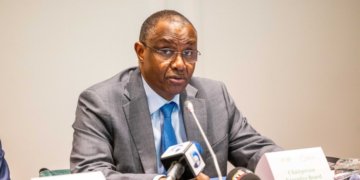
Dr. Richard Munang

As he starts his tenure in Accra, Munang has signaled that his initial focus will be on listening to UNU-INRA’s researchers, African governments and communities.

“This morning I met the UNU-INRA team in Accra,” he wrote Monday. “Their welcome, and the work already underway, are the foundation we build on.”

He said he would begin by listening “to our researchers, to the governments we serve, and to the communities whose lives this work must change.”

Munang also invoked a lesson from his grandmother to illustrate the importance he places on evidence and accounting for Africa’s resources.

“A man who does not count his harvest will always believe the barn is full,” he recalled her saying.

When his appointment was announced in July, Munang said Africa needed rigorous research that could translate its natural wealth into tangible development gains.

“Africa’s natural resources are the foundation of the continent’s future, and the need for rigorous, African-led science that is connected to policy and action has never been greater,” he said.

He pledged to work toward making UNU-INRA “a trusted evidence partner that helps Africa turn its natural wealth into sustainable and inclusive development.”
 

Get the inside Story

Stay informed on the stories shaping Africa’s future. Get breaking news, in-depth analysis, opinions and exclusive insights from across the continent delivered to your inbox, free and unfiltered.


Get in touch for more:
Felix Tih
Editorial Director, Bantu Gazette
WhatsApp
LinkedIn
X (Twitter)
Instagram

Related Posts

Mali’s Rokiatu Traoré wins United Nations Changemaker Award

Mali’s Rokiatu Traoré wins United Nations Changemaker Award

by Samira Benhadda
November 2, 2026
0

...

Dakar 2026 opens in Senegal, bringing Olympic competition to Africa for first time

Dakar 2026 opens in Senegal, bringing Olympic competition to Africa for first time

by Aissatou Fall
November 1, 2026
0

...

ATTS2026 | Africa’s Power Reform Push Turns to Private Capital, Regional Trade

ATTS2026 | Africa’s Power Reform Push Turns to Private Capital, Regional Trade

by Felix Tih
October 29, 2026
0

...

ACBF Governors Put Implementation at the Heart of Capacity-Building Agenda

ACBF Governors Put Implementation at the Heart of Capacity-Building Agenda

by Felix Tih
October 28, 2026
0

...

Burkina Faso Links Mechanized Harvests to a New Push for Local Food Processing

Burkina Faso Links Mechanized Harvests to a New Push for Local Food Processing

by Aissatou Fall
October 27, 2026
0

...

Ethiopia’s Abiy Rallies Youth to Enroll in Free Coding Courses as Country Targets 7 Million Coders By 2026

Africa’s AI Promise Depends on the Basics, World Bank Says

by Mary Oduor
October 21, 2026
0

...

From the Cape Flats, ‘We Ubuntu’ Imagines an Africa Held Together by Hope
Culture & Identity

From the Cape Flats, ‘We Ubuntu’ Imagines an Africa Held Together by Hope

by Sethunya Marang Motoutwane
Reading Time: 5 mins read
November 6, 2026
0

Cape Town artist Stanton Europa draws on the Cape Flats, digital design and Ubuntu to imagine an African visual culture...

Read moreDetails
Morocco Puts Infrastructure on Display at Africa Cup of Nations

Morocco 2030 Could Reshape Youth Development Across African Sports, Expert Says

by Doyinsola Ibidunni
November 5, 2026
0

Morocco’s 2030 World Cup preparations show how major tournaments can expand youth opportunities, strengthen local sports and create lasting benefits...

Think Tanks Urge Practical Fixes to Make Africa’s Free Trade Work

Think Tanks Urge Practical Fixes to Make Africa’s Free Trade Work

by Maureen Amogelang Garetshoge
November 4, 2026
0

Landlocked economies, financing gaps and energy constraints are testing implementation of the African Continental Free Trade Area (AfCFTA), across the...

Mali’s Rokiatu Traoré wins United Nations Changemaker Award

Mali’s Rokiatu Traoré wins United Nations Changemaker Award

by Samira Benhadda
November 2, 2026
0

Malian environmental leader Rokiatu Traoré received the 2026 Changemaker Award at the Heroes of Tomorrow ceremony in Rome, where three...

Africa Cup of Nations Returns to Two-Year Cycle as 2027 Preparations Gather Pace

Africa Cup of Nations Returns to Two-Year Cycle as 2027 Preparations Gather Pace

by Doyinsola Ibidunni
November 2, 2026
0

CAF keeps AFCON on a two-year cycle as Samson Adamu takes over as general secretary and Uganda inks a tourism...

Next Post
Nairobi 2029 Puts Africa at the Heart of World Athletics

Nairobi 2029 Puts Africa at the Heart of World Athletics

Benin’s Wadagni Joins Kagame for Casual Evening Walk in Kigali

Benin’s Wadagni Joins Kagame for Casual Evening Walk in Kigali

Natural Diamond Producers Sign Beijing Declaration to Boost Industry Ties With China

Natural Diamond Producers Sign Beijing Declaration to Boost Industry Ties With China

South Africa’s Motsepe Re-Elected as African Football Chief

CAF's Motsepe Inspects Tanzania AFCON 2027 Preparations, Rules Out Replacement

Bantu Gazette is a pioneering news platform that champions Africa's development, culture, and heritage. We spotlight the continent's successes, address its challenges, and provide insightful coverage of events that shape its future.

Bantu Gazette is a pioneering news platform that champions Africa's development, culture, and heritage. We spotlight the continent's successes, address its challenges, and provide insightful coverage of events that shape its future.

Our Platforms

  • Bantu Magazine
  • Bantu Brief
  • Black Frame Studio

Our Services

  • Bantu Agency
  • Advertise
  • Partnerships

Our Services

  • Editorial Director
  • Opportunities
  • Contact
Bantu Gazette
  • Energy & Trade
  • Finance
  • Health
  • Politics & Economy
  • Technology
  • Environment
  • Feature
  • Opinion
  • Changemakers
  • Tourism & Culture
  • Magazine