

HARARE
Climate change, rapid urbanization, population growth and unsustainable water use are intensifying pressure on water resources, while inadequate access to clean water and safe sanitation continues to contribute to preventable disease, economic losses and inequality and to threaten livelihoods and ecosystems.
These growing challenges are also putting pressure on Africa’s institutions, infrastructure and policies, highlighting the need for stronger institutional capacity, effective governance and sustained investment to ensure reliable water and sanitation services.
These challenges underpin the African Union (AU)’s decision to make sustainable water availability and safe sanitation systems its 2026 Theme of the Year.
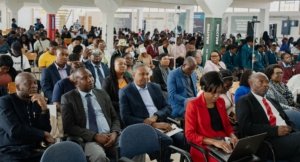
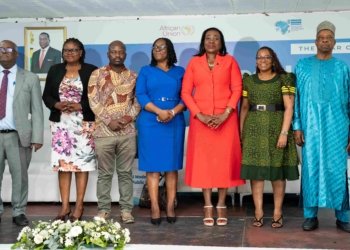
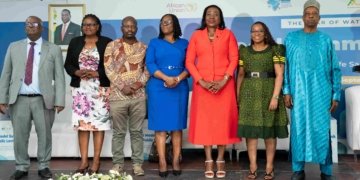
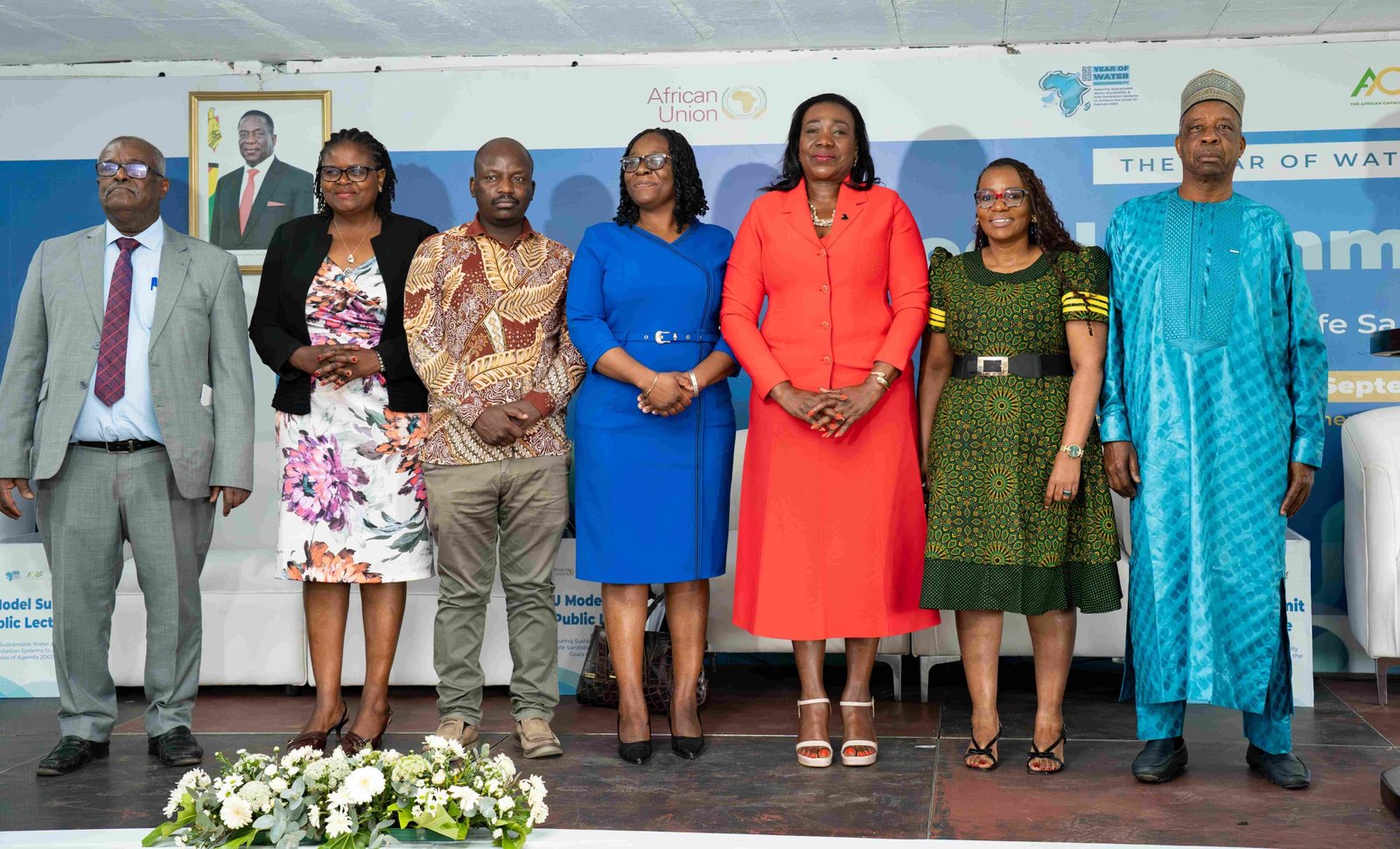
Speakers at the AU Model Summit Public Lecture, held at the Women’s University in Africa in Harare, Zimbabwe, on Sept. 17, added an institutional dimension to the challenge.
Moussa Elhadji Adam, director of the Business Services and Operations Department at the African Capacity Building Foundation (ACBF), said fragmented governance and weak coordination constrain service delivery, while gaps in managerial, regulatory and financial capacity affect institutions’ ability to sustain results and manage investment.
Adam also identified accountability among citizens, regulators, service providers and policymakers as essential to sustainable systems. His argument placed institutional capacity alongside infrastructure and financing as a condition for sustained water and sanitation services.
The burden is also unequal. Nonkululeko Prudence Ngwenya, director of the African Union Commission’s Women, Gender and Youth Directorate, said women and girls frequently bear responsibility for collecting household water, managing hygiene and caring for people affected by waterborne disease.
Water scarcity can therefore create “time poverty,” she said, reducing time available for education, income generation, skills development and leadership.
Turning continental commitments into implementation
Climate change compounds those inequalities. Ngwenya said more frequent droughts, increasingly unpredictable rainfall and more severe floods can force women to travel farther for water and heighten vulnerabilities.
Inadequate sanitation can also expose women and girls to health risks, lack of privacy, safety concerns and difficulties with menstrual hygiene management, constraining education and participation.
Against this backdrop, the African Union Southern Africa Regional Office (AU-SARO), the Women’s University in Africa, participating AU institutions and partners used the public lecture to connect the AU’s 2026 Theme of the Year with research, institutional capacity, gender-responsive policy and youth-led solutions.
The intervention reflected AU-SARO’s mandate to maintain relationships between the AU, Southern African member states, the Southern African Development Community (SADC) and the Common Market for Eastern and Southern Africa (COMESA), as well as to monitor regional integration and development.
Ambassador Hilda Suka Mafudze, AU permanent representative to Southern Africa, COMESA and SADC, argued that Agenda 2063’s vision becomes meaningful only when commitments are translated into implementation.
Universities, she said, can contribute through research on water conservation, climate-resilient infrastructure, sanitation technologies and environmental management.
Adam provided an example of capacity development already underway. ACBF’s partnership with the African Water and Sanitation Association supports stronger governance, financial and human-resource systems.
He said ACBF’s role is not to construct water infrastructure but to strengthen institutions responsible for planning, financing, regulating and delivering services.
At the university level, Vice Chancellor Professor Sunungurai Dominica Chigarande called for research to move beyond publication toward practical solutions.
She proposed affordable purification technologies, wastewater reuse and appropriate sanitation technologies, drought-resilient crops, early-warning systems and participatory water management, supported by interdisciplinary African research on water governance, sanitation, climate resilience and gender.
Building capacity for water-secure development
Gender-responsive governance emerged as a central policy requirement.
Ngwenya recommended government investment in gender-responsive water and sanitation infrastructure, stronger higher education capacity, action to challenge social norms that disproportionately burden women and girls, women’s inclusion in water governance and greater opportunities for young people to innovate and lead.
“The future of water governance in Africa must be inclusive, participatory and gender-responsive,” she said.
If carried into policy and institutional practice, these proposals could strengthen the evidence available to governments, expand universities’ contribution to implementation and give students and young researchers a more direct role in solving community water challenges.
Mafudze called for stronger partnerships among universities, governments, local authorities, the private sector and development institutions so research can translate into practical action.
The speakers also set out continuing commitments and proposed actions. ACBF reaffirmed its commitment to work with governments, regional institutions, universities and partners on capacity strengthening.
WUA said it stood ready to contribute through research, teaching, innovation and community engagement and proposed exploring joint research on water, sanitation, climate and gender; student innovation challenges; policy dialogues; community outreach; and research linked to national and continental policy processes.
These remain proposals for collaboration rather than announced completed partnerships or outcomes.
The recommendations support Agenda 2063’s Aspiration 1 for a prosperous Africa based on inclusive growth and sustainable development because reliable water and sanitation underpin health, food security, livelihoods, education and economic participation.
Mafudze described water security as indispensable to improving quality of life and strengthening food security, while Ngwenya linked access to women’s and girls’ ability to study, work and participate in leadership.
The same agenda advances Sustainable Development Goal 6 on clean water and sanitation while connecting substantively with goals on health, education, gender equality and climate action. The discussions showed those links as practical rather than parallel.
Unsafe water affects health, water collection can reduce girls’ educational opportunities, exclusion from water governance reinforces gender inequality, and climate pressures increase water insecurity.
The institutional challenge is therefore broader than infrastructure. As Adam framed the central test, Africa must ask whether it has “the institutions, capacities, financing mechanisms, and accountability systems required to sustain universal access to water and sanitation.”