
DAKAR, Senegal
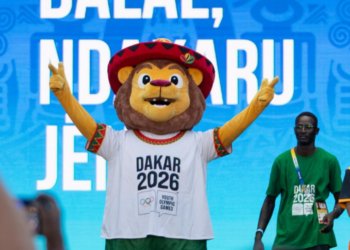
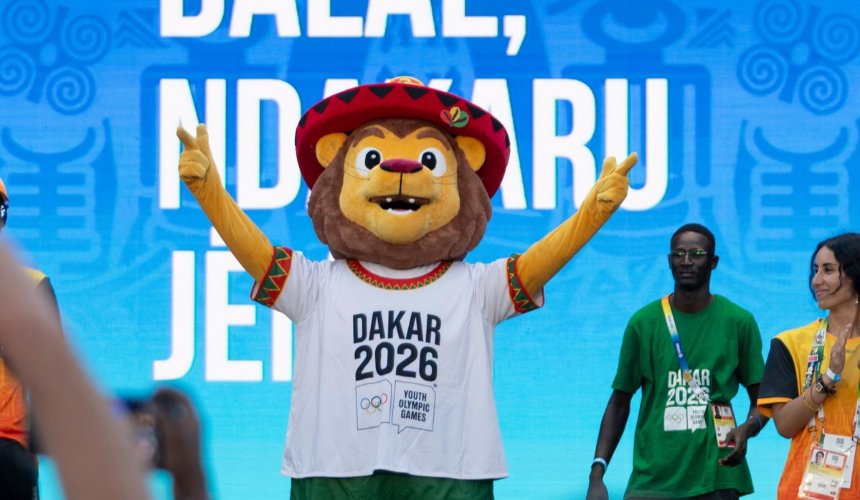
Five African countries finished among the world’s top 10 at the Dakar 2026 Youth Olympic Games, a landmark achievement as Senegal became the first African nation to host an Olympic sporting event.
Egypt led the African delegations with a fourth-place finish, followed by Ethiopia in fifth, host Senegal in sixth, Kenya in eighth and South Africa in ninth when the two-week competition concluded on Friday, Nov. 13.
The five African nations in the top 10 demonstrated the continent’s competitive presence across several sports, from swimming and athletics to wrestling, taekwondo and rugby sevens.
Approximately 2,700 young athletes competed across 25 sports in Dakar, Diamniadio and Saly. China topped the final medal standings with 18 gold medals, followed by Japan with 11 and Russia with eight.
The medals added another dimension to an event already historic for Africa. Young athletes from around the world competed for Olympic medals on African soil for the first time, with Senegal providing the stage for a new generation of sporting talent.
Senegal’s historic victories on home soil
The Games marked a breakthrough in Olympic competition for Senegal.
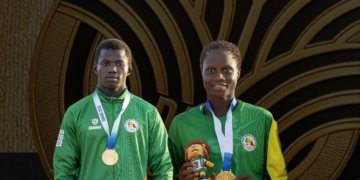
At Saly Beach West, Elisabeth Diatta became the host nation’s first gold medalist of Dakar 2026 when she won the women’s 55-kilogram beach wrestling competition on Nov. 7.
Maguette Diop followed with gold in the men’s 80-kilogram division, before Ndeye Khady Anna Diatta secured another title in the women’s 45-kilogram category the following day. Senegal won three of the eight beach wrestling gold medals awarded at the Games.
The host nation’s success extended beyond the wrestling arena.
On Nov. 9, Senegal’s men’s 3×3 basketball team defeated Lithuania 14-13 in overtime to claim gold. With the score tied at 13-13, 16-year-old Papa Mamadou Cisse scored the decisive basket.
The women’s team added bronze, giving Senegal the first African medals in 3×3 basketball at a Youth Olympic Games.
Another breakthrough came in taekwondo, where 16-year-old Marie Sarr defeated Tunisia’s Yasmine Haouani to win the women’s 55-kilogram title.
Her victory also highlighted the role of athlete development programs. According to the International Olympic Committee (IOC), Sarr had attended three World Taekwondo training camps supported by Olympic Solidarity between 2024 and 2026.
Following her triumph, Sarr encouraged young girls to participate in sport.
“Girls, you have to take part, you have to play sport,” she said in comments published by the IOC.
Senegal finished with five gold and seven bronze medals, securing 12 podium finishes on home soil.
Egypt leads Africa as Ethiopia and Kenya excel
Egypt emerged as Africa’s highest-ranked delegation, securing six gold medals among its 12 podium finishes.
One of its standout performers was 17-year-old swimmer Zain Ali, who completed a sweep of the men’s butterfly events.
Ali won gold in the 50-meter, 100-meter and 200-meter races, completing his third victory on Nov. 6. His three titles accounted for half of Egypt’s gold medals at the Games.
Ethiopia, meanwhile, reinforced its strength in middle-distance and distance running.
Sixteen-year-old Yomif Abebe won the men’s 800 meters in a personal-best 1 minute, 48.99 seconds, while Elsabet Amare claimed the women’s 1,500 meters in 4:28.02.
Earlier, 15-year-old Junedin Abdo captured the men’s 2,000-meter steeplechase title in 5:29.30, helping Ethiopia build a collection of five gold and three silver medals.
Kenya’s performance extended beyond its achievements in distance running.
Its women’s rugby sevens team defeated Australia in sudden-death extra time on Nov. 3 to secure the first rugby sevens gold medal for an African nation at either the senior Olympic Games or Youth Olympics.
Madagascar also reached the podium, winning bronze in the women’s competition.
Kenya added athletics titles, including victories in the women’s 2,000-meter steeplechase and men’s 3,000 meters, finishing eighth overall with four gold and two silver medals.
South Africa completed the African presence in the top 10 with three gold, five silver and three bronze medals.
Among its notable results was a silver medal in men’s rugby sevens after a closely contested final against France. South Africa lost 26-19, despite a strong second-half performance. South African swimmer Leah Markgraaff also earned silver in the women’s 400-meter freestyle.
Other African countries recorded significant achievements outside the top 10. Nigeria finished 17th with three gold medals, including victories in the men’s and women’s 100-meter races. Zimbabwe’s Ropafadzo Mzondo also claimed gold in the 200 meters.
Africa’s Olympic moment extends beyond medals
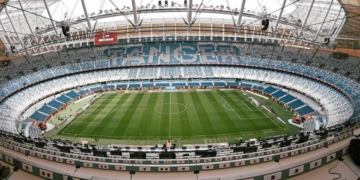
The Dakar Games represented another chapter in the Youth Olympic movement, following previous Summer editions in Singapore in 2010, Nanjing in 2014 and Buenos Aires in 2018.
They also introduced several milestones beyond the competition results.
Dakar 2026 was the first Youth Olympics to achieve gender parity across athlete quota places, sports, disciplines and events. A six-member Refugee Olympic Team, comprising athletes based in Africa, participated in the Youth Olympics for the first time.
The Games marked a meaningful milestone for IOC President Kirsty Coventry, a former Olympic swimming champion from Zimbabwe.
Speaking at the opening ceremony, Coventry described her pride as a Zimbabwean and African woman witnessing the Olympic movement arrive on the continent.
At a ceremony honoring Senegalese officials and organizers after the Games, she praised the host nation’s contribution.
“You have shown the world what Senegal and Africa are capable of,” Coventry said, according to the IOC.
Former Kenyan rugby sevens captain Humphrey Kayange, who chairs the IOC Coordination Commission for Dakar 2026, also emphasized the significance of the performances.
“Talent is universal. Talent is everywhere,” Kayange said in an IOC interview published during the final days of competition.
He pointed to Kenya’s rugby victory, Egypt’s swimming success and Senegal’s beach wrestling titles as examples of what young African athletes can achieve when given opportunities to compete and develop.
The next challenge for African sport
Several performances in Dakar were linked to existing development initiatives.
According to the IOC, its Olympic Solidarity program has supported 149 youth development initiatives across 53 African National Olympic Committees since 2025.
The program has reached more than 3,300 young athletes and 550 coaches through training, education and other development activities.
The Games also created opportunities beyond the athletes themselves.
More than 300 young professionals, including participants from 21 African National Olympic Committees, received training through the Dakar 2026 Learning Academy.
The IOC says more than 1 million Senegalese schoolchildren were reached through Olympic values education programs, while several sports facilities were renovated. The Youth Olympic Village in Diamniadio is intended to return to university use after the competition.
These initiatives are part of the legacy that Senegal and the IOC hope to establish. Their lasting benefits will become clearer as facilities return to public use and young professionals apply the skills acquired during the Games.