
Botswana and Côte d’Ivoire signed cooperation agreements in Abidjan this week as President Duma Boko pressed businesses in both countries to grow a bilateral trade relationship he put at less than $1 million.
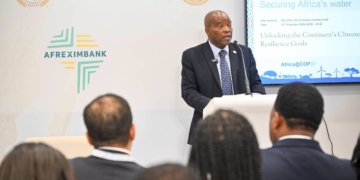
“Building interconnection networks and infrastructure to facilitate trade among African countries is no longer an option; it is a survival imperative,” Boko told business leaders in Abidjan.
Boko was in Côte d’Ivoire from November 15 to 18 on Botswana’s first state visit, as the guest of President Alassane Ouattara.
The Botswana Investment and Trade Centre and the Investment Promotion Center of Côte d’Ivoire hosted the inaugural Botswana-Côte d’Ivoire Business Forum on Tuesday, which Boko headlined with Ivorian Vice President Tiémoko Meyliet Koné.
Ouattara said overall exchanges between the two countries fall short of the potential of their economies, according to a statement the Ivorian Presidency issued after the two leaders met at the Presidential Palace on Monday.
He invited Botswana’s private sector to invest in Ivorian mining, petroleum and the major projects in the National Development Plan 2026-2030.
Free Trade as Common Ground
Boko urged companies to use the African Continental Free Trade Area (AfCFTA) to build that trade.
He told investors that Africa must reform its laws and institutions to compete for investment.
“Africa is in need of a revolution, but that revolution does not lie in one single intervention, one grand gesture, it lies in relentless small acts of courage, of calculation, of decision and of precise execution,” he said.
He presented Botswana’s Economic Transformation Programme, which the government says has identified 186 projects worth 514 billion pula ($37 billion) and aims to create 512,000 jobs by 2036.
He invited Ivorian firms to explore opportunities in Botswana and to form partnerships that create jobs and shared prosperity.
Boko told Ouattara he wants to expand exchanges under the AfCFTA to deepen trade and cooperation among African countries, according to the Ivorian Presidency.
The free trade area is a flagship project of the African Union’s Agenda 2063.
The two governments signed agreements covering mines, petroleum, animal and fisheries resources, and political and diplomatic cooperation, the Ivorian Presidency said.
Botswana’s Office of the President said the agreements also cover mutual visa abolition for holders of diplomatic, official, service and special passports, along with cooperation in mineral exploration and skills development.
The Abidjan agreements build on the mining and energy cooperation agreement the two countries signed in Gaborone in July.
Boko attended the opening of the second International Exhibition of Extractive Resources and Energy (SIREXE 2026) on Wednesday at the Parc des Expositions in Abidjan, with Botswana as Guest of Honor.
The exhibition runs until November 22 and expects more than 30 countries to take part.
Boko’s schedule also took him to the Mining Development Company of Côte d’Ivoire and the Ivorian Refining Company to see Ivorian mining and mineral processing operations.
At a dinner celebrating 60 years of leadership in the diamond sector, Boko defended natural diamonds against lab-grown stones and said their value rests on authenticity and their bond with the communities that mine them.
“It is not some construction or something conjured up in a laboratory. It carries the weight of history,” he said.
Boko said the global energy transition must drive Africa’s industrialization, economic transformation and shared prosperity as the continent’s natural resources reach world markets.
Visit Carries Long Personal History
Boko recalled advice Ouattara gave Botswana’s leaders in 1970 during an International Monetary Fund mission to the country.
Boko said that advice helped shape Botswana into a stable, open democracy focused on economic development, according to the Ivorian Presidency.
Ouattara conferred on Boko the Grand Cross of the National Order of the Republic of Côte d’Ivoire at an official lunch after their talks.
According to the Botswana Presidency, the agreements are expected to provide a stronger framework for collaboration in strategic sectors and open avenues for skills transfer, investment and economic development.