

Bantu Gazette

Bantu Gazette
  • Energy & Trade
  • Finance
  • Health
  • Politics & Economy
  • Technology
  • Environment
  • Feature
  • Opinion
  • Changemakers
  • Tourism & Culture
  • Sports
  • Magazine
Menu
  • Black Frame Studio
  • Magazine

Africa’s Green Energy Potential Could Transform Industrialization

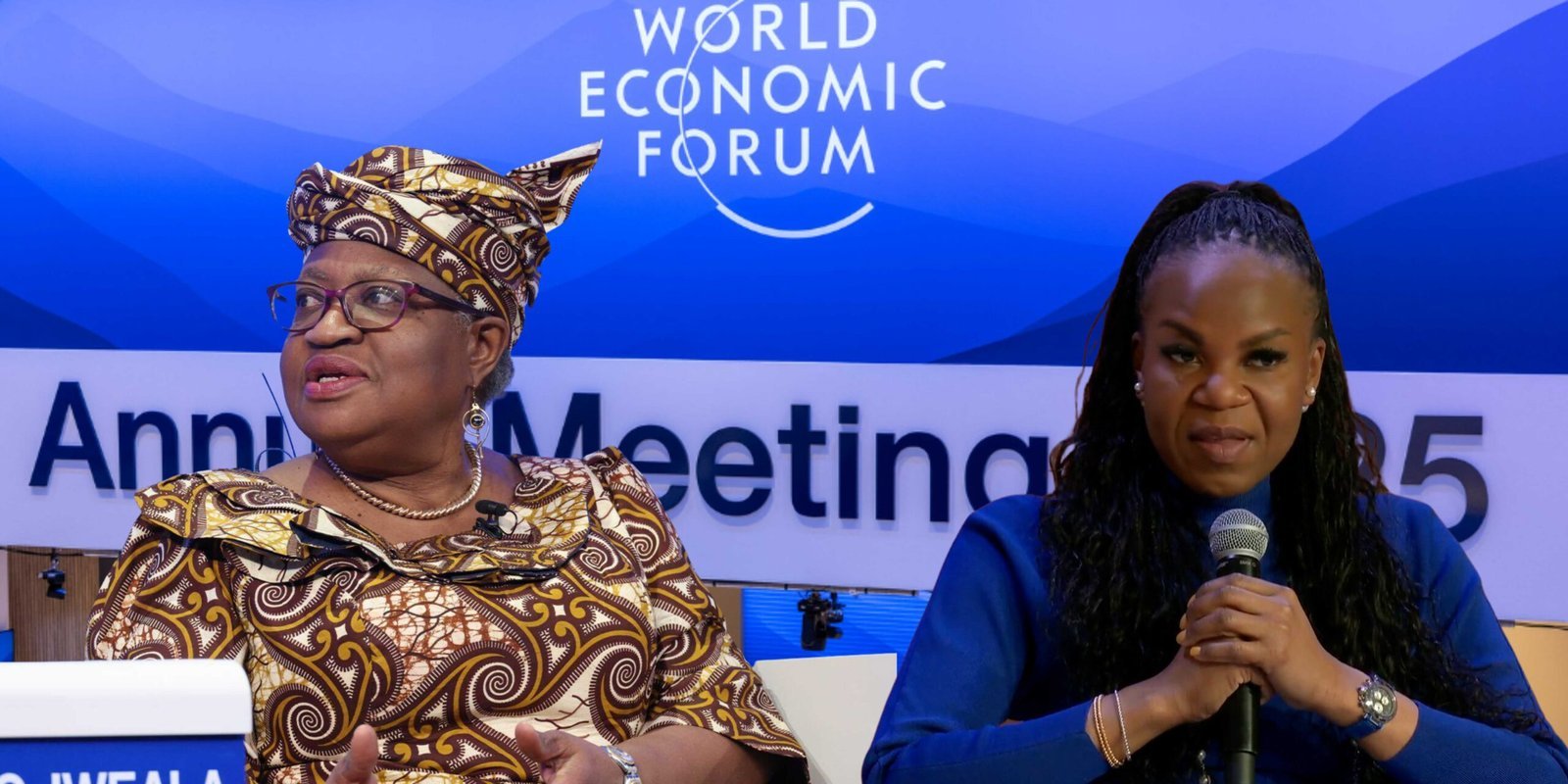
WTO Director-General Ngozi Okonjo-Iweala (left) and Damilola Ogunbiyi, Special Representative of the UN Secretary-General for Sustainable Energy for All (right), speaking at separate panels during the World Economic Forum in Davos. (Edited image)

WTO Director-General Ngozi Okonjo-Iweala (left) and Damilola Ogunbiyi, Special Representative of the UN Secretary-General for Sustainable Energy for All (right), speaking at separate panels during the World Economic Forum in Davos. (Edited image)

Felix Tihby Felix Tih
January 23, 2025
Reading Time: 4 mins read

Africa’s Green Energy Potential Could Transform Industrialization

WTO Director-General Ngozi Okonjo-Iweala (left) and Damilola Ogunbiyi, Special Representative of the UN Secretary-General for Sustainable Energy for All (right), speaking at separate panels during the World Economic Forum in Davos. (Edited image)

WTO Director-General Ngozi Okonjo-Iweala (left) and Damilola Ogunbiyi, Special Representative of the UN Secretary-General for Sustainable Energy for All (right), speaking at separate panels during the World Economic Forum in Davos. (Edited image)

WTO Director-General Ngozi Okonjo-Iweala (left) and Damilola Ogunbiyi, Special Representative of the UN Secretary-General for Sustainable Energy for All (right), speaking at separate panels during the World Economic Forum in Davos. (Edited image)

WTO Director-General Ngozi Okonjo-Iweala (left) and Damilola Ogunbiyi, Special Representative of the UN Secretary-General for Sustainable Energy for All (right), speaking at separate panels during the World Economic Forum in Davos. (Edited image)

Felix Tihby Felix Tih
July 16, 2025
Reading Time: 4 mins read

DAVOS, Switzerland (BG) — Africa stands on the verge of a transformative opportunity to industrialize sustainably, harnessing its vast clean energy resources while driving global efforts to combat climate change, according to world leaders and experts speaking at the World Economic Forum in Davos this week.

Ngozi Okonjo-Iweala, Director-General of the World Trade Organization, highlighted the continent’s untapped potential in renewable energy during a panel discussion titled “Squaring the Climate Trade Circle.”

She proposed an innovative approach to trade that leverages countries’ environmental strengths to reduce global carbon emissions.

“So just as we encourage countries to produce to their economic comparative advantage, you know, you produce what you’re most good at, and you trade it to others who produce what they’re most good at,” Okonjo-Iweala said.

“What if countries could produce what they’re most environmentally good at, those goods that they produce where they can lower carbon emissions, and trade to others that don’t have that, so that overall, we lower carbon emissions for the world?” she added.

The statistics surrounding Africa’s renewable energy potential are staggering. The continent boasts 60% of the world’s solar energy resources, yet it receives a disproportionately small share—just 2%—of global solar investment, according to Okonjo-Iweala.

The WTO chief emphasized the vital role trade plays in advancing clean technology adoption, noting that it is essential for transferring innovations like solar and wind technologies from the places they are developed to the places they are manufactured.

“It’s absolutely clear to me that you could not have the adoption of technology and clean energy the way we would like it in the world without trade,” she said.

Okonjo-Iweala also observed that trade is often taken for granted, which leads people to “neglect some of the benefits that trade brings” in facilitating the global shift to renewable energy.

Industrializing With Clean Energy

Damilola Ogunbiyi, the United Nations Special Representative for Sustainable Energy for All, echoed Okonjo-Iweala’s vision of Africa as a global hub for green energy.

Speaking at a separate panel titled “Industrial Decarbonization as a Growth Strategy,” she emphasized Africa’s unique position to industrialize more cleanly and efficiently than developed nations of the past.

“I don’t think people talk enough about the opportunity of decarbonization,” Ogunbiyi stressed.

She said Africa, which has not fully industrialized, can do it better. “We don’t have to have them industrialize or use old technologies and decarbonize. So, there is a big opportunity, especially for those types of jobs that will be created, for a whole new industry.”

She called for collaboration between governments, businesses, and civil society to ensure Africa can lead in clean energy industrialization.

“That’s why it is so important for governments, civil society, businesses to really work together in this. Not just from what is happening in your own country or what’s happening in Scotland or the U.S. How do you take that capacity building to other countries that are going to do it regardless?” the UN official said.

Africa’s Untapped Renewable Resources

Analysts believe bridging this gap could accelerate economic development while addressing global energy needs sustainably.

Okonjo-Iweala and Ogunbiyi stressed that Africa’s potential to lead in the green economy hinges on international cooperation and investment.

Clean energy projects on the continent could unlock millions of jobs, spur innovation, and position Africa as a leader in the global transition to renewable energy.

By fostering industrialization powered by green energy, African nations could leapfrog traditional, carbon-intensive development paths and establish themselves as competitive players in the global economy.

Ogunbiyi pointed out that Africa’s relatively late industrialization offers an advantage: the chance to build from the ground up with the latest clean technologies.

The Road Ahead

To capitalize on its potential, Africa will need more than just investment. Experts agree that international frameworks must facilitate fair trade in green energy technologies and materials, while governments across the continent must adopt policies that encourage renewable energy adoption.

As the world grapples with the urgent need to lower emissions, Africa’s renewable energy resources and its potential for green industrialization have drawn increasing attention.

Leaders in Davos stressed that unlocking this potential would advance Africa’s economic growth and contribute meaningfully to the global fight against climate change.

As Okonjo-Iweala said, the goal is to leverage trade and green energy for mutual benefit: “You produce what you are most good at… and trade it to others who produce what they’re most good at. What if countries could produce what they are most environmentally good at?”

Africa’s path to green industrialization may still be nascent. Still, global cooperation could redefine the continent’s role in the global economy and secure a more sustainable future for all.

Reporting by the Bantu Gazette from Davos, Switzerland

Get the inside Story

Stay informed on the stories shaping Africa’s future. Get breaking news, in-depth analysis, opinions and exclusive insights from across the continent delivered to your inbox, free and unfiltered.


Get in touch for more:
Felix Tih
Editorial Director, Bantu Gazette
WhatsApp
LinkedIn
X (Twitter)
Instagram

Related Posts

Ethiopia, Djibouti Plan Pipeline Corridor to Boost Horn of Africa Energy Trade
Energy & Trade

Ethiopia, Djibouti Plan Pipeline Corridor to Boost Horn of Africa Energy Trade

May 22, 2026
Liberia to Build its 1st Electrical Manufacturing Plant in $26M Deal with Kenyan Firm
Energy & Trade

Liberia to Build its 1st Electrical Manufacturing Plant in $26M Deal with Kenyan Firm

May 20, 2026
Ethiopia’s Flagship Dam Doubles Power Output, Supplies Half of Country’s Electricity
Energy & Trade

Ethiopia’s Flagship Dam Doubles Power Output, Supplies Half of Country’s Electricity

May 7, 2026
Zimbabwe Becomes First African Nation to Export Processed Lithium
Energy & Trade

Zimbabwe Becomes First African Nation to Export Processed Lithium

May 5, 2026
NamPower lists N$5 billion bond program on Namibia Securities Exchange
Energy & Trade

NamPower lists N$5 billion bond program on Namibia Securities Exchange

April 28, 2026
Cameroon Moves to Tighten Grip on Oil Liftings, Revenues
Energy & Trade

Cameroon Moves to Tighten Grip on Oil Liftings, Revenues

April 25, 2026

Most Recent

Benin Announces Free Public Secondary Education for All Girls
Changemakers

Benin Announces Free Public Secondary Education for All Girls

by Aissatou Fall
June 4, 2026
0

President Romuald Wadagni says the policy will remove financial barriers to education and help thousands of girls stay in school...

Read moreDetails
Zimbabwe Secures Non-Permanent Seat on U.N. Security Council

Zimbabwe Secures Non-Permanent Seat on U.N. Security Council

June 3, 2026
Dangote Retains Africa’s Most Admired Brand Title for 8th Consecutive Year

Dangote Retains Africa’s Most Admired Brand Title for 8th Consecutive Year

June 4, 2026
Rwanda’s RSSB Tigers Make History with 2026 BAL Championship Victory

Rwanda’s RSSB Tigers Make History with 2026 BAL Championship Victory

June 4, 2026
Research Finds Consumer Demand, Not Herd Size, Drives African Dairy Development

Research Finds Consumer Demand, Not Herd Size, Drives African Dairy Development

June 3, 2026
African Electric Mobility Firm Spiro Raises $215 Million for Continental Expansion

African Electric Mobility Firm Spiro Raises $215 Million for Continental Expansion

June 3, 2026
Millions Turn Out for Ethiopia’s 7th General Election as Leaders and International Observers Monitor the Poll

Millions Turn Out for Ethiopia’s 7th General Election as Leaders and International Observers Monitor the Poll

June 3, 2026
Benin Announces Free Public Secondary Education for All Girls
Changemakers

Benin Announces Free Public Secondary Education for All Girls

by Aissatou Fall
Reading Time: 2 mins read
June 4, 2026
0

President Romuald Wadagni says the policy will remove financial barriers to education and help thousands of girls stay in school...

Read moreDetails
Zimbabwe Secures Non-Permanent Seat on U.N. Security Council
Politics & Economy

Zimbabwe Secures Non-Permanent Seat on U.N. Security Council

by Naledi Kgosi
Reading Time: 2 mins read
June 3, 2026
0

The southern African nation will begin a two-year term in January 2027, marking its return to the council after more...

Read moreDetails
Dangote Retains Africa’s Most Admired Brand Title for 8th Consecutive Year
Changemakers

Dangote Retains Africa’s Most Admired Brand Title for 8th Consecutive Year

by Aissatou Fall
Reading Time: 2 mins read
June 4, 2026
0

The industrial conglomerate topped the 2026 Brand Africa rankings and said the honor validates its commitment to building industries and...

Read moreDetails

Africa’s Green Energy Potential Could Transform Industrialization

WTO Director-General Ngozi Okonjo-Iweala (left) and Damilola Ogunbiyi, Special Representative of the UN Secretary-General for Sustainable Energy for All (right), speaking at separate panels during the World Economic Forum in Davos. (Edited image)

WTO Director-General Ngozi Okonjo-Iweala (left) and Damilola Ogunbiyi, Special Representative of the UN Secretary-General for Sustainable Energy for All (right), speaking at separate panels during the World Economic Forum in Davos. (Edited image)

DAVOS, Switzerland (BG) — Africa stands on the verge of a transformative opportunity to industrialize sustainably, harnessing its vast clean energy resources while driving global efforts to combat climate change, according to world leaders and experts speaking at the World Economic Forum in Davos this week.

Ngozi Okonjo-Iweala, Director-General of the World Trade Organization, highlighted the continent’s untapped potential in renewable energy during a panel discussion titled “Squaring the Climate Trade Circle.”

She proposed an innovative approach to trade that leverages countries’ environmental strengths to reduce global carbon emissions.

“So just as we encourage countries to produce to their economic comparative advantage, you know, you produce what you’re most good at, and you trade it to others who produce what they’re most good at,” Okonjo-Iweala said.

“What if countries could produce what they’re most environmentally good at, those goods that they produce where they can lower carbon emissions, and trade to others that don’t have that, so that overall, we lower carbon emissions for the world?” she added.

The statistics surrounding Africa’s renewable energy potential are staggering. The continent boasts 60% of the world’s solar energy resources, yet it receives a disproportionately small share—just 2%—of global solar investment, according to Okonjo-Iweala.

The WTO chief emphasized the vital role trade plays in advancing clean technology adoption, noting that it is essential for transferring innovations like solar and wind technologies from the places they are developed to the places they are manufactured.

“It’s absolutely clear to me that you could not have the adoption of technology and clean energy the way we would like it in the world without trade,” she said.

Okonjo-Iweala also observed that trade is often taken for granted, which leads people to “neglect some of the benefits that trade brings” in facilitating the global shift to renewable energy.

Industrializing With Clean Energy

Damilola Ogunbiyi, the United Nations Special Representative for Sustainable Energy for All, echoed Okonjo-Iweala’s vision of Africa as a global hub for green energy.

Speaking at a separate panel titled “Industrial Decarbonization as a Growth Strategy,” she emphasized Africa’s unique position to industrialize more cleanly and efficiently than developed nations of the past.

“I don’t think people talk enough about the opportunity of decarbonization,” Ogunbiyi stressed.

She said Africa, which has not fully industrialized, can do it better. “We don’t have to have them industrialize or use old technologies and decarbonize. So, there is a big opportunity, especially for those types of jobs that will be created, for a whole new industry.”

She called for collaboration between governments, businesses, and civil society to ensure Africa can lead in clean energy industrialization.

“That’s why it is so important for governments, civil society, businesses to really work together in this. Not just from what is happening in your own country or what’s happening in Scotland or the U.S. How do you take that capacity building to other countries that are going to do it regardless?” the UN official said.

Africa’s Untapped Renewable Resources

Analysts believe bridging this gap could accelerate economic development while addressing global energy needs sustainably.

Okonjo-Iweala and Ogunbiyi stressed that Africa’s potential to lead in the green economy hinges on international cooperation and investment.

Clean energy projects on the continent could unlock millions of jobs, spur innovation, and position Africa as a leader in the global transition to renewable energy.

By fostering industrialization powered by green energy, African nations could leapfrog traditional, carbon-intensive development paths and establish themselves as competitive players in the global economy.

Ogunbiyi pointed out that Africa’s relatively late industrialization offers an advantage: the chance to build from the ground up with the latest clean technologies.

The Road Ahead

To capitalize on its potential, Africa will need more than just investment. Experts agree that international frameworks must facilitate fair trade in green energy technologies and materials, while governments across the continent must adopt policies that encourage renewable energy adoption.

As the world grapples with the urgent need to lower emissions, Africa’s renewable energy resources and its potential for green industrialization have drawn increasing attention.

Leaders in Davos stressed that unlocking this potential would advance Africa’s economic growth and contribute meaningfully to the global fight against climate change.

As Okonjo-Iweala said, the goal is to leverage trade and green energy for mutual benefit: “You produce what you are most good at… and trade it to others who produce what they’re most good at. What if countries could produce what they are most environmentally good at?”

Africa’s path to green industrialization may still be nascent. Still, global cooperation could redefine the continent’s role in the global economy and secure a more sustainable future for all.

Reporting by the Bantu Gazette from Davos, Switzerland
Africa’s Green Energy Potential Could Transform Industrialization

WTO Director-General Ngozi Okonjo-Iweala (left) and Damilola Ogunbiyi, Special Representative of the UN Secretary-General for Sustainable Energy for All (right), speaking at separate panels during the World Economic Forum in Davos. (Edited image)

WTO Director-General Ngozi Okonjo-Iweala (left) and Damilola Ogunbiyi, Special Representative of the UN Secretary-General for Sustainable Energy for All (right), speaking at separate panels during the World Economic Forum in Davos. (Edited image)

Felix Tihby Felix Tih
January 23, 2025

DAVOS, Switzerland (BG) — Africa stands on the verge of a transformative opportunity to industrialize sustainably, harnessing its vast clean energy resources while driving global efforts to combat climate change, according to world leaders and experts speaking at the World Economic Forum in Davos this week.

Ngozi Okonjo-Iweala, Director-General of the World Trade Organization, highlighted the continent’s untapped potential in renewable energy during a panel discussion titled “Squaring the Climate Trade Circle.”

She proposed an innovative approach to trade that leverages countries’ environmental strengths to reduce global carbon emissions.

“So just as we encourage countries to produce to their economic comparative advantage, you know, you produce what you’re most good at, and you trade it to others who produce what they’re most good at,” Okonjo-Iweala said.

“What if countries could produce what they’re most environmentally good at, those goods that they produce where they can lower carbon emissions, and trade to others that don’t have that, so that overall, we lower carbon emissions for the world?” she added.

The statistics surrounding Africa’s renewable energy potential are staggering. The continent boasts 60% of the world’s solar energy resources, yet it receives a disproportionately small share—just 2%—of global solar investment, according to Okonjo-Iweala.

The WTO chief emphasized the vital role trade plays in advancing clean technology adoption, noting that it is essential for transferring innovations like solar and wind technologies from the places they are developed to the places they are manufactured.

“It’s absolutely clear to me that you could not have the adoption of technology and clean energy the way we would like it in the world without trade,” she said.

Okonjo-Iweala also observed that trade is often taken for granted, which leads people to “neglect some of the benefits that trade brings” in facilitating the global shift to renewable energy.

Industrializing With Clean Energy

Damilola Ogunbiyi, the United Nations Special Representative for Sustainable Energy for All, echoed Okonjo-Iweala’s vision of Africa as a global hub for green energy.

Speaking at a separate panel titled “Industrial Decarbonization as a Growth Strategy,” she emphasized Africa’s unique position to industrialize more cleanly and efficiently than developed nations of the past.

“I don’t think people talk enough about the opportunity of decarbonization,” Ogunbiyi stressed.

She said Africa, which has not fully industrialized, can do it better. “We don’t have to have them industrialize or use old technologies and decarbonize. So, there is a big opportunity, especially for those types of jobs that will be created, for a whole new industry.”

She called for collaboration between governments, businesses, and civil society to ensure Africa can lead in clean energy industrialization.

“That’s why it is so important for governments, civil society, businesses to really work together in this. Not just from what is happening in your own country or what’s happening in Scotland or the U.S. How do you take that capacity building to other countries that are going to do it regardless?” the UN official said.

Africa’s Untapped Renewable Resources

Analysts believe bridging this gap could accelerate economic development while addressing global energy needs sustainably.

Okonjo-Iweala and Ogunbiyi stressed that Africa’s potential to lead in the green economy hinges on international cooperation and investment.

Clean energy projects on the continent could unlock millions of jobs, spur innovation, and position Africa as a leader in the global transition to renewable energy.

By fostering industrialization powered by green energy, African nations could leapfrog traditional, carbon-intensive development paths and establish themselves as competitive players in the global economy.

Ogunbiyi pointed out that Africa’s relatively late industrialization offers an advantage: the chance to build from the ground up with the latest clean technologies.

The Road Ahead

To capitalize on its potential, Africa will need more than just investment. Experts agree that international frameworks must facilitate fair trade in green energy technologies and materials, while governments across the continent must adopt policies that encourage renewable energy adoption.

As the world grapples with the urgent need to lower emissions, Africa’s renewable energy resources and its potential for green industrialization have drawn increasing attention.

Leaders in Davos stressed that unlocking this potential would advance Africa’s economic growth and contribute meaningfully to the global fight against climate change.

As Okonjo-Iweala said, the goal is to leverage trade and green energy for mutual benefit: “You produce what you are most good at… and trade it to others who produce what they’re most good at. What if countries could produce what they are most environmentally good at?”

Africa’s path to green industrialization may still be nascent. Still, global cooperation could redefine the continent’s role in the global economy and secure a more sustainable future for all.

Reporting by the Bantu Gazette from Davos, Switzerland

Get the inside Story

Stay informed on the stories shaping Africa’s future. Get breaking news, in-depth analysis, opinions and exclusive insights from across the continent delivered to your inbox, free and unfiltered.


Get in touch for more:
Felix Tih
Editorial Director, Bantu Gazette
WhatsApp
LinkedIn
X (Twitter)
Instagram

Related Posts

Ethiopia, Djibouti Plan Pipeline Corridor to Boost Horn of Africa Energy Trade

Ethiopia, Djibouti Plan Pipeline Corridor to Boost Horn of Africa Energy Trade

by Kalkidan Negash
May 22, 2026
0

...

Liberia to Build its 1st Electrical Manufacturing Plant in $26M Deal with Kenyan Firm

Liberia to Build its 1st Electrical Manufacturing Plant in $26M Deal with Kenyan Firm

by Aissatou Fall
May 14, 2026
0

...

Ethiopia’s Flagship Dam Doubles Power Output, Supplies Half of Country’s Electricity

Ethiopia’s Flagship Dam Doubles Power Output, Supplies Half of Country’s Electricity

by Kalkidan Negash
May 6, 2026
0

...

Zimbabwe Becomes First African Nation to Export Processed Lithium

Zimbabwe Becomes First African Nation to Export Processed Lithium

by Naledi Kgosi
May 5, 2026
0

...

NamPower lists N$5 billion bond program on Namibia Securities Exchange

NamPower lists N$5 billion bond program on Namibia Securities Exchange

by Naledi Kgosi
April 28, 2026
0

...

Cameroon Moves to Tighten Grip on Oil Liftings, Revenues

Cameroon Moves to Tighten Grip on Oil Liftings, Revenues

by Marina Bisse
April 25, 2026
0

...

Benin Announces Free Public Secondary Education for All Girls
Changemakers

Benin Announces Free Public Secondary Education for All Girls

by Aissatou Fall
Reading Time: 2 mins read
June 4, 2026
0

President Romuald Wadagni says the policy will remove financial barriers to education and help thousands of girls stay in school...

Read moreDetails
Zimbabwe Secures Non-Permanent Seat on U.N. Security Council

Zimbabwe Secures Non-Permanent Seat on U.N. Security Council

by Naledi Kgosi
June 3, 2026
0

The southern African nation will begin a two-year term in January 2027, marking its return to the council after more...

Dangote Retains Africa’s Most Admired Brand Title for 8th Consecutive Year

Dangote Retains Africa’s Most Admired Brand Title for 8th Consecutive Year

by Aissatou Fall
June 3, 2026
0

The industrial conglomerate topped the 2026 Brand Africa rankings and said the honor validates its commitment to building industries and...

Rwanda’s RSSB Tigers Make History with 2026 BAL Championship Victory

Rwanda’s RSSB Tigers Make History with 2026 BAL Championship Victory

by Amani Mwakalebela
June 3, 2026
0

The Kigali-based club became the first team from Rwanda to capture the Basketball Africa League championship with a 90-88 win...

Research Finds Consumer Demand, Not Herd Size, Drives African Dairy Development

Research Finds Consumer Demand, Not Herd Size, Drives African Dairy Development

by Marina Bisse
June 3, 2026
0

Policy support and higher dairy consumption have helped North Africa build stronger dairy sectors than regions with larger cattle populations,...

Next Post

Innovation Drives Ghana’s Efforts to Boost Food Security, Sustainability

Taraba Human Rights Film Festival Champions Education in Nigeria

Taraba Human Rights Film Festival Champions Education in Nigeria

Furaha Secures $10M to Expand Loan Program for Africa’s Underprivileged

Furaha Secures $10M to Expand Loan Program for Africa's Underprivileged

Togo Leverages Artificial Intelligence to Map Poverty and Deliver Support

Bantu Gazette is a pioneering news platform that champions Africa's development, culture, and heritage. We spotlight the continent's successes, address its challenges, and provide insightful coverage of events that shape its future.

Bantu Gazette is a pioneering news platform that champions Africa's development, culture, and heritage. We spotlight the continent's successes, address its challenges, and provide insightful coverage of events that shape its future.

Our Platforms

  • Bantu Magazine
  • Bantu Brief
  • Black Frame Studio

Our Services

  • Bantu Agency
  • Advertise
  • Partnerships

Our Services

  • Editorial Director
  • Opportunities
  • Contact

Bantu Gazette is a pioneering news platform that champions Africa's development, culture, and heritage. We spotlight the continent's successes, address its challenges, and provide insightful coverage of events that shape its future.

Our Platforms

  • Bantu Magazine
  • Bantu Brief
  • Black Frame Studio

Our Services

  • Bantu Agency
  • Advertise
  • Partnerships

Our Services

  • Editorial Director
  • Opportunities
  • Contact
Bantu Gazette
  • Energy & Trade
  • Finance
  • Health
  • Politics & Economy
  • Technology
  • Environment
  • Feature
  • Opinion
  • Changemakers
  • Tourism & Culture
  • Magazine