

Bantu Gazette

Bantu Gazette
  • Energy & Trade
  • Finance
  • Health
  • Politics & Economy
  • Technology
  • Environment
  • Feature
  • Opinion
  • Changemakers
  • Tourism & Culture
  • Sports
  • Magazine
Menu
  • Black Frame Studio
  • Magazine

Africa’s Green Energy Potential Could Transform Industrialization

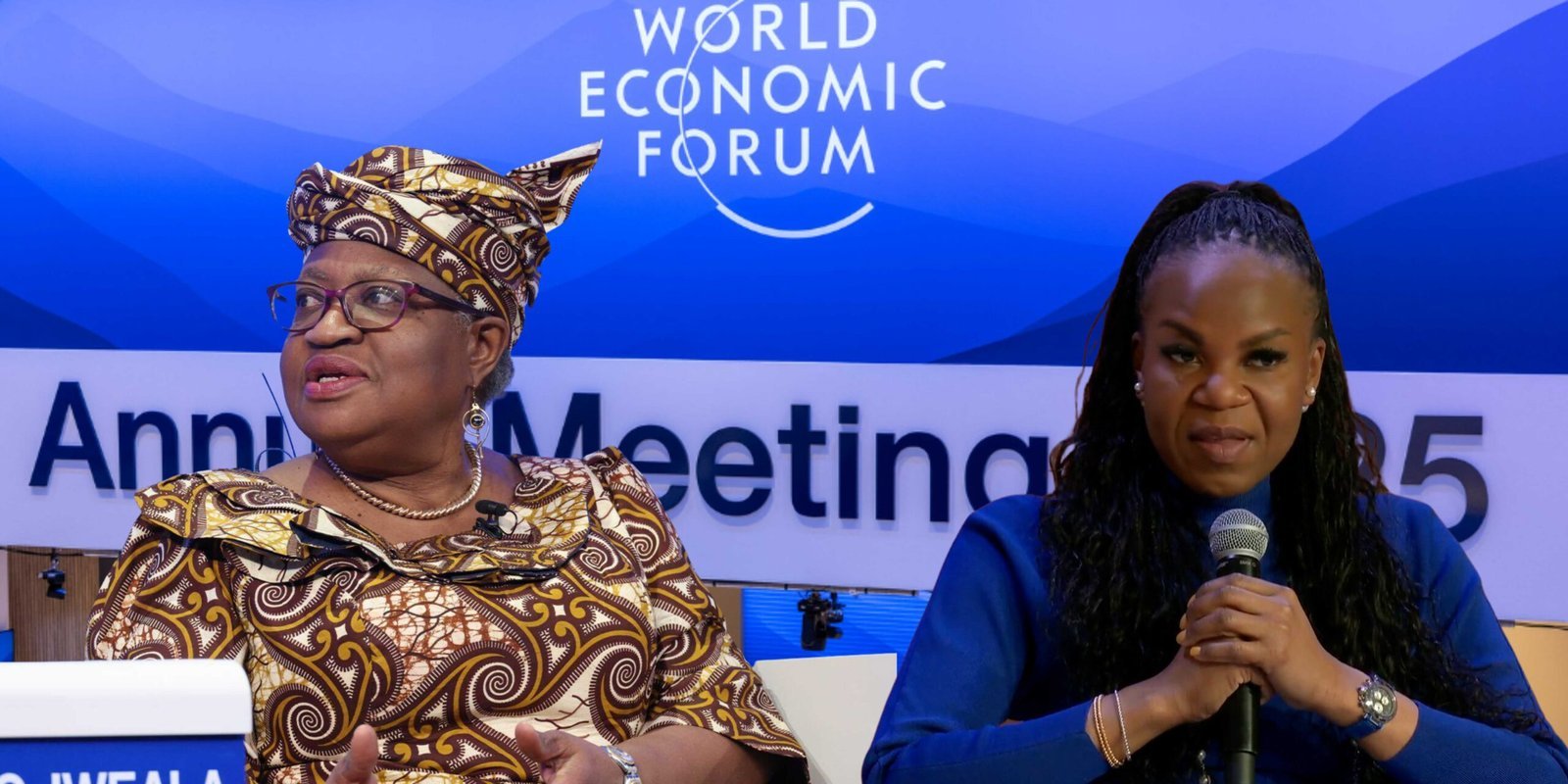
WTO Director-General Ngozi Okonjo-Iweala (left) and Damilola Ogunbiyi, Special Representative of the UN Secretary-General for Sustainable Energy for All (right), speaking at separate panels during the World Economic Forum in Davos. (Edited image)

WTO Director-General Ngozi Okonjo-Iweala (left) and Damilola Ogunbiyi, Special Representative of the UN Secretary-General for Sustainable Energy for All (right), speaking at separate panels during the World Economic Forum in Davos. (Edited image)

Felix Tihby Felix Tih
January 23, 2025
Reading Time: 4 mins read

Africa’s Green Energy Potential Could Transform Industrialization

WTO Director-General Ngozi Okonjo-Iweala (left) and Damilola Ogunbiyi, Special Representative of the UN Secretary-General for Sustainable Energy for All (right), speaking at separate panels during the World Economic Forum in Davos. (Edited image)

WTO Director-General Ngozi Okonjo-Iweala (left) and Damilola Ogunbiyi, Special Representative of the UN Secretary-General for Sustainable Energy for All (right), speaking at separate panels during the World Economic Forum in Davos. (Edited image)

WTO Director-General Ngozi Okonjo-Iweala (left) and Damilola Ogunbiyi, Special Representative of the UN Secretary-General for Sustainable Energy for All (right), speaking at separate panels during the World Economic Forum in Davos. (Edited image)

WTO Director-General Ngozi Okonjo-Iweala (left) and Damilola Ogunbiyi, Special Representative of the UN Secretary-General for Sustainable Energy for All (right), speaking at separate panels during the World Economic Forum in Davos. (Edited image)

Felix Tihby Felix Tih
July 16, 2025
Reading Time: 4 mins read

DAVOS, Switzerland (BG) — Africa stands on the verge of a transformative opportunity to industrialize sustainably, harnessing its vast clean energy resources while driving global efforts to combat climate change, according to world leaders and experts speaking at the World Economic Forum in Davos this week.

Ngozi Okonjo-Iweala, Director-General of the World Trade Organization, highlighted the continent’s untapped potential in renewable energy during a panel discussion titled “Squaring the Climate Trade Circle.”

She proposed an innovative approach to trade that leverages countries’ environmental strengths to reduce global carbon emissions.

“So just as we encourage countries to produce to their economic comparative advantage, you know, you produce what you’re most good at, and you trade it to others who produce what they’re most good at,” Okonjo-Iweala said.

“What if countries could produce what they’re most environmentally good at, those goods that they produce where they can lower carbon emissions, and trade to others that don’t have that, so that overall, we lower carbon emissions for the world?” she added.

The statistics surrounding Africa’s renewable energy potential are staggering. The continent boasts 60% of the world’s solar energy resources, yet it receives a disproportionately small share—just 2%—of global solar investment, according to Okonjo-Iweala.

The WTO chief emphasized the vital role trade plays in advancing clean technology adoption, noting that it is essential for transferring innovations like solar and wind technologies from the places they are developed to the places they are manufactured.

“It’s absolutely clear to me that you could not have the adoption of technology and clean energy the way we would like it in the world without trade,” she said.

Okonjo-Iweala also observed that trade is often taken for granted, which leads people to “neglect some of the benefits that trade brings” in facilitating the global shift to renewable energy.

Industrializing With Clean Energy

Damilola Ogunbiyi, the United Nations Special Representative for Sustainable Energy for All, echoed Okonjo-Iweala’s vision of Africa as a global hub for green energy.

Speaking at a separate panel titled “Industrial Decarbonization as a Growth Strategy,” she emphasized Africa’s unique position to industrialize more cleanly and efficiently than developed nations of the past.

“I don’t think people talk enough about the opportunity of decarbonization,” Ogunbiyi stressed.

She said Africa, which has not fully industrialized, can do it better. “We don’t have to have them industrialize or use old technologies and decarbonize. So, there is a big opportunity, especially for those types of jobs that will be created, for a whole new industry.”

She called for collaboration between governments, businesses, and civil society to ensure Africa can lead in clean energy industrialization.

“That’s why it is so important for governments, civil society, businesses to really work together in this. Not just from what is happening in your own country or what’s happening in Scotland or the U.S. How do you take that capacity building to other countries that are going to do it regardless?” the UN official said.

Africa’s Untapped Renewable Resources

Analysts believe bridging this gap could accelerate economic development while addressing global energy needs sustainably.

Okonjo-Iweala and Ogunbiyi stressed that Africa’s potential to lead in the green economy hinges on international cooperation and investment.

Clean energy projects on the continent could unlock millions of jobs, spur innovation, and position Africa as a leader in the global transition to renewable energy.

By fostering industrialization powered by green energy, African nations could leapfrog traditional, carbon-intensive development paths and establish themselves as competitive players in the global economy.

Ogunbiyi pointed out that Africa’s relatively late industrialization offers an advantage: the chance to build from the ground up with the latest clean technologies.

The Road Ahead

To capitalize on its potential, Africa will need more than just investment. Experts agree that international frameworks must facilitate fair trade in green energy technologies and materials, while governments across the continent must adopt policies that encourage renewable energy adoption.

As the world grapples with the urgent need to lower emissions, Africa’s renewable energy resources and its potential for green industrialization have drawn increasing attention.

Leaders in Davos stressed that unlocking this potential would advance Africa’s economic growth and contribute meaningfully to the global fight against climate change.

As Okonjo-Iweala said, the goal is to leverage trade and green energy for mutual benefit: “You produce what you are most good at… and trade it to others who produce what they’re most good at. What if countries could produce what they are most environmentally good at?”

Africa’s path to green industrialization may still be nascent. Still, global cooperation could redefine the continent’s role in the global economy and secure a more sustainable future for all.

Reporting by the Bantu Gazette from Davos, Switzerland
Get the inside Story

Stay informed on the stories shaping Africa’s future. Get breaking news, in-depth analysis, opinions and exclusive insights from across the continent delivered to your inbox, free and unfiltered.


Get in touch for more:
Felix Tih
Editorial Director, Bantu Gazette
WhatsApp
LinkedIn
X (Twitter)
Instagram

Related Posts

Crude-for-Naira Plan Gains Ground as Nigeria Pushes for Energy Market Reform
Energy & Trade

DR Congo Raises Fuel Prices Amid High Refining Costs Linked to Middle East Crisis

April 18, 2026
Kenya Manufacturers Warn Logistics Costs Undercut Intra-African Trade Gains
Energy & Trade

Kenya Manufacturers Warn Logistics Costs Undercut Intra-African Trade Gains

April 13, 2026
South Africa’s Kusile Power Station Reaches Full Capacity, Ending Years of Setbacks
Energy & Trade

South Africa’s Kusile Power Station Reaches Full Capacity, Ending Years of Setbacks

April 11, 2026
Tunisia Plans Trans-Saharan Land Corridor to Open Sahel Trade Routes
Energy & Trade

Tunisia Plans Trans-Saharan Land Corridor to Open Sahel Trade Routes

April 5, 2026
Africa, Latin America Seek Stronger Trade Ties at WTO Meeting
Energy & Trade

Africa, Latin America Seek Stronger Trade Ties at WTO Meeting

March 29, 2026
Nigeria’s State Oil Company Shifts Focus From Reserves to Sustained Revenue
Energy & Trade

Nigeria’s State Oil Company Shifts Focus From Reserves to Sustained Revenue

March 24, 2026

Most Recent

Côte d’Ivoire Creates Sovereign Development Fund to Finance Long-Term Growth
Politics & Economy

Côte d’Ivoire Creates Sovereign Development Fund to Finance Long-Term Growth

by Aissatou Fall
April 19, 2026
0

Côte d'Ivoire has established a sovereign development fund to channel state resources into long-term strategic investments, formalizing a new financing...

Read moreDetails
West Africa Bank Commits €310M to Guinea’s Simandou 2040 Development Plan

West Africa Bank Commits €310M to Guinea’s Simandou 2040 Development Plan

April 19, 2026
Gambia Commissions First Hybrid Green Ferry on Banjul-Barra Corridor

Gambia Commissions First Hybrid Green Ferry on Banjul-Barra Corridor

April 18, 2026
Burkina Faso Nationalizes SOFITEX to Reclaim Full Control of Cotton Sector

Burkina Faso Nationalizes SOFITEX to Reclaim Full Control of Cotton Sector

April 17, 2026
Crude-for-Naira Plan Gains Ground as Nigeria Pushes for Energy Market Reform

DR Congo Raises Fuel Prices Amid High Refining Costs Linked to Middle East Crisis

April 18, 2026
Lesotho Launches Five-Year Industrial Strategy Targeting 50,000 Jobs

Lesotho Launches Five-Year Industrial Strategy Targeting 50,000 Jobs

April 16, 2026
Gabon Bans Broiler Chicken Imports to Boost Local Output

Gabon Bans Broiler Chicken Imports to Boost Local Output

April 15, 2026
Côte d’Ivoire Creates Sovereign Development Fund to Finance Long-Term Growth
Politics & Economy

Côte d’Ivoire Creates Sovereign Development Fund to Finance Long-Term Growth

by Aissatou Fall
Reading Time: 1 min read
April 19, 2026
0

Côte d'Ivoire has established a sovereign development fund to channel state resources into long-term strategic investments, formalizing a new financing...

Read moreDetails
West Africa Bank Commits €310M to Guinea’s Simandou 2040 Development Plan
Politics & Economy

West Africa Bank Commits €310M to Guinea’s Simandou 2040 Development Plan

by Marina Bisse
Reading Time: 1 min read
April 19, 2026
0

The Economic Community of West African States Bank for Investment and Development, or EBID, has signed a financing agreement with...

Read moreDetails
Gambia Commissions First Hybrid Green Ferry on Banjul-Barra Corridor
Uncategorized

Gambia Commissions First Hybrid Green Ferry on Banjul-Barra Corridor

by Cynthia N. Ganchok
Reading Time: 1 min read
April 18, 2026
0

President Adama Barrow has officially inaugurated the Barra Ferry, a vessel capable of carrying 1,000 passengers and more than 50...

Read moreDetails

Africa’s Green Energy Potential Could Transform Industrialization

WTO Director-General Ngozi Okonjo-Iweala (left) and Damilola Ogunbiyi, Special Representative of the UN Secretary-General for Sustainable Energy for All (right), speaking at separate panels during the World Economic Forum in Davos. (Edited image)

WTO Director-General Ngozi Okonjo-Iweala (left) and Damilola Ogunbiyi, Special Representative of the UN Secretary-General for Sustainable Energy for All (right), speaking at separate panels during the World Economic Forum in Davos. (Edited image)

DAVOS, Switzerland (BG) — Africa stands on the verge of a transformative opportunity to industrialize sustainably, harnessing its vast clean energy resources while driving global efforts to combat climate change, according to world leaders and experts speaking at the World Economic Forum in Davos this week.

Ngozi Okonjo-Iweala, Director-General of the World Trade Organization, highlighted the continent’s untapped potential in renewable energy during a panel discussion titled “Squaring the Climate Trade Circle.”

She proposed an innovative approach to trade that leverages countries’ environmental strengths to reduce global carbon emissions.

“So just as we encourage countries to produce to their economic comparative advantage, you know, you produce what you’re most good at, and you trade it to others who produce what they’re most good at,” Okonjo-Iweala said.

“What if countries could produce what they’re most environmentally good at, those goods that they produce where they can lower carbon emissions, and trade to others that don’t have that, so that overall, we lower carbon emissions for the world?” she added.

The statistics surrounding Africa’s renewable energy potential are staggering. The continent boasts 60% of the world’s solar energy resources, yet it receives a disproportionately small share—just 2%—of global solar investment, according to Okonjo-Iweala.

The WTO chief emphasized the vital role trade plays in advancing clean technology adoption, noting that it is essential for transferring innovations like solar and wind technologies from the places they are developed to the places they are manufactured.

“It’s absolutely clear to me that you could not have the adoption of technology and clean energy the way we would like it in the world without trade,” she said.

Okonjo-Iweala also observed that trade is often taken for granted, which leads people to “neglect some of the benefits that trade brings” in facilitating the global shift to renewable energy.

Industrializing With Clean Energy

Damilola Ogunbiyi, the United Nations Special Representative for Sustainable Energy for All, echoed Okonjo-Iweala’s vision of Africa as a global hub for green energy.

Speaking at a separate panel titled “Industrial Decarbonization as a Growth Strategy,” she emphasized Africa’s unique position to industrialize more cleanly and efficiently than developed nations of the past.

“I don’t think people talk enough about the opportunity of decarbonization,” Ogunbiyi stressed.

She said Africa, which has not fully industrialized, can do it better. “We don’t have to have them industrialize or use old technologies and decarbonize. So, there is a big opportunity, especially for those types of jobs that will be created, for a whole new industry.”

She called for collaboration between governments, businesses, and civil society to ensure Africa can lead in clean energy industrialization.

“That’s why it is so important for governments, civil society, businesses to really work together in this. Not just from what is happening in your own country or what’s happening in Scotland or the U.S. How do you take that capacity building to other countries that are going to do it regardless?” the UN official said.

Africa’s Untapped Renewable Resources

Analysts believe bridging this gap could accelerate economic development while addressing global energy needs sustainably.

Okonjo-Iweala and Ogunbiyi stressed that Africa’s potential to lead in the green economy hinges on international cooperation and investment.

Clean energy projects on the continent could unlock millions of jobs, spur innovation, and position Africa as a leader in the global transition to renewable energy.

By fostering industrialization powered by green energy, African nations could leapfrog traditional, carbon-intensive development paths and establish themselves as competitive players in the global economy.

Ogunbiyi pointed out that Africa’s relatively late industrialization offers an advantage: the chance to build from the ground up with the latest clean technologies.

The Road Ahead

To capitalize on its potential, Africa will need more than just investment. Experts agree that international frameworks must facilitate fair trade in green energy technologies and materials, while governments across the continent must adopt policies that encourage renewable energy adoption.

As the world grapples with the urgent need to lower emissions, Africa’s renewable energy resources and its potential for green industrialization have drawn increasing attention.

Leaders in Davos stressed that unlocking this potential would advance Africa’s economic growth and contribute meaningfully to the global fight against climate change.

As Okonjo-Iweala said, the goal is to leverage trade and green energy for mutual benefit: “You produce what you are most good at… and trade it to others who produce what they’re most good at. What if countries could produce what they are most environmentally good at?”

Africa’s path to green industrialization may still be nascent. Still, global cooperation could redefine the continent’s role in the global economy and secure a more sustainable future for all.

Reporting by the Bantu Gazette from Davos, Switzerland
Africa’s Green Energy Potential Could Transform Industrialization

WTO Director-General Ngozi Okonjo-Iweala (left) and Damilola Ogunbiyi, Special Representative of the UN Secretary-General for Sustainable Energy for All (right), speaking at separate panels during the World Economic Forum in Davos. (Edited image)

WTO Director-General Ngozi Okonjo-Iweala (left) and Damilola Ogunbiyi, Special Representative of the UN Secretary-General for Sustainable Energy for All (right), speaking at separate panels during the World Economic Forum in Davos. (Edited image)

Felix Tihby Felix Tih
January 23, 2025

DAVOS, Switzerland (BG) — Africa stands on the verge of a transformative opportunity to industrialize sustainably, harnessing its vast clean energy resources while driving global efforts to combat climate change, according to world leaders and experts speaking at the World Economic Forum in Davos this week.

Ngozi Okonjo-Iweala, Director-General of the World Trade Organization, highlighted the continent’s untapped potential in renewable energy during a panel discussion titled “Squaring the Climate Trade Circle.”

She proposed an innovative approach to trade that leverages countries’ environmental strengths to reduce global carbon emissions.

“So just as we encourage countries to produce to their economic comparative advantage, you know, you produce what you’re most good at, and you trade it to others who produce what they’re most good at,” Okonjo-Iweala said.

“What if countries could produce what they’re most environmentally good at, those goods that they produce where they can lower carbon emissions, and trade to others that don’t have that, so that overall, we lower carbon emissions for the world?” she added.

The statistics surrounding Africa’s renewable energy potential are staggering. The continent boasts 60% of the world’s solar energy resources, yet it receives a disproportionately small share—just 2%—of global solar investment, according to Okonjo-Iweala.

The WTO chief emphasized the vital role trade plays in advancing clean technology adoption, noting that it is essential for transferring innovations like solar and wind technologies from the places they are developed to the places they are manufactured.

“It’s absolutely clear to me that you could not have the adoption of technology and clean energy the way we would like it in the world without trade,” she said.

Okonjo-Iweala also observed that trade is often taken for granted, which leads people to “neglect some of the benefits that trade brings” in facilitating the global shift to renewable energy.

Industrializing With Clean Energy

Damilola Ogunbiyi, the United Nations Special Representative for Sustainable Energy for All, echoed Okonjo-Iweala’s vision of Africa as a global hub for green energy.

Speaking at a separate panel titled “Industrial Decarbonization as a Growth Strategy,” she emphasized Africa’s unique position to industrialize more cleanly and efficiently than developed nations of the past.

“I don’t think people talk enough about the opportunity of decarbonization,” Ogunbiyi stressed.

She said Africa, which has not fully industrialized, can do it better. “We don’t have to have them industrialize or use old technologies and decarbonize. So, there is a big opportunity, especially for those types of jobs that will be created, for a whole new industry.”

She called for collaboration between governments, businesses, and civil society to ensure Africa can lead in clean energy industrialization.

“That’s why it is so important for governments, civil society, businesses to really work together in this. Not just from what is happening in your own country or what’s happening in Scotland or the U.S. How do you take that capacity building to other countries that are going to do it regardless?” the UN official said.

Africa’s Untapped Renewable Resources

Analysts believe bridging this gap could accelerate economic development while addressing global energy needs sustainably.

Okonjo-Iweala and Ogunbiyi stressed that Africa’s potential to lead in the green economy hinges on international cooperation and investment.

Clean energy projects on the continent could unlock millions of jobs, spur innovation, and position Africa as a leader in the global transition to renewable energy.

By fostering industrialization powered by green energy, African nations could leapfrog traditional, carbon-intensive development paths and establish themselves as competitive players in the global economy.

Ogunbiyi pointed out that Africa’s relatively late industrialization offers an advantage: the chance to build from the ground up with the latest clean technologies.

The Road Ahead

To capitalize on its potential, Africa will need more than just investment. Experts agree that international frameworks must facilitate fair trade in green energy technologies and materials, while governments across the continent must adopt policies that encourage renewable energy adoption.

As the world grapples with the urgent need to lower emissions, Africa’s renewable energy resources and its potential for green industrialization have drawn increasing attention.

Leaders in Davos stressed that unlocking this potential would advance Africa’s economic growth and contribute meaningfully to the global fight against climate change.

As Okonjo-Iweala said, the goal is to leverage trade and green energy for mutual benefit: “You produce what you are most good at… and trade it to others who produce what they’re most good at. What if countries could produce what they are most environmentally good at?”

Africa’s path to green industrialization may still be nascent. Still, global cooperation could redefine the continent’s role in the global economy and secure a more sustainable future for all.

Reporting by the Bantu Gazette from Davos, Switzerland

Get the inside Story

Stay informed on the stories shaping Africa’s future. Get breaking news, in-depth analysis, opinions and exclusive insights from across the continent delivered to your inbox, free and unfiltered.


Get in touch for more:
Felix Tih
Editorial Director, Bantu Gazette
WhatsApp
LinkedIn
X (Twitter)
Instagram

Related Posts

Crude-for-Naira Plan Gains Ground as Nigeria Pushes for Energy Market Reform

DR Congo Raises Fuel Prices Amid High Refining Costs Linked to Middle East Crisis

by Seraphine Biyogo
April 17, 2026
0

...

Kenya Manufacturers Warn Logistics Costs Undercut Intra-African Trade Gains

Kenya Manufacturers Warn Logistics Costs Undercut Intra-African Trade Gains

by Amani Mwakalebela
April 13, 2026
0

...

South Africa’s Kusile Power Station Reaches Full Capacity, Ending Years of Setbacks

South Africa’s Kusile Power Station Reaches Full Capacity, Ending Years of Setbacks

by Naledi Kgosi
April 11, 2026
0

...

Tunisia Plans Trans-Saharan Land Corridor to Open Sahel Trade Routes

Tunisia Plans Trans-Saharan Land Corridor to Open Sahel Trade Routes

by Samira Benhadda
April 5, 2026
0

...

Africa, Latin America Seek Stronger Trade Ties at WTO Meeting

Africa, Latin America Seek Stronger Trade Ties at WTO Meeting

by Felix Tih
March 29, 2026
0

...

Nigeria’s State Oil Company Shifts Focus From Reserves to Sustained Revenue

Nigeria’s State Oil Company Shifts Focus From Reserves to Sustained Revenue

by Elise Ntebah
March 24, 2026
0

...

Côte d’Ivoire Creates Sovereign Development Fund to Finance Long-Term Growth
Politics & Economy

Côte d’Ivoire Creates Sovereign Development Fund to Finance Long-Term Growth

by Aissatou Fall
Reading Time: 1 min read
April 19, 2026
0

Côte d'Ivoire has established a sovereign development fund to channel state resources into long-term strategic investments, formalizing a new financing...

Read moreDetails
West Africa Bank Commits €310M to Guinea’s Simandou 2040 Development Plan

West Africa Bank Commits €310M to Guinea’s Simandou 2040 Development Plan

by Marina Bisse
April 19, 2026
0

The Economic Community of West African States Bank for Investment and Development, or EBID, has signed a financing agreement with...

Gambia Commissions First Hybrid Green Ferry on Banjul-Barra Corridor

Gambia Commissions First Hybrid Green Ferry on Banjul-Barra Corridor

by Cynthia N. Ganchok
April 18, 2026
0

President Adama Barrow has officially inaugurated the Barra Ferry, a vessel capable of carrying 1,000 passengers and more than 50...

Burkina Faso Nationalizes SOFITEX to Reclaim Full Control of Cotton Sector

Burkina Faso Nationalizes SOFITEX to Reclaim Full Control of Cotton Sector

by Aissatou Fall
April 17, 2026
0

Burkina Faso’s transitional government has moved to take full ownership of the country’s largest cotton company, completing a nationalization that...

Crude-for-Naira Plan Gains Ground as Nigeria Pushes for Energy Market Reform

DR Congo Raises Fuel Prices Amid High Refining Costs Linked to Middle East Crisis

by Seraphine Biyogo
April 17, 2026
0

The Democratic Republic of Congo (DRC) raised fuel prices across all four of its domestic supply zones this week, citing...

Next Post

Innovation Drives Ghana’s Efforts to Boost Food Security, Sustainability

Taraba Human Rights Film Festival Champions Education in Nigeria

Taraba Human Rights Film Festival Champions Education in Nigeria

Furaha Secures $10M to Expand Loan Program for Africa’s Underprivileged

Furaha Secures $10M to Expand Loan Program for Africa's Underprivileged

Togo Leverages Artificial Intelligence to Map Poverty and Deliver Support

Bantu Gazette is a pioneering news platform that champions Africa's development, culture, and heritage. We spotlight the continent's successes, address its challenges, and provide insightful coverage of events that shape its future.

Bantu Gazette is a pioneering news platform that champions Africa's development, culture, and heritage. We spotlight the continent's successes, address its challenges, and provide insightful coverage of events that shape its future.

Our Platforms

  • Bantu Magazine
  • Bantu Brief
  • Black Frame Studio

Our Services

  • Bantu Agency
  • Advertise
  • Partnerships

Our Services

  • Editorial Director
  • Opportunities
  • Contact

Bantu Gazette is a pioneering news platform that champions Africa's development, culture, and heritage. We spotlight the continent's successes, address its challenges, and provide insightful coverage of events that shape its future.

Our Platforms

  • Bantu Magazine
  • Bantu Brief
  • Black Frame Studio

Our Services

  • Bantu Agency
  • Advertise
  • Partnerships

Our Services

  • Editorial Director
  • Opportunities
  • Contact
Bantu Gazette
  • Energy & Trade
  • Finance
  • Health
  • Politics & Economy
  • Technology
  • Environment
  • Feature
  • Opinion
  • Changemakers
  • Tourism & Culture
  • Magazine