

Bantu Gazette
  • Black Frame Studio
  • Magazine
No Result
View All Result
Bantu Gazette
  • Black Frame Studio
  • Magazine
No Result
View All Result
Bantu Gazette
No Result
View All Result

Africa Must Industrialize with Urgency, Leaders Say at 2025 Africa Business Forum

Africa Must Industrialize with Urgency, Leaders Say at 2025 Africa Business Forum
Felix Tihby Felix Tih
February 17, 2025
Reading Time: 4 mins read

Africa Must Industrialize with Urgency, Leaders Say at 2025 Africa Business Forum

Africa Must Industrialize with Urgency, Leaders Say at 2025 Africa Business Forum
Felix Tihby Felix Tih
July 16, 2025
Reading Time: 4 mins read

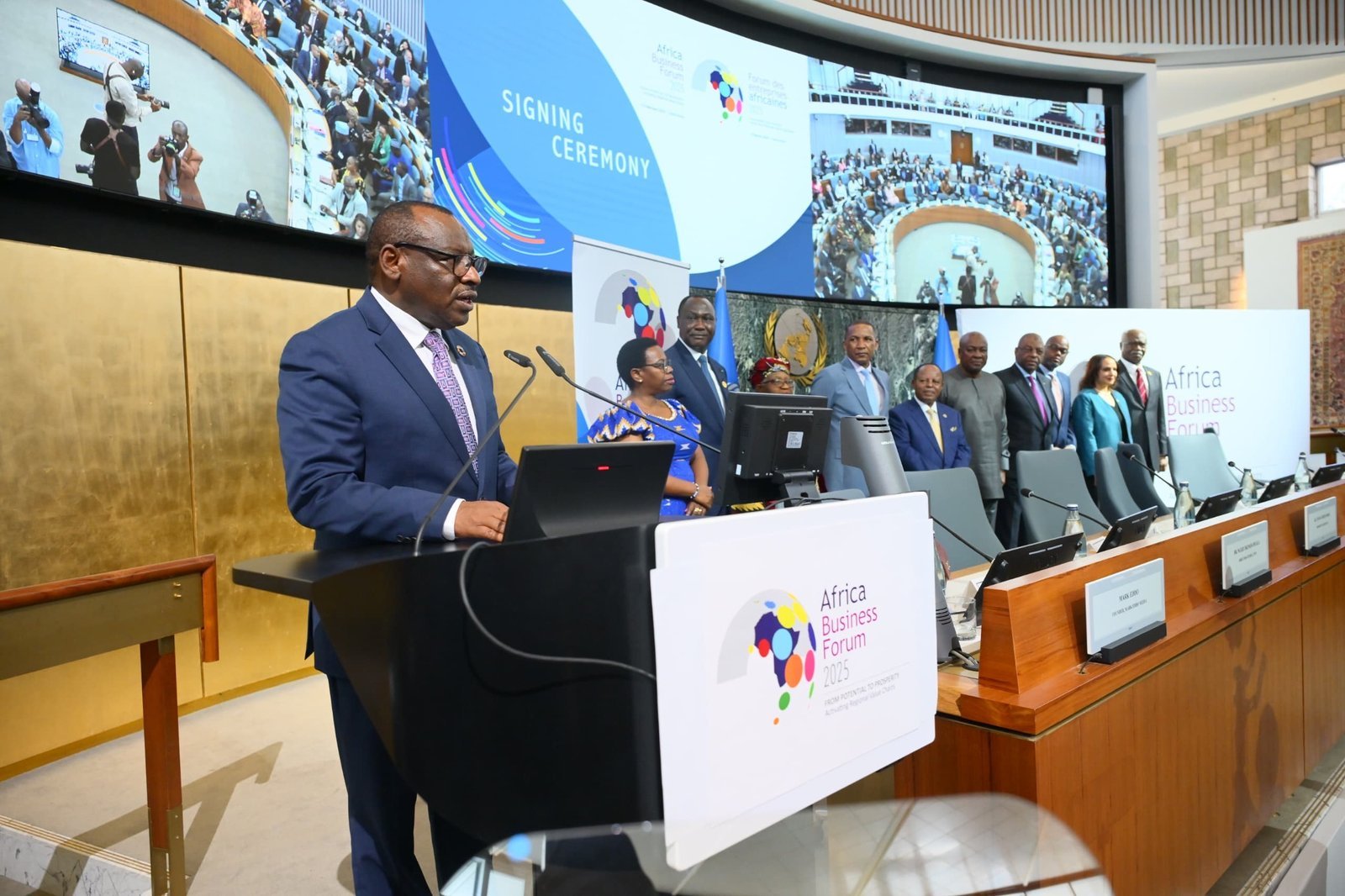
ADDIS ABABA, Ethiopia — The time for gradual change is over—Africa must industrialize with urgency to unlock its full economic potential, leaders and experts declared at the 2025 Africa Business Forum on Monday in Addis Ababa.

With food insecurity, trade barriers, and dependence on raw commodity exports still hindering progress, the call for bold, immediate action echoed throughout the event.

“The time has come to rewrite Africa’s narrative from a continent of untapped potential to a global powerhouse of production, innovation and economic self-sufficiency,” said Claver Gatete, executive secretary of the United Nations Economic Commission for Africa (ECA).

He added: “We can no longer afford to export raw commodities and import finished products at high cost. An Africa that prospers is one that embraces industrialization, champions value addition and advances regional integration.”

Industrialization as the Path to Economic Independence

With over 60% of the world’s uncultivated arable land, Africa has the resources to feed itself—yet it remains heavily dependent on food imports.

“Africa has over 60% of the world’s uncultivated arable land, yet remains heavily dependent on food imports. This paradox must be addressed,” said Samaila Zubairu, president and CEO of the Africa Finance Corporation.

He urged African nations to adopt modern agricultural practices: “We must embrace modernization in agriculture. Mechanization and climate-resilient crops are crucial to addressing low productivity and ensuring food security.”

The African Continental Free Trade Area (AfCFTA)—seen as a game-changer for regional economic growth—was a central topic of discussion.

“Africa faces food insecurity, but we have the capacity to export grains within our continent. We must eliminate tariffs on agricultural products to strengthen regional value chains,” said Wamkele Mene, secretary-general of the AfCFTA.

Botswana’s President Duma Gideon Boko highlighted the role of regional collaboration in boosting agricultural exports.

“We need to strengthen channels of collaboration so that Botswana’s beef can reach the African continent quicker and easier under the AfCFTA,” he said.

He also emphasized the country’s ambitions in vaccine production: “We’ve produced quality vaccines, and we aim to scale up production to supply the entire African continent, especially for foot-and-mouth disease. Botswana’s ambition is to set up production facilities for vaccines in other African countries and support our neighbors.”

Infrastructure and Investment: A Foundation for Growth

Beyond agriculture, leaders stressed the need for resilient infrastructure to support industrialization. Ethiopia’s President Taye Atsekselassie emphasized its importance in mitigating future risks.

“Resilient infrastructure is imperative to withstand climate change impacts and mitigate future risks,” he said.

He also made a strong case for investing in human capital: “Investing in human capital is crucial. Education, skills development, and innovation are key to driving Africa’s manufacturing sector and regional value chains.”

On financing Africa’s transformation, he stated: “Addressing resources mobilizing and financing gap is critical. Africa must take control of its destiny to ensure sustainable prosperity for millions.”

His words were echoed by Dr. Monique Nsanzabaganwa, who emphasized the role of regional cooperation and private sector involvement in industrialization:

“Regional cooperation, intra-African investment, and private sector participation are key to building efficient regional value chains,” Nsanzabaganwa said.

She further highlighted the potential of these efforts to drive job creation: “Regional value chains have the potential to enhance local production networks and create jobs for our youthful population.”

Trade Barriers Must Be Removed for Africa to Thrive

Ghana’s President John Dramani Mahama warned that Africa’s economic future depends on eliminating trade barriers.

“Without youth opportunities, it’s a ticking time bomb,” he said. “To thrive under AfCFTA, we must fix trade barriers—better roads, rails, ports, and stronger partnerships.”

A strong call for local production and consumption came from Dr. Ngozi Okonjo-Iweala, director-general of the World Trade Organization (WTO).

“We must look inward and ask: how many of us are consuming our own products?” she said. “If we are manufacturing here and still buying from elsewhere, how will we support our economies?”

She urged African countries to take action: “Let’s be the change we want. If we want to consume and produce locally, we must stop buying products from elsewhere and start investing in our own industries.”

A Defining Moment for Africa

The forum concluded with a commitment to accelerate AfCFTA’s implementation. The UN Economic Commission for Africa (ECA) and the AfCFTA Secretariat signed a memorandum of understanding (MoU) to strengthen collaboration.

The agreement aims to boost intra-African trade and accelerate Africa’s economic transformation.

As Gatete put it: “The time for incremental change is over. Africa must industrialize with urgency.”

Leaders agreed that for Africa to move beyond potential and become a global economic powerhouse, the time to act is now.


Get the inside Story

Stay informed on the stories shaping Africa’s future. Get breaking news, in-depth analysis, opinions and exclusive insights from across the continent delivered to your inbox, free and unfiltered.


Related Posts

egypt moves to launch second tax facilitation package
Politics & Economy

Egypt Moves to Launch Second Tax Facilitation Package

December 1, 2025
east africa court ruling clears path for uganda tanzania pipeline
Politics & Economy

East Africa Court Ruling Clears Path for Uganda Tanzania Pipeline

November 29, 2025
digital abuse against women surges amid legal and platform gaps
Politics & Economy

Digital Abuse Against Women Surges Amid Legal and Platform Gaps

November 28, 2025
Politics & Economy

Calls for Action Grow as 16 Days Against Gender-Based Violence Begins

November 26, 2025
Africa, Europe Celebrate Progress, Set Joint Agenda at Luanda Summit
Politics & Economy

Africa, Europe Celebrate Progress, Set Joint Agenda at Luanda Summit

November 26, 2025
Africa, EU Leaders Mark 25 Years of Partnership at Summit in Angola
Politics & Economy

Africa, EU Leaders Mark 25 Years of Partnership at Summit in Angola

November 26, 2025

Most Recent

egypt moves to launch second tax facilitation package
Politics & Economy

Egypt Moves to Launch Second Tax Facilitation Package

by Samira Benhadda
December 1, 2025
0

Government targets stronger compliance, simpler procedures and renewed investor confidence

Read moreDetails
east africa court ruling clears path for uganda tanzania pipeline

East Africa Court Ruling Clears Path for Uganda Tanzania Pipeline

November 29, 2025
digital abuse against women surges amid legal and platform gaps

Digital Abuse Against Women Surges Amid Legal and Platform Gaps

November 28, 2025
Africa Urged to Tackle Illicit Tobacco Trade as Global Treaty Talks Close

Africa Urged to Tackle Illicit Tobacco Trade as Global Treaty Talks Close

November 27, 2025

Calls for Action Grow as 16 Days Against Gender-Based Violence Begins

November 26, 2025
Urgent Call for Action to Combat Antimicrobial Resistance in Africa

Eswatini Launches New Epidemic Surveillance Guidelines

December 1, 2025
Africa, Europe Celebrate Progress, Set Joint Agenda at Luanda Summit

Africa, Europe Celebrate Progress, Set Joint Agenda at Luanda Summit

November 26, 2025
egypt moves to launch second tax facilitation package
Politics & Economy

Egypt Moves to Launch Second Tax Facilitation Package

by Samira Benhadda
Reading Time: 2 mins read
December 1, 2025
0

Government targets stronger compliance, simpler procedures and renewed investor confidence

Read moreDetails
east africa court ruling clears path for uganda tanzania pipeline
Politics & Economy

East Africa Court Ruling Clears Path for Uganda Tanzania Pipeline

by Jane Mukami
Reading Time: 2 mins read
November 29, 2025
0

Decision removes a key hurdle for the $10 billion EACOP project while rights groups warn of displacement and ecosystem risks

Read moreDetails
digital abuse against women surges amid legal and platform gaps
Politics & Economy

Digital Abuse Against Women Surges Amid Legal and Platform Gaps

by Samira Benhadda
Reading Time: 2 mins read
November 28, 2025
0

South Africa, Kenya, Rwanda and others have cyber laws but weak enforcement fails to protect women

Read moreDetails

Africa Must Industrialize with Urgency, Leaders Say at 2025 Africa Business Forum

Africa Must Industrialize with Urgency, Leaders Say at 2025 Africa Business Forum

ADDIS ABABA, Ethiopia — The time for gradual change is over—Africa must industrialize with urgency to unlock its full economic potential, leaders and experts declared at the 2025 Africa Business Forum on Monday in Addis Ababa.

With food insecurity, trade barriers, and dependence on raw commodity exports still hindering progress, the call for bold, immediate action echoed throughout the event.

“The time has come to rewrite Africa’s narrative from a continent of untapped potential to a global powerhouse of production, innovation and economic self-sufficiency,” said Claver Gatete, executive secretary of the United Nations Economic Commission for Africa (ECA).

He added: “We can no longer afford to export raw commodities and import finished products at high cost. An Africa that prospers is one that embraces industrialization, champions value addition and advances regional integration.”

Industrialization as the Path to Economic Independence

With over 60% of the world’s uncultivated arable land, Africa has the resources to feed itself—yet it remains heavily dependent on food imports.

“Africa has over 60% of the world’s uncultivated arable land, yet remains heavily dependent on food imports. This paradox must be addressed,” said Samaila Zubairu, president and CEO of the Africa Finance Corporation.

He urged African nations to adopt modern agricultural practices: “We must embrace modernization in agriculture. Mechanization and climate-resilient crops are crucial to addressing low productivity and ensuring food security.”

The African Continental Free Trade Area (AfCFTA)—seen as a game-changer for regional economic growth—was a central topic of discussion.

“Africa faces food insecurity, but we have the capacity to export grains within our continent. We must eliminate tariffs on agricultural products to strengthen regional value chains,” said Wamkele Mene, secretary-general of the AfCFTA.

Botswana’s President Duma Gideon Boko highlighted the role of regional collaboration in boosting agricultural exports.

“We need to strengthen channels of collaboration so that Botswana’s beef can reach the African continent quicker and easier under the AfCFTA,” he said.

He also emphasized the country’s ambitions in vaccine production: “We’ve produced quality vaccines, and we aim to scale up production to supply the entire African continent, especially for foot-and-mouth disease. Botswana’s ambition is to set up production facilities for vaccines in other African countries and support our neighbors.”

Infrastructure and Investment: A Foundation for Growth

Beyond agriculture, leaders stressed the need for resilient infrastructure to support industrialization. Ethiopia’s President Taye Atsekselassie emphasized its importance in mitigating future risks.

“Resilient infrastructure is imperative to withstand climate change impacts and mitigate future risks,” he said.

He also made a strong case for investing in human capital: “Investing in human capital is crucial. Education, skills development, and innovation are key to driving Africa’s manufacturing sector and regional value chains.”

On financing Africa’s transformation, he stated: “Addressing resources mobilizing and financing gap is critical. Africa must take control of its destiny to ensure sustainable prosperity for millions.”

His words were echoed by Dr. Monique Nsanzabaganwa, who emphasized the role of regional cooperation and private sector involvement in industrialization:

“Regional cooperation, intra-African investment, and private sector participation are key to building efficient regional value chains,” Nsanzabaganwa said.

She further highlighted the potential of these efforts to drive job creation: “Regional value chains have the potential to enhance local production networks and create jobs for our youthful population.”

Trade Barriers Must Be Removed for Africa to Thrive

Ghana’s President John Dramani Mahama warned that Africa’s economic future depends on eliminating trade barriers.

“Without youth opportunities, it’s a ticking time bomb,” he said. “To thrive under AfCFTA, we must fix trade barriers—better roads, rails, ports, and stronger partnerships.”

A strong call for local production and consumption came from Dr. Ngozi Okonjo-Iweala, director-general of the World Trade Organization (WTO).

“We must look inward and ask: how many of us are consuming our own products?” she said. “If we are manufacturing here and still buying from elsewhere, how will we support our economies?”

She urged African countries to take action: “Let’s be the change we want. If we want to consume and produce locally, we must stop buying products from elsewhere and start investing in our own industries.”

A Defining Moment for Africa

The forum concluded with a commitment to accelerate AfCFTA’s implementation. The UN Economic Commission for Africa (ECA) and the AfCFTA Secretariat signed a memorandum of understanding (MoU) to strengthen collaboration.

The agreement aims to boost intra-African trade and accelerate Africa’s economic transformation.

As Gatete put it: “The time for incremental change is over. Africa must industrialize with urgency.”

Leaders agreed that for Africa to move beyond potential and become a global economic powerhouse, the time to act is now.

Africa Must Industrialize with Urgency, Leaders Say at 2025 Africa Business Forum

Africa Must Industrialize with Urgency, Leaders Say at 2025 Africa Business Forum
Felix Tihby Felix Tih
February 17, 2025

ADDIS ABABA, Ethiopia — The time for gradual change is over—Africa must industrialize with urgency to unlock its full economic potential, leaders and experts declared at the 2025 Africa Business Forum on Monday in Addis Ababa.

With food insecurity, trade barriers, and dependence on raw commodity exports still hindering progress, the call for bold, immediate action echoed throughout the event.

“The time has come to rewrite Africa’s narrative from a continent of untapped potential to a global powerhouse of production, innovation and economic self-sufficiency,” said Claver Gatete, executive secretary of the United Nations Economic Commission for Africa (ECA).

He added: “We can no longer afford to export raw commodities and import finished products at high cost. An Africa that prospers is one that embraces industrialization, champions value addition and advances regional integration.”

Industrialization as the Path to Economic Independence

With over 60% of the world’s uncultivated arable land, Africa has the resources to feed itself—yet it remains heavily dependent on food imports.

“Africa has over 60% of the world’s uncultivated arable land, yet remains heavily dependent on food imports. This paradox must be addressed,” said Samaila Zubairu, president and CEO of the Africa Finance Corporation.

He urged African nations to adopt modern agricultural practices: “We must embrace modernization in agriculture. Mechanization and climate-resilient crops are crucial to addressing low productivity and ensuring food security.”

The African Continental Free Trade Area (AfCFTA)—seen as a game-changer for regional economic growth—was a central topic of discussion.

“Africa faces food insecurity, but we have the capacity to export grains within our continent. We must eliminate tariffs on agricultural products to strengthen regional value chains,” said Wamkele Mene, secretary-general of the AfCFTA.

Botswana’s President Duma Gideon Boko highlighted the role of regional collaboration in boosting agricultural exports.

“We need to strengthen channels of collaboration so that Botswana’s beef can reach the African continent quicker and easier under the AfCFTA,” he said.

He also emphasized the country’s ambitions in vaccine production: “We’ve produced quality vaccines, and we aim to scale up production to supply the entire African continent, especially for foot-and-mouth disease. Botswana’s ambition is to set up production facilities for vaccines in other African countries and support our neighbors.”

Infrastructure and Investment: A Foundation for Growth

Beyond agriculture, leaders stressed the need for resilient infrastructure to support industrialization. Ethiopia’s President Taye Atsekselassie emphasized its importance in mitigating future risks.

“Resilient infrastructure is imperative to withstand climate change impacts and mitigate future risks,” he said.

He also made a strong case for investing in human capital: “Investing in human capital is crucial. Education, skills development, and innovation are key to driving Africa’s manufacturing sector and regional value chains.”

On financing Africa’s transformation, he stated: “Addressing resources mobilizing and financing gap is critical. Africa must take control of its destiny to ensure sustainable prosperity for millions.”

His words were echoed by Dr. Monique Nsanzabaganwa, who emphasized the role of regional cooperation and private sector involvement in industrialization:

“Regional cooperation, intra-African investment, and private sector participation are key to building efficient regional value chains,” Nsanzabaganwa said.

She further highlighted the potential of these efforts to drive job creation: “Regional value chains have the potential to enhance local production networks and create jobs for our youthful population.”

Trade Barriers Must Be Removed for Africa to Thrive

Ghana’s President John Dramani Mahama warned that Africa’s economic future depends on eliminating trade barriers.

“Without youth opportunities, it’s a ticking time bomb,” he said. “To thrive under AfCFTA, we must fix trade barriers—better roads, rails, ports, and stronger partnerships.”

A strong call for local production and consumption came from Dr. Ngozi Okonjo-Iweala, director-general of the World Trade Organization (WTO).

“We must look inward and ask: how many of us are consuming our own products?” she said. “If we are manufacturing here and still buying from elsewhere, how will we support our economies?”

She urged African countries to take action: “Let’s be the change we want. If we want to consume and produce locally, we must stop buying products from elsewhere and start investing in our own industries.”

A Defining Moment for Africa

The forum concluded with a commitment to accelerate AfCFTA’s implementation. The UN Economic Commission for Africa (ECA) and the AfCFTA Secretariat signed a memorandum of understanding (MoU) to strengthen collaboration.

The agreement aims to boost intra-African trade and accelerate Africa’s economic transformation.

As Gatete put it: “The time for incremental change is over. Africa must industrialize with urgency.”

Leaders agreed that for Africa to move beyond potential and become a global economic powerhouse, the time to act is now.

Get the inside Story

Stay informed on the stories shaping Africa’s future. Get breaking news, in-depth analysis, opinions and exclusive insights from across the continent delivered to your inbox, free and unfiltered.


Related Posts

egypt moves to launch second tax facilitation package

Egypt Moves to Launch Second Tax Facilitation Package

by Samira Benhadda
December 1, 2025
0

...

east africa court ruling clears path for uganda tanzania pipeline

East Africa Court Ruling Clears Path for Uganda Tanzania Pipeline

by Jane Mukami
November 29, 2025
0

...

digital abuse against women surges amid legal and platform gaps

Digital Abuse Against Women Surges Amid Legal and Platform Gaps

by Samira Benhadda
November 28, 2025
0

...

Calls for Action Grow as 16 Days Against Gender-Based Violence Begins

by Aissatou Fall
November 26, 2025
0

...

Africa, Europe Celebrate Progress, Set Joint Agenda at Luanda Summit

Africa, Europe Celebrate Progress, Set Joint Agenda at Luanda Summit

by Amani Mwakalebela
November 26, 2025
0

...

Africa, EU Leaders Mark 25 Years of Partnership at Summit in Angola

Africa, EU Leaders Mark 25 Years of Partnership at Summit in Angola

by Amani Mwakalebela
November 24, 2025
0

...

egypt moves to launch second tax facilitation package
Politics & Economy

Egypt Moves to Launch Second Tax Facilitation Package

by Samira Benhadda
Reading Time: 2 mins read
December 1, 2025
0

Government targets stronger compliance, simpler procedures and renewed investor confidence

Read moreDetails
east africa court ruling clears path for uganda tanzania pipeline

East Africa Court Ruling Clears Path for Uganda Tanzania Pipeline

by Jane Mukami
November 29, 2025
0

Decision removes a key hurdle for the $10 billion EACOP project while rights groups warn of displacement and ecosystem risks

digital abuse against women surges amid legal and platform gaps

Digital Abuse Against Women Surges Amid Legal and Platform Gaps

by Samira Benhadda
November 28, 2025
0

South Africa, Kenya, Rwanda and others have cyber laws but weak enforcement fails to protect women

Africa Urged to Tackle Illicit Tobacco Trade as Global Treaty Talks Close

Africa Urged to Tackle Illicit Tobacco Trade as Global Treaty Talks Close

by Felix Tih
November 27, 2025
0

African institutions and global health officials are calling for stronger action against the illicit tobacco trade, warning that illegal flows...

Calls for Action Grow as 16 Days Against Gender-Based Violence Begins

by Aissatou Fall
November 26, 2025
0

The African Union and lawmakers across the continent are calling for urgent action to combat violence against women and girls,...

Next Post

Africa’s Natural Gas Market Set for Growth Amid Global Energy Shift

Centrafrique : intensification de la vaccination contre la polio dans les communautés isolées

Ethiopia Secures $600 Million Investment for Dairy, Commercial Farming

Ethiopia Secures $600 Million Investment for Dairy, Commercial Farming

Ghana’s President Mahama Enforces Asset Declaration Deadline

Ghana’s President Mahama Enforces Asset Declaration Deadline

The editorial platform of Bantu Agency.

The editorial platform of Bantu Agency.

Our Platforms

  • Bantu Magazine
  • Bantu Brief
  • Black Frame Studio

Our Services

  • Bantu Agency
  • Advertise
  • Partnerships

Our Services

  • Editorial Director
  • Opportunities
  • Contact

The editorial platform of Bantu Agency.

Our Platforms

  • Bantu Magazine
  • Bantu Brief
  • Black Frame Studio

Our Services

  • Bantu Agency
  • Advertise
  • Partnerships

Our Services

  • Editorial Director
  • Opportunities
  • Contact
Bantu Gazette
  • Energy & Trade
  • Finance
  • Health
  • Politics & Economy
  • Technology
  • Environment
  • Feature
  • Opinion
  • Changemakers
  • Tourism & Culture
  • Magazine