

Bantu Gazette
  • Black Frame Studio
  • Magazine
No Result
View All Result
Bantu Gazette
  • Black Frame Studio
  • Magazine
No Result
View All Result
Bantu Gazette
No Result
View All Result

COP29: Deadly weather events show cost of climate inaction

Felix Tihby Felix Tih
November 17, 2024
Reading Time: 6 mins read

COP29: Deadly weather events show cost of climate inaction

Felix Tihby Felix Tih
July 16, 2025
Reading Time: 6 mins read

The context in which COP29 begins in Baku, Azerbaijan on November 11 is critical but not hopeless.

A UN climate report released just days before the Conference confirmed that global average temperature rise is approaching 1.5°C above pre-industrial levels, which would put the world on course for a catastrophic rise of 2.6-3.1°C this century, unless there are immediate and major cuts to greenhouse gas emissions.

A failure to act will lead to increasingly frequent and dangerous extreme weather events.

The UN is calling for urgent collective action, led by the G20 group of developed economies and the biggest emitters, to deliver the greenhouse gas emissions cuts needed to limit global warming.

What is the UN Climate Change Conference?

The climate crisis transcends borders. Solving it requires unprecedented international cooperation, with the UN and its chief, the Secretary-General, at the centre of the multilateral effort.

The annual UN Climate Change Conferences (otherwise known, in UN jargon, as COPs, or Conferences of the Parties to the UN Framework Convention on Climate Change), are the world’s primary multilateral decision-making forum on climate change, bringing together almost every country on Earth. 

They are unique opportunities for the world to come together to agree on how to address the climate crisis, limit the global temperature rise to 1.5 degrees Celsius, help vulnerable communities to adapt to the changing climate, and achieve net-zero emissions by 2050.

COPs are meant to be inclusive affairs and, as well as world leaders and government representatives, a diverse range of people from all aspects of society, from business leaders and climate scientists to Indigenous Peoples and youth, are involved, taking part in order to share insights and best practices to strengthen climate action that benefits all.

What is the focus of COP29?

A top priority for negotiators in Baku will be agreeing on a new climate finance goal, one that ensures every country has the means to take much stronger climate action, slash greenhouse gas emissions and build resilient communities. 

An electric vehicle is charged in Scotland in the UK

The aim is for the conference to help unlock the trillions of dollars that developing countries need in order to mitigate harmful carbon emissions, adapt to climate change and cope with the loss and damage it has caused.

Look out for a continuation of discussions held at the UN Summit of the Future earlier this year on reforming the international financial architecture. The UN Secretary-General, António Guterres has described the current system as “entirely unfit for purpose” and ill-equipped to cope with today’s challenges:  many poor countries are facing unsustainable levels of debt that leave them unable to invest in social protection and health care, let alone measures that would bring about the transition to a low carbon economy.

What will happen over the two weeks?

As ever, there will be a packed schedule of negotiations, speeches, press conferences, events and panel discussions at the conference site, divided into a Green Zone – which is overseen by the COP29 Presidency and open to the general public – and a Blue Zone managed by the UN.
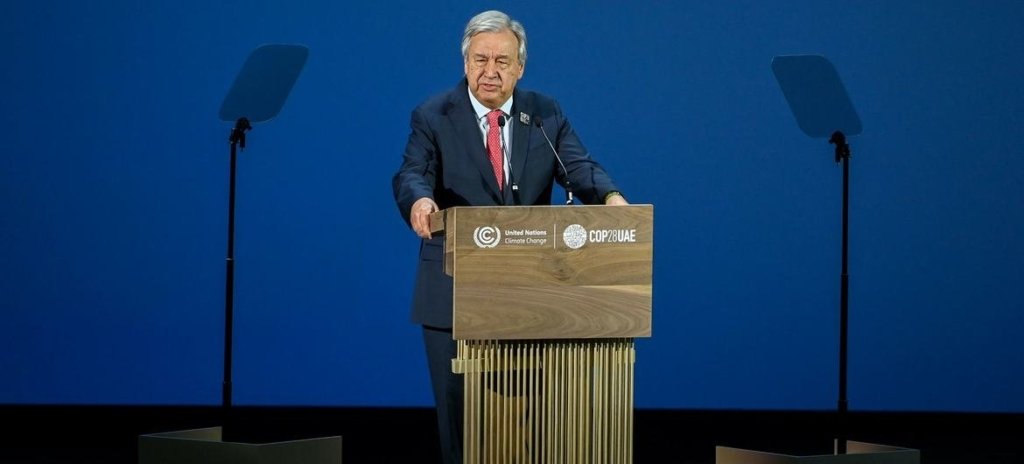
UN Secretary-General António Guterres addresses COP28 held in Dubai in 2023.

This is where the nitty-gritty of the negotiations will take place, as the representatives of the nations of the world try to thrash out a deal by the end of the event. An agreement is usually reached, but not without drama, with last minute disagreements pushing the talks beyond their official deadline.

Why are COPs important?

The importance of COPs lies in their convening power: the decisions made at each of them may not go as far as some may hope, in terms of addressing the climate crisis, but they are made by consensus, uniting the countries of the world in international agreements that set standards and advance action in critical areas.
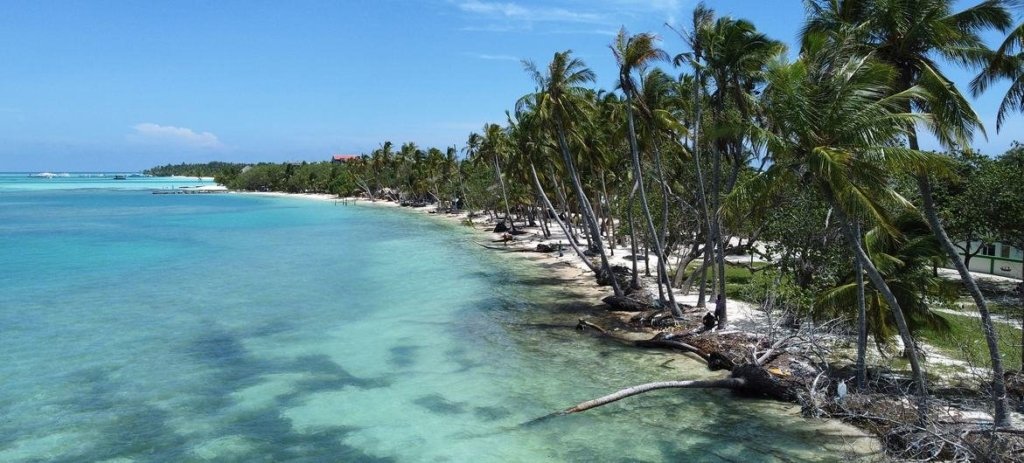
Low-lying archipelagoes like the Maldives are particularly susceptible to the ravages of climate change.

In 2015, at COP21 in Paris, a landmark climate agreement was reached in which countries agreed to reduce global warming to well below 2 degrees Celsius above pre-industrial levels and pursue efforts to limit it to 1.5 degrees. The Paris Agreement works on a five- year cycle of increasingly ambitious climate action by countries. The next updated national climate action plans – known as Nationally Determined Contributions, or NDCs – are due in 2025. This process has led to incremental but important improvements, in terms of reduced emissions and measures to promote the adoption of renewable energy sources.

Each year, negotiators build on progress made at the previous year’s COP, strengthening aspirations and commitments, and pushing for new agreements, based on the latest scientific findings on the climate, and the role of human activity in the crisis.

What comes next?
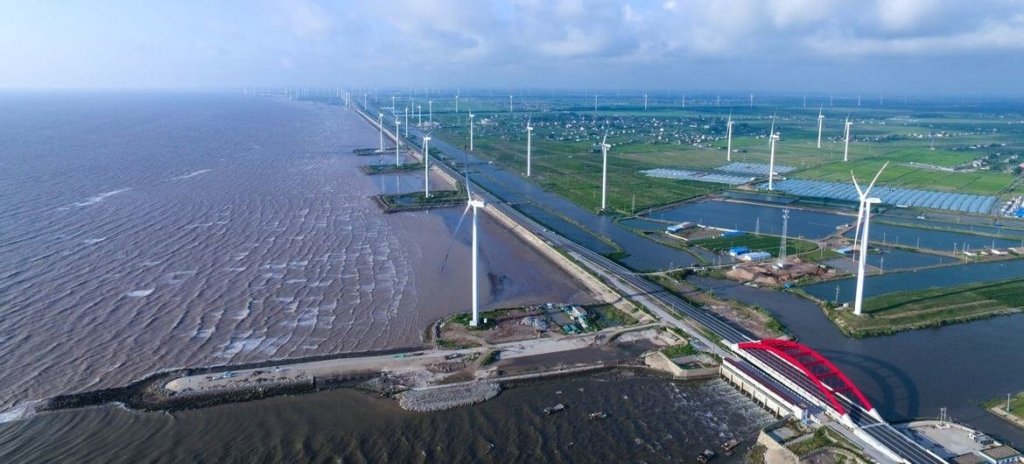
Wind turbines line a coastal highway in Yancheng, China.

Beyond the conference walls, there are many positive signs that the clean energy transition is gathering pace, and already paying huge dividends, in terms of the creation of jobs and boosting the economies that are embracing it.

Renewables are entering the energy system at an unprecedented rate, and electricity from new wind and solar power is now cheaper in most places than electricity from fossil fuels.

A future powered by renewable energy is now inevitable. Those who take decisive action and invest in clean technologies today are expected to reap the biggest rewards in the years to come.

Even before the end of COP29, delegates will be ironing out the details of their improved national climate plans, which amongst other targets will focus on transitioning away from fossil fuels, and keeping the world on track to a no more than 1.5 degree increase in global temperatures.

Get the inside Story

Stay informed on the stories shaping Africa’s future. Get breaking news, in-depth analysis, opinions and exclusive insights from across the continent delivered to your inbox, free and unfiltered.


Related Posts

Africa Urged to Tackle Illicit Tobacco Trade as Global Treaty Talks Close
Health

Africa Urged to Tackle Illicit Tobacco Trade as Global Treaty Talks Close

November 27, 2025
Urgent Call for Action to Combat Antimicrobial Resistance in Africa
Health

Eswatini Launches New Epidemic Surveillance Guidelines

December 1, 2025
Botswana Launches Medical Delivery Drones to Improve Rural Health Access
Health

Botswana Launches Medical Delivery Drones to Improve Rural Health Access

November 26, 2025
Ethiopia to Host COP 32 After Securing African Support in Belém
Environment

Ethiopia to Host COP 32 After Securing African Support in Belém

November 14, 2025
South Africa Adds 130,000 Construction Jobs in Sector Rebound
Environment

South Africa Adds 130,000 Construction Jobs in Sector Rebound

November 14, 2025
Rwanda Kicks Off National Tree-Planting Season
Environment

Rwanda Kicks Off National Tree-Planting Season

October 25, 2025

Most Recent

egypt moves to launch second tax facilitation package
Politics & Economy

Egypt Moves to Launch Second Tax Facilitation Package

by Samira Benhadda
December 1, 2025
0

Government targets stronger compliance, simpler procedures and renewed investor confidence

Read moreDetails
east africa court ruling clears path for uganda tanzania pipeline

East Africa Court Ruling Clears Path for Uganda Tanzania Pipeline

November 29, 2025
digital abuse against women surges amid legal and platform gaps

Digital Abuse Against Women Surges Amid Legal and Platform Gaps

November 28, 2025
Africa Urged to Tackle Illicit Tobacco Trade as Global Treaty Talks Close

Africa Urged to Tackle Illicit Tobacco Trade as Global Treaty Talks Close

November 27, 2025

Calls for Action Grow as 16 Days Against Gender-Based Violence Begins

November 26, 2025
Urgent Call for Action to Combat Antimicrobial Resistance in Africa

Eswatini Launches New Epidemic Surveillance Guidelines

December 1, 2025
Africa, Europe Celebrate Progress, Set Joint Agenda at Luanda Summit

Africa, Europe Celebrate Progress, Set Joint Agenda at Luanda Summit

November 26, 2025
egypt moves to launch second tax facilitation package
Politics & Economy

Egypt Moves to Launch Second Tax Facilitation Package

by Samira Benhadda
Reading Time: 2 mins read
December 1, 2025
0

Government targets stronger compliance, simpler procedures and renewed investor confidence

Read moreDetails
east africa court ruling clears path for uganda tanzania pipeline
Politics & Economy

East Africa Court Ruling Clears Path for Uganda Tanzania Pipeline

by Jane Mukami
Reading Time: 2 mins read
November 29, 2025
0

Decision removes a key hurdle for the $10 billion EACOP project while rights groups warn of displacement and ecosystem risks

Read moreDetails
digital abuse against women surges amid legal and platform gaps
Politics & Economy

Digital Abuse Against Women Surges Amid Legal and Platform Gaps

by Samira Benhadda
Reading Time: 2 mins read
November 28, 2025
0

South Africa, Kenya, Rwanda and others have cyber laws but weak enforcement fails to protect women

Read moreDetails

COP29: Deadly weather events show cost of climate inaction

The context in which COP29 begins in Baku, Azerbaijan on November 11 is critical but not hopeless.

A UN climate report released just days before the Conference confirmed that global average temperature rise is approaching 1.5°C above pre-industrial levels, which would put the world on course for a catastrophic rise of 2.6-3.1°C this century, unless there are immediate and major cuts to greenhouse gas emissions.

A failure to act will lead to increasingly frequent and dangerous extreme weather events.

The UN is calling for urgent collective action, led by the G20 group of developed economies and the biggest emitters, to deliver the greenhouse gas emissions cuts needed to limit global warming.

What is the UN Climate Change Conference?

The climate crisis transcends borders. Solving it requires unprecedented international cooperation, with the UN and its chief, the Secretary-General, at the centre of the multilateral effort.

The annual UN Climate Change Conferences (otherwise known, in UN jargon, as COPs, or Conferences of the Parties to the UN Framework Convention on Climate Change), are the world’s primary multilateral decision-making forum on climate change, bringing together almost every country on Earth. 

They are unique opportunities for the world to come together to agree on how to address the climate crisis, limit the global temperature rise to 1.5 degrees Celsius, help vulnerable communities to adapt to the changing climate, and achieve net-zero emissions by 2050.

COPs are meant to be inclusive affairs and, as well as world leaders and government representatives, a diverse range of people from all aspects of society, from business leaders and climate scientists to Indigenous Peoples and youth, are involved, taking part in order to share insights and best practices to strengthen climate action that benefits all.

What is the focus of COP29?

A top priority for negotiators in Baku will be agreeing on a new climate finance goal, one that ensures every country has the means to take much stronger climate action, slash greenhouse gas emissions and build resilient communities. 

An electric vehicle is charged in Scotland in the UK

The aim is for the conference to help unlock the trillions of dollars that developing countries need in order to mitigate harmful carbon emissions, adapt to climate change and cope with the loss and damage it has caused.

Look out for a continuation of discussions held at the UN Summit of the Future earlier this year on reforming the international financial architecture. The UN Secretary-General, António Guterres has described the current system as “entirely unfit for purpose” and ill-equipped to cope with today’s challenges:  many poor countries are facing unsustainable levels of debt that leave them unable to invest in social protection and health care, let alone measures that would bring about the transition to a low carbon economy.

What will happen over the two weeks?

As ever, there will be a packed schedule of negotiations, speeches, press conferences, events and panel discussions at the conference site, divided into a Green Zone – which is overseen by the COP29 Presidency and open to the general public – and a Blue Zone managed by the UN.

UN Secretary-General António Guterres addresses COP28 held in Dubai in 2023.

This is where the nitty-gritty of the negotiations will take place, as the representatives of the nations of the world try to thrash out a deal by the end of the event. An agreement is usually reached, but not without drama, with last minute disagreements pushing the talks beyond their official deadline.

Why are COPs important?

The importance of COPs lies in their convening power: the decisions made at each of them may not go as far as some may hope, in terms of addressing the climate crisis, but they are made by consensus, uniting the countries of the world in international agreements that set standards and advance action in critical areas.

Low-lying archipelagoes like the Maldives are particularly susceptible to the ravages of climate change.

In 2015, at COP21 in Paris, a landmark climate agreement was reached in which countries agreed to reduce global warming to well below 2 degrees Celsius above pre-industrial levels and pursue efforts to limit it to 1.5 degrees. The Paris Agreement works on a five- year cycle of increasingly ambitious climate action by countries. The next updated national climate action plans – known as Nationally Determined Contributions, or NDCs – are due in 2025. This process has led to incremental but important improvements, in terms of reduced emissions and measures to promote the adoption of renewable energy sources.

Each year, negotiators build on progress made at the previous year’s COP, strengthening aspirations and commitments, and pushing for new agreements, based on the latest scientific findings on the climate, and the role of human activity in the crisis.

What comes next?

Wind turbines line a coastal highway in Yancheng, China.

Beyond the conference walls, there are many positive signs that the clean energy transition is gathering pace, and already paying huge dividends, in terms of the creation of jobs and boosting the economies that are embracing it.

Renewables are entering the energy system at an unprecedented rate, and electricity from new wind and solar power is now cheaper in most places than electricity from fossil fuels.

A future powered by renewable energy is now inevitable. Those who take decisive action and invest in clean technologies today are expected to reap the biggest rewards in the years to come.

Even before the end of COP29, delegates will be ironing out the details of their improved national climate plans, which amongst other targets will focus on transitioning away from fossil fuels, and keeping the world on track to a no more than 1.5 degree increase in global temperatures.
COP29: Deadly weather events show cost of climate inaction

Felix Tihby Felix Tih
November 17, 2024

The context in which COP29 begins in Baku, Azerbaijan on November 11 is critical but not hopeless.

A UN climate report released just days before the Conference confirmed that global average temperature rise is approaching 1.5°C above pre-industrial levels, which would put the world on course for a catastrophic rise of 2.6-3.1°C this century, unless there are immediate and major cuts to greenhouse gas emissions.

A failure to act will lead to increasingly frequent and dangerous extreme weather events.

The UN is calling for urgent collective action, led by the G20 group of developed economies and the biggest emitters, to deliver the greenhouse gas emissions cuts needed to limit global warming.

What is the UN Climate Change Conference?

The climate crisis transcends borders. Solving it requires unprecedented international cooperation, with the UN and its chief, the Secretary-General, at the centre of the multilateral effort.

The annual UN Climate Change Conferences (otherwise known, in UN jargon, as COPs, or Conferences of the Parties to the UN Framework Convention on Climate Change), are the world’s primary multilateral decision-making forum on climate change, bringing together almost every country on Earth. 

They are unique opportunities for the world to come together to agree on how to address the climate crisis, limit the global temperature rise to 1.5 degrees Celsius, help vulnerable communities to adapt to the changing climate, and achieve net-zero emissions by 2050.

COPs are meant to be inclusive affairs and, as well as world leaders and government representatives, a diverse range of people from all aspects of society, from business leaders and climate scientists to Indigenous Peoples and youth, are involved, taking part in order to share insights and best practices to strengthen climate action that benefits all.

What is the focus of COP29?

A top priority for negotiators in Baku will be agreeing on a new climate finance goal, one that ensures every country has the means to take much stronger climate action, slash greenhouse gas emissions and build resilient communities. 

An electric vehicle is charged in Scotland in the UK

The aim is for the conference to help unlock the trillions of dollars that developing countries need in order to mitigate harmful carbon emissions, adapt to climate change and cope with the loss and damage it has caused.

Look out for a continuation of discussions held at the UN Summit of the Future earlier this year on reforming the international financial architecture. The UN Secretary-General, António Guterres has described the current system as “entirely unfit for purpose” and ill-equipped to cope with today’s challenges:  many poor countries are facing unsustainable levels of debt that leave them unable to invest in social protection and health care, let alone measures that would bring about the transition to a low carbon economy.

What will happen over the two weeks?

As ever, there will be a packed schedule of negotiations, speeches, press conferences, events and panel discussions at the conference site, divided into a Green Zone – which is overseen by the COP29 Presidency and open to the general public – and a Blue Zone managed by the UN.

UN Secretary-General António Guterres addresses COP28 held in Dubai in 2023.

This is where the nitty-gritty of the negotiations will take place, as the representatives of the nations of the world try to thrash out a deal by the end of the event. An agreement is usually reached, but not without drama, with last minute disagreements pushing the talks beyond their official deadline.

Why are COPs important?

The importance of COPs lies in their convening power: the decisions made at each of them may not go as far as some may hope, in terms of addressing the climate crisis, but they are made by consensus, uniting the countries of the world in international agreements that set standards and advance action in critical areas.

Low-lying archipelagoes like the Maldives are particularly susceptible to the ravages of climate change.

In 2015, at COP21 in Paris, a landmark climate agreement was reached in which countries agreed to reduce global warming to well below 2 degrees Celsius above pre-industrial levels and pursue efforts to limit it to 1.5 degrees. The Paris Agreement works on a five- year cycle of increasingly ambitious climate action by countries. The next updated national climate action plans – known as Nationally Determined Contributions, or NDCs – are due in 2025. This process has led to incremental but important improvements, in terms of reduced emissions and measures to promote the adoption of renewable energy sources.

Each year, negotiators build on progress made at the previous year’s COP, strengthening aspirations and commitments, and pushing for new agreements, based on the latest scientific findings on the climate, and the role of human activity in the crisis.

What comes next?

Wind turbines line a coastal highway in Yancheng, China.

Beyond the conference walls, there are many positive signs that the clean energy transition is gathering pace, and already paying huge dividends, in terms of the creation of jobs and boosting the economies that are embracing it.

Renewables are entering the energy system at an unprecedented rate, and electricity from new wind and solar power is now cheaper in most places than electricity from fossil fuels.

A future powered by renewable energy is now inevitable. Those who take decisive action and invest in clean technologies today are expected to reap the biggest rewards in the years to come.

Even before the end of COP29, delegates will be ironing out the details of their improved national climate plans, which amongst other targets will focus on transitioning away from fossil fuels, and keeping the world on track to a no more than 1.5 degree increase in global temperatures.

Get the inside Story

Stay informed on the stories shaping Africa’s future. Get breaking news, in-depth analysis, opinions and exclusive insights from across the continent delivered to your inbox, free and unfiltered.


Related Posts

Africa Urged to Tackle Illicit Tobacco Trade as Global Treaty Talks Close

Africa Urged to Tackle Illicit Tobacco Trade as Global Treaty Talks Close

by Felix Tih
November 27, 2025
0

...

Urgent Call for Action to Combat Antimicrobial Resistance in Africa

Eswatini Launches New Epidemic Surveillance Guidelines

by Jane Mukami
November 26, 2025
0

...

Botswana Launches Medical Delivery Drones to Improve Rural Health Access

Botswana Launches Medical Delivery Drones to Improve Rural Health Access

by Jane Mukami
November 24, 2025
0

...

Ethiopia to Host COP 32 After Securing African Support in Belém

Ethiopia to Host COP 32 After Securing African Support in Belém

by Maraki Desta
November 14, 2025
0

...

South Africa Adds 130,000 Construction Jobs in Sector Rebound

South Africa Adds 130,000 Construction Jobs in Sector Rebound

by Naledi Kgosi
November 13, 2025
0

...

Rwanda Kicks Off National Tree-Planting Season

Rwanda Kicks Off National Tree-Planting Season

by Jane Mukami
October 25, 2025
0

...

egypt moves to launch second tax facilitation package
Politics & Economy

Egypt Moves to Launch Second Tax Facilitation Package

by Samira Benhadda
Reading Time: 2 mins read
December 1, 2025
0

Government targets stronger compliance, simpler procedures and renewed investor confidence

Read moreDetails
east africa court ruling clears path for uganda tanzania pipeline

East Africa Court Ruling Clears Path for Uganda Tanzania Pipeline

by Jane Mukami
November 29, 2025
0

Decision removes a key hurdle for the $10 billion EACOP project while rights groups warn of displacement and ecosystem risks

digital abuse against women surges amid legal and platform gaps

Digital Abuse Against Women Surges Amid Legal and Platform Gaps

by Samira Benhadda
November 28, 2025
0

South Africa, Kenya, Rwanda and others have cyber laws but weak enforcement fails to protect women

Africa Urged to Tackle Illicit Tobacco Trade as Global Treaty Talks Close

Africa Urged to Tackle Illicit Tobacco Trade as Global Treaty Talks Close

by Felix Tih
November 27, 2025
0

African institutions and global health officials are calling for stronger action against the illicit tobacco trade, warning that illegal flows...

Calls for Action Grow as 16 Days Against Gender-Based Violence Begins

by Aissatou Fall
November 26, 2025
0

The African Union and lawmakers across the continent are calling for urgent action to combat violence against women and girls,...

Next Post

DR Congo Launches R21 Malaria Vaccine to Combat Child Mortality

Vaccine doses allocated to 9 African countries hardest hit by mpox surge

Vaccine Doses Allocated to Nine African Nations Amid Mpox Surge

African Dev’t Bank Calls for Financing Africa’s Green Transformation at COP29

African Dev’t Bank Calls for Financing Africa’s Green Transformation at COP29

Mauritius Opposition Returns Navin Ramgoolam Returns as Mauritius Prime Minister

The editorial platform of Bantu Agency.

The editorial platform of Bantu Agency.

Our Platforms

  • Bantu Magazine
  • Bantu Brief
  • Black Frame Studio

Our Services

  • Bantu Agency
  • Advertise
  • Partnerships

Our Services

  • Editorial Director
  • Opportunities
  • Contact

The editorial platform of Bantu Agency.

Our Platforms

  • Bantu Magazine
  • Bantu Brief
  • Black Frame Studio

Our Services

  • Bantu Agency
  • Advertise
  • Partnerships

Our Services

  • Editorial Director
  • Opportunities
  • Contact
Bantu Gazette
  • Energy & Trade
  • Finance
  • Health
  • Politics & Economy
  • Technology
  • Environment
  • Feature
  • Opinion
  • Changemakers
  • Tourism & Culture
  • Magazine