
Bantu Gazette

Bantu Gazette
  • Energy & Trade
  • Finance
  • Health
  • Politics & Economy
  • Technology
  • Environment
  • Feature
  • Opinion
  • Changemakers
  • Tourism & Culture
  • Sports
  • Magazine
Menu
  • Black Frame Studio
  • Magazine

Continental Free Trade Tops Africa CEO Forum Talks

Continental Free Trade Tops Africa CEO Forum Talks
Felix Tihby Felix Tih
May 12, 2025
Reading Time: 4 mins read

Continental Free Trade Tops Africa CEO Forum Talks

Continental Free Trade Tops Africa CEO Forum Talks
Felix Tihby Felix Tih
July 16, 2025
Reading Time: 4 mins read

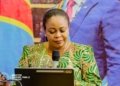
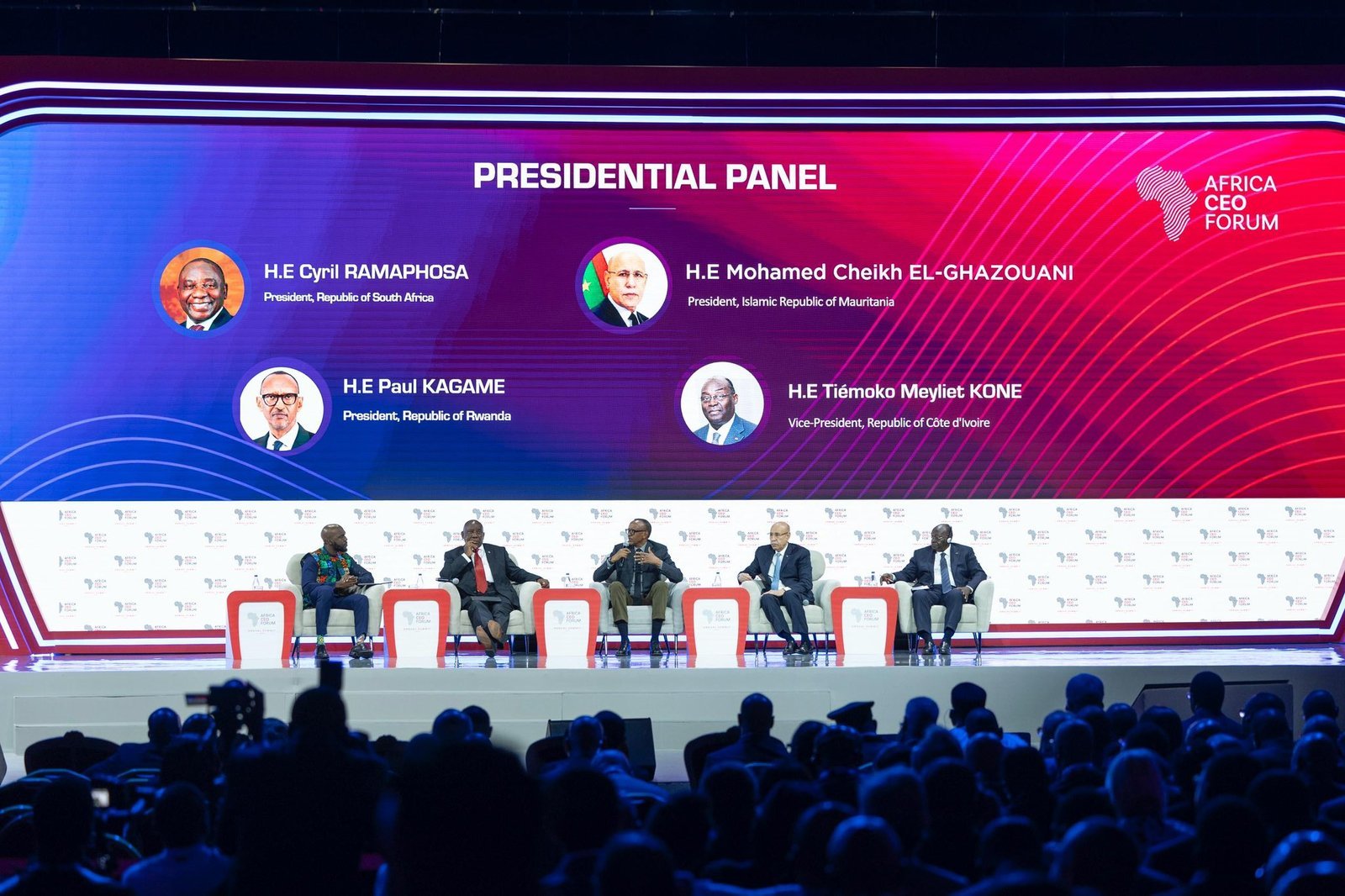
Abidjan, Côte d’Ivoire – At the 2025 Africa CEO Forum in Abidjan, African heads of state highlighted the need for deeper integration and practical collaboration between governments and businesses.

Monday’s discussions focused on the African Continental Free Trade Area, described as a framework for unlocking trade and economic opportunities across the continent.

President Cyril Ramaphosa said the Continental Free Trade Area presents an opportunity for business leaders to access a market of 1.4 billion people and a combined GDP of $3.4 trillion.

He encouraged the private sector to engage with the trade framework as a platform to build cross-border partnerships and infrastructure.

“Trade requires working roads, functioning airlines, efficient ports, and rail systems,” he noted. He added that governments are prepared to reduce risk on major infrastructure projects through sovereign financial tools to attract private investment.

When a moderator pointed out the realities of closed borders, expensive flights, and visa restrictions, Ramaphosa responded that these issues are being addressed. “The pace might be slow, but it is happening,” he said. “The AfCFTA [African Continental Free Trade Area] will open the floodgates for economic activity.”

Kagame Calls for Action Over Rhetoric

Rwandan President Paul Kagame expanded on the conversation by reflecting on the continent’s repeated promises and missed opportunities. He said Africa has made progress over the past three decades, but stressed the need for faster implementation and stronger ownership.

“We can do more, and we can do it together,” he said. Kagame questioned why African nations wait for aid cuts before acting and challenged the idea that development must be externally funded. “There is a mindset on the continent that someone else will foot the bill. That has undermined our efforts.”

He expressed concern over the lack of follow-through on continental agreements, citing bureaucratic delays and insufficient coordination. Kagame insisted that Africa already possesses the knowledge, talent, and institutions to advance, but often lacks the political will.

From Raw Materials to Skills Retention

Kagame questioned why Africa continues to export both raw materials and skilled talent while importing finished products and foreign expertise. “Why don’t we retain this talent and let it serve our own needs?” he asked.

He added that real transformation requires honest conversations and a shift in mentality. “Sometimes we need to wash our dirty linen in public if that’s what it takes to make progress.”

Referring to upcoming discussions at the G20, Ramphosa said that a continental accord on critical minerals could help protect and maximize Africa’s strategic resources, if public and private sectors work together.

“And this is precisely what we are going to be advocating also at the G20. When it comes to critical minerals, we need a critical minerals accord that enables all of us to manage these resources properly.” He said.

Mauritania and Côte d’Ivoire Emphasize Business Environment

President Mohamed Ould Ghazouani of Mauritania described how his country is enacting reforms to create a more attractive climate for private investment. These include new laws on electricity, investment, and public procurement, aimed at allowing small and medium-sized enterprises to grow and contribute to job creation.

He stated that private enterprise cannot thrive without government-led reforms that guarantee legal protection and improve infrastructure. “We are building an environment that will support a dynamic private sector,” he said.

President Alassane Ouattara of Côte d’Ivoire noted that despite global uncertainties, his country has maintained stable growth supported by strong private investment and macroeconomic management. He called for faster implementation of the AfCFTA and increased local processing of Africa’s raw materials.

“We must now work to strengthen intra‑African trade by continuing our efforts to process our raw materials and by accelerating the implementation of the AfCFTA,” he said.

Digital Transformation and Development Models

Senegalese President Bassirou Diomaye Faye brought a digital dimension to the discussion. He pointed to Estonia and Rwanda as countries that have made significant progress in building digital systems that support efficient governance and citizen services.

Faye said Africa should not fall behind in the global digital race and must work toward sovereignty in digital infrastructure. “We must also be actors, not only consumers,” he said, referring to Africa’s role in shaping its own digital future.

He encouraged African countries to invest in transparent, fast, and reliable digital services that can accelerate development and promote accountability.

The Africa CEO Forum, taking place on May 12–13 in Côte d’Ivoire’s capital Abidjan, brings together African heads of state, CEOs, and investors to discuss practical solutions for economic transformation across the continent.
Get the inside Story

Stay informed on the stories shaping Africa’s future. Get breaking news, in-depth analysis, opinions and exclusive insights from across the continent delivered to your inbox, free and unfiltered.


Get in touch for more:
Felix Tih
Editorial Director, Bantu Gazette
WhatsApp
LinkedIn
X (Twitter)
Instagram

Related Posts

Ghana’s Energy Sector Remains Country’s Biggest Economic Risk, Finance Minister Says
Politics & Economy

Ghana Clears $1.47 Billion in Energy Debts, Restores World Bank Guarantee

January 12, 2026
Ethiopia Breaks Ground on Africa’s Largest Airport
Politics & Economy

Ethiopia Breaks Ground on Africa’s Largest Airport

January 10, 2026
Egypt Tapped as Potential Hub for Pan-African Gold Bank
Politics & Economy

Egypt Tapped as Potential Hub for Pan-African Gold Bank

January 6, 2026
Equatorial Guinea Moves Capital from Malabo to Ciudad de la Paz
Finance

Equatorial Guinea Moves Capital from Malabo to Ciudad de la Paz

January 7, 2026
Rwanda Tops Africa in World Bank Business Ready Rankings
Politics & Economy

Rwanda Tops Africa in World Bank Business Ready Rankings

January 3, 2026
Nigeria’s Tinubu Hails Economic Growth After 2025 Gains, Tax Reforms
Politics & Economy

Nigeria’s Tinubu Hails Economic Growth After 2025 Gains, Tax Reforms

January 2, 2026

Most Recent

Nigeria, UAE Agree to Eliminate Tariffs on Over 7,000 Products
Energy & Trade

Nigeria, UAE Agree to Eliminate Tariffs on Over 7,000 Products

by Aissatou Fall
January 13, 2026
0

Nigeria and the United Arab Emirates on Tuesday signed a Comprehensive Economic Partnership Agreement that removes tariffs on more than...

Read moreDetails
Ghana’s Energy Sector Remains Country’s Biggest Economic Risk, Finance Minister Says

Ghana Clears $1.47 Billion in Energy Debts, Restores World Bank Guarantee

January 12, 2026
Eto’o Commends Morocco’s AFCON Hosting, Sportsmanship After Cameroon’s Exit

Eto’o Commends Morocco’s AFCON Hosting, Sportsmanship After Cameroon’s Exit

January 11, 2026
Africa’s Oldest Cremation Pyre Found in Malawi, Dating Back 9,500 Years

Africa’s Oldest Cremation Pyre Found in Malawi, Dating Back 9,500 Years

January 10, 2026
Ethiopia Breaks Ground on Africa’s Largest Airport

Ethiopia Breaks Ground on Africa’s Largest Airport

January 10, 2026
Kenya Secures Funds to Protect Reefs, Grow Coastal Economy

Kenya Secures Funds to Protect Reefs, Grow Coastal Economy

January 9, 2026
Morocco Leverages AFCON 2025 to Boost Global Tourism Visibility

Morocco Leverages AFCON 2025 to Boost Global Tourism Visibility

January 7, 2026
Nigeria, UAE Agree to Eliminate Tariffs on Over 7,000 Products
Energy & Trade

Nigeria, UAE Agree to Eliminate Tariffs on Over 7,000 Products

by Aissatou Fall
Reading Time: 1 min read
January 13, 2026
0

Nigeria and the United Arab Emirates on Tuesday signed a Comprehensive Economic Partnership Agreement that removes tariffs on more than...

Read moreDetails
Ghana’s Energy Sector Remains Country’s Biggest Economic Risk, Finance Minister Says
Politics & Economy

Ghana Clears $1.47 Billion in Energy Debts, Restores World Bank Guarantee

by Marcelo Edjang
Reading Time: 1 min read
January 12, 2026
0

The Government of Ghana paid about $1.47 billion in 2025 to clear energy sector arrears, restore a key World Bank...

Read moreDetails
Eto’o Commends Morocco’s AFCON Hosting, Sportsmanship After Cameroon’s Exit
Sports

Eto’o Commends Morocco’s AFCON Hosting, Sportsmanship After Cameroon’s Exit

by Elise Ntebah
Reading Time: 1 min read
January 11, 2026
0

Samuel Eto’o, president of the Cameroon Football Federation, praised Morocco for its exemplary organization and warm hospitality during the 2025...

Read moreDetails

Continental Free Trade Tops Africa CEO Forum Talks

Continental Free Trade Tops Africa CEO Forum Talks

Abidjan, Côte d’Ivoire – At the 2025 Africa CEO Forum in Abidjan, African heads of state highlighted the need for deeper integration and practical collaboration between governments and businesses.

Monday’s discussions focused on the African Continental Free Trade Area, described as a framework for unlocking trade and economic opportunities across the continent.

President Cyril Ramaphosa said the Continental Free Trade Area presents an opportunity for business leaders to access a market of 1.4 billion people and a combined GDP of $3.4 trillion.

He encouraged the private sector to engage with the trade framework as a platform to build cross-border partnerships and infrastructure.

“Trade requires working roads, functioning airlines, efficient ports, and rail systems,” he noted. He added that governments are prepared to reduce risk on major infrastructure projects through sovereign financial tools to attract private investment.

When a moderator pointed out the realities of closed borders, expensive flights, and visa restrictions, Ramaphosa responded that these issues are being addressed. “The pace might be slow, but it is happening,” he said. “The AfCFTA [African Continental Free Trade Area] will open the floodgates for economic activity.”

Kagame Calls for Action Over Rhetoric

Rwandan President Paul Kagame expanded on the conversation by reflecting on the continent’s repeated promises and missed opportunities. He said Africa has made progress over the past three decades, but stressed the need for faster implementation and stronger ownership.

“We can do more, and we can do it together,” he said. Kagame questioned why African nations wait for aid cuts before acting and challenged the idea that development must be externally funded. “There is a mindset on the continent that someone else will foot the bill. That has undermined our efforts.”

He expressed concern over the lack of follow-through on continental agreements, citing bureaucratic delays and insufficient coordination. Kagame insisted that Africa already possesses the knowledge, talent, and institutions to advance, but often lacks the political will.

From Raw Materials to Skills Retention

Kagame questioned why Africa continues to export both raw materials and skilled talent while importing finished products and foreign expertise. “Why don’t we retain this talent and let it serve our own needs?” he asked.

He added that real transformation requires honest conversations and a shift in mentality. “Sometimes we need to wash our dirty linen in public if that’s what it takes to make progress.”

Referring to upcoming discussions at the G20, Ramphosa said that a continental accord on critical minerals could help protect and maximize Africa’s strategic resources, if public and private sectors work together.

“And this is precisely what we are going to be advocating also at the G20. When it comes to critical minerals, we need a critical minerals accord that enables all of us to manage these resources properly.” He said.

Mauritania and Côte d’Ivoire Emphasize Business Environment

President Mohamed Ould Ghazouani of Mauritania described how his country is enacting reforms to create a more attractive climate for private investment. These include new laws on electricity, investment, and public procurement, aimed at allowing small and medium-sized enterprises to grow and contribute to job creation.

He stated that private enterprise cannot thrive without government-led reforms that guarantee legal protection and improve infrastructure. “We are building an environment that will support a dynamic private sector,” he said.

President Alassane Ouattara of Côte d’Ivoire noted that despite global uncertainties, his country has maintained stable growth supported by strong private investment and macroeconomic management. He called for faster implementation of the AfCFTA and increased local processing of Africa’s raw materials.

“We must now work to strengthen intra‑African trade by continuing our efforts to process our raw materials and by accelerating the implementation of the AfCFTA,” he said.

Digital Transformation and Development Models

Senegalese President Bassirou Diomaye Faye brought a digital dimension to the discussion. He pointed to Estonia and Rwanda as countries that have made significant progress in building digital systems that support efficient governance and citizen services.

Faye said Africa should not fall behind in the global digital race and must work toward sovereignty in digital infrastructure. “We must also be actors, not only consumers,” he said, referring to Africa’s role in shaping its own digital future.

He encouraged African countries to invest in transparent, fast, and reliable digital services that can accelerate development and promote accountability.

The Africa CEO Forum, taking place on May 12–13 in Côte d’Ivoire’s capital Abidjan, brings together African heads of state, CEOs, and investors to discuss practical solutions for economic transformation across the continent.

Continental Free Trade Tops Africa CEO Forum Talks

Continental Free Trade Tops Africa CEO Forum Talks
Felix Tihby Felix Tih
May 12, 2025

Abidjan, Côte d’Ivoire – At the 2025 Africa CEO Forum in Abidjan, African heads of state highlighted the need for deeper integration and practical collaboration between governments and businesses.

Monday’s discussions focused on the African Continental Free Trade Area, described as a framework for unlocking trade and economic opportunities across the continent.

President Cyril Ramaphosa said the Continental Free Trade Area presents an opportunity for business leaders to access a market of 1.4 billion people and a combined GDP of $3.4 trillion.

He encouraged the private sector to engage with the trade framework as a platform to build cross-border partnerships and infrastructure.

“Trade requires working roads, functioning airlines, efficient ports, and rail systems,” he noted. He added that governments are prepared to reduce risk on major infrastructure projects through sovereign financial tools to attract private investment.

When a moderator pointed out the realities of closed borders, expensive flights, and visa restrictions, Ramaphosa responded that these issues are being addressed. “The pace might be slow, but it is happening,” he said. “The AfCFTA [African Continental Free Trade Area] will open the floodgates for economic activity.”

Kagame Calls for Action Over Rhetoric

Rwandan President Paul Kagame expanded on the conversation by reflecting on the continent’s repeated promises and missed opportunities. He said Africa has made progress over the past three decades, but stressed the need for faster implementation and stronger ownership.

“We can do more, and we can do it together,” he said. Kagame questioned why African nations wait for aid cuts before acting and challenged the idea that development must be externally funded. “There is a mindset on the continent that someone else will foot the bill. That has undermined our efforts.”

He expressed concern over the lack of follow-through on continental agreements, citing bureaucratic delays and insufficient coordination. Kagame insisted that Africa already possesses the knowledge, talent, and institutions to advance, but often lacks the political will.

From Raw Materials to Skills Retention

Kagame questioned why Africa continues to export both raw materials and skilled talent while importing finished products and foreign expertise. “Why don’t we retain this talent and let it serve our own needs?” he asked.

He added that real transformation requires honest conversations and a shift in mentality. “Sometimes we need to wash our dirty linen in public if that’s what it takes to make progress.”

Referring to upcoming discussions at the G20, Ramphosa said that a continental accord on critical minerals could help protect and maximize Africa’s strategic resources, if public and private sectors work together.

“And this is precisely what we are going to be advocating also at the G20. When it comes to critical minerals, we need a critical minerals accord that enables all of us to manage these resources properly.” He said.

Mauritania and Côte d’Ivoire Emphasize Business Environment

President Mohamed Ould Ghazouani of Mauritania described how his country is enacting reforms to create a more attractive climate for private investment. These include new laws on electricity, investment, and public procurement, aimed at allowing small and medium-sized enterprises to grow and contribute to job creation.

He stated that private enterprise cannot thrive without government-led reforms that guarantee legal protection and improve infrastructure. “We are building an environment that will support a dynamic private sector,” he said.

President Alassane Ouattara of Côte d’Ivoire noted that despite global uncertainties, his country has maintained stable growth supported by strong private investment and macroeconomic management. He called for faster implementation of the AfCFTA and increased local processing of Africa’s raw materials.

“We must now work to strengthen intra‑African trade by continuing our efforts to process our raw materials and by accelerating the implementation of the AfCFTA,” he said.

Digital Transformation and Development Models

Senegalese President Bassirou Diomaye Faye brought a digital dimension to the discussion. He pointed to Estonia and Rwanda as countries that have made significant progress in building digital systems that support efficient governance and citizen services.

Faye said Africa should not fall behind in the global digital race and must work toward sovereignty in digital infrastructure. “We must also be actors, not only consumers,” he said, referring to Africa’s role in shaping its own digital future.

He encouraged African countries to invest in transparent, fast, and reliable digital services that can accelerate development and promote accountability.

The Africa CEO Forum, taking place on May 12–13 in Côte d’Ivoire’s capital Abidjan, brings together African heads of state, CEOs, and investors to discuss practical solutions for economic transformation across the continent.
Get the inside Story

Stay informed on the stories shaping Africa’s future. Get breaking news, in-depth analysis, opinions and exclusive insights from across the continent delivered to your inbox, free and unfiltered.


Get in touch for more:
Felix Tih
Editorial Director, Bantu Gazette
WhatsApp
LinkedIn
X (Twitter)
Instagram

Related Posts

Ghana’s Energy Sector Remains Country’s Biggest Economic Risk, Finance Minister Says

Ghana Clears $1.47 Billion in Energy Debts, Restores World Bank Guarantee

by Marcelo Edjang
January 12, 2026
0

...

Ethiopia Breaks Ground on Africa’s Largest Airport

Ethiopia Breaks Ground on Africa’s Largest Airport

by Maraki Desta
January 10, 2026
0

...

Egypt Tapped as Potential Hub for Pan-African Gold Bank

Egypt Tapped as Potential Hub for Pan-African Gold Bank

by Samira Benhadda
January 6, 2026
0

...

Equatorial Guinea Moves Capital from Malabo to Ciudad de la Paz

Equatorial Guinea Moves Capital from Malabo to Ciudad de la Paz

by Bantu Gazette
January 4, 2026
0

...

Rwanda Tops Africa in World Bank Business Ready Rankings

Rwanda Tops Africa in World Bank Business Ready Rankings

by Jane Mukami
January 3, 2026
0

...

Nigeria’s Tinubu Hails Economic Growth After 2025 Gains, Tax Reforms

Nigeria’s Tinubu Hails Economic Growth After 2025 Gains, Tax Reforms

by Cynthia N. Ganchok
January 2, 2026
0

...

Nigeria, UAE Agree to Eliminate Tariffs on Over 7,000 Products
Energy & Trade

Nigeria, UAE Agree to Eliminate Tariffs on Over 7,000 Products

by Aissatou Fall
Reading Time: 1 min read
January 13, 2026
0

Nigeria and the United Arab Emirates on Tuesday signed a Comprehensive Economic Partnership Agreement that removes tariffs on more than...

Read moreDetails
Ghana’s Energy Sector Remains Country’s Biggest Economic Risk, Finance Minister Says

Ghana Clears $1.47 Billion in Energy Debts, Restores World Bank Guarantee

by Marcelo Edjang
January 12, 2026
0

The Government of Ghana paid about $1.47 billion in 2025 to clear energy sector arrears, restore a key World Bank...

Eto’o Commends Morocco’s AFCON Hosting, Sportsmanship After Cameroon’s Exit

Eto’o Commends Morocco’s AFCON Hosting, Sportsmanship After Cameroon’s Exit

by Elise Ntebah
January 11, 2026
0

Samuel Eto’o, president of the Cameroon Football Federation, praised Morocco for its exemplary organization and warm hospitality during the 2025...

Africa’s Oldest Cremation Pyre Found in Malawi, Dating Back 9,500 Years

Africa’s Oldest Cremation Pyre Found in Malawi, Dating Back 9,500 Years

by Amani Mwakalebela
January 10, 2026
0

Archaeologists have uncovered Africa’s earliest known cremation at the base of Mount Hora in northern Malawi, dating to about 9,500...

Ethiopia Breaks Ground on Africa’s Largest Airport

Ethiopia Breaks Ground on Africa’s Largest Airport

by Maraki Desta
January 10, 2026
0

Ethiopia has broken ground on Bishoftu International Airport, a multi-billion-dollar project set to become the largest aviation infrastructure development in...

Next Post
Nigeria Launches $500 Million Climate Finance Platform

Nigeria Launches $500 Million Climate Finance Platform

À Abidjan, l’Afrique veut passer des discours aux actes

À Abidjan, l’Afrique veut passer des discours aux actes

South Africa, Nigeria Lead 2025 List of Africa’s Fastest-Growing Companies

South Africa, Nigeria Lead 2025 List of Africa’s Fastest-Growing Companies

African Energy Leaders Urge Unity, Local Value Creation

African Energy Leaders Urge Unity, Local Value Creation

Bantu Gazette is a pioneering news platform that champions Africa's development, culture, and heritage. We spotlight the continent's successes, address its challenges, and provide insightful coverage of events that shape its future.

Bantu Gazette is a pioneering news platform that champions Africa's development, culture, and heritage. We spotlight the continent's successes, address its challenges, and provide insightful coverage of events that shape its future.

Our Platforms

  • Bantu Magazine
  • Bantu Brief
  • Black Frame Studio

Our Services

  • Bantu Agency
  • Advertise
  • Partnerships

Our Services

  • Editorial Director
  • Opportunities
  • Contact

Bantu Gazette is a pioneering news platform that champions Africa's development, culture, and heritage. We spotlight the continent's successes, address its challenges, and provide insightful coverage of events that shape its future.

Our Platforms

  • Bantu Magazine
  • Bantu Brief
  • Black Frame Studio

Our Services

  • Bantu Agency
  • Advertise
  • Partnerships

Our Services

  • Editorial Director
  • Opportunities
  • Contact
Bantu Gazette
  • Energy & Trade
  • Finance
  • Health
  • Politics & Economy
  • Technology
  • Environment
  • Feature
  • Opinion
  • Changemakers
  • Tourism & Culture
  • Magazine