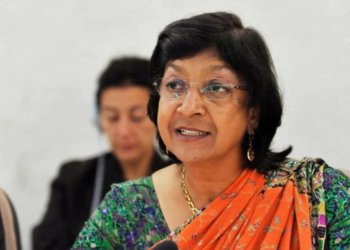

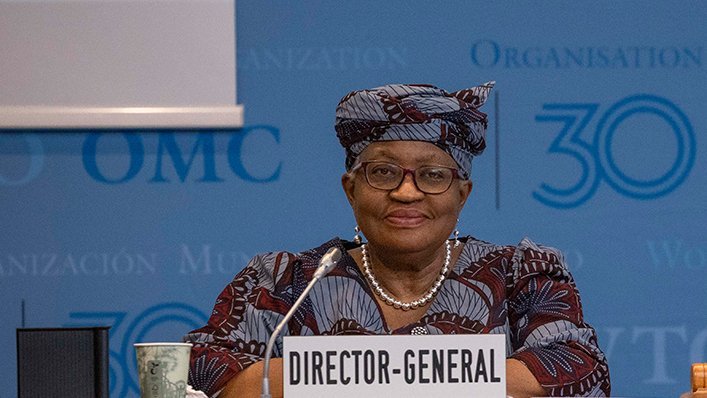

Africa can anchor a new model of global growth by moving beyond commodity dependence and expanding value-added production integrated into global trade and investment networks, according to a policy paper by Ngozi Okonjo-Iweala, Director-General of the World Trade Organization.
The paper, based on the Mattei Lecture delivered at the 2025 Africa Growth and Opportunity Research in Action Conference, argues that Africa’s economic transformation carries implications beyond the continent.
By expanding manufacturing, services, and regionally integrated value chains, Africa could strengthen global supply chain resilience at a time of geopolitical strain and declining foreign direct investment to developing economies.
While foreign investment into developing countries has fallen to about 2.3 percent of GDP, global trade volumes have held up better than expected, according to the paper.
Goods trade continues to expand, services trade is growing faster, and South-South commerce has accelerated.
Against this backdrop, Africa’s goods exports are projected to grow by more than 5 percent, with digitally delivered services rising at double-digit rates from a low base.
Despite these trends, Africa remains marginal in global trade, accounting for less than 3 percent of goods exports.
High trade costs, limited value addition, and slow regional integration continue to constrain competitiveness.
Trade costs within Africa remain higher than those with external partners, undermining efforts to build regional value chains.
Okonjo-Iweala proposes a two-track agenda:
At the global level, she calls for modernization of the multilateral trading system, including reforms at the WTO and wider adoption of investment facilitation frameworks to improve predictability and reduce barriers.
At the continental level, the paper urges faster implementation of the African Continental Free Trade Area, with a focus on lowering intra-African trade frictions and attracting efficiency-seeking investment into manufacturing, services, and so-called industries without smokestacks.
The paper points to Africa’s demographic growth, expanding middle class, mineral resources, and renewable energy potential as foundations for a more diversified growth path.
Case studies cited include industrial parks, automotive exports, fintech platforms, and critical mineral processing projects, which demonstrate feasibility while highlighting the need for scale.
A delivery-focused partnership with Europe, framed around a modernized Mattei approach, is presented as a route to de-risk investment and accelerate infrastructure development with shared gains in jobs, growth, and supply chain diversification.
By Felix Tih, reporting from a Policy Research Working Paper by Ngozi Okonjo-Iweala, Director-General of the World Trade Organization.