
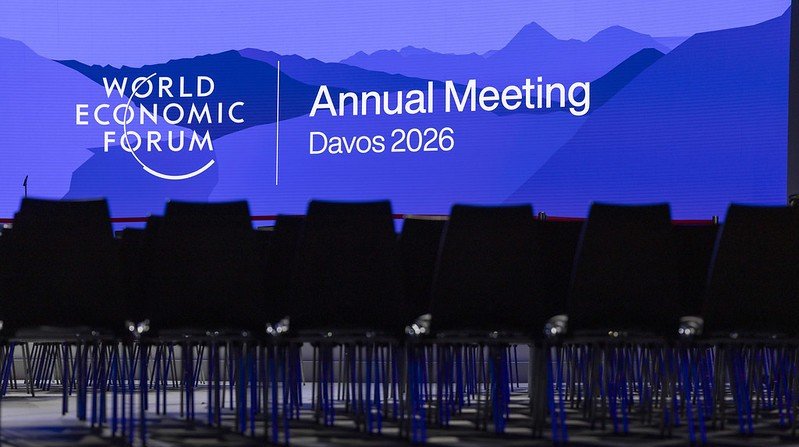
Every January, as snow blankets the Swiss Alps, the world’s political and financial elite gather in Davos for the World Economic Forum. Within that rarefied ecosystem of power and influence, the Africa Collective has carved out a space to champion the continent’s priorities.
With the jets departed and the panels concluded, the question remains whether this marked a turning point for Africa’s development agenda or simply another round of elite networking with limited impact.
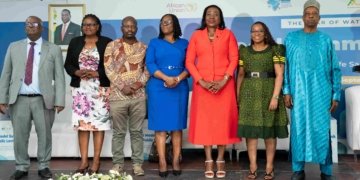
Since 2020, the Africa Collective has established a consistent presence during the Forum’s annual meeting. Through a weeklong program at the Africa Collective House, it convenes curated sessions, thematic panels, networking events and receptions, all co-created with partners to engage with the broader policy and business discussions unfolding in Davos.
As someone deeply invested in social impact and systems transformation, I believe the reality lies somewhere between visibility and measurable value.
From Side Event to Central Stage
For years, Africa’s presence in Davos was marginal. We were often a topic of discussion rather than a participant in the dialogue. The Africa Collective shifted that dynamic. It created a dedicated environment where African heads of state, CEOs and global investors could engage as equals.
The narrative has moved away from “Aid to Africa” and toward “Investment in Africa.” By positioning the African Continental Free Trade Area (AfCFTA) as a unified, investable market, the Collective reframed the continent not as a destination for assistance, but as a partner in business.
The Power and the Pitfalls of the Network
Still, networking at the highest levels can be a double-edged sword. The Davos environment thrives on access and introductions. But a handshake in Switzerland does not lower the cost of cross-border trade for a smallholder farmer in Liberia or unlock scale for a startup in Johannesburg. The bottlenecks persist.
The Africa Collective has delivered immense social capital. The challenge is converting that momentum into tangible economic capital, particularly when faced with persistent barriers.
First, the implementation gap remains wide. While there is consensus on big-picture goals such as the 2030 Sustainable Development Goals, the granular work of policy harmonization and cross-border regulation takes place far from Davos.
Second, the conversations often take place in echo chambers of influence. When youth leaders, grassroots innovators and female entrepreneurs are excluded from the agenda, we risk crafting solutions for problems that exist only on paper.
Beyond the Optics of Engagement
If the Africa Collective is to fulfill its potential, the post-Davos roadmap must go beyond panels and press releases. It must respond to the lived realities of Africa’s 1.4 billion citizens. We cannot settle for the performance of commitment. We must insist on a shift in how we serve the continent.
That shift begins with radical accountability. Announcing investments is no longer enough. We need transparent, trackable mechanisms that follow every dollar committed through the Africa Collective.
Accountability must extend to the street vendor, the rural farmer and the young entrepreneur who needs to see these deals materialize into infrastructure, access and opportunity.
It also requires digital democratization. The divide between global capital and local talent must be bridged. Technology should enable a young innovator in a remote village to pitch to a global investor with the same ease as a CEO at a Davos hotel. If we are serious about inclusive growth, opportunity must be decentralized.
And most critically, we must adopt a human-centered approach to trade and governance. The future of African integration depends not on who commands a boardroom, but on how effectively we support the informal trader, the transport operator and the cross-border worker. Development must simplify life at the grassroots level.
A Platform in Motion
This year, the Africa Collective showed that it is no longer simply an annual event. It is evolving into a year-round strategic platform. But the success of Davos 2026 will not be measured by the number of deals signed at the Hard Rock Hotel.
It will be measured by the speed at which those deals translate into infrastructure, jobs and inclusive economic growth on the ground.
Africa has moved beyond potential. We are now in acceleration mode. The responsibility is on all of us to ensure that in the momentum, no one is left behind.
In a significant move, the World Economic Forum announced it will host its 2027 spring meeting in South Africa.
The decision follows the successful resumption of its Africa-focused summits, last held in Cape Town in 2019 before the pandemic disrupted global convenings.
It also builds on South Africa’s G20 presidency in 2025, which culminated in a leaders’ summit and more than 135 official business events across the country.
Tourism Minister Patricia de Lille welcomed the decision as a signal of global confidence in South Africa’s ability to host major international gatherings.
As the sping forum returns to African soil, we are offered a rare opportunity to redefine the narrative on our own terms. The question now is whether we will seize it.