
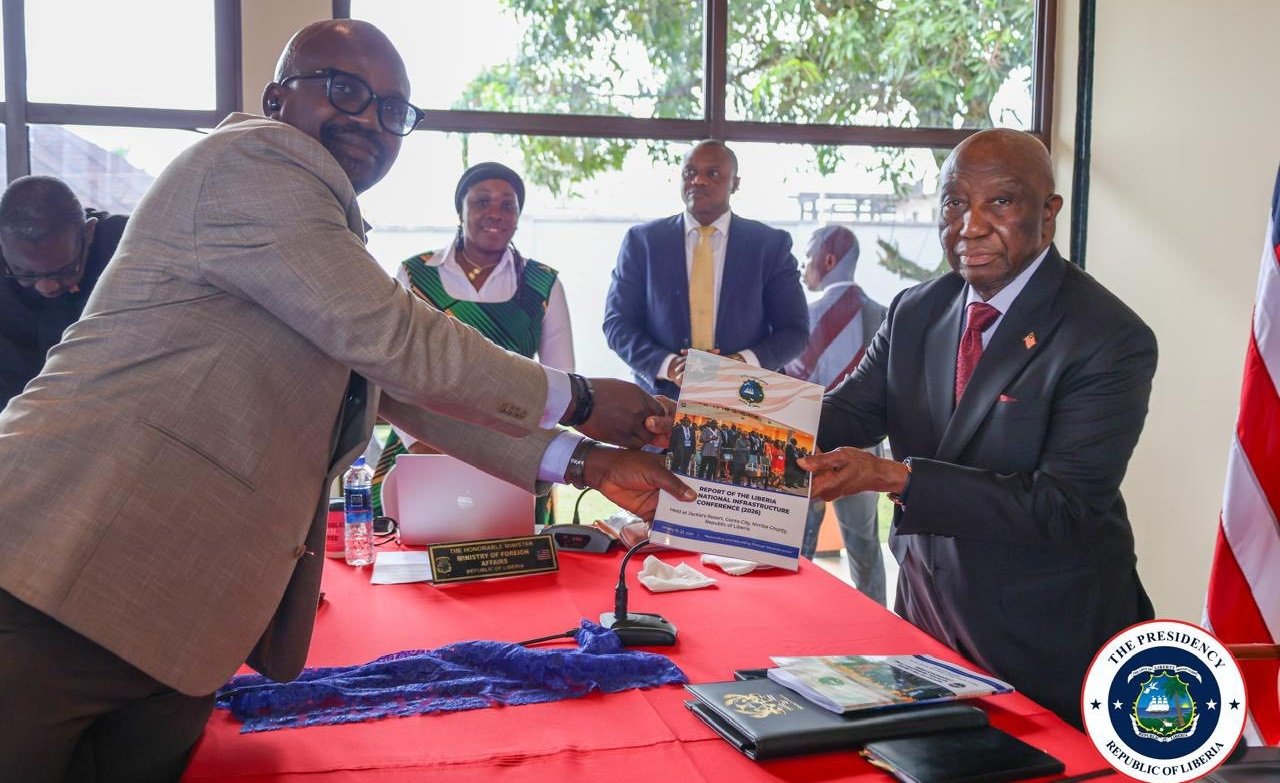

Liberia’s Cabinet has approved an Infrastructure Policy Roadmap spanning 2026 to 2029 and endorsed a Greater Monrovia Urban Redevelopment Program, marking a structural shift in how the government plans, regulates and delivers public infrastructure.
President Joseph Boakai convened the third Cabinet meeting of 2026 on Thursday, April 9, at the Executive Mansion, where ministers deliberated on a governance framework to institutionalize coordinated infrastructure planning across ministries and agencies, rather than advancing individual project announcements.
The roadmap establishes a phased approach to infrastructure implementation, supported by strengthened regulatory enforcement.
Cabinet discussions centered on restoring zoning discipline in Monrovia, where the capital’s population has grown from roughly 350,000 after the civil conflict to more than 1 million residents today, placing acute pressure on water, electricity, education and health care systems.
President Boakai tasked the Ministry of Public Works with enforcing city ordinances and halting unauthorized construction, particularly in alleyways and areas where unregulated development has intensified congestion and public health risks.
The Cabinet also announced the immediate suspension of newly introduced tourism fees by the Liberia National Tourism Authority, pending stakeholder consultations, reflecting the administration’s stated commitment to policy review before implementation.
“We have no apology when we do things that are right for our people,” Boakai said.
The meeting’s theme, centered on rethinking infrastructure planning and governance to advance modernization, framed the session as a policy consolidation exercise rather than a capital investment announcement.
Boakai urged ministers to demonstrate measurable results and strengthen interministerial coordination across education, communications, agriculture and internal affairs.