
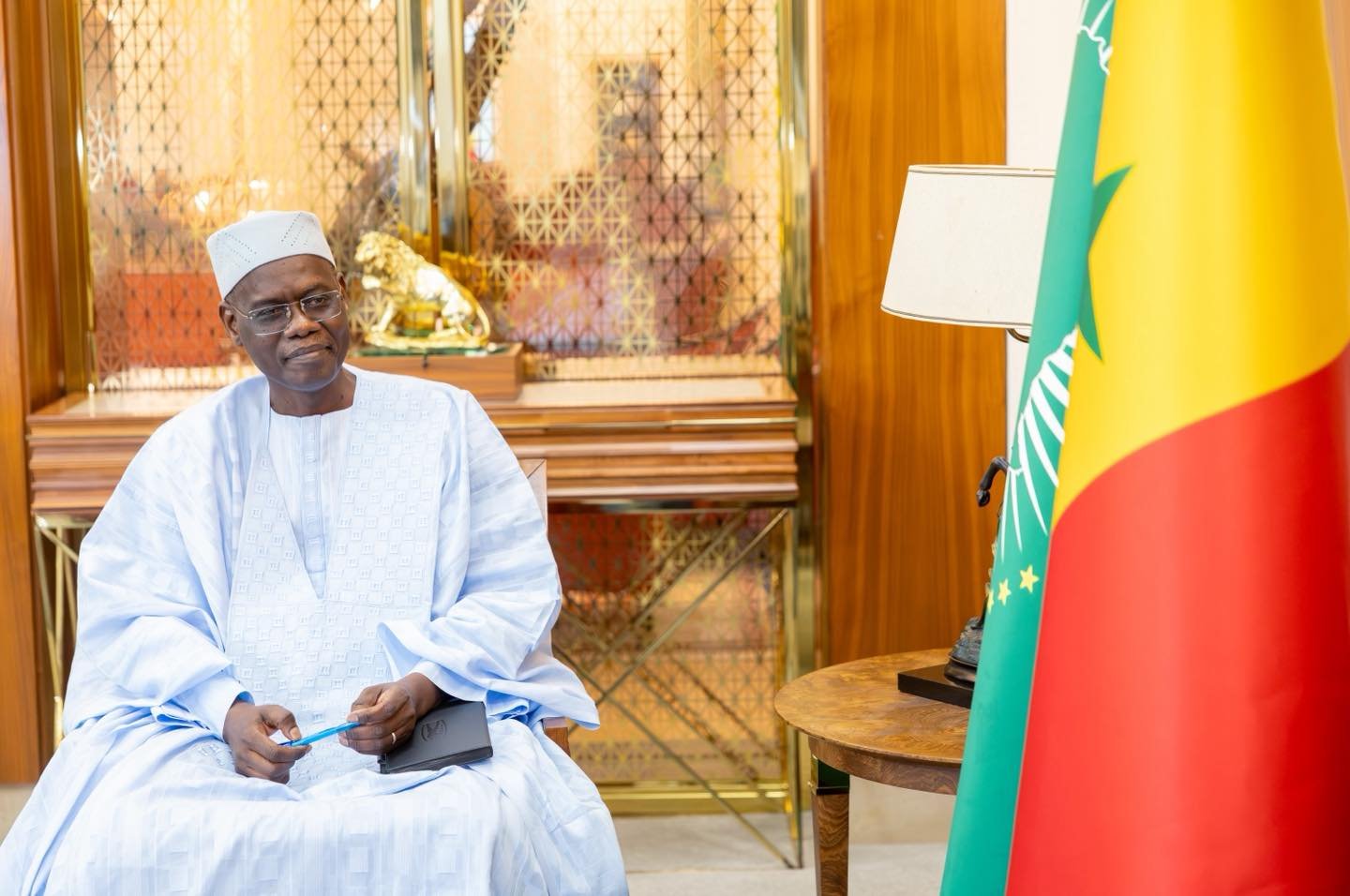

DAKAR, Senegal
President Bassirou Diomaye Faye has appointed veteran central banker Ahmadou Alhaminou Mohamed Lo as Senegal’s new prime minister, three days after dismissing Ousmane Sonko amid widening tensions over the country’s fiscal management.
Lo took office Monday with a sober acknowledgment of the economic strain facing his administration.
“In these crucial moments in the life of the nation, we must all be conscious of the emergency context in which our country finds itself, particularly the state of public finances and its impact on the economy,” he told officials in Dakar.
The new premier cited additional pressures, including rising energy and food costs linked to the Middle East crisis, persistent social unrest and a deteriorating security climate across West Africa.
Faye dismissed Sonko on Friday, May 22, after irreconcilable differences over how to navigate Senegal’s debt crisis and stalled talks with international lenders.
In his first address, Lo praised his predecessor’s contributions, noting that Sonko’s tenure produced a national transformation agenda, a master plan, an economic and social recovery program, and a five-year development strategy.
“I would like to salute the fruitful work carried out under the impulse of the president of the republic and the coordination of the outgoing prime minister, Ousmane Sonko,” Lo said.
He stressed that the leadership change does not mark a policy reversal but rather “a change of method in institutional coherence and governmental action,” consistent with the commitments of the PROJET platform, Senegal’s national transformation program, and rooted in PASTEF, the sovereignty-focused movement that underpins Faye’s presidency.
PASTEF, or African Patriots of Senegal for Work, Ethics and Fraternity, came to power in March 2024 after Faye defeated Macky Sall’s ruling coalition following a popular groundswell of support and an alliance with party founder Ousmane Sonko.
A Technocrat for Turbulent Times
Lo, 60, brings nearly four decades of experience at the Central Bank of West African States, known as BCEAO, where he rose from treasury officer to secretary-general. As Senegal’s national director from 2016, he oversaw eurobond issuances, credit-rating engagements with Standard & Poor’s and Moody’s, and IMF negotiations under the ISPE and ICPE programs.
Faye first appointed him secretary-general of the Cabinet in April 2024 and later minister of state responsible for steering the Senegal 2050 transformation agenda.
His promotion now places operational control of that same program in the hands of its chief architect.
Lo outlined three priorities for his mandate, including resolving citizens’ daily hardships, advancing the Jub Jubal Jubbanti governance and accountability framework across social, territorial and administrative dimensions, and consolidating economic, geostrategic and cultural sovereignty.
“Senegal is a safe and reliable country, and intends to remain so,” he said, reassuring investors and partners. “I consider this new responsibility a sacred duty.”