
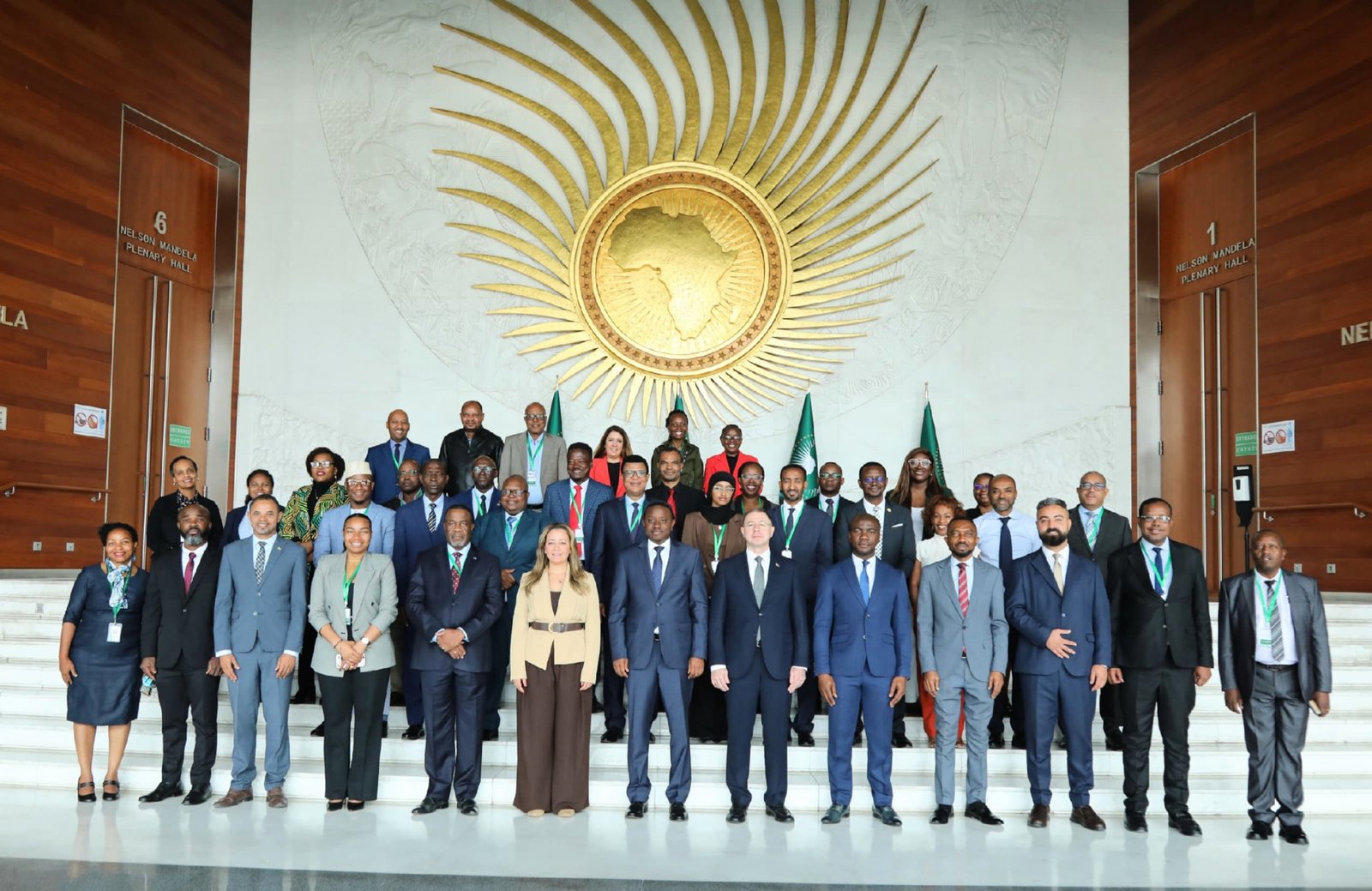

The African Capacity Building Foundation (ACBF) and the African Union Commission (AUC), with support from the Azerbaijan International Development Agency (AIDA), convened a high-level training on Wednesday to strengthen African diplomats’ knowledge of carbon markets as the continent advances implementation of the Africa Action Plan on Carbon Markets.
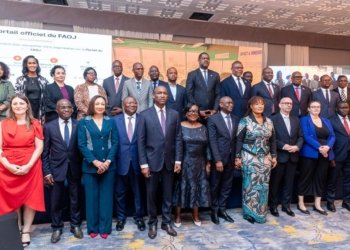
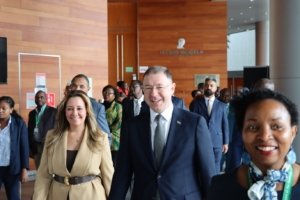
More than 80 African ambassadors and senior diplomats accredited to the African Union participated in the training at the African Union Headquarters in Addis Ababa, Ethiopia, where they deepened their understanding of carbon market mechanisms, governance and policy to support Africa’s participation in global carbon markets.
Speaking on behalf of ACBF Executive Secretary Mamadou Biteye, Ambassador Laho Bangoura, Special Adviser to the Executive Secretary and Head of the ACBF Liaison Office to the African Union, emphasized that capacity development remains central to Africa’s climate ambitions.
“As climate finance becomes increasingly central to Africa’s development agenda, capacity development must remain at the heart of our response. Because when Africa has the right capacities, Africa can better shape its own future.”
The training examined carbon market mechanisms, policy and regulatory frameworks, governance systems and practical African experiences.
Participants explored compliance and voluntary carbon markets, transparency requirements, community engagement, benefit-sharing mechanisms and the role of forests, wetlands and other natural carbon sinks in generating high-integrity carbon credits.
The sessions also examined Africa’s position in international carbon markets and the policy coordination required to strengthen the continent’s voice in global climate negotiations.
African countries continue to place carbon markets higher on the continental climate agenda as governments pursue green investment and sustainable development.
The Africa Action Plan on Carbon Markets, adopted by the African Union Assembly in 2025, provides member states with a common approach to developing high-integrity carbon markets that support economic growth, environmental stewardship and equitable benefit-sharing.
Recent decisions adopted under Article 6 of the Paris Agreement at COP29 have created greater certainty for international carbon trading, opening new opportunities for developing countries to mobilize investment for climate action.
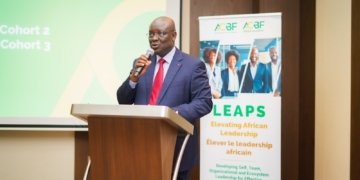
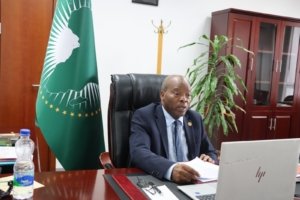
Opening the training, African Union Commissioner for Agriculture, Rural Development, Blue Economy and Sustainable Environment, H.E. Moses Vilakati, said that effective governance remains central to Africa’s participation in carbon markets.
“Our collective approach must continue to be guided by our continental frameworks. These frameworks require us to safeguard ecosystem integrity, ensure genuine Free, Prior and Informed Consent (FPIC), and guarantee transparent, legally enforceable benefit-sharing with indigenous peoples and local communities.”
Ambassador Ruslan Nasibov of the Republic of Azerbaijan said the progress achieved at COP29 creates significant opportunities for Africa to expand its role in international carbon markets while strengthening sustainable development.
“For Africa, this achievement presents significant opportunities. The continent possesses extraordinary natural assets, abundant renewable energy potential, and vast opportunities for generating high-integrity carbon credits. Yet realizing this potential requires strong institutions, sound regulatory frameworks, technical expertise, and skilled negotiators who can effectively represent national and continental interests.”
The program reflects continued cooperation between the African Union Commission, ACBF and Azerbaijan to strengthen Africa’s institutional capacity on emerging development priorities.
Azerbaijan supported the training through the Azerbaijan International Development Agency following its COP29 Presidency, which placed particular emphasis on advancing the priorities of climate-vulnerable countries and strengthening Africa’s participation in international climate processes.
The training forms part of broader efforts to implement the Africa Action Plan on Carbon Markets, strengthen governance and institutional capacity across member states and deepen regional cooperation on carbon market development.
The knowledge and policy insights shared during the program equip African diplomats to support national carbon market frameworks, engage more effectively in international negotiations and advance Africa’s common position as carbon markets continue to shape the global climate landscape.
Bangoura said the future of carbon markets will influence Africa’s economic transformation, environmental sustainability and climate resilience.
“The future of carbon markets will have important implications for Africa’s economic transformation, environmental sustainability and climate resilience,” Bangoura stated.
Together, we can help ensure that Africa is not only a participant in global carbon markets, but a leader in promoting carbon markets that are fair, credible, transparent and firmly anchored in sustainable development,” he added.