

OUIDAH, Benin
On a stretch of Benin’s Atlantic coast long associated with the forced departure of enslaved Africans, the country is seeking to give the idea of return a new and increasingly tangible meaning.
Benin marked the International Day for the Remembrance of the Slave Trade and its Abolition in Ouidah on Sunday Aug. 23 under the theme “From the Door of No Return to the Door of Return.”
The program combined remembrance with efforts to rebuild connections between Africa and descendants of people displaced through the transatlantic slave trade.
The International Day for the Remembrance of the Slave Trade and its Abolition is observed each year on Aug. 23. The date commemorates the uprising that began in Saint-Domingue, present-day Haiti, during the night of Aug. 22-23, 1791, and ultimately led to the Haitian Revolution and contributed to the abolition of the transatlantic slave trade.
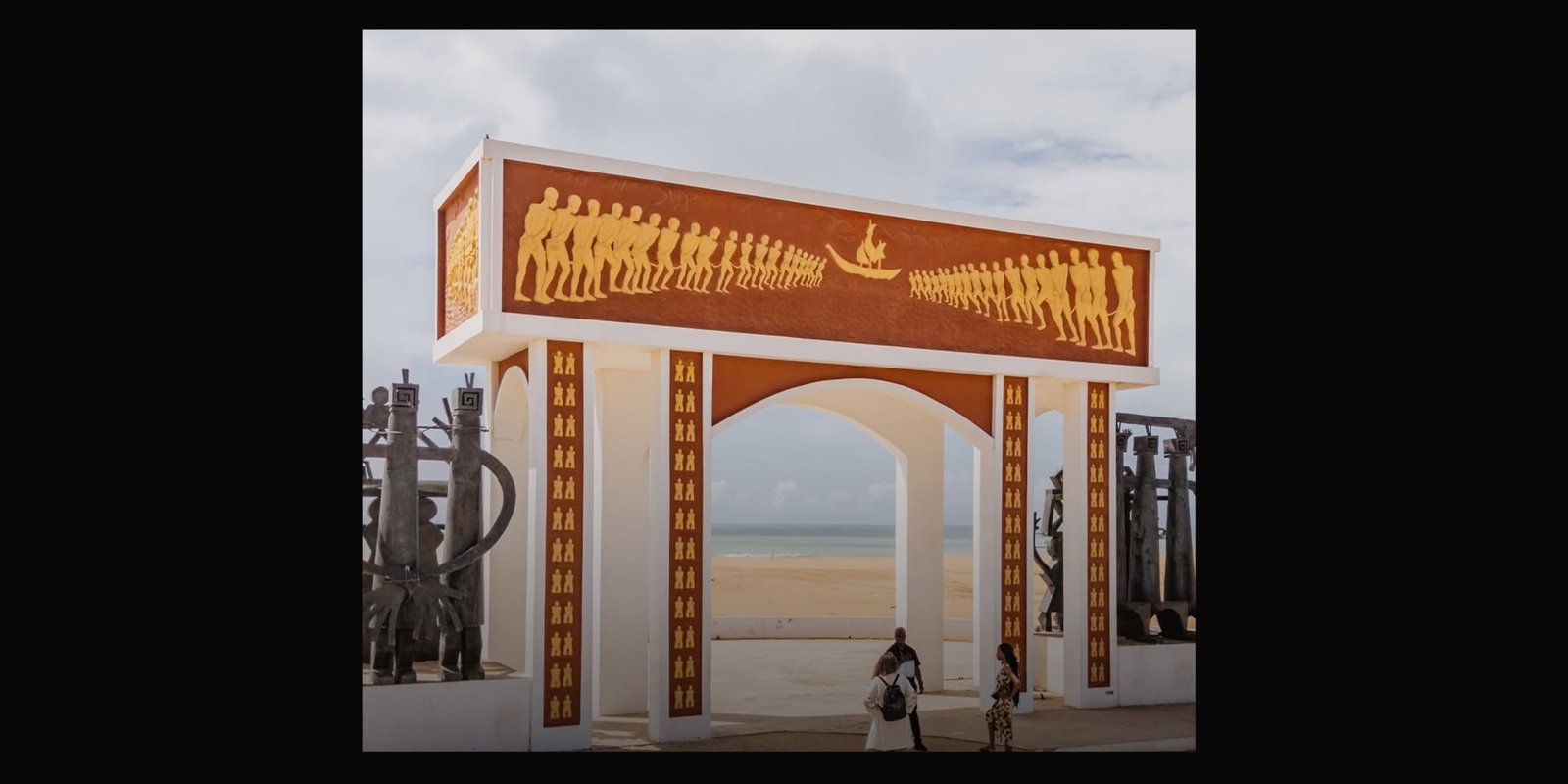
The symbolism is particularly powerful in Ouidah, a coastal city that was one of the major embarkation points for enslaved Africans transported across the Atlantic. Today, the Door of No Return stands near the coast as a memorial to those who were taken away.
Through the commemoration, Benin is reaffirming its commitment to preserving and passing on the memory of the slave trade while encouraging people of African descent in the diaspora to reconnect with their roots.
This year’s commemoration sought to turn that history toward reconnection.
Activities included a memorial walk along routes associated with enslaved people, conferences on history and return, discussions about colonial-era cultural objects and restitution, cultural events, and a ceremony for the presentation of citizenship documents to people of African descent who have become Beninese nationals.
The citizenship component is part of a broader policy adopted by Benin to strengthen ties with the African diaspora.
Under a 2024 law, Benin created a route to recognition of nationality for people of African descent who can establish that an ancestor from sub-Saharan Africa was deported from the continent through the slave trade. The government subsequently launched the My Afro Origins platform to facilitate the process.
In May, Benin’s Justice Ministry formally presented nationality certificates to 22 people of African descent, describing the initiative as a means of restoring an official connection between the country and people returning to their ancestral roots.
For Ouidah, the idea of a “Door of Return” therefore carries both historical and contemporary significance.
The city’s Door of No Return recalls an era in which Africans crossed the Atlantic under coercion with little prospect of returning home. Benin is now using citizenship, heritage and cultural reconnection to create a route in the opposite direction.
Benin’s approach places the African diaspora at the center of that remembrance. It also raises a broader question for African countries with deep historical connections to the transatlantic slave trade: How can remembrance become a foundation for stronger relationships with millions of people of African descent around the world?
In Ouidah, Benin is beginning to offer one answer by transforming the symbolism of a place long associated with forced departure.
The Door of No Return remains a memorial to those who were taken away, but it is increasingly being paired with a new idea, a door of return for their descendants.