
Bantu Gazette

Bantu Gazette
  • Policy & Governance
  • Development & Impact
  • Business, Trade & Economy
  • Energy
  • Changemakers
  • Culture & Identity
  • Perspectives
  • Magazine
Menu
  • Black Frame Studio
  • Magazine

Ghana’s Cedi Rally Shows Path Forward for Emerging Markets

Ghana's cedi became the world's best-performing currency in early 2025, surging nearly 50% against the dollar from January through May

Ghana’s Cedi Rally Shows Path Forward for Emerging Markets

Ghana's Cedi

Godfred Nana Yaw Amoakoby Godfred Nana Yaw Amoako
June 30, 2025
Reading Time: 4 mins read

Ghana’s Cedi Rally Shows Path Forward for Emerging Markets

Ghana's cedi became the world's best-performing currency in early 2025, surging nearly 50% against the dollar from January through May

Ghana’s Cedi Rally Shows Path Forward for Emerging Markets

Ghana's Cedi

Ghana’s Cedi Rally Shows Path Forward for Emerging Markets

Ghana's Cedi

Godfred Nana Yaw Amoakoby Godfred Nana Yaw Amoako
August 5, 2025
Reading Time: 4 mins read

ACCRA – Ghana’s cedi became the world’s best-performing currency in early 2025, surging nearly 50% against the dollar from January through May. The gains proved short-lived, highlighting persistent structural weaknesses in West Africa’s second-largest economy.

The currency strengthened from around ₵15 to just above ₵10 per dollar, marking a dramatic turnaround from 2022 when it ranked among global laggards. By mid-June the rally had reversed as dollar shortages emerged and demand for foreign currency outpaced supply.

Three factors drove the initial surge, with commodity prices providing the biggest boost as gold climbed from $2,000 to over $3,400 per ounce, benefiting one of Africa’s top producers. Cocoa and oil prices gained substantially while lifting export revenues.

Fiscal reforms under a $3 billion International Monetary Fund program restored market confidence as debt restructuring provided relief. The central bank maintained rates at 28% and injected nearly $500 million into forex markets in April alone.

Currency strength triggered rating upgrades as Fitch raised Ghana’s long-term foreign-currency rating to ‘B-‘ from ‘Restricted Default,’ citing improved debt negotiations and restored creditor relationships. The government restructured $13.1 billion in Eurobonds and made progress on the remaining $2.6 billion. Formalized small-scale mining expanded legal gold exports, boosting foreign reserves.

President John Dramani Mahama, who returned to office in January, called for balance between currency stability and export competitiveness. He proposed an optimal exchange rate of ₵10-12 per dollar to benefit both importers and exporters.

Market conditions deteriorated by June as banks reported dollar shortages while demand for foreign currency spiked. Physical dollar liquidity fell, straining retail traders at markets including Makola.

Rebecca Ofosuwaa, a clothing merchant, noted that she bought goods when the dollar was at ₵16 and now couldn’t cut prices just because the currency had strengthened. Forex withdrawal delays and limited dollar availability exposed ongoing structural weaknesses.

The reversal highlighted Ghana’s vulnerability to external shocks as the rally reflected favorable commodity prices and IMF credibility rather than deep structural reforms.

Similar patterns affect regional peers as Nigeria faces persistent currency instability despite being Africa’s largest oil producer, hampered by low investor confidence and exchange rate management issues. Zimbabwe continues battling monetary dysfunction with multiple exchange rates and low trust.

Ghana appears more stable by comparison, while the cedi’s volatility shows how quickly gains can disappear when external conditions shift.

Success Remains on Paper

The currency’s performance has yet to meaningfully impact ordinary Ghanaians as imported goods became temporarily more affordable and transport costs dipped slightly, though most citizens saw no significant relief.

Rent, school fees and food prices remain elevated while wages have failed to keep pace with inflation, and businesses report high operational costs.

Emmanuel Amey-Wemegah, a retired civil servant, shared that the 2023 domestic bond restructuring wiped out much of his retirement savings. He described the impact as devastating, with no visible pathway to recovery.

Professor Eric Oteng-Abayie of Kwame Nkrumah University of Science and Technology argues that the gains are fragile unless they translate into real economic progress. He highlights the need for reforms to benefit the average Ghanaian rather than international investors or rating agencies.

Policymakers must expand exports beyond gold, boost value-added production in cocoa and oil, and support small industries with reliable credit access. The forex market needs greater depth and transparency, while fiscal discipline must stay linked to inflation control and public accountability. Economic progress must reflect in social policy, with rising reserves and falling inflation translating to improved wages and affordable living costs.

Inflation dropped to 18.4% by May 2025, the lowest in three years, though this change has failed to deliver meaningful relief to households.

The cedi’s rally demonstrates what becomes possible when policy, global conditions and market confidence align. Without structural reforms and inclusive growth, the gains risk becoming another fleeting headline. Ghana could become a model for African economies navigating inflation, debt and external dependence if it links macroeconomic strength to daily reality.

For now, average Ghanaians still ask when economic gains will improve their lives. That remains the true test of this recovery.


 
Godfred Nana Yaw Amoako

Godfred Nana Yaw Amoakois a Writer, Emerging Policy Analyst & Development Strategist.

Get the inside Story

Stay informed on the stories shaping Africa’s future. Get breaking news, in-depth analysis, opinions and exclusive insights from across the continent delivered to your inbox, free and unfiltered.


Get in touch for more:
Felix Tih
Editorial Director, Bantu Gazette
WhatsApp
LinkedIn
X (Twitter)
Instagram

Related Posts

Who Gets to Define African Art? Moroccan Cubism and the Right to Self-Representation
Culture & Identity

Who Gets to Define African Art? Moroccan Cubism and the Right to Self-Representation

October 23, 2026
What Can Africa Achieve Without a Security Council Seat?
Perspectives

What Can Africa Achieve Without a Security Council Seat?

October 7, 2026
When Inheritance Becomes Hierarchy
Culture & Identity

When Inheritance Becomes Hierarchy

October 23, 2026
Peace Requires Investment in the People Who Sustain It
Perspectives

Peace Requires Investment in the People Who Sustain It

September 25, 2026
A Work Should Not Leave Africa Without Its History Traveling With It
Culture & Identity

A Work Should Not Leave Africa Without Its History Traveling With It

September 14, 2026
Africa IP Day | One Market, Many Intellectual Property Systems. Can AfCFTA Bridge the Gap?
Development & Impact

Africa IP Day | One Market, Many Intellectual Property Systems. Can AfCFTA Bridge the Gap?

September 12, 2026

Most Recent

Evidence, Citizens Key to Africa’s Green Energy Transition
Policy & Governance

Evidence, Citizens Key to Africa’s Green Energy Transition

by Felix Tih
October 21, 2026
0

With about 600 million Africans still lacking electricity, experts say the continent’s think tanks need to turn research into policy...

Read moreDetails
Ethiopia’s Abiy Rallies Youth to Enroll in Free Coding Courses as Country Targets 7 Million Coders By 2026

Africa’s AI Promise Depends on the Basics, World Bank Says

October 23, 2026
Across Borders, Young Africans Turn Skills into Workplace Experience

Across Borders, Young Africans Turn Skills into Workplace Experience

October 23, 2026
Uganda’s Kikazi Bets on Indigenous Foods and Intra-African Trade for Growth

Uganda’s Kikazi Bets on Indigenous Foods and Intra-African Trade for Growth

October 21, 2026
Confederation of African Football Raises Member Association Grants to Up to $700,000

Confederation of African Football Raises Member Association Grants to Up to $700,000

October 17, 2026
Sub-Saharan Africa’s 4.5% Growth Masks a Wider Economic Divide

Sub-Saharan Africa’s 4.5% Growth Masks a Wider Economic Divide

October 21, 2026
What Africa’s Leading Women Would Tell Their Younger Selves

What Africa’s Leading Women Would Tell Their Younger Selves

October 21, 2026
Evidence, Citizens Key to Africa’s Green Energy Transition
Policy & Governance

Evidence, Citizens Key to Africa’s Green Energy Transition

by Felix Tih
Reading Time: 3 mins read
October 21, 2026
0

With about 600 million Africans still lacking electricity, experts say the continent’s think tanks need to turn research into policy...

Read moreDetails
Ethiopia’s Abiy Rallies Youth to Enroll in Free Coding Courses as Country Targets 7 Million Coders By 2026
Development & Impact

Africa’s AI Promise Depends on the Basics, World Bank Says

by Mary Oduor
Reading Time: 3 mins read
October 23, 2026
0

World Bank says AI can boost productivity and public services across Africa when power, connectivity, skills, data and capable institutions...

Read moreDetails
Across Borders, Young Africans Turn Skills into Workplace Experience
Development & Impact

Across Borders, Young Africans Turn Skills into Workplace Experience

by Edith Augustine
Reading Time: 5 mins read
October 23, 2026
0

From finance and design to education and data, young Africans are gaining practical experience while helping organizations across the continent...

Read moreDetails

Ghana’s Cedi Rally Shows Path Forward for Emerging Markets

Ghana's cedi became the world's best-performing currency in early 2025, surging nearly 50% against the dollar from January through May

Ghana’s Cedi Rally Shows Path Forward for Emerging Markets

Ghana's Cedi

ACCRA – Ghana’s cedi became the world’s best-performing currency in early 2025, surging nearly 50% against the dollar from January through May. The gains proved short-lived, highlighting persistent structural weaknesses in West Africa’s second-largest economy.

The currency strengthened from around ₵15 to just above ₵10 per dollar, marking a dramatic turnaround from 2022 when it ranked among global laggards. By mid-June the rally had reversed as dollar shortages emerged and demand for foreign currency outpaced supply.

Three factors drove the initial surge, with commodity prices providing the biggest boost as gold climbed from $2,000 to over $3,400 per ounce, benefiting one of Africa’s top producers. Cocoa and oil prices gained substantially while lifting export revenues.

Fiscal reforms under a $3 billion International Monetary Fund program restored market confidence as debt restructuring provided relief. The central bank maintained rates at 28% and injected nearly $500 million into forex markets in April alone.

Currency strength triggered rating upgrades as Fitch raised Ghana’s long-term foreign-currency rating to ‘B-‘ from ‘Restricted Default,’ citing improved debt negotiations and restored creditor relationships. The government restructured $13.1 billion in Eurobonds and made progress on the remaining $2.6 billion. Formalized small-scale mining expanded legal gold exports, boosting foreign reserves.

President John Dramani Mahama, who returned to office in January, called for balance between currency stability and export competitiveness. He proposed an optimal exchange rate of ₵10-12 per dollar to benefit both importers and exporters.

Market conditions deteriorated by June as banks reported dollar shortages while demand for foreign currency spiked. Physical dollar liquidity fell, straining retail traders at markets including Makola.

Rebecca Ofosuwaa, a clothing merchant, noted that she bought goods when the dollar was at ₵16 and now couldn’t cut prices just because the currency had strengthened. Forex withdrawal delays and limited dollar availability exposed ongoing structural weaknesses.

The reversal highlighted Ghana’s vulnerability to external shocks as the rally reflected favorable commodity prices and IMF credibility rather than deep structural reforms.

Similar patterns affect regional peers as Nigeria faces persistent currency instability despite being Africa’s largest oil producer, hampered by low investor confidence and exchange rate management issues. Zimbabwe continues battling monetary dysfunction with multiple exchange rates and low trust.

Ghana appears more stable by comparison, while the cedi’s volatility shows how quickly gains can disappear when external conditions shift.

Success Remains on Paper

The currency’s performance has yet to meaningfully impact ordinary Ghanaians as imported goods became temporarily more affordable and transport costs dipped slightly, though most citizens saw no significant relief.

Rent, school fees and food prices remain elevated while wages have failed to keep pace with inflation, and businesses report high operational costs.

Emmanuel Amey-Wemegah, a retired civil servant, shared that the 2023 domestic bond restructuring wiped out much of his retirement savings. He described the impact as devastating, with no visible pathway to recovery.

Professor Eric Oteng-Abayie of Kwame Nkrumah University of Science and Technology argues that the gains are fragile unless they translate into real economic progress. He highlights the need for reforms to benefit the average Ghanaian rather than international investors or rating agencies.

Policymakers must expand exports beyond gold, boost value-added production in cocoa and oil, and support small industries with reliable credit access. The forex market needs greater depth and transparency, while fiscal discipline must stay linked to inflation control and public accountability. Economic progress must reflect in social policy, with rising reserves and falling inflation translating to improved wages and affordable living costs.

Inflation dropped to 18.4% by May 2025, the lowest in three years, though this change has failed to deliver meaningful relief to households.

The cedi’s rally demonstrates what becomes possible when policy, global conditions and market confidence align. Without structural reforms and inclusive growth, the gains risk becoming another fleeting headline. Ghana could become a model for African economies navigating inflation, debt and external dependence if it links macroeconomic strength to daily reality.

For now, average Ghanaians still ask when economic gains will improve their lives. That remains the true test of this recovery.

 
Godfred Nana Yaw Amoako

Godfred Nana Yaw Amoakois a Writer, Emerging Policy Analyst & Development Strategist.

Ghana’s Cedi Rally Shows Path Forward for Emerging Markets

Ghana's cedi became the world's best-performing currency in early 2025, surging nearly 50% against the dollar from January through May

Ghana’s Cedi Rally Shows Path Forward for Emerging Markets

Ghana's Cedi

Godfred Nana Yaw Amoakoby Godfred Nana Yaw Amoako
June 30, 2025

ACCRA – Ghana’s cedi became the world’s best-performing currency in early 2025, surging nearly 50% against the dollar from January through May. The gains proved short-lived, highlighting persistent structural weaknesses in West Africa’s second-largest economy.

The currency strengthened from around ₵15 to just above ₵10 per dollar, marking a dramatic turnaround from 2022 when it ranked among global laggards. By mid-June the rally had reversed as dollar shortages emerged and demand for foreign currency outpaced supply.

Three factors drove the initial surge, with commodity prices providing the biggest boost as gold climbed from $2,000 to over $3,400 per ounce, benefiting one of Africa’s top producers. Cocoa and oil prices gained substantially while lifting export revenues.

Fiscal reforms under a $3 billion International Monetary Fund program restored market confidence as debt restructuring provided relief. The central bank maintained rates at 28% and injected nearly $500 million into forex markets in April alone.

Currency strength triggered rating upgrades as Fitch raised Ghana’s long-term foreign-currency rating to ‘B-‘ from ‘Restricted Default,’ citing improved debt negotiations and restored creditor relationships. The government restructured $13.1 billion in Eurobonds and made progress on the remaining $2.6 billion. Formalized small-scale mining expanded legal gold exports, boosting foreign reserves.

President John Dramani Mahama, who returned to office in January, called for balance between currency stability and export competitiveness. He proposed an optimal exchange rate of ₵10-12 per dollar to benefit both importers and exporters.

Market conditions deteriorated by June as banks reported dollar shortages while demand for foreign currency spiked. Physical dollar liquidity fell, straining retail traders at markets including Makola.

Rebecca Ofosuwaa, a clothing merchant, noted that she bought goods when the dollar was at ₵16 and now couldn’t cut prices just because the currency had strengthened. Forex withdrawal delays and limited dollar availability exposed ongoing structural weaknesses.

The reversal highlighted Ghana’s vulnerability to external shocks as the rally reflected favorable commodity prices and IMF credibility rather than deep structural reforms.

Similar patterns affect regional peers as Nigeria faces persistent currency instability despite being Africa’s largest oil producer, hampered by low investor confidence and exchange rate management issues. Zimbabwe continues battling monetary dysfunction with multiple exchange rates and low trust.

Ghana appears more stable by comparison, while the cedi’s volatility shows how quickly gains can disappear when external conditions shift.

Success Remains on Paper

The currency’s performance has yet to meaningfully impact ordinary Ghanaians as imported goods became temporarily more affordable and transport costs dipped slightly, though most citizens saw no significant relief.

Rent, school fees and food prices remain elevated while wages have failed to keep pace with inflation, and businesses report high operational costs.

Emmanuel Amey-Wemegah, a retired civil servant, shared that the 2023 domestic bond restructuring wiped out much of his retirement savings. He described the impact as devastating, with no visible pathway to recovery.

Professor Eric Oteng-Abayie of Kwame Nkrumah University of Science and Technology argues that the gains are fragile unless they translate into real economic progress. He highlights the need for reforms to benefit the average Ghanaian rather than international investors or rating agencies.

Policymakers must expand exports beyond gold, boost value-added production in cocoa and oil, and support small industries with reliable credit access. The forex market needs greater depth and transparency, while fiscal discipline must stay linked to inflation control and public accountability. Economic progress must reflect in social policy, with rising reserves and falling inflation translating to improved wages and affordable living costs.

Inflation dropped to 18.4% by May 2025, the lowest in three years, though this change has failed to deliver meaningful relief to households.

The cedi’s rally demonstrates what becomes possible when policy, global conditions and market confidence align. Without structural reforms and inclusive growth, the gains risk becoming another fleeting headline. Ghana could become a model for African economies navigating inflation, debt and external dependence if it links macroeconomic strength to daily reality.

For now, average Ghanaians still ask when economic gains will improve their lives. That remains the true test of this recovery.
 
Godfred Nana Yaw Amoako

Godfred Nana Yaw Amoakois a Writer, Emerging Policy Analyst & Development Strategist.

Get the inside Story

Stay informed on the stories shaping Africa’s future. Get breaking news, in-depth analysis, opinions and exclusive insights from across the continent delivered to your inbox, free and unfiltered.


Get in touch for more:
Felix Tih
Editorial Director, Bantu Gazette
WhatsApp
LinkedIn
X (Twitter)
Instagram

Related Posts

Who Gets to Define African Art? Moroccan Cubism and the Right to Self-Representation

Who Gets to Define African Art? Moroccan Cubism and the Right to Self-Representation

by Chaimaa Mellouki
October 12, 2026
0

...

What Can Africa Achieve Without a Security Council Seat?

What Can Africa Achieve Without a Security Council Seat?

by Bukelwa Maphanga
September 30, 2026
0

...

When Inheritance Becomes Hierarchy

When Inheritance Becomes Hierarchy

by Munira Bonnet
September 29, 2026
0

...

Peace Requires Investment in the People Who Sustain It

Peace Requires Investment in the People Who Sustain It

by Mame Khady Louise Diouf
September 21, 2026
0

...

A Work Should Not Leave Africa Without Its History Traveling With It

A Work Should Not Leave Africa Without Its History Traveling With It

by Munira Bonnet
September 12, 2026
0

...

Africa IP Day | One Market, Many Intellectual Property Systems. Can AfCFTA Bridge the Gap?

Africa IP Day | One Market, Many Intellectual Property Systems. Can AfCFTA Bridge the Gap?

by Felix Tih
September 10, 2026
0

...

Evidence, Citizens Key to Africa’s Green Energy Transition
Policy & Governance

Evidence, Citizens Key to Africa’s Green Energy Transition

by Felix Tih
Reading Time: 3 mins read
October 21, 2026
0

With about 600 million Africans still lacking electricity, experts say the continent’s think tanks need to turn research into policy...

Read moreDetails
Ethiopia’s Abiy Rallies Youth to Enroll in Free Coding Courses as Country Targets 7 Million Coders By 2026

Africa’s AI Promise Depends on the Basics, World Bank Says

by Mary Oduor
October 21, 2026
0

World Bank says AI can boost productivity and public services across Africa when power, connectivity, skills, data and capable institutions...

Across Borders, Young Africans Turn Skills into Workplace Experience

Across Borders, Young Africans Turn Skills into Workplace Experience

by Edith Augustine
October 21, 2026
0

From finance and design to education and data, young Africans are gaining practical experience while helping organizations across the continent...

Uganda’s Kikazi Bets on Indigenous Foods and Intra-African Trade for Growth

Uganda’s Kikazi Bets on Indigenous Foods and Intra-African Trade for Growth

by Sethunya Marang Motoutwane
October 19, 2026
0

The Ugandan agro-processor wants to take millet and cassava into regional markets, where financing, logistics and certification still complicate cross-border...

Confederation of African Football Raises Member Association Grants to Up to $700,000

Confederation of African Football Raises Member Association Grants to Up to $700,000

by Doyinsola Ibidunni
October 17, 2026
0

The governing body is raising annual grants for 54 national associations while adding more money for regional competitions, clubs and...

Next Post
Kigali’s Transport Upgrade to Ease Commutes and Boost Jobs

Kigali’s Transport Upgrade to Ease Commutes and Boost Jobs

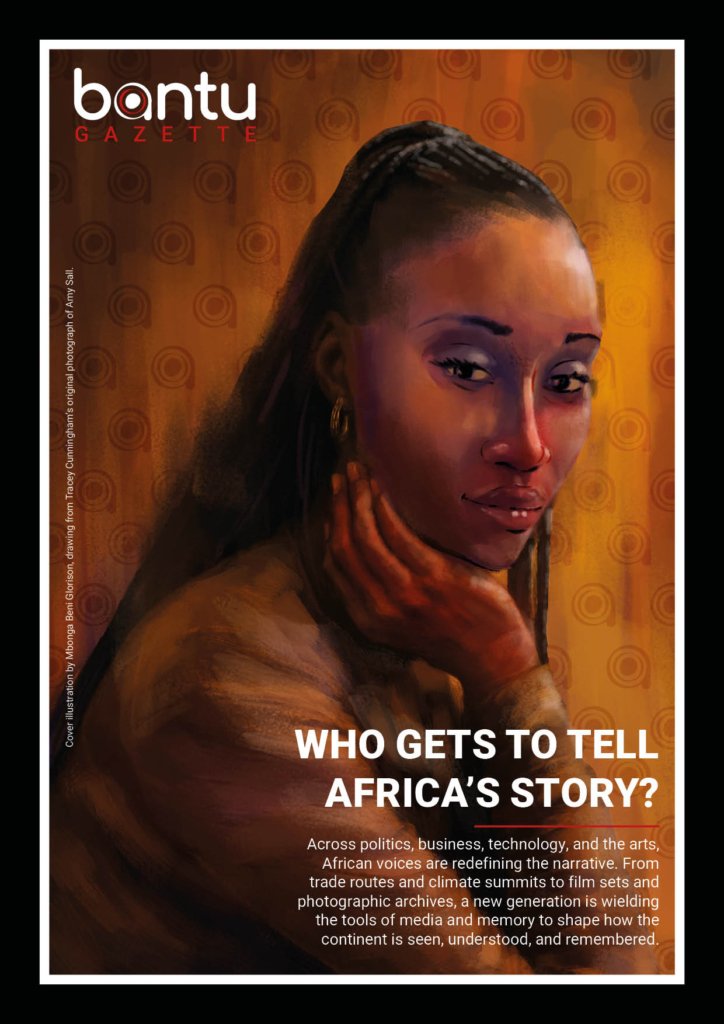
Who Gets to Tell Africa’s Story?​

Who Gets to Tell Africa’s Story?​

Ethiopia’s Export Reform Drives Record-Breaking Economic Turnaround

Africa Launches First Pan-African Card Scheme

Africa Launches First Pan-African Card Scheme

Bantu Gazette is a pioneering news platform that champions Africa's development, culture, and heritage. We spotlight the continent's successes, address its challenges, and provide insightful coverage of events that shape its future.

Bantu Gazette is a pioneering news platform that champions Africa's development, culture, and heritage. We spotlight the continent's successes, address its challenges, and provide insightful coverage of events that shape its future.

Our Platforms

  • Bantu Magazine
  • Bantu Brief
  • Black Frame Studio

Our Services

  • Bantu Agency
  • Advertise
  • Partnerships

Our Services

  • Editorial Director
  • Opportunities
  • Contact
Bantu Gazette
  • Energy & Trade
  • Finance
  • Health
  • Politics & Economy
  • Technology
  • Environment
  • Feature
  • Opinion
  • Changemakers
  • Tourism & Culture
  • Magazine