
Bantu Gazette

Bantu Gazette
  • Energy & Trade
  • Finance
  • Health
  • Politics & Economy
  • Technology
  • Environment
  • Feature
  • Opinion
  • Changemakers
  • Tourism & Culture
  • Sports
  • Magazine
Menu
  • Black Frame Studio
  • Magazine

Free Trade Area is a Game-Changer for Africa’s Future

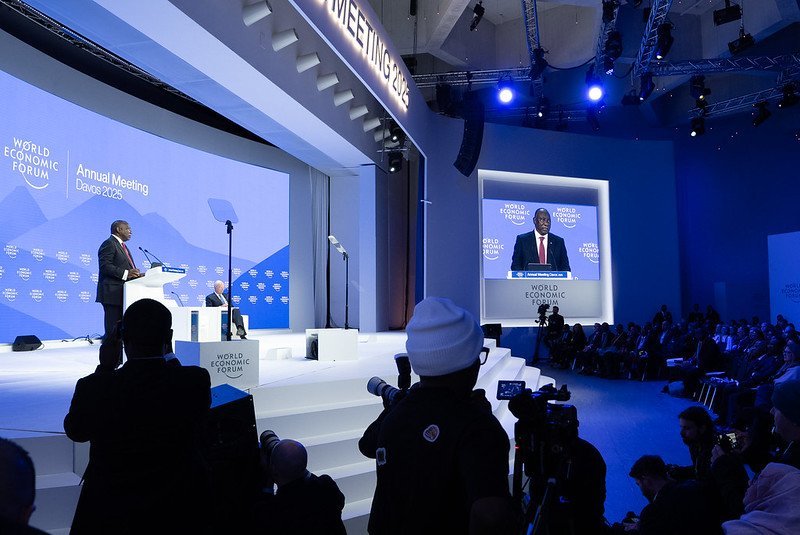
South African President Cyril Ramaphosa, Klaus Schwab, Founder and Chairman of the Board of Trustees, World Economic Forum, Switzerland. Copyright: WEF / Greg Beadle

South African President Cyril Ramaphosa, Klaus Schwab, Founder and Chairman of the Board of Trustees, World Economic Forum, Switzerland. Copyright: WEF / Greg Beadle

Felix Tihby Felix Tih
January 21, 2025
Reading Time: 4 mins read

Free Trade Area is a Game-Changer for Africa’s Future

South African President Cyril Ramaphosa, Klaus Schwab, Founder and Chairman of the Board of Trustees, World Economic Forum, Switzerland. Copyright: WEF / Greg Beadle

South African President Cyril Ramaphosa, Klaus Schwab, Founder and Chairman of the Board of Trustees, World Economic Forum, Switzerland. Copyright: WEF / Greg Beadle

South African President Cyril Ramaphosa, Klaus Schwab, Founder and Chairman of the Board of Trustees, World Economic Forum, Switzerland. Copyright: WEF / Greg Beadle

South African President Cyril Ramaphosa, Klaus Schwab, Founder and Chairman of the Board of Trustees, World Economic Forum, Switzerland. Copyright: WEF / Greg Beadle

Felix Tihby Felix Tih
July 16, 2025
Reading Time: 4 mins read

DAVOS, Switzerland (BG) — The African Continental Free Trade Area (AfCFTA) could transform Africa’s economic and social fortunes, unlocking opportunities for inclusive growth and sustainable development, South African President Cyril Ramaphosa said Tuesday at the World Economic Forum (WEF) in Davos.

Ramaphosa emphasized the transformative role of the AfCFTA in reshaping Africa’s economic landscape, while calling for global solidarity and cooperation to address pressing global challenges.

“The African Continental Free Trade Area has the potential to change the economic and social fortunes of the continent,” said Ramaphosa, highlighting Africa’s growing importance on the global stage.

This year, South Africa holds the G20 Presidency for the first time, marking a historic milestone as the forum convenes in Africa.

Under the theme of “solidarity, equality, and sustainable development,” Ramaphosa outlined South Africa’s G20 agenda to promote inclusive growth, address inequality, and tackle climate challenges.

Ramaphosa positioned the AfCFTA as a key driver of economic transformation, pointing to its potential to bolster regional integration, trade, and job creation across the continent.

“Africa continues to be an expanding market for goods and services,” he said, adding that the continent is home to the youngest population in the world and possesses unmatched natural resource wealth.

The AfCFTA is a monumental free trade initiative, uniting 55 African Union member states and eight regional economic communities (RECs).

With a population of more than 1.2 billion people and a combined GDP of approximately $3.4 trillion, the AfCFTA is one of the flagship projects of the African Union’s Agenda 2063: The Africa We Want.

Infrastructure Revolution is Propelling Africa’s Growth

He called on G20 members to support the AfCFTA Adjustment Fund, which promotes sustainability, inclusive growth, and regional integration.

The South African president also highlighted the importance of infrastructure development to Africa’s growth, describing it as a cornerstone of the continent’s economic progress.

“An infrastructure revolution is propelling Africa’s growth,” he noted, urging investments in critical areas such as roads, energy, telecommunications, and digital connectivity.

In his speech, Ramaphosa called for greater cooperation on the beneficiation of Africa’s critical minerals—essential resources for the global energy transition.

He advocated for a G20 framework to promote local value addition and green industrialization.

“As minerals extraction accelerates to match the needs of the energy transition, the countries and local communities endowed with these resources must be the ones to benefit the most,” he said.

Ramaphosa emphasized the need for low-carbon manufacturing value chains and investments in green technologies to ensure Africa’s resources contribute to sustainable development.

Tackling Debt and Climate Challenges

Ramaphosa highlighted the urgent need for debt relief and climate financing to address the challenges faced by low-income and developing nations, particularly in Africa.

Debt sustainability for low-income countries is one of South Africa’s four G20 priorities.

He criticized the inequity in the distribution of Special Drawing Rights (SDRs) by global financial institutions, noting that over 60% of SDRs are allocated to wealthy nations.

“These drawing rights should be redirected to enable countries in Africa and other parts of the Global South to realise their developmental aspirations,” he said, urging G20 nations to leverage private capital and create innovative financing solutions to support sustainable development.

Climate change and disaster resilience also featured prominently in Ramaphosa’s address.

He called for increased funding to support the just energy transition in developing economies and for mechanisms to finance post-disaster reconstruction.

“The increasing rate of climate-induced natural disasters is affecting countries that can least afford the costs of recovery and rebuilding,” he warned.

A Call for Global Cooperation

At the heart of Ramaphosa’s speech was a call for global solidarity and collaboration to tackle the challenges of the 21st century.

Citing the legacy of Nelson Mandela, he reminded the audience of the interdependence of nations and humanity’s shared responsibility to foster progress.

“The rights and freedoms of one people cannot be separated from the rights and freedoms of all peoples,” he said, emphasizing the importance of collective action in addressing poverty, inequality, unemployment, and climate change.

South Africa’s G20 Presidency, Ramaphosa stressed, is an opportunity to showcase Africa’s promise and to foster partnerships that will drive inclusive growth and development.

“Through its G20 Presidency, South Africa is well-positioned to advance global cooperation and build partnerships for growth and development,” he said.

In closing, Ramaphosa extended an invitation to G20 leaders to visit South Africa and experience its beauty and potential firsthand.

“Come and see South Africa for yourself, the most beautiful country in the world,” he said.

Ramaphosa’s address in Davos set a bold and ambitious tone for South Africa’s G20 Presidency, with a clear focus on leveraging Africa’s resources, youth, and innovation to create a more inclusive, sustainable, and equitable global economy.

As the world’s attention turns to Johannesburg later this year, the G20 summit promises to be a pivotal moment for Africa’s rise on the global stage.
Get the inside Story

Stay informed on the stories shaping Africa’s future. Get breaking news, in-depth analysis, opinions and exclusive insights from across the continent delivered to your inbox, free and unfiltered.


Get in touch for more:
Felix Tih
Editorial Director, Bantu Gazette
WhatsApp
LinkedIn
X (Twitter)
Instagram

Related Posts

West Africa Records First Social Bond Listing on Luxembourg Green Exchange
Politics & Economy

West Africa Records First Social Bond Listing on Luxembourg Green Exchange

January 15, 2026
Politics & Economy

Africa’s Growth Future Lies in Value-Added Trade, WTO Chief Says

January 14, 2026
Ghana’s Energy Sector Remains Country’s Biggest Economic Risk, Finance Minister Says
Politics & Economy

Ghana Clears $1.47 Billion in Energy Debts, Restores World Bank Guarantee

January 12, 2026
Ethiopia Breaks Ground on Africa’s Largest Airport
Politics & Economy

Ethiopia Breaks Ground on Africa’s Largest Airport

January 10, 2026
Egypt Tapped as Potential Hub for Pan-African Gold Bank
Politics & Economy

Egypt Tapped as Potential Hub for Pan-African Gold Bank

January 6, 2026
Equatorial Guinea Moves Capital from Malabo to Ciudad de la Paz
Finance

Equatorial Guinea Moves Capital from Malabo to Ciudad de la Paz

January 7, 2026

Most Recent

Rwanda Coffee Export Earnings Reach Record $150 Million in 2025
Energy & Trade

Rwanda Coffee Export Earnings Reach Record $150 Million in 2025

by Jane Mukami
January 16, 2026
0

Rwanda’s coffee industry posted its strongest year on record in 2025, with export revenues reaching nearly $150 million, according to...

Read moreDetails
Africa Cup of Nations in Morocco Sets Record With 90% Revenue Increase

Africa Cup of Nations in Morocco Sets Record With 90% Revenue Increase

January 16, 2026
Morocco’s Long-Term Planning Shapes Africa Cup of Nations 2025

Morocco’s Long-Term Planning Shapes Africa Cup of Nations 2025

January 16, 2026
West Africa Records First Social Bond Listing on Luxembourg Green Exchange

West Africa Records First Social Bond Listing on Luxembourg Green Exchange

January 15, 2026
Italian Journalists Admire Morocco’s World-Class Stadiums

Italian Journalists Admire Morocco’s World-Class Stadiums

January 14, 2026

Africa’s Growth Future Lies in Value-Added Trade, WTO Chief Says

January 14, 2026
Nigeria, UAE Agree to Eliminate Tariffs on Over 7,000 Products

Nigeria, UAE Agree to Eliminate Tariffs on Over 7,000 Products

January 13, 2026
Rwanda Coffee Export Earnings Reach Record $150 Million in 2025
Energy & Trade

Rwanda Coffee Export Earnings Reach Record $150 Million in 2025

by Jane Mukami
Reading Time: 1 min read
January 16, 2026
0

Rwanda’s coffee industry posted its strongest year on record in 2025, with export revenues reaching nearly $150 million, according to...

Read moreDetails
Africa Cup of Nations in Morocco Sets Record With 90% Revenue Increase
Sports

Africa Cup of Nations in Morocco Sets Record With 90% Revenue Increase

by Elise Ntebah
Reading Time: 1 min read
January 16, 2026
0

The TotalEnergies Africa Cup of Nations Morocco 2025 has delivered the largest commercial return in the history of the tournament,...

Read moreDetails
Morocco’s Long-Term Planning Shapes Africa Cup of Nations 2025
Sports

Morocco’s Long-Term Planning Shapes Africa Cup of Nations 2025

by Felix Tih
Reading Time: 2 mins read
January 16, 2026
0

Morocco began planning the infrastructure and operational framework for the 2025 Africa Cup of Nations more than four years before...

Read moreDetails

Free Trade Area is a Game-Changer for Africa’s Future

South African President Cyril Ramaphosa, Klaus Schwab, Founder and Chairman of the Board of Trustees, World Economic Forum, Switzerland. Copyright: WEF / Greg Beadle

South African President Cyril Ramaphosa, Klaus Schwab, Founder and Chairman of the Board of Trustees, World Economic Forum, Switzerland. Copyright: WEF / Greg Beadle

DAVOS, Switzerland (BG) — The African Continental Free Trade Area (AfCFTA) could transform Africa’s economic and social fortunes, unlocking opportunities for inclusive growth and sustainable development, South African President Cyril Ramaphosa said Tuesday at the World Economic Forum (WEF) in Davos.

Ramaphosa emphasized the transformative role of the AfCFTA in reshaping Africa’s economic landscape, while calling for global solidarity and cooperation to address pressing global challenges.

“The African Continental Free Trade Area has the potential to change the economic and social fortunes of the continent,” said Ramaphosa, highlighting Africa’s growing importance on the global stage.

This year, South Africa holds the G20 Presidency for the first time, marking a historic milestone as the forum convenes in Africa.

Under the theme of “solidarity, equality, and sustainable development,” Ramaphosa outlined South Africa’s G20 agenda to promote inclusive growth, address inequality, and tackle climate challenges.

Ramaphosa positioned the AfCFTA as a key driver of economic transformation, pointing to its potential to bolster regional integration, trade, and job creation across the continent.

“Africa continues to be an expanding market for goods and services,” he said, adding that the continent is home to the youngest population in the world and possesses unmatched natural resource wealth.

The AfCFTA is a monumental free trade initiative, uniting 55 African Union member states and eight regional economic communities (RECs).

With a population of more than 1.2 billion people and a combined GDP of approximately $3.4 trillion, the AfCFTA is one of the flagship projects of the African Union’s Agenda 2063: The Africa We Want.

Infrastructure Revolution is Propelling Africa’s Growth

He called on G20 members to support the AfCFTA Adjustment Fund, which promotes sustainability, inclusive growth, and regional integration.

The South African president also highlighted the importance of infrastructure development to Africa’s growth, describing it as a cornerstone of the continent’s economic progress.

“An infrastructure revolution is propelling Africa’s growth,” he noted, urging investments in critical areas such as roads, energy, telecommunications, and digital connectivity.

In his speech, Ramaphosa called for greater cooperation on the beneficiation of Africa’s critical minerals—essential resources for the global energy transition.

He advocated for a G20 framework to promote local value addition and green industrialization.

“As minerals extraction accelerates to match the needs of the energy transition, the countries and local communities endowed with these resources must be the ones to benefit the most,” he said.

Ramaphosa emphasized the need for low-carbon manufacturing value chains and investments in green technologies to ensure Africa’s resources contribute to sustainable development.

Tackling Debt and Climate Challenges

Ramaphosa highlighted the urgent need for debt relief and climate financing to address the challenges faced by low-income and developing nations, particularly in Africa.

Debt sustainability for low-income countries is one of South Africa’s four G20 priorities.

He criticized the inequity in the distribution of Special Drawing Rights (SDRs) by global financial institutions, noting that over 60% of SDRs are allocated to wealthy nations.

“These drawing rights should be redirected to enable countries in Africa and other parts of the Global South to realise their developmental aspirations,” he said, urging G20 nations to leverage private capital and create innovative financing solutions to support sustainable development.

Climate change and disaster resilience also featured prominently in Ramaphosa’s address.

He called for increased funding to support the just energy transition in developing economies and for mechanisms to finance post-disaster reconstruction.

“The increasing rate of climate-induced natural disasters is affecting countries that can least afford the costs of recovery and rebuilding,” he warned.

A Call for Global Cooperation

At the heart of Ramaphosa’s speech was a call for global solidarity and collaboration to tackle the challenges of the 21st century.

Citing the legacy of Nelson Mandela, he reminded the audience of the interdependence of nations and humanity’s shared responsibility to foster progress.

“The rights and freedoms of one people cannot be separated from the rights and freedoms of all peoples,” he said, emphasizing the importance of collective action in addressing poverty, inequality, unemployment, and climate change.

South Africa’s G20 Presidency, Ramaphosa stressed, is an opportunity to showcase Africa’s promise and to foster partnerships that will drive inclusive growth and development.

“Through its G20 Presidency, South Africa is well-positioned to advance global cooperation and build partnerships for growth and development,” he said.

In closing, Ramaphosa extended an invitation to G20 leaders to visit South Africa and experience its beauty and potential firsthand.

“Come and see South Africa for yourself, the most beautiful country in the world,” he said.

Ramaphosa’s address in Davos set a bold and ambitious tone for South Africa’s G20 Presidency, with a clear focus on leveraging Africa’s resources, youth, and innovation to create a more inclusive, sustainable, and equitable global economy.

As the world’s attention turns to Johannesburg later this year, the G20 summit promises to be a pivotal moment for Africa’s rise on the global stage.
Free Trade Area is a Game-Changer for Africa’s Future

South African President Cyril Ramaphosa, Klaus Schwab, Founder and Chairman of the Board of Trustees, World Economic Forum, Switzerland. Copyright: WEF / Greg Beadle

South African President Cyril Ramaphosa, Klaus Schwab, Founder and Chairman of the Board of Trustees, World Economic Forum, Switzerland. Copyright: WEF / Greg Beadle

Felix Tihby Felix Tih
January 21, 2025

DAVOS, Switzerland (BG) — The African Continental Free Trade Area (AfCFTA) could transform Africa’s economic and social fortunes, unlocking opportunities for inclusive growth and sustainable development, South African President Cyril Ramaphosa said Tuesday at the World Economic Forum (WEF) in Davos.

Ramaphosa emphasized the transformative role of the AfCFTA in reshaping Africa’s economic landscape, while calling for global solidarity and cooperation to address pressing global challenges.

“The African Continental Free Trade Area has the potential to change the economic and social fortunes of the continent,” said Ramaphosa, highlighting Africa’s growing importance on the global stage.

This year, South Africa holds the G20 Presidency for the first time, marking a historic milestone as the forum convenes in Africa.

Under the theme of “solidarity, equality, and sustainable development,” Ramaphosa outlined South Africa’s G20 agenda to promote inclusive growth, address inequality, and tackle climate challenges.

Ramaphosa positioned the AfCFTA as a key driver of economic transformation, pointing to its potential to bolster regional integration, trade, and job creation across the continent.

“Africa continues to be an expanding market for goods and services,” he said, adding that the continent is home to the youngest population in the world and possesses unmatched natural resource wealth.

The AfCFTA is a monumental free trade initiative, uniting 55 African Union member states and eight regional economic communities (RECs).

With a population of more than 1.2 billion people and a combined GDP of approximately $3.4 trillion, the AfCFTA is one of the flagship projects of the African Union’s Agenda 2063: The Africa We Want.

Infrastructure Revolution is Propelling Africa’s Growth

He called on G20 members to support the AfCFTA Adjustment Fund, which promotes sustainability, inclusive growth, and regional integration.

The South African president also highlighted the importance of infrastructure development to Africa’s growth, describing it as a cornerstone of the continent’s economic progress.

“An infrastructure revolution is propelling Africa’s growth,” he noted, urging investments in critical areas such as roads, energy, telecommunications, and digital connectivity.

In his speech, Ramaphosa called for greater cooperation on the beneficiation of Africa’s critical minerals—essential resources for the global energy transition.

He advocated for a G20 framework to promote local value addition and green industrialization.

“As minerals extraction accelerates to match the needs of the energy transition, the countries and local communities endowed with these resources must be the ones to benefit the most,” he said.

Ramaphosa emphasized the need for low-carbon manufacturing value chains and investments in green technologies to ensure Africa’s resources contribute to sustainable development.

Tackling Debt and Climate Challenges

Ramaphosa highlighted the urgent need for debt relief and climate financing to address the challenges faced by low-income and developing nations, particularly in Africa.

Debt sustainability for low-income countries is one of South Africa’s four G20 priorities.

He criticized the inequity in the distribution of Special Drawing Rights (SDRs) by global financial institutions, noting that over 60% of SDRs are allocated to wealthy nations.

“These drawing rights should be redirected to enable countries in Africa and other parts of the Global South to realise their developmental aspirations,” he said, urging G20 nations to leverage private capital and create innovative financing solutions to support sustainable development.

Climate change and disaster resilience also featured prominently in Ramaphosa’s address.

He called for increased funding to support the just energy transition in developing economies and for mechanisms to finance post-disaster reconstruction.

“The increasing rate of climate-induced natural disasters is affecting countries that can least afford the costs of recovery and rebuilding,” he warned.

A Call for Global Cooperation

At the heart of Ramaphosa’s speech was a call for global solidarity and collaboration to tackle the challenges of the 21st century.

Citing the legacy of Nelson Mandela, he reminded the audience of the interdependence of nations and humanity’s shared responsibility to foster progress.

“The rights and freedoms of one people cannot be separated from the rights and freedoms of all peoples,” he said, emphasizing the importance of collective action in addressing poverty, inequality, unemployment, and climate change.

South Africa’s G20 Presidency, Ramaphosa stressed, is an opportunity to showcase Africa’s promise and to foster partnerships that will drive inclusive growth and development.

“Through its G20 Presidency, South Africa is well-positioned to advance global cooperation and build partnerships for growth and development,” he said.

In closing, Ramaphosa extended an invitation to G20 leaders to visit South Africa and experience its beauty and potential firsthand.

“Come and see South Africa for yourself, the most beautiful country in the world,” he said.

Ramaphosa’s address in Davos set a bold and ambitious tone for South Africa’s G20 Presidency, with a clear focus on leveraging Africa’s resources, youth, and innovation to create a more inclusive, sustainable, and equitable global economy.

As the world’s attention turns to Johannesburg later this year, the G20 summit promises to be a pivotal moment for Africa’s rise on the global stage.
Get the inside Story

Stay informed on the stories shaping Africa’s future. Get breaking news, in-depth analysis, opinions and exclusive insights from across the continent delivered to your inbox, free and unfiltered.


Get in touch for more:
Felix Tih
Editorial Director, Bantu Gazette
WhatsApp
LinkedIn
X (Twitter)
Instagram

Related Posts

West Africa Records First Social Bond Listing on Luxembourg Green Exchange

West Africa Records First Social Bond Listing on Luxembourg Green Exchange

by Aissatou Fall
January 15, 2026
0

...

Africa’s Growth Future Lies in Value-Added Trade, WTO Chief Says

by Felix Tih
January 14, 2026
0

...

Ghana’s Energy Sector Remains Country’s Biggest Economic Risk, Finance Minister Says

Ghana Clears $1.47 Billion in Energy Debts, Restores World Bank Guarantee

by Marcelo Edjang
January 12, 2026
0

...

Ethiopia Breaks Ground on Africa’s Largest Airport

Ethiopia Breaks Ground on Africa’s Largest Airport

by Maraki Desta
January 10, 2026
0

...

Egypt Tapped as Potential Hub for Pan-African Gold Bank

Egypt Tapped as Potential Hub for Pan-African Gold Bank

by Samira Benhadda
January 6, 2026
0

...

Equatorial Guinea Moves Capital from Malabo to Ciudad de la Paz

Equatorial Guinea Moves Capital from Malabo to Ciudad de la Paz

by Bantu Gazette
January 4, 2026
0

...

Rwanda Coffee Export Earnings Reach Record $150 Million in 2025
Energy & Trade

Rwanda Coffee Export Earnings Reach Record $150 Million in 2025

by Jane Mukami
Reading Time: 1 min read
January 16, 2026
0

Rwanda’s coffee industry posted its strongest year on record in 2025, with export revenues reaching nearly $150 million, according to...

Read moreDetails
Africa Cup of Nations in Morocco Sets Record With 90% Revenue Increase

Africa Cup of Nations in Morocco Sets Record With 90% Revenue Increase

by Elise Ntebah
January 16, 2026
0

The TotalEnergies Africa Cup of Nations Morocco 2025 has delivered the largest commercial return in the history of the tournament,...

Morocco’s Long-Term Planning Shapes Africa Cup of Nations 2025

Morocco’s Long-Term Planning Shapes Africa Cup of Nations 2025

by Felix Tih
January 16, 2026
0

Morocco began planning the infrastructure and operational framework for the 2025 Africa Cup of Nations more than four years before...

West Africa Records First Social Bond Listing on Luxembourg Green Exchange

West Africa Records First Social Bond Listing on Luxembourg Green Exchange

by Aissatou Fall
January 15, 2026
0

The West African Economic and Monetary Union (UEMOA) reached a milestone in sustainable finance as its regional mortgage refinancing institution...

Italian Journalists Admire Morocco’s World-Class Stadiums

Italian Journalists Admire Morocco’s World-Class Stadiums

by Nora Tabe
January 14, 2026
0

Italian journalists have expressed strong admiration for the level of organization and infrastructure provided by Morocco during the Africa Cup...

Next Post
Wamkele Keabetswe Mene, Secretary-General, African Continental Free Trade Area Secretariat. Copyright: World Economic Forum (2025) / Chris Heeney

Zone de libre-échange africaine : avancées pour femmes et jeunes.

Félix Tshisekedi, President of the Democratic Republic of the Congo. Copyright: World Economic Forum / Jason Alden

DR Congo Announces the World’s Largest Tropical Forest Reserve

WTO Director-General Ngozi Okonjo-Iweala (left) and Damilola Ogunbiyi, Special Representative of the UN Secretary-General for Sustainable Energy for All (right), speaking at separate panels during the World Economic Forum in Davos. (Edited image)

Africa's Green Energy Potential Could Transform Industrialization

Innovation Drives Ghana’s Efforts to Boost Food Security, Sustainability

Bantu Gazette is a pioneering news platform that champions Africa's development, culture, and heritage. We spotlight the continent's successes, address its challenges, and provide insightful coverage of events that shape its future.

Bantu Gazette is a pioneering news platform that champions Africa's development, culture, and heritage. We spotlight the continent's successes, address its challenges, and provide insightful coverage of events that shape its future.

Our Platforms

  • Bantu Magazine
  • Bantu Brief
  • Black Frame Studio

Our Services

  • Bantu Agency
  • Advertise
  • Partnerships

Our Services

  • Editorial Director
  • Opportunities
  • Contact

Bantu Gazette is a pioneering news platform that champions Africa's development, culture, and heritage. We spotlight the continent's successes, address its challenges, and provide insightful coverage of events that shape its future.

Our Platforms

  • Bantu Magazine
  • Bantu Brief
  • Black Frame Studio

Our Services

  • Bantu Agency
  • Advertise
  • Partnerships

Our Services

  • Editorial Director
  • Opportunities
  • Contact
Bantu Gazette
  • Energy & Trade
  • Finance
  • Health
  • Politics & Economy
  • Technology
  • Environment
  • Feature
  • Opinion
  • Changemakers
  • Tourism & Culture
  • Magazine