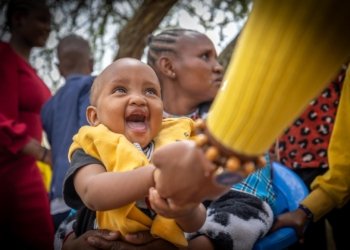

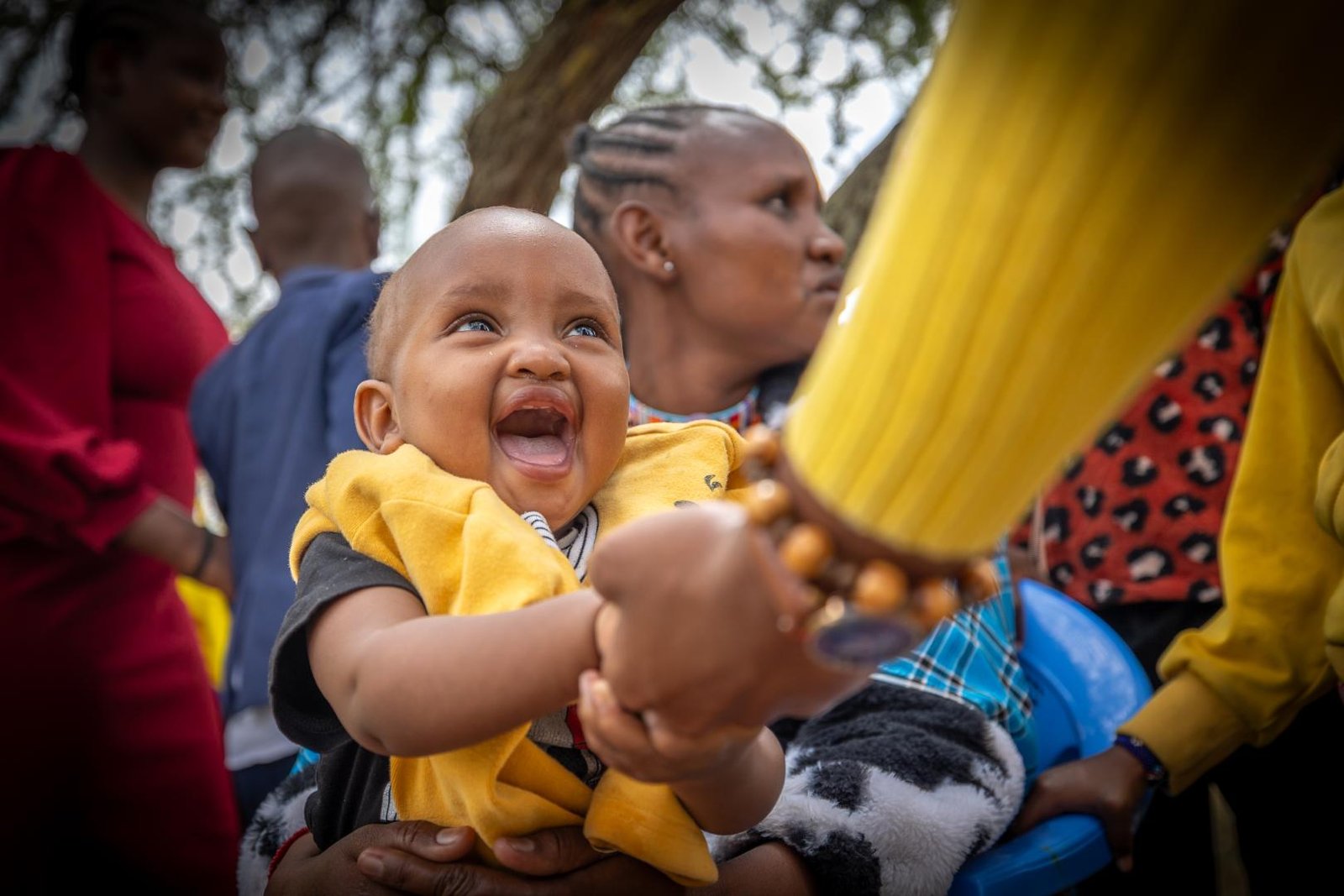

Kenya has measured early childhood development in a national health survey for the first time, integrating global assessment tools that track how children grow, learn and interact during their earliest years.
The Kenya National Bureau of Statistics collected data earlier this year from about 30,000 households across 1,000 communities nationwide as part of the Kenya Mini Demographic and Health Survey 2025-26, according to a World Health Organization (WHO) statement on Wednesday.
The survey introduced the WHO’s Global Scales for Early Development, an instrument designed to assess development among children from birth to age 3, capturing not only physical health but also how children think, communicate and interact.
The effort expands the scope of national health data beyond traditional indicators such as nutrition and physical health.
According to the statement, the aim is to capture how children think, communicate and interact during early childhood, a period widely recognized as central to brain development and long-term well-being.
The assessment formed part of a broader survey that also gathered information from women ages 15 to 49 on maternal health, reproductive health, family planning, health insurance coverage and domestic violence.
To cover older preschool children, the survey also incorporated the Early Childhood Development Index 2030 developed by UNICEF, which measures development among children ages 3 to 5.
Together, the two tools measure developmental progress among children from birth to age 5.
Field teams adapted the assessment to the Kenyan context, translating materials into local languages and using picture cards during interviews.
The World Health Organization partnered with the Aga Khan University’s Institute for Human Development to train the Kenya National Bureau of Statistics and other stakeholders on the use of the tool before field deployment. About 150 data collectors were then trained and deployed across all 47 counties.
“Feedback from data collectors confirmed that mothers responded positively to the simple, engaging picture cards,” said Dr. Makeba Shiroya, the World Health Organization’s technical lead for child health in Kenya.
The results, the statement said, will guide future policy decisions on child health, nutrition and early learning programs.
The survey serves as an interim assessment between Kenya’s full Demographic and Health Surveys conducted periodically nationwide.