


Bantu Gazette
  • Black Frame Studio
  • Magazine
No Result
View All Result
Bantu Gazette
  • Black Frame Studio
  • Magazine
No Result
View All Result
Bantu Gazette
No Result
View All Result

Health Taxes Shape Africa’s Path to Sustainable Financing

Senor officials, experts connect evidence on health taxes with AU commitments to boost domestic resource mobilization and health equity

Health Taxes Shape Africa’s Path to Sustainable Financing

Experts at ACBF's 34th BoG Meeting in Addis Ababa

Felix Tihby Felix Tih
October 7, 2025
Reading Time: 2 mins read

Health Taxes Shape Africa’s Path to Sustainable Financing

Senor officials, experts connect evidence on health taxes with AU commitments to boost domestic resource mobilization and health equity

Health Taxes Shape Africa’s Path to Sustainable Financing

Experts at ACBF's 34th BoG Meeting in Addis Ababa

Health Taxes Shape Africa’s Path to Sustainable Financing

Experts at ACBF's 34th BoG Meeting in Addis Ababa

Felix Tihby Felix Tih
October 13, 2025
Reading Time: 2 mins read

The 34th Board of Governors meeting of the African Capacity Building Foundation in Addis Ababa on Tuesday featured an engaging knowledge sharing session on health financing that drew strong interest from participants.

The discussion focused on how countries can use health taxes to improve population health while creating more reliable sources of domestic revenue.

Professor Corné van Walbeek from the University of Cape Town shared evidence that raising cigarette prices by just 10% can lead to a drop in smoking rates by 4% to 8%. Fewer people smoking means fewer cases of tobacco-related illness and more tax revenue for governments to invest in public services.
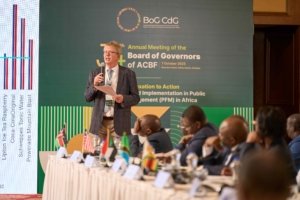
Professor Corné van Walbeek from the University of Cape Town

The findings reinforced how fiscal tools can improve health outcomes while expanding domestic revenue streams.

The session also highlighted examples from across Africa. In Cabo Verde, tobacco tax reforms raised government revenue and reduced smoking rates.

In South Africa, a sugar tax prompted manufacturers to cut sugar content in beverages.

These examples showed that well-designed excise taxes can influence markets, generate predictable income, and lower future health costs.

Innovative Health Taxes

The discussion linked directly to outcomes from the Eighth Ordinary Session of the African Union Specialized Technical Committee on Finance, Monetary Affairs, Economic Planning and Integration, held from October 2 to 3 in Johannesburg.

In their ministerial declaration, African finance and health ministers agreed to introduce innovative health taxes on harmful products, raise health spending toward the Abuja target of 15 percent of national budgets, and strengthen public financial management.

The declaration also called for stronger domestic resource mobilization, improved public financial management and increased investment in primary health care through mechanisms such as the AUDA-NEPAD Programme for Investment and Financing in Africa’s Health.

This direction aligns with the evidence presented in Addis Ababa, which showed that health taxes create a “triple win” of improved public health, increased fiscal space, and reduced long-term healthcare costs.

Dr. William Maina of the World Health Organization noted that noncommunicable diseases now account for more than 30 percent of deaths in the African region and could reach 50 percent by 2030.

Dr. William Maina, World Health Organization

Maina warned that the growing cost of treating these diseases is placing major strain on health systems and household finances across the region.

The WHO estimates that the productivity cost of NCDs already exceeds one-third of the total cost of illness in Africa.

These concerns reflect a wider global agenda. The 2015 United Nations Addis Ababa Action Agenda on Financing for Development recognized tobacco taxation as an effective tool for mobilizing domestic resources while advancing sustainable development.

A Sustainable Path Forward

Support for health taxes marks a shift in how governments view fiscal and health policy.

According to experts, fiscal and health policy are no longer separate discussions. Linking public health goals with fiscal strategy allows countries to prevent disease, stabilize budgets and build more resilient health systems.

African governments are beginning to treat public health and fiscal planning as part of the same agenda.

Taxes on tobacco, alcohol and sugary drinks offer a way to address both immediate and future challenges.

They influence consumer choices while building the foundation for more sustainable health systems.

The dialogue in Addis Ababa and the commitments in Johannesburg showed that Africa’s approach to sustainable development is evolving.


Get the inside Story

Stay informed on the stories shaping Africa’s future. Get breaking news, in-depth analysis, opinions and exclusive insights from across the continent delivered to your inbox, free and unfiltered.


Related Posts

Africa HealthTech Summit Pushes Policy Reform for Innovation
Health

Africa HealthTech Summit Pushes Policy Reform for Innovation

October 16, 2025
Ghana Renews Mercy Ships Partnership to Boost Surgical Care
Health

Ghana Renews Mercy Ships Partnership to Boost Surgical Care

September 17, 2025
Sanitation Data in Sub-Saharan Africa Faces Major Challenges
Health

Sanitation Data in Sub-Saharan Africa Faces Major Challenges

August 26, 2025
Africa CDC Launches Strategy to Boost Health Financing and Self-Reliance
Health

Botswana Unveils $375 Million Health First Fund to Revive Public Health

August 31, 2025
Global South Leaders Unite at World Health Assembly for Child Survival
Health

Global South Leaders Unite at World Health Assembly for Child Survival

July 16, 2025
New Diagnostic Factory in Nigeria Marks Step Toward Africa’s Medical Self-Reliance
Health

New Diagnostic Factory in Nigeria Marks Step Toward Africa’s Medical Self-Reliance

July 16, 2025

Most Recent

Kenya to Recruit 20,000 Teachers as Education Investments Pay Off
Politics & Economy

Kenya Introduces School Fees as Malawi Declares Free Education

by Jane Mukami
November 10, 2025
0

Kenya will begin charging public senior secondary school students an annual fee of KSh 53,554 (approximately $414) starting in 2026,...

Read moreDetails
Ethiopia Launches First Electronic Passport, Marking New Era in Secure Travel

Ethiopia’s New E-passport Earns Global Design Honor

November 10, 2025
South Africa’s G20 Presidency a Catalyst for Energy Investment in Africa

G20 Report Warns of Rising Inequality, Urges Global Action

November 5, 2025
Namibia Deepens Regional Ties Through Trade and Energy

Namibia Repays $750 Million Eurobond, Largest Debt Maturity in Its History

November 4, 2025
Mali Unveils 2nd Lithium Mine as Part of Economic Sovereignty Push

Mali Unveils 2nd Lithium Mine as Part of Economic Sovereignty Push

November 5, 2025
$1.5 Billion Fund Targets Infrastructure Projects Across Africa

$1.5 Billion Fund Targets Infrastructure Projects Across Africa

November 5, 2025
Kenya Dominates New York Marathon as Obiri Breaks Course Record

Kenya Dominates New York Marathon as Obiri Breaks Course Record

November 5, 2025
Kenya to Recruit 20,000 Teachers as Education Investments Pay Off
Politics & Economy

Kenya Introduces School Fees as Malawi Declares Free Education

by Jane Mukami
Reading Time: 1 min read
November 10, 2025
0

Kenya will begin charging public senior secondary school students an annual fee of KSh 53,554 (approximately $414) starting in 2026,...

Read moreDetails
Ethiopia Launches First Electronic Passport, Marking New Era in Secure Travel
Tourism & Culture

Ethiopia’s New E-passport Earns Global Design Honor

by Maraki Desta
Reading Time: 1 min read
November 10, 2025
0

Ethiopia's recently introduced electronic passport has won the 2025 Red Dot Award for Brands and Communication Design, according to Selamawit...

Read moreDetails
South Africa’s G20 Presidency a Catalyst for Energy Investment in Africa
Politics & Economy

G20 Report Warns of Rising Inequality, Urges Global Action

by Naledi Kgosi
Reading Time: 1 min read
November 5, 2025
0

The G20 Global Inequality Report, presented Tuesday to President Cyril Ramaphosa in Cape Town, outlines a stark portrait of inequality...

Read moreDetails

Health Taxes Shape Africa’s Path to Sustainable Financing

Senor officials, experts connect evidence on health taxes with AU commitments to boost domestic resource mobilization and health equity

Health Taxes Shape Africa’s Path to Sustainable Financing

Experts at ACBF's 34th BoG Meeting in Addis Ababa

The 34th Board of Governors meeting of the African Capacity Building Foundation in Addis Ababa on Tuesday featured an engaging knowledge sharing session on health financing that drew strong interest from participants.

The discussion focused on how countries can use health taxes to improve population health while creating more reliable sources of domestic revenue.

Professor Corné van Walbeek from the University of Cape Town shared evidence that raising cigarette prices by just 10% can lead to a drop in smoking rates by 4% to 8%. Fewer people smoking means fewer cases of tobacco-related illness and more tax revenue for governments to invest in public services.

Professor Corné van Walbeek from the University of Cape Town

The findings reinforced how fiscal tools can improve health outcomes while expanding domestic revenue streams.

The session also highlighted examples from across Africa. In Cabo Verde, tobacco tax reforms raised government revenue and reduced smoking rates.

In South Africa, a sugar tax prompted manufacturers to cut sugar content in beverages.

These examples showed that well-designed excise taxes can influence markets, generate predictable income, and lower future health costs.

Innovative Health Taxes

The discussion linked directly to outcomes from the Eighth Ordinary Session of the African Union Specialized Technical Committee on Finance, Monetary Affairs, Economic Planning and Integration, held from October 2 to 3 in Johannesburg.

In their ministerial declaration, African finance and health ministers agreed to introduce innovative health taxes on harmful products, raise health spending toward the Abuja target of 15 percent of national budgets, and strengthen public financial management.

The declaration also called for stronger domestic resource mobilization, improved public financial management and increased investment in primary health care through mechanisms such as the AUDA-NEPAD Programme for Investment and Financing in Africa’s Health.

This direction aligns with the evidence presented in Addis Ababa, which showed that health taxes create a “triple win” of improved public health, increased fiscal space, and reduced long-term healthcare costs.

Dr. William Maina of the World Health Organization noted that noncommunicable diseases now account for more than 30 percent of deaths in the African region and could reach 50 percent by 2030.

Dr. William Maina, World Health Organization

Maina warned that the growing cost of treating these diseases is placing major strain on health systems and household finances across the region.

The WHO estimates that the productivity cost of NCDs already exceeds one-third of the total cost of illness in Africa.

These concerns reflect a wider global agenda. The 2015 United Nations Addis Ababa Action Agenda on Financing for Development recognized tobacco taxation as an effective tool for mobilizing domestic resources while advancing sustainable development.

A Sustainable Path Forward

Support for health taxes marks a shift in how governments view fiscal and health policy.

According to experts, fiscal and health policy are no longer separate discussions. Linking public health goals with fiscal strategy allows countries to prevent disease, stabilize budgets and build more resilient health systems.

African governments are beginning to treat public health and fiscal planning as part of the same agenda.

Taxes on tobacco, alcohol and sugary drinks offer a way to address both immediate and future challenges.

They influence consumer choices while building the foundation for more sustainable health systems.

The dialogue in Addis Ababa and the commitments in Johannesburg showed that Africa’s approach to sustainable development is evolving.

Health Taxes Shape Africa’s Path to Sustainable Financing

Senor officials, experts connect evidence on health taxes with AU commitments to boost domestic resource mobilization and health equity

Health Taxes Shape Africa’s Path to Sustainable Financing

Experts at ACBF's 34th BoG Meeting in Addis Ababa

Felix Tihby Felix Tih
October 7, 2025

The 34th Board of Governors meeting of the African Capacity Building Foundation in Addis Ababa on Tuesday featured an engaging knowledge sharing session on health financing that drew strong interest from participants.

The discussion focused on how countries can use health taxes to improve population health while creating more reliable sources of domestic revenue.

Professor Corné van Walbeek from the University of Cape Town shared evidence that raising cigarette prices by just 10% can lead to a drop in smoking rates by 4% to 8%. Fewer people smoking means fewer cases of tobacco-related illness and more tax revenue for governments to invest in public services.

Professor Corné van Walbeek from the University of Cape Town

The findings reinforced how fiscal tools can improve health outcomes while expanding domestic revenue streams.

The session also highlighted examples from across Africa. In Cabo Verde, tobacco tax reforms raised government revenue and reduced smoking rates.

In South Africa, a sugar tax prompted manufacturers to cut sugar content in beverages.

These examples showed that well-designed excise taxes can influence markets, generate predictable income, and lower future health costs.

Innovative Health Taxes

The discussion linked directly to outcomes from the Eighth Ordinary Session of the African Union Specialized Technical Committee on Finance, Monetary Affairs, Economic Planning and Integration, held from October 2 to 3 in Johannesburg.

In their ministerial declaration, African finance and health ministers agreed to introduce innovative health taxes on harmful products, raise health spending toward the Abuja target of 15 percent of national budgets, and strengthen public financial management.

The declaration also called for stronger domestic resource mobilization, improved public financial management and increased investment in primary health care through mechanisms such as the AUDA-NEPAD Programme for Investment and Financing in Africa’s Health.

This direction aligns with the evidence presented in Addis Ababa, which showed that health taxes create a “triple win” of improved public health, increased fiscal space, and reduced long-term healthcare costs.

Dr. William Maina of the World Health Organization noted that noncommunicable diseases now account for more than 30 percent of deaths in the African region and could reach 50 percent by 2030.

Dr. William Maina, World Health Organization

Maina warned that the growing cost of treating these diseases is placing major strain on health systems and household finances across the region.

The WHO estimates that the productivity cost of NCDs already exceeds one-third of the total cost of illness in Africa.

These concerns reflect a wider global agenda. The 2015 United Nations Addis Ababa Action Agenda on Financing for Development recognized tobacco taxation as an effective tool for mobilizing domestic resources while advancing sustainable development.

A Sustainable Path Forward

Support for health taxes marks a shift in how governments view fiscal and health policy.

According to experts, fiscal and health policy are no longer separate discussions. Linking public health goals with fiscal strategy allows countries to prevent disease, stabilize budgets and build more resilient health systems.

African governments are beginning to treat public health and fiscal planning as part of the same agenda.

Taxes on tobacco, alcohol and sugary drinks offer a way to address both immediate and future challenges.

They influence consumer choices while building the foundation for more sustainable health systems.

The dialogue in Addis Ababa and the commitments in Johannesburg showed that Africa’s approach to sustainable development is evolving.

Get the inside Story

Stay informed on the stories shaping Africa’s future. Get breaking news, in-depth analysis, opinions and exclusive insights from across the continent delivered to your inbox, free and unfiltered.


Related Posts

Africa HealthTech Summit Pushes Policy Reform for Innovation

Africa HealthTech Summit Pushes Policy Reform for Innovation

by Jane Mukami
October 13, 2025
0

...

Ghana Renews Mercy Ships Partnership to Boost Surgical Care

Ghana Renews Mercy Ships Partnership to Boost Surgical Care

by Cynthia N. Ganchok
September 17, 2025
0

...

Sanitation Data in Sub-Saharan Africa Faces Major Challenges

Sanitation Data in Sub-Saharan Africa Faces Major Challenges

by Samira Benhadda
August 26, 2025
0

...

Africa CDC Launches Strategy to Boost Health Financing and Self-Reliance

Botswana Unveils $375 Million Health First Fund to Revive Public Health

by Amani Mwakalebela
August 25, 2025
0

...

Global South Leaders Unite at World Health Assembly for Child Survival

Global South Leaders Unite at World Health Assembly for Child Survival

by Sandra Ndang
May 27, 2025
0

...

New Diagnostic Factory in Nigeria Marks Step Toward Africa’s Medical Self-Reliance

New Diagnostic Factory in Nigeria Marks Step Toward Africa’s Medical Self-Reliance

by Sandra Ndang
May 10, 2025
0

...

Kenya to Recruit 20,000 Teachers as Education Investments Pay Off
Politics & Economy

Kenya Introduces School Fees as Malawi Declares Free Education

by Jane Mukami
Reading Time: 1 min read
November 10, 2025
0

Kenya will begin charging public senior secondary school students an annual fee of KSh 53,554 (approximately $414) starting in 2026,...

Read moreDetails
Ethiopia Launches First Electronic Passport, Marking New Era in Secure Travel

Ethiopia’s New E-passport Earns Global Design Honor

by Maraki Desta
November 10, 2025
0

Ethiopia's recently introduced electronic passport has won the 2025 Red Dot Award for Brands and Communication Design, according to Selamawit...

South Africa’s G20 Presidency a Catalyst for Energy Investment in Africa

G20 Report Warns of Rising Inequality, Urges Global Action

by Naledi Kgosi
November 5, 2025
0

The G20 Global Inequality Report, presented Tuesday to President Cyril Ramaphosa in Cape Town, outlines a stark portrait of inequality...

Namibia Deepens Regional Ties Through Trade and Energy

Namibia Repays $750 Million Eurobond, Largest Debt Maturity in Its History

by Amani Mwakalebela
November 4, 2025
0

Namibia has fully repaid its $750 million Eurobond issued in 2015, the country’s largest-ever debt maturity, according to a government...

Mali Unveils 2nd Lithium Mine as Part of Economic Sovereignty Push

Mali Unveils 2nd Lithium Mine as Part of Economic Sovereignty Push

by Aissatou Fall
November 3, 2025
0

Mali inaugurated its second lithium mine on Monday, marking a key milestone in the country’s strategy to strengthen economic sovereignty...

Next Post
34th ACBF Board of Governors Push for Strong Fiscal Systems

34th ACBF Board of Governors Push for Strong Fiscal Systems

11th Africa Think Tank Summit Calls for Stronger Fiscal Leadership

11th Africa Think Tank Summit Calls for Stronger Fiscal Leadership

Africa’s Agricultural Promise Hinges on Fulfilling Fiscal Commitments

Africa’s Agricultural Promise Hinges on Fulfilling Fiscal Commitments

AI Reshaping Africa’s Fiscal Systems Through Innovation

AI Reshaping Africa’s Fiscal Systems Through Innovation

The editorial platform of Bantu Agency.

The editorial platform of Bantu Agency.

Our Platforms

  • Bantu Magazine
  • Bantu Brief
  • Black Frame Studio

Our Services

  • Bantu Agency
  • Advertise
  • Partnerships

Our Services

  • Editorial Director
  • Opportunities
  • Contact

The editorial platform of Bantu Agency.

Our Platforms

  • Bantu Magazine
  • Bantu Brief
  • Black Frame Studio

Our Services

  • Bantu Agency
  • Advertise
  • Partnerships

Our Services

  • Editorial Director
  • Opportunities
  • Contact
Bantu Gazette
  • Energy & Trade
  • Finance
  • Health
  • Politics & Economy
  • Technology
  • Environment
  • Feature
  • Opinion
  • Changemakers
  • Tourism & Culture
  • Magazine