

Bantu Gazette

Bantu Gazette
  • Energy & Trade
  • Finance
  • Health
  • Politics & Economy
  • Technology
  • Environment
  • Feature
  • Opinion
  • Changemakers
  • Tourism & Culture
  • Sports
  • Magazine
Menu
  • Black Frame Studio
  • Magazine

Negative Media Narratives Cost Africa $4.2 Billion Annually, Report Finds

Felix Tihby Felix Tih
November 25, 2024
Reading Time: 3 mins read

Negative Media Narratives Cost Africa $4.2 Billion Annually, Report Finds

Felix Tihby Felix Tih
July 16, 2025
Reading Time: 3 mins read

African nations receive disproportionate attention during elections, with a significant focus on negative themes such as violence and corruption.

NAIROBI, Kenya (BG) – A groundbreaking report by Africa No Filter and Africapractice has revealed that stereotypical global media narratives about Africa are costing the continent up to $4.2 billion annually in inflated interest payments on sovereign debt.

The report, titled The Cost of Media Stereotypes to Africa: The Relationship Between Media, Investment and Economic Development, highlights the economic consequences of biased reporting on Africa’s financial flows.

Using a mixed-methods approach, the study examined global media coverage of elections in Africa, comparing it to non-African countries with similar political risk profiles.

It found that African nations receive disproportionate attention during elections, with a significant focus on negative themes such as violence and corruption.

These biased narratives amplify perceived risks, leading to higher borrowing costs for African countries even when their socio-economic and political conditions are comparable to their global peers.

Media Bias Drives Financial Disparities

The report, published in October 2024, revealed that negative media sentiment has a direct correlation with sovereign bond yields, a key financial indicator.

African nations pay higher interest rates due to perceptions of increased credit risk fueled by unfavorable reporting.

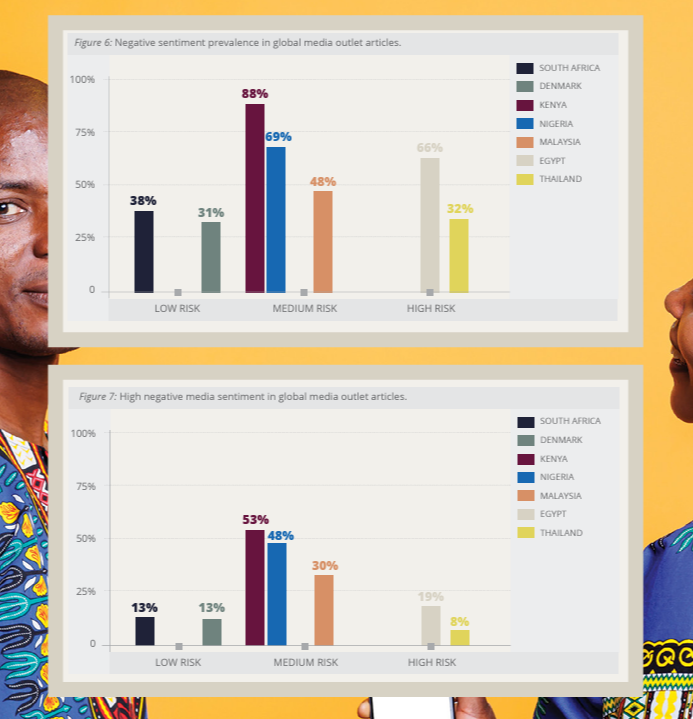
For instance, Kenya and Nigeria face an 88% and 69% prevalence of negative sentiment in global media, compared to Malaysia’s 48%, despite having similar political risk levels.
This results in inflated borrowing costs, diverting critical resources away from essential infrastructure, healthcare, and education investments.

The report argues that changing the narrative about Africa in international media could significantly reduce these costs.

If African countries were covered more positively, akin to their non-African counterparts, bond yields would decline, saving the continent billions in debt servicing expenses.

Recommendations for Change

The report emphasizes the need for balanced reporting and fair representation of Africa in global media.

It also calls for collaborative efforts among African governments, media organizations, and international stakeholders to challenge harmful stereotypes.

By addressing these narratives, Africa could unlock more favorable financial terms, bolstering development and economic resilience.

This research sheds light on the tangible impact of media on economic development, underscoring the urgency of rethinking how Africa is portrayed globally.

Full Report HERE
Get the inside Story

Stay informed on the stories shaping Africa’s future. Get breaking news, in-depth analysis, opinions and exclusive insights from across the continent delivered to your inbox, free and unfiltered.


Get in touch for more:
Felix Tih
Editorial Director, Bantu Gazette
WhatsApp
LinkedIn
X (Twitter)
Instagram

Related Posts

Ethiopia Marks 130 Years of Adwa Victory as Symbol of African Sovereignty
Politics & Economy

Ethiopia Marks 130 Years of Adwa Victory as Symbol of African Sovereignty

March 2, 2026
DR Congo Launches Survey to Advance Gender Parity Reforms
Politics & Economy

DR Congo Launches Survey to Advance Gender Parity Reforms

February 27, 2026
Senegal Police Strengthen Gender Inclusion in Security Sector
Politics & Economy

Senegal Police Strengthen Gender Inclusion in Security Sector

February 27, 2026
Ghana Reports Fiscal Gains as Debt Falls and Inflation Eases
Politics & Economy

Ghana Reports Fiscal Gains as Debt Falls and Inflation Eases

February 24, 2026
Cameroon Cocoa Wins Gold at Global Quality Awards
Politics & Economy

Cameroon Cocoa Wins Gold at Global Quality Awards

February 23, 2026
South Sudan Adopts Cybercrime, Audit Reforms To Boost Accountability
Politics & Economy

South Sudan Adopts Cybercrime, Audit Reforms To Boost Accountability

February 19, 2026

Most Recent

Ethiopia Marks 130 Years of Adwa Victory as Symbol of African Sovereignty
Politics & Economy

Ethiopia Marks 130 Years of Adwa Victory as Symbol of African Sovereignty

by Felix Tih
March 2, 2026
0

Ethiopia on Monday marked the 130th anniversary of the Battle of Adwa with a national commemoration at the Adwa Victory...

Read moreDetails
Urgent Call for Action to Combat Antimicrobial Resistance in Africa

Angola Accelerates Final Steps to Eradicate Guinea Worm by 2030

March 1, 2026
DR Congo Launches Survey to Advance Gender Parity Reforms

DR Congo Launches Survey to Advance Gender Parity Reforms

February 27, 2026
Senegal Police Strengthen Gender Inclusion in Security Sector

Senegal Police Strengthen Gender Inclusion in Security Sector

February 27, 2026
Nigeria’s Dangote Refinery to Export Petrol After Meeting Domestic Demand

Nigeria’s Dangote Refinery to Export Petrol After Meeting Domestic Demand

February 25, 2026
Ghana Reports Fiscal Gains as Debt Falls and Inflation Eases

Ghana Reports Fiscal Gains as Debt Falls and Inflation Eases

February 24, 2026
Cameroon Cocoa Wins Gold at Global Quality Awards

Cameroon Cocoa Wins Gold at Global Quality Awards

February 23, 2026
Ethiopia Marks 130 Years of Adwa Victory as Symbol of African Sovereignty
Politics & Economy

Ethiopia Marks 130 Years of Adwa Victory as Symbol of African Sovereignty

by Felix Tih
Reading Time: 2 mins read
March 2, 2026
0

Ethiopia on Monday marked the 130th anniversary of the Battle of Adwa with a national commemoration at the Adwa Victory...

Read moreDetails
Urgent Call for Action to Combat Antimicrobial Resistance in Africa
Health

Angola Accelerates Final Steps to Eradicate Guinea Worm by 2030

by Naledi Kgosi
Reading Time: 2 mins read
March 1, 2026
0

Angola has marked five consecutive years without a single human case of Guinea worm disease, health officials said, as the...

Read moreDetails
DR Congo Launches Survey to Advance Gender Parity Reforms
Politics & Economy

DR Congo Launches Survey to Advance Gender Parity Reforms

by Elise Ntebah
Reading Time: 1 min read
February 27, 2026
0

The Democratic Republic of Congo has launched a nationwide survey to assess how gender policy is understood and implemented across...

Read moreDetails

Negative Media Narratives Cost Africa $4.2 Billion Annually, Report Finds

African nations receive disproportionate attention during elections, with a significant focus on negative themes such as violence and corruption.

NAIROBI, Kenya (BG) – A groundbreaking report by Africa No Filter and Africapractice has revealed that stereotypical global media narratives about Africa are costing the continent up to $4.2 billion annually in inflated interest payments on sovereign debt.

The report, titled The Cost of Media Stereotypes to Africa: The Relationship Between Media, Investment and Economic Development, highlights the economic consequences of biased reporting on Africa’s financial flows.

Using a mixed-methods approach, the study examined global media coverage of elections in Africa, comparing it to non-African countries with similar political risk profiles.

It found that African nations receive disproportionate attention during elections, with a significant focus on negative themes such as violence and corruption.

These biased narratives amplify perceived risks, leading to higher borrowing costs for African countries even when their socio-economic and political conditions are comparable to their global peers.

Media Bias Drives Financial Disparities

The report, published in October 2024, revealed that negative media sentiment has a direct correlation with sovereign bond yields, a key financial indicator.

African nations pay higher interest rates due to perceptions of increased credit risk fueled by unfavorable reporting.

For instance, Kenya and Nigeria face an 88% and 69% prevalence of negative sentiment in global media, compared to Malaysia’s 48%, despite having similar political risk levels.

This results in inflated borrowing costs, diverting critical resources away from essential infrastructure, healthcare, and education investments.

The report argues that changing the narrative about Africa in international media could significantly reduce these costs.

If African countries were covered more positively, akin to their non-African counterparts, bond yields would decline, saving the continent billions in debt servicing expenses.

Recommendations for Change

The report emphasizes the need for balanced reporting and fair representation of Africa in global media.

It also calls for collaborative efforts among African governments, media organizations, and international stakeholders to challenge harmful stereotypes.

By addressing these narratives, Africa could unlock more favorable financial terms, bolstering development and economic resilience.

This research sheds light on the tangible impact of media on economic development, underscoring the urgency of rethinking how Africa is portrayed globally.

Full Report HERE

Negative Media Narratives Cost Africa $4.2 Billion Annually, Report Finds

Felix Tihby Felix Tih
November 25, 2024

African nations receive disproportionate attention during elections, with a significant focus on negative themes such as violence and corruption.

NAIROBI, Kenya (BG) – A groundbreaking report by Africa No Filter and Africapractice has revealed that stereotypical global media narratives about Africa are costing the continent up to $4.2 billion annually in inflated interest payments on sovereign debt.

The report, titled The Cost of Media Stereotypes to Africa: The Relationship Between Media, Investment and Economic Development, highlights the economic consequences of biased reporting on Africa’s financial flows.

Using a mixed-methods approach, the study examined global media coverage of elections in Africa, comparing it to non-African countries with similar political risk profiles.

It found that African nations receive disproportionate attention during elections, with a significant focus on negative themes such as violence and corruption.

These biased narratives amplify perceived risks, leading to higher borrowing costs for African countries even when their socio-economic and political conditions are comparable to their global peers.

Media Bias Drives Financial Disparities

The report, published in October 2024, revealed that negative media sentiment has a direct correlation with sovereign bond yields, a key financial indicator.

African nations pay higher interest rates due to perceptions of increased credit risk fueled by unfavorable reporting.

For instance, Kenya and Nigeria face an 88% and 69% prevalence of negative sentiment in global media, compared to Malaysia’s 48%, despite having similar political risk levels.

This results in inflated borrowing costs, diverting critical resources away from essential infrastructure, healthcare, and education investments.

The report argues that changing the narrative about Africa in international media could significantly reduce these costs.

If African countries were covered more positively, akin to their non-African counterparts, bond yields would decline, saving the continent billions in debt servicing expenses.

Recommendations for Change

The report emphasizes the need for balanced reporting and fair representation of Africa in global media.

It also calls for collaborative efforts among African governments, media organizations, and international stakeholders to challenge harmful stereotypes.

By addressing these narratives, Africa could unlock more favorable financial terms, bolstering development and economic resilience.

This research sheds light on the tangible impact of media on economic development, underscoring the urgency of rethinking how Africa is portrayed globally.

Full Report HERE

Get the inside Story

Stay informed on the stories shaping Africa’s future. Get breaking news, in-depth analysis, opinions and exclusive insights from across the continent delivered to your inbox, free and unfiltered.


Get in touch for more:
Felix Tih
Editorial Director, Bantu Gazette
WhatsApp
LinkedIn
X (Twitter)
Instagram

Related Posts

Ethiopia Marks 130 Years of Adwa Victory as Symbol of African Sovereignty

Ethiopia Marks 130 Years of Adwa Victory as Symbol of African Sovereignty

by Felix Tih
March 2, 2026
0

...

DR Congo Launches Survey to Advance Gender Parity Reforms

DR Congo Launches Survey to Advance Gender Parity Reforms

by Elise Ntebah
February 27, 2026
0

...

Senegal Police Strengthen Gender Inclusion in Security Sector

Senegal Police Strengthen Gender Inclusion in Security Sector

by Aissatou Fall
February 27, 2026
0

...

Ghana Reports Fiscal Gains as Debt Falls and Inflation Eases

Ghana Reports Fiscal Gains as Debt Falls and Inflation Eases

by Aissatou Fall
February 24, 2026
0

...

Cameroon Cocoa Wins Gold at Global Quality Awards

Cameroon Cocoa Wins Gold at Global Quality Awards

by Nora Tabe
February 23, 2026
0

...

South Sudan Adopts Cybercrime, Audit Reforms To Boost Accountability

South Sudan Adopts Cybercrime, Audit Reforms To Boost Accountability

by Jane Mukami
February 19, 2026
0

...

Ethiopia Marks 130 Years of Adwa Victory as Symbol of African Sovereignty
Politics & Economy

Ethiopia Marks 130 Years of Adwa Victory as Symbol of African Sovereignty

by Felix Tih
Reading Time: 2 mins read
March 2, 2026
0

Ethiopia on Monday marked the 130th anniversary of the Battle of Adwa with a national commemoration at the Adwa Victory...

Read moreDetails
Urgent Call for Action to Combat Antimicrobial Resistance in Africa

Angola Accelerates Final Steps to Eradicate Guinea Worm by 2030

by Naledi Kgosi
March 1, 2026
0

Angola has marked five consecutive years without a single human case of Guinea worm disease, health officials said, as the...

DR Congo Launches Survey to Advance Gender Parity Reforms

DR Congo Launches Survey to Advance Gender Parity Reforms

by Elise Ntebah
February 27, 2026
0

The Democratic Republic of Congo has launched a nationwide survey to assess how gender policy is understood and implemented across...

Senegal Police Strengthen Gender Inclusion in Security Sector

Senegal Police Strengthen Gender Inclusion in Security Sector

by Aissatou Fall
February 27, 2026
0

The Senegal National Police took a step toward strengthening gender inclusion within the country’s security institutions following a meeting of...

Nigeria’s Dangote Refinery to Export Petrol After Meeting Domestic Demand

Nigeria’s Dangote Refinery to Export Petrol After Meeting Domestic Demand

by Naledi Kgosi
February 25, 2026
0

Nigeria’s Dangote refinery will export up to 20 million liters of petrol daily after surpassing domestic demand, a milestone that...

Next Post

'Zimbabwe’s Debt Resolution Efforts Make Significant Progress'

Sub-Saharan Africa's Economic Growth on the Rise, Says IMF

Africa Advances Infrastructure Agenda as PIDA Week 2024 Opens in Addis Ababa

Namibia Holds Pivotal Presidential, National Assembly Elections

Bantu Gazette is a pioneering news platform that champions Africa's development, culture, and heritage. We spotlight the continent's successes, address its challenges, and provide insightful coverage of events that shape its future.

Bantu Gazette is a pioneering news platform that champions Africa's development, culture, and heritage. We spotlight the continent's successes, address its challenges, and provide insightful coverage of events that shape its future.

Our Platforms

  • Bantu Magazine
  • Bantu Brief
  • Black Frame Studio

Our Services

  • Bantu Agency
  • Advertise
  • Partnerships

Our Services

  • Editorial Director
  • Opportunities
  • Contact

Bantu Gazette is a pioneering news platform that champions Africa's development, culture, and heritage. We spotlight the continent's successes, address its challenges, and provide insightful coverage of events that shape its future.

Our Platforms

  • Bantu Magazine
  • Bantu Brief
  • Black Frame Studio

Our Services

  • Bantu Agency
  • Advertise
  • Partnerships

Our Services

  • Editorial Director
  • Opportunities
  • Contact
Bantu Gazette
  • Energy & Trade
  • Finance
  • Health
  • Politics & Economy
  • Technology
  • Environment
  • Feature
  • Opinion
  • Changemakers
  • Tourism & Culture
  • Magazine