
Bantu Gazette

Bantu Gazette
  • Energy & Trade
  • Finance
  • Health
  • Politics & Economy
  • Technology
  • Environment
  • Feature
  • Opinion
  • Changemakers
  • Tourism & Culture
  • Sports
  • Magazine
Menu
  • Black Frame Studio
  • Magazine

The Gift of Water: How the Lesotho Rural Water Supply and Sanitation Project is Transforming Lives

The Gift of Water: How the Lesotho Rural Water Supply and Sanitation Project is Transforming Lives
Bantu Gazetteby Bantu Gazette
March 24, 2025
Reading Time: 6 mins read

The Gift of Water: How the Lesotho Rural Water Supply and Sanitation Project is Transforming Lives

The Gift of Water: How the Lesotho Rural Water Supply and Sanitation Project is Transforming Lives
Bantu Gazetteby Bantu Gazette
March 24, 2025
Reading Time: 6 mins read

ABIDJAN, Ivory Coast –  “Water is life; when there is no water, it is as if there are no people living.”

These profound words from ‘Masechefo Sechefo, a Community Councilor at Ha Sekete village, capture the essence of existence in rural Lesotho before the African Development Bank’s transformative intervention.

In a country where water ironically constitutes 30% of the nation’s GDP, many rural Basotho paradoxically lived without access to clean water. This stark contradiction defined daily life until the Lesotho Rural Water Supply and Sanitation Project began changing the narrative in the communities.

The Long Walk For Water

Before the project, women and girls in villages across Maseru and Berea districts would wake before dawn to begin their daily ‘pilgrimage’ to distant springs and unprotected wells. The journey often stretched more than a kilometer each way, with women carrying heavy containers while navigating challenging mountain terrain.

“Where we used to fetch water, it was so far that there could have been challenges, perhaps the risk of being attacked or harmed by criminals,” recalls ‘Masechefo.

At Sekete Primary School, the situation was equally dire. Headteacher Sello Matlali remembers: “We had to send children to fetch water from the unprotected wells around our communities. It was about one and a half kilometers walk from the school.”

This daily expedition meant losing children’s classroom time and productive hours for women. Worse still, the unprotected water sources harbored pathogens causing diarrheal diseases that disproportionately affected the community’s most vulnerable members.

A Project That Flows Like Life Itself

When the African Development Bank’s initiative reached these communities, it didn’t merely install infrastructure – it unleashed potential.

The project, set to conclude in March 2025 after more than a decade of implementation, has delivered remarkable results: 190 kilometers of pipeline to distribution networks, water storage reservoirs with a total capacity of 3.48 million liters, and 166 public water points serving approximately 28,266 people across eight zones in Maseru and Berea districts.

The numbers tell only part of the story. Moses Tembo, the project’s task manager at the African Development Bank, highlights the impact: “From the data collected through the project, you could see that many people’s lives have been changed. Most people were drawing water from springs and unprotected wells, and the incidence of diarrheal diseases was quite high.”

Beyond water supply, the project expanded sanitation infrastructure, – constructing 266 sanitation facilities for vulnerable households and 284 toilets at schools and healthcare facilities.

“It Was Like Our Birthday”

At Sekete Primary School, the transformation has been profound. “When water was supplied, it was like our birthday,” Sello Maltali exclaims, his eyes bright with emotion. “The African Development Bank came to our rescue when we were in serious problem.”

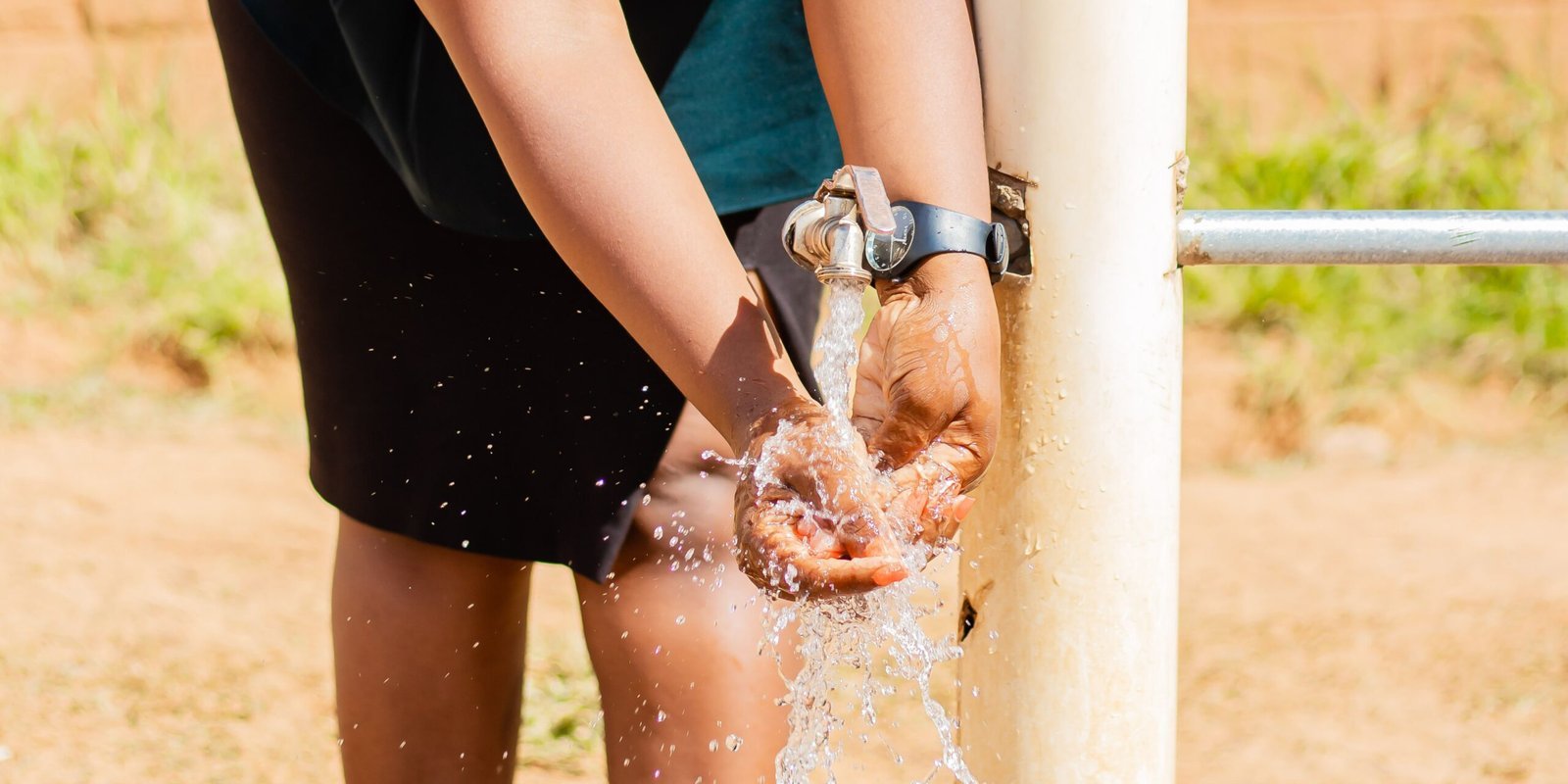
The school now boasts eight water taps and proper sanitation facilities – eight toilets for boys, seven for girls, and a dedicated facility for children with disabilities. This thoughtful design has created an inclusive learning environment where all 500 students can focus on education rather than basic survival needs.

“We live the life we never lived before,” Matlali reflects. “We forget the past. We talk of it as history.”

The impact extends beyond convenience. The school has witnessed increased enrollment and reduced disease transmission. Students can now pursue agricultural education, which teaches them self-reliance and food production skills.

We used to have a small community tap where 2,000 people would queue, and because of the drought, we wouldn’t have enough water some days

Women Liberated, Communities Transformed

For women like ‘Masechefo, the project has delivered more than water – it has brought dignity and safety. “This project has brought a big change in our lives and our families. There is cleanliness in our homes and on our bodies.”

The transformation has touched every aspect of community life. Residents found employment during construction— collecting stones, laying bricks, mixing cement, and completing roofing work. This approach ensured that the community benefited from the completed infrastructure and the process itself.

Mamosili Kikine, the project’s technical adviser, explains: “The beneficiaries are using water for different purposes, like cooking and washing. The schools and clinics in these zones are also benefiting.”

Climate Resilience: Protecting the Future

As the base project nears completion, an additional component introduced in 2019 focuses on climate resilience. This component educates communities about preserving watersheds and forests to ensure sustainable water resources.

“Lesotho is very much dependent on water for its economy and the wellbeing of people,” task manager Tembo explains. “The water reserves 10 years ago, 20 years ago, are not the same at the moment.”

By protecting water sources through this education, the project aims to secure these life-giving resources for future generations.

Water: A Celebration of Life

As the African Development Bank joined in celebrating World Water Day on March 22, the communities served by this project understand its significance profoundly. They have experienced life with and without clean water –and know which they prefer.

“Without water, there is no life,” declares headteacher Sello Matlali. “Water shortage is death. We cannot have food. We cannot bathe. We cannot wash our hands. We are vulnerable to disease.”

The project’s legacy extends beyond pipes and reservoirs. It has fundamentally altered the relationship between communities and water – creating not just consumers but stewards of this precious resource.

For the people of Lesotho’s rural communities, water is no longer just a substance—it’s the embodiment of possibility, dignity, and future prosperity. In a country blessed with abundant water resources that benefit neighboring nations, the African Development Bank has ensured that Lesotho’s citizens can finally share in this natural wealth.

And for that, as Sello Matlali puts it, “It is very joyous.”

A Nurse’s Story

Mots’elisi Makhele, the only community health nurse serving approximately 2,000 people in her rural community, has witnessed a remarkable transformation thanks to the African Development Bank’s water supply and sanitation project.

“We used to have a small community tap where 2,000 people would queue, and because of the drought, we wouldn’t have enough water some days,” Makhele recalls, adding that this single tap served everyone—elderly women, small children, and her clinic.

The health consequences were severe. “I couldn’t do normal birth deliveries because there was no water,” said Makhele. “There was an increased rate of waterborne infections, and I had many babies with malnutrition because the water was not clean.”

The African Development Bank project transformed the community by providing individual household taps and proper sanitation facilities. The clinic received two proper toilets and a washing station where patients can wash their hands.

The impact has been profound. “After initiating this project, the incidence rate of diarrheal diseases and malnutrition has decreased,” Makhele said excitedly.

SOURCE : AFDB
Get the inside Story

Stay informed on the stories shaping Africa’s future. Get breaking news, in-depth analysis, opinions and exclusive insights from across the continent delivered to your inbox, free and unfiltered.


Get in touch for more:
Felix Tih
Editorial Director, Bantu Gazette
WhatsApp
LinkedIn
X (Twitter)
Instagram

Related Posts

President Buhari, Who Reshaped Nigerian Democracy, Dies at 82
General

President Buhari, Who Reshaped Nigerian Democracy, Dies at 82

August 16, 2025
Cameroon Maps Path to National AI Strategy After Two-Day Conference
General

Cameroon Maps Path to National AI Strategy After Two-Day Conference

July 16, 2025
Foreign Capital Flows Concentrate in South Africa, Egypt
General

Foreign Capital Flows Concentrate in South Africa, Egypt

July 16, 2025
Kigali’s Transport Upgrade to Ease Commutes and Boost Jobs
General

Kigali’s Transport Upgrade to Ease Commutes and Boost Jobs

July 21, 2025
West African States Mark 50 Years of Regional Unity, Development
General

West African States Mark 50 Years of Regional Unity, Development

June 8, 2025
Ethiopian Prime Minister Launches Revitalized Kasanchis Corridor Project
General

Ethiopian Prime Minister Launches Revitalized Kasanchis Corridor Project

April 22, 2025

Most Recent

Ghana’s Energy Sector Remains Country’s Biggest Economic Risk, Finance Minister Says
Politics & Economy

Ghana Clears $1.47 Billion in Energy Debts, Restores World Bank Guarantee

by Marcelo Edjang
January 12, 2026
0

The Government of Ghana paid about $1.47 billion in 2025 to clear energy sector arrears, restore a key World Bank...

Read moreDetails
Eto’o Commends Morocco’s AFCON Hosting, Sportsmanship After Cameroon’s Exit

Eto’o Commends Morocco’s AFCON Hosting, Sportsmanship After Cameroon’s Exit

January 11, 2026
Africa’s Oldest Cremation Pyre Found in Malawi, Dating Back 9,500 Years

Africa’s Oldest Cremation Pyre Found in Malawi, Dating Back 9,500 Years

January 10, 2026
Ethiopia Breaks Ground on Africa’s Largest Airport

Ethiopia Breaks Ground on Africa’s Largest Airport

January 10, 2026
Kenya Secures Funds to Protect Reefs, Grow Coastal Economy

Kenya Secures Funds to Protect Reefs, Grow Coastal Economy

January 9, 2026
Morocco Leverages AFCON 2025 to Boost Global Tourism Visibility

Morocco Leverages AFCON 2025 to Boost Global Tourism Visibility

January 7, 2026
Morocco Puts Infrastructure on Display at Africa Cup of Nations

South Africa Praises Morocco’s Excellence in AFCON Hosting

January 7, 2026
Ghana’s Energy Sector Remains Country’s Biggest Economic Risk, Finance Minister Says
Politics & Economy

Ghana Clears $1.47 Billion in Energy Debts, Restores World Bank Guarantee

by Marcelo Edjang
Reading Time: 1 min read
January 12, 2026
0

The Government of Ghana paid about $1.47 billion in 2025 to clear energy sector arrears, restore a key World Bank...

Read moreDetails
Eto’o Commends Morocco’s AFCON Hosting, Sportsmanship After Cameroon’s Exit
Sports

Eto’o Commends Morocco’s AFCON Hosting, Sportsmanship After Cameroon’s Exit

by Elise Ntebah
Reading Time: 1 min read
January 11, 2026
0

Samuel Eto’o, president of the Cameroon Football Federation, praised Morocco for its exemplary organization and warm hospitality during the 2025...

Read moreDetails
Africa’s Oldest Cremation Pyre Found in Malawi, Dating Back 9,500 Years
Tourism & Culture

Africa’s Oldest Cremation Pyre Found in Malawi, Dating Back 9,500 Years

by Amani Mwakalebela
Reading Time: 2 mins read
January 10, 2026
0

Archaeologists have uncovered Africa’s earliest known cremation at the base of Mount Hora in northern Malawi, dating to about 9,500...

Read moreDetails

The Gift of Water: How the Lesotho Rural Water Supply and Sanitation Project is Transforming Lives

The Gift of Water: How the Lesotho Rural Water Supply and Sanitation Project is Transforming Lives

ABIDJAN, Ivory Coast –  “Water is life; when there is no water, it is as if there are no people living.”

These profound words from ‘Masechefo Sechefo, a Community Councilor at Ha Sekete village, capture the essence of existence in rural Lesotho before the African Development Bank’s transformative intervention.

In a country where water ironically constitutes 30% of the nation’s GDP, many rural Basotho paradoxically lived without access to clean water. This stark contradiction defined daily life until the Lesotho Rural Water Supply and Sanitation Project began changing the narrative in the communities.

The Long Walk For Water

Before the project, women and girls in villages across Maseru and Berea districts would wake before dawn to begin their daily ‘pilgrimage’ to distant springs and unprotected wells. The journey often stretched more than a kilometer each way, with women carrying heavy containers while navigating challenging mountain terrain.

“Where we used to fetch water, it was so far that there could have been challenges, perhaps the risk of being attacked or harmed by criminals,” recalls ‘Masechefo.

At Sekete Primary School, the situation was equally dire. Headteacher Sello Matlali remembers: “We had to send children to fetch water from the unprotected wells around our communities. It was about one and a half kilometers walk from the school.”

This daily expedition meant losing children’s classroom time and productive hours for women. Worse still, the unprotected water sources harbored pathogens causing diarrheal diseases that disproportionately affected the community’s most vulnerable members.

A Project That Flows Like Life Itself

When the African Development Bank’s initiative reached these communities, it didn’t merely install infrastructure – it unleashed potential.

The project, set to conclude in March 2025 after more than a decade of implementation, has delivered remarkable results: 190 kilometers of pipeline to distribution networks, water storage reservoirs with a total capacity of 3.48 million liters, and 166 public water points serving approximately 28,266 people across eight zones in Maseru and Berea districts.

The numbers tell only part of the story. Moses Tembo, the project’s task manager at the African Development Bank, highlights the impact: “From the data collected through the project, you could see that many people’s lives have been changed. Most people were drawing water from springs and unprotected wells, and the incidence of diarrheal diseases was quite high.”

Beyond water supply, the project expanded sanitation infrastructure, – constructing 266 sanitation facilities for vulnerable households and 284 toilets at schools and healthcare facilities.

“It Was Like Our Birthday”

At Sekete Primary School, the transformation has been profound. “When water was supplied, it was like our birthday,” Sello Maltali exclaims, his eyes bright with emotion. “The African Development Bank came to our rescue when we were in serious problem.”

The school now boasts eight water taps and proper sanitation facilities – eight toilets for boys, seven for girls, and a dedicated facility for children with disabilities. This thoughtful design has created an inclusive learning environment where all 500 students can focus on education rather than basic survival needs.

“We live the life we never lived before,” Matlali reflects. “We forget the past. We talk of it as history.”

The impact extends beyond convenience. The school has witnessed increased enrollment and reduced disease transmission. Students can now pursue agricultural education, which teaches them self-reliance and food production skills.

We used to have a small community tap where 2,000 people would queue, and because of the drought, we wouldn’t have enough water some days

Women Liberated, Communities Transformed

For women like ‘Masechefo, the project has delivered more than water – it has brought dignity and safety. “This project has brought a big change in our lives and our families. There is cleanliness in our homes and on our bodies.”

The transformation has touched every aspect of community life. Residents found employment during construction— collecting stones, laying bricks, mixing cement, and completing roofing work. This approach ensured that the community benefited from the completed infrastructure and the process itself.

Mamosili Kikine, the project’s technical adviser, explains: “The beneficiaries are using water for different purposes, like cooking and washing. The schools and clinics in these zones are also benefiting.”

Climate Resilience: Protecting the Future

As the base project nears completion, an additional component introduced in 2019 focuses on climate resilience. This component educates communities about preserving watersheds and forests to ensure sustainable water resources.

“Lesotho is very much dependent on water for its economy and the wellbeing of people,” task manager Tembo explains. “The water reserves 10 years ago, 20 years ago, are not the same at the moment.”

By protecting water sources through this education, the project aims to secure these life-giving resources for future generations.

Water: A Celebration of Life

As the African Development Bank joined in celebrating World Water Day on March 22, the communities served by this project understand its significance profoundly. They have experienced life with and without clean water –and know which they prefer.

“Without water, there is no life,” declares headteacher Sello Matlali. “Water shortage is death. We cannot have food. We cannot bathe. We cannot wash our hands. We are vulnerable to disease.”

The project’s legacy extends beyond pipes and reservoirs. It has fundamentally altered the relationship between communities and water – creating not just consumers but stewards of this precious resource.

For the people of Lesotho’s rural communities, water is no longer just a substance—it’s the embodiment of possibility, dignity, and future prosperity. In a country blessed with abundant water resources that benefit neighboring nations, the African Development Bank has ensured that Lesotho’s citizens can finally share in this natural wealth.

And for that, as Sello Matlali puts it, “It is very joyous.”

A Nurse’s Story

Mots’elisi Makhele, the only community health nurse serving approximately 2,000 people in her rural community, has witnessed a remarkable transformation thanks to the African Development Bank’s water supply and sanitation project.

“We used to have a small community tap where 2,000 people would queue, and because of the drought, we wouldn’t have enough water some days,” Makhele recalls, adding that this single tap served everyone—elderly women, small children, and her clinic.

The health consequences were severe. “I couldn’t do normal birth deliveries because there was no water,” said Makhele. “There was an increased rate of waterborne infections, and I had many babies with malnutrition because the water was not clean.”

The African Development Bank project transformed the community by providing individual household taps and proper sanitation facilities. The clinic received two proper toilets and a washing station where patients can wash their hands.

The impact has been profound. “After initiating this project, the incidence rate of diarrheal diseases and malnutrition has decreased,” Makhele said excitedly.

SOURCE : AFDB
The Gift of Water: How the Lesotho Rural Water Supply and Sanitation Project is Transforming Lives

The Gift of Water: How the Lesotho Rural Water Supply and Sanitation Project is Transforming Lives
Bantu Gazetteby Bantu Gazette
March 24, 2025

ABIDJAN, Ivory Coast –  “Water is life; when there is no water, it is as if there are no people living.”

These profound words from ‘Masechefo Sechefo, a Community Councilor at Ha Sekete village, capture the essence of existence in rural Lesotho before the African Development Bank’s transformative intervention.

In a country where water ironically constitutes 30% of the nation’s GDP, many rural Basotho paradoxically lived without access to clean water. This stark contradiction defined daily life until the Lesotho Rural Water Supply and Sanitation Project began changing the narrative in the communities.

The Long Walk For Water

Before the project, women and girls in villages across Maseru and Berea districts would wake before dawn to begin their daily ‘pilgrimage’ to distant springs and unprotected wells. The journey often stretched more than a kilometer each way, with women carrying heavy containers while navigating challenging mountain terrain.

“Where we used to fetch water, it was so far that there could have been challenges, perhaps the risk of being attacked or harmed by criminals,” recalls ‘Masechefo.

At Sekete Primary School, the situation was equally dire. Headteacher Sello Matlali remembers: “We had to send children to fetch water from the unprotected wells around our communities. It was about one and a half kilometers walk from the school.”

This daily expedition meant losing children’s classroom time and productive hours for women. Worse still, the unprotected water sources harbored pathogens causing diarrheal diseases that disproportionately affected the community’s most vulnerable members.

A Project That Flows Like Life Itself

When the African Development Bank’s initiative reached these communities, it didn’t merely install infrastructure – it unleashed potential.

The project, set to conclude in March 2025 after more than a decade of implementation, has delivered remarkable results: 190 kilometers of pipeline to distribution networks, water storage reservoirs with a total capacity of 3.48 million liters, and 166 public water points serving approximately 28,266 people across eight zones in Maseru and Berea districts.

The numbers tell only part of the story. Moses Tembo, the project’s task manager at the African Development Bank, highlights the impact: “From the data collected through the project, you could see that many people’s lives have been changed. Most people were drawing water from springs and unprotected wells, and the incidence of diarrheal diseases was quite high.”

Beyond water supply, the project expanded sanitation infrastructure, – constructing 266 sanitation facilities for vulnerable households and 284 toilets at schools and healthcare facilities.

“It Was Like Our Birthday”

At Sekete Primary School, the transformation has been profound. “When water was supplied, it was like our birthday,” Sello Maltali exclaims, his eyes bright with emotion. “The African Development Bank came to our rescue when we were in serious problem.”

The school now boasts eight water taps and proper sanitation facilities – eight toilets for boys, seven for girls, and a dedicated facility for children with disabilities. This thoughtful design has created an inclusive learning environment where all 500 students can focus on education rather than basic survival needs.

“We live the life we never lived before,” Matlali reflects. “We forget the past. We talk of it as history.”

The impact extends beyond convenience. The school has witnessed increased enrollment and reduced disease transmission. Students can now pursue agricultural education, which teaches them self-reliance and food production skills.

We used to have a small community tap where 2,000 people would queue, and because of the drought, we wouldn’t have enough water some days

Women Liberated, Communities Transformed

For women like ‘Masechefo, the project has delivered more than water – it has brought dignity and safety. “This project has brought a big change in our lives and our families. There is cleanliness in our homes and on our bodies.”

The transformation has touched every aspect of community life. Residents found employment during construction— collecting stones, laying bricks, mixing cement, and completing roofing work. This approach ensured that the community benefited from the completed infrastructure and the process itself.

Mamosili Kikine, the project’s technical adviser, explains: “The beneficiaries are using water for different purposes, like cooking and washing. The schools and clinics in these zones are also benefiting.”

Climate Resilience: Protecting the Future

As the base project nears completion, an additional component introduced in 2019 focuses on climate resilience. This component educates communities about preserving watersheds and forests to ensure sustainable water resources.

“Lesotho is very much dependent on water for its economy and the wellbeing of people,” task manager Tembo explains. “The water reserves 10 years ago, 20 years ago, are not the same at the moment.”

By protecting water sources through this education, the project aims to secure these life-giving resources for future generations.

Water: A Celebration of Life

As the African Development Bank joined in celebrating World Water Day on March 22, the communities served by this project understand its significance profoundly. They have experienced life with and without clean water –and know which they prefer.

“Without water, there is no life,” declares headteacher Sello Matlali. “Water shortage is death. We cannot have food. We cannot bathe. We cannot wash our hands. We are vulnerable to disease.”

The project’s legacy extends beyond pipes and reservoirs. It has fundamentally altered the relationship between communities and water – creating not just consumers but stewards of this precious resource.

For the people of Lesotho’s rural communities, water is no longer just a substance—it’s the embodiment of possibility, dignity, and future prosperity. In a country blessed with abundant water resources that benefit neighboring nations, the African Development Bank has ensured that Lesotho’s citizens can finally share in this natural wealth.

And for that, as Sello Matlali puts it, “It is very joyous.”

A Nurse’s Story

Mots’elisi Makhele, the only community health nurse serving approximately 2,000 people in her rural community, has witnessed a remarkable transformation thanks to the African Development Bank’s water supply and sanitation project.

“We used to have a small community tap where 2,000 people would queue, and because of the drought, we wouldn’t have enough water some days,” Makhele recalls, adding that this single tap served everyone—elderly women, small children, and her clinic.

The health consequences were severe. “I couldn’t do normal birth deliveries because there was no water,” said Makhele. “There was an increased rate of waterborne infections, and I had many babies with malnutrition because the water was not clean.”

The African Development Bank project transformed the community by providing individual household taps and proper sanitation facilities. The clinic received two proper toilets and a washing station where patients can wash their hands.

The impact has been profound. “After initiating this project, the incidence rate of diarrheal diseases and malnutrition has decreased,” Makhele said excitedly.

SOURCE : AFDB

Get the inside Story

Stay informed on the stories shaping Africa’s future. Get breaking news, in-depth analysis, opinions and exclusive insights from across the continent delivered to your inbox, free and unfiltered.


Get in touch for more:
Felix Tih
Editorial Director, Bantu Gazette
WhatsApp
LinkedIn
X (Twitter)
Instagram

Related Posts

President Buhari, Who Reshaped Nigerian Democracy, Dies at 82

President Buhari, Who Reshaped Nigerian Democracy, Dies at 82

by Felix Tih
July 13, 2025
0

...

Cameroon Maps Path to National AI Strategy After Two-Day Conference

Cameroon Maps Path to National AI Strategy After Two-Day Conference

by Felix Tih
July 9, 2025
0

...

Foreign Capital Flows Concentrate in South Africa, Egypt

Foreign Capital Flows Concentrate in South Africa, Egypt

by Tetelo Mofokeng
July 7, 2025
0

...

Kigali’s Transport Upgrade to Ease Commutes and Boost Jobs

Kigali’s Transport Upgrade to Ease Commutes and Boost Jobs

by Bantu Gazette
July 1, 2025
0

...

West African States Mark 50 Years of Regional Unity, Development

West African States Mark 50 Years of Regional Unity, Development

by Bantu Gazette
June 8, 2025
0

...

Ethiopian Prime Minister Launches Revitalized Kasanchis Corridor Project

Ethiopian Prime Minister Launches Revitalized Kasanchis Corridor Project

by Bantu Gazette
April 22, 2025
0

...

Ghana’s Energy Sector Remains Country’s Biggest Economic Risk, Finance Minister Says
Politics & Economy

Ghana Clears $1.47 Billion in Energy Debts, Restores World Bank Guarantee

by Marcelo Edjang
Reading Time: 1 min read
January 12, 2026
0

The Government of Ghana paid about $1.47 billion in 2025 to clear energy sector arrears, restore a key World Bank...

Read moreDetails
Eto’o Commends Morocco’s AFCON Hosting, Sportsmanship After Cameroon’s Exit

Eto’o Commends Morocco’s AFCON Hosting, Sportsmanship After Cameroon’s Exit

by Elise Ntebah
January 11, 2026
0

Samuel Eto’o, president of the Cameroon Football Federation, praised Morocco for its exemplary organization and warm hospitality during the 2025...

Africa’s Oldest Cremation Pyre Found in Malawi, Dating Back 9,500 Years

Africa’s Oldest Cremation Pyre Found in Malawi, Dating Back 9,500 Years

by Amani Mwakalebela
January 10, 2026
0

Archaeologists have uncovered Africa’s earliest known cremation at the base of Mount Hora in northern Malawi, dating to about 9,500...

Ethiopia Breaks Ground on Africa’s Largest Airport

Ethiopia Breaks Ground on Africa’s Largest Airport

by Maraki Desta
January 10, 2026
0

Ethiopia has broken ground on Bishoftu International Airport, a multi-billion-dollar project set to become the largest aviation infrastructure development in...

Kenya Secures Funds to Protect Reefs, Grow Coastal Economy

Kenya Secures Funds to Protect Reefs, Grow Coastal Economy

by Jane Mukami
January 9, 2026
0

Kenya has secured nearly $800,000 in new investments to expand coral reef-friendly businesses, targeting coastal pollution and overfishing as part...

Next Post

Africa’s Happiness Scores Show Mixed Progress Amid Resilient Social Bonds

Nigeria to Adopt Egypt’s Power Model

African Union and European Union Mark 25 Years of Strategic Partnership

First African Trade Center in Barbados to Boost Africa-Caribbean Ties

Bantu Gazette is a pioneering news platform that champions Africa's development, culture, and heritage. We spotlight the continent's successes, address its challenges, and provide insightful coverage of events that shape its future.

Bantu Gazette is a pioneering news platform that champions Africa's development, culture, and heritage. We spotlight the continent's successes, address its challenges, and provide insightful coverage of events that shape its future.

Our Platforms

  • Bantu Magazine
  • Bantu Brief
  • Black Frame Studio

Our Services

  • Bantu Agency
  • Advertise
  • Partnerships

Our Services

  • Editorial Director
  • Opportunities
  • Contact

Bantu Gazette is a pioneering news platform that champions Africa's development, culture, and heritage. We spotlight the continent's successes, address its challenges, and provide insightful coverage of events that shape its future.

Our Platforms

  • Bantu Magazine
  • Bantu Brief
  • Black Frame Studio

Our Services

  • Bantu Agency
  • Advertise
  • Partnerships

Our Services

  • Editorial Director
  • Opportunities
  • Contact
Bantu Gazette
  • Energy & Trade
  • Finance
  • Health
  • Politics & Economy
  • Technology
  • Environment
  • Feature
  • Opinion
  • Changemakers
  • Tourism & Culture
  • Magazine