
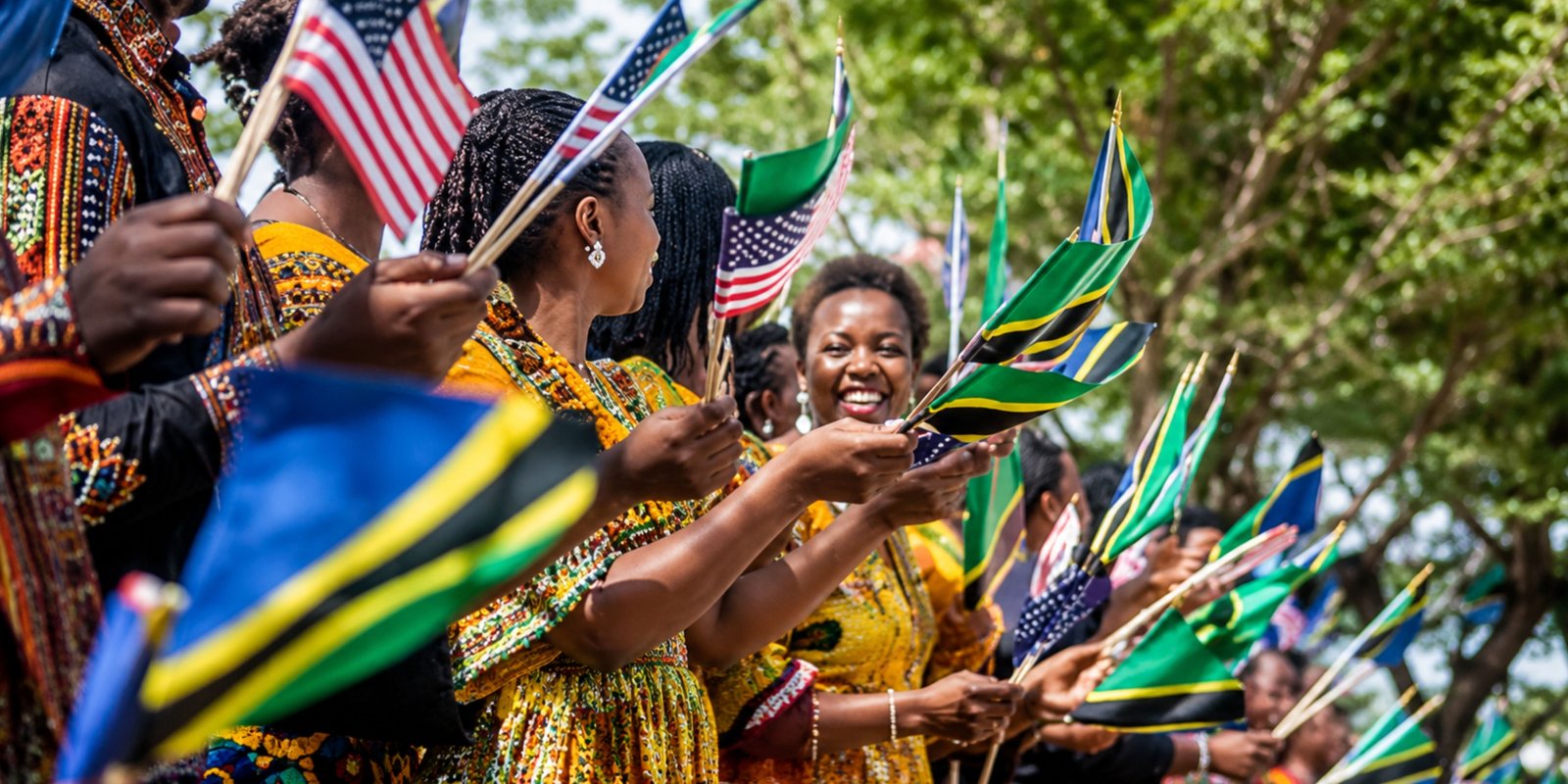

The United States and Tanzania have long-standing diplomatic relations and many opportunities for cooperation. This was the closing remark in Mr. William Trachman’s Opening Statement as a Nominee for U.S. Ambassador to Tanzania before the Senate Foreign Relations Committee on April 28, 2026. He noted that the two countries have cooperated closely on health, security, and economic development.
For years, this cooperation has been built on mutual respect and shared interests, according to Mr. Trachman, and is poised to endure despite the country’s recent challenges following the controversial electoral outcomes on Oct. 29, 2025. Trachman, like his predecessor, Mr. Andrew Lentz, did not shy away from acknowledging challenges in the relationship as noted in the US Department of State’s review of its bilateral and strategic relations with Tanzania on Dec. 4, 2025.
This review mentions several concerns of the US, including post-election violence, human rights concerns, and restrictive business environments, which have raised questions about the foundations of US – Tanzanian relations. Yet beyond those concerns, Mr. William Trachman’s testimony made a strong case for why Tanzania deserves sustained American attention and engagement, calling for a reset in the relationship in areas of security and stability.
In his view, the US and Tanzania have more to gain, thus they need to reset their bilateral relations. The three priority areas include maritime and regional security, an open environment for American business, and access to strategic resources.
US foreign policy objectives in East Africa and beyond can hardly be achieved without Tanzania as a partner. Tanzania is a maritime gateway for East and Central Africa. Its 1,424-kilometer coastline on the Indian coastline commands high strategic importance. This also includes a 241,541-square-kilometer area along a trade corridor connecting Africa to the Middle East and Asia with an Exclusive Economic Zone (EEZ) and strategic islands, mainly Zanzibar, Pemba, and Mafia.
Tanzania is a key member of the East African Community and a player in ensuring regional security. With rising contestations around the Indian Ocean, piracy along the East African shore, and conflict in Congo, the US is better off building strong ties with Tanzania.
Mr. Trachman stated that he will work closely with Tanzanian authorities to deepen cooperation where interests align, including in addressing transnational threats, improving maritime domain awareness along Indian Ocean coastlines, and promoting regional stability in East Africa.
Tanzania is endowed with an extensive resource base that both the US and Tanzania could benefit from. Tanzania holds more than 47 trillion cubic feet of offshore natural gas reserves, one of the largest untapped reserves in sub-Saharan Africa. Its $42 billion LNG project, with ExxonMobil as a key consortium partner alongside Shell and Equinor, is now closer to realisation than at any point in its history.
As of late April 2026, Tanzania’s Energy Minister confirmed that commercial and tax agreements with investors have been finalised. When this project comes online, Tanzania will become a significant player in global energy markets. One capable of offering Asian and European buyers an alternative to Gulf supply, easing global price pressures and reducing the leverage of unstable transit chokepoints like the Strait of Hormuz.
Beyond Tanzania’s strategic value, it sits atop immense natural wealth that is increasingly central to the American industrial drive. Tanzania’s $942 million Tembo Nickel project and the $300 million Mahenge Graphite mine are among the flagship investments now advancing toward agreement with US partners.
African nations, including Tanzania, hold around a quarter of global graphite resources, and Washington has identified nickel and graphite as strategic minerals, with scope for supply-chain partnerships, offtake arrangements, and technical support for downstream processing that would directly reduce American dependence on Chinese-controlled supply chains.
Beijing has already demonstrated its willingness to leverage raw material dependencies as a tool of economic coercion, most recently during trade negotiations with Washington. It will be futile for Trump’s administration to ignore a credible alternative that Tanzania offers in terms of minerals.
Several issues proposed in Senators Shaheen and Cruz’s Bill can be undertaken without undoing the gains US-Tanzania relations have made so far. There is a need to recognize and treat Tanzania more as a partner than a mere recipient of financial assistance.
Tanzania is not only a recipient of assistance, just as the US is not the only bride in the congregation. China has made extensive inroads in the region. More than ever, especially in this era of ‘America First,’ the US should keep a closer eye on East Africa’s rising star. So, as the US undertakes a broad re-evaluation of its partnerships across Africa, there should be awareness that the strategic calculus underpinning the Tanzania relationship has not changed. If anything, the external environment has strengthened it.
Tensions in the Strait of Hormuz show no signs of resolving overnight. Supply chain vulnerability has become a permanent feature of global trade. China is deeply embedded across the continent.
In that context, a dependable partner astride one of the world’s most critical maritime corridors and sitting atop minerals essential to the American industrial economy, is not a diplomatic courtesy. The US needs partners it can trust. Tanzania has earned that designation. A reliable partner in East Africa is not a luxury. It is a necessity.