

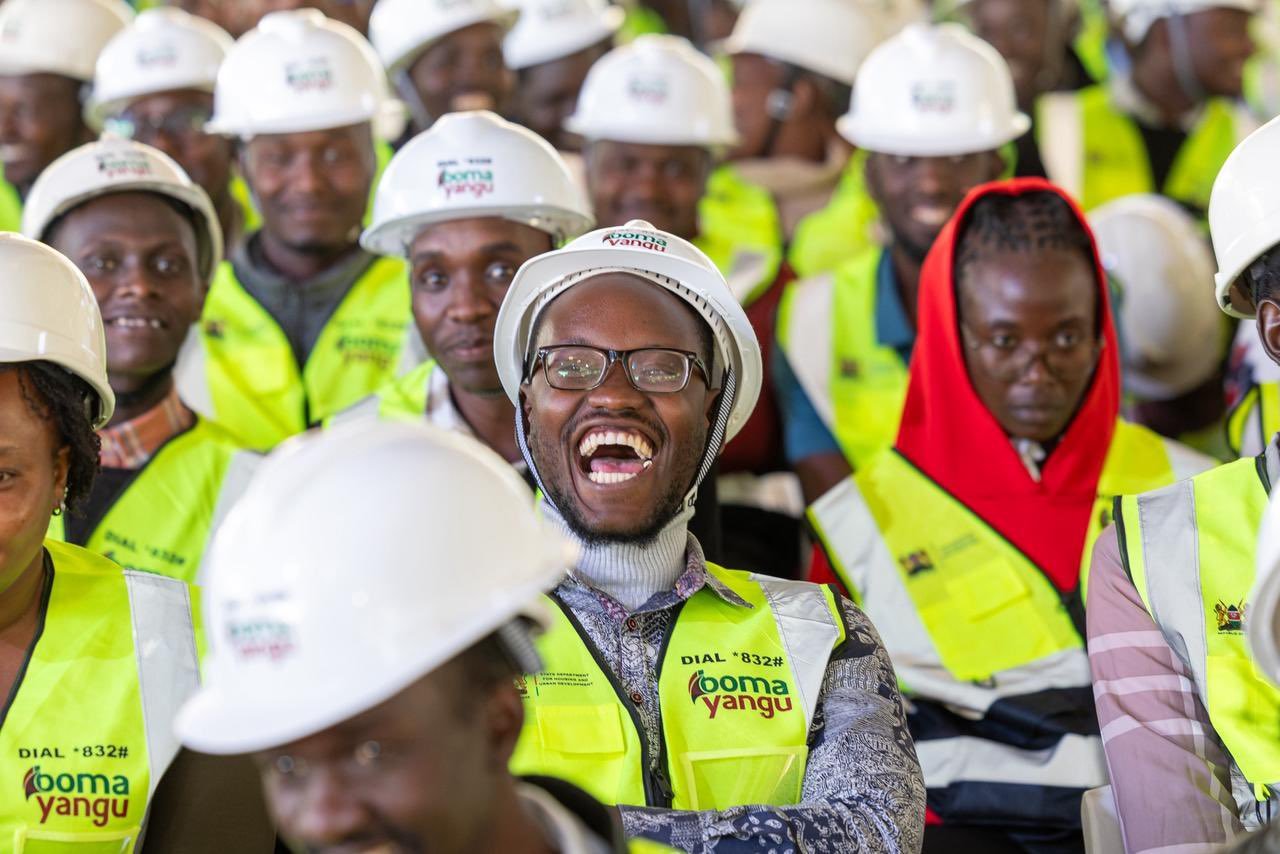

Kenya has launched a paid internship program that will place 5,500 young people in construction-related roles under the government’s Affordable Housing Program, linking graduate entry to a nationwide building drive that already employs hundreds of thousands of workers.
The initiative was launched on Friday at the State House in Nairobi by President William Ruto. It opens pathways into more than 40 professional roles across engineering, architecture, planning, information technology, finance, environmental management, surveying and construction.
The internship sits within the Affordable Housing Program, which the government says currently engages more than 500,000 Kenyans, with over 240,000 housing units under construction nationwide.
The scheme forms part of a broader public works push that also spans roads, rail, airports, seaports, energy and water storage projects.
Speaking during a live engagement at the launch, Ruto framed the internships as exposure to operational sites rather than classroom learning. Addressing an engineer on stage, he asked what message industry leaders would give interns arriving at “live, real construction sites.”
A senior engineer responded that the placements offer rare access to hands-on experience and employer visibility.
“You have an opportunity to marry the theory and the practical,” she said, urging interns to treat site work as an extended interview with consultants and contractors.
She encouraged them to ask questions and embrace on-the-job learning, adding that participants are “being paid to learn.”
Ruto said the remarks captured the intent of the program, describing it as “an opportunity that doesn’t come always.”
Officials said the internships draw on approaches used in several countries to ease school-to-work transitions by pairing public investment with structured workplace training. The government expects the housing-linked placements to absorb graduates from Kenya’s education system while supporting delivery capacity across the construction value chain.
Kenya has made housing a central plank of its economic agenda, positioning large-scale building as both a social policy and a labor market tool.
The internship launch signals a bid to formalize entry routes for young professionals into an industry where experience on active sites often determines employability.