

MOGADISHU, Somalia
The first Somalia Maritime Summit concluded in Mogadishu with the adoption of a comprehensive communiqué outlining a national agenda aimed at transforming Somalia into a secure and prosperous maritime nation, anchored in governance, security, economic development and regional cooperation.
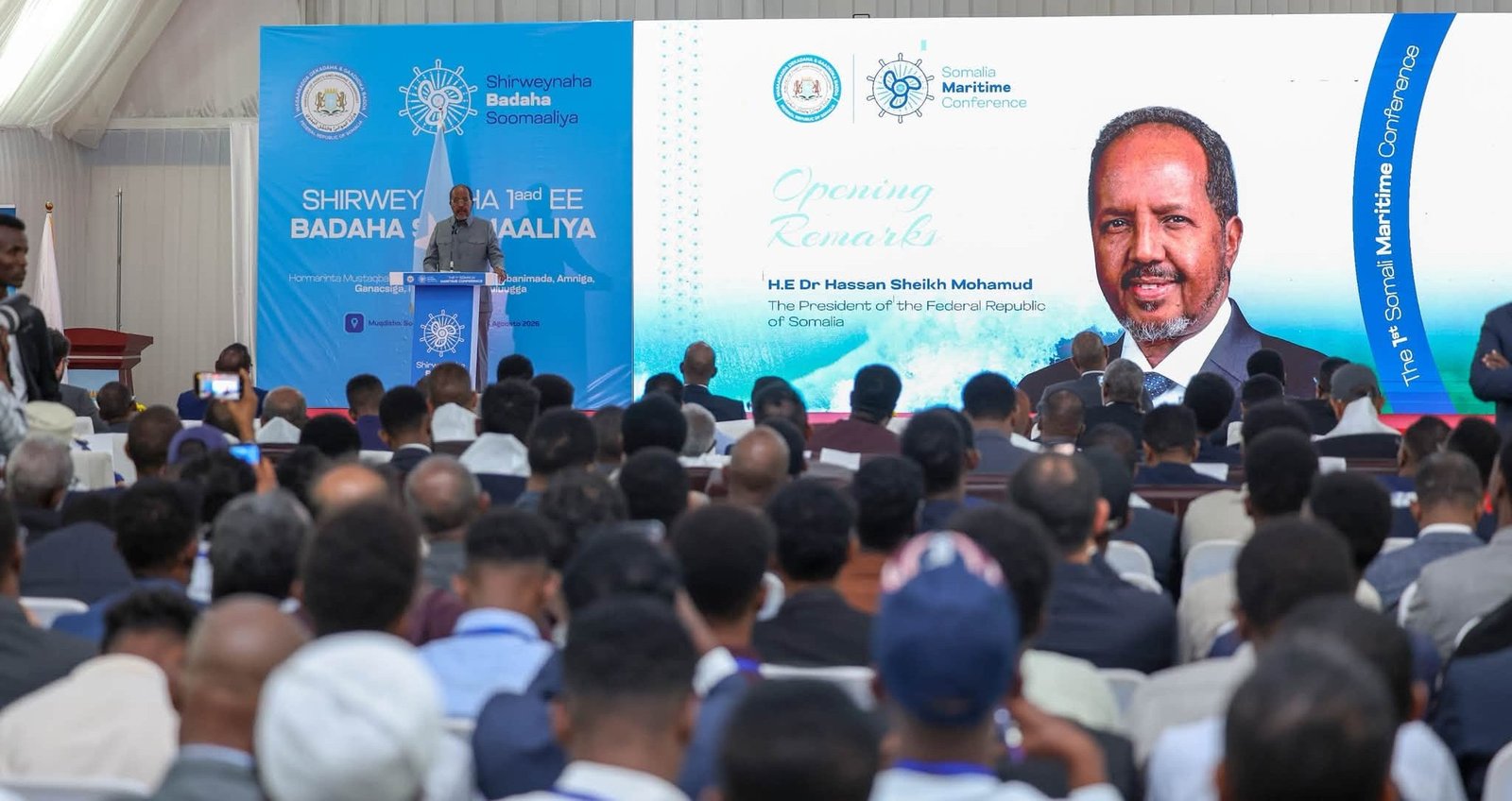
Held on Aug. 4-5 under the theme “Shaping the Future of Somalia’s Maritime Sector: Governance, Security, Fisheries and Blue Economy,” the conference brought together senior government officials, academics, maritime experts, private-sector representatives and international partners to discuss the future of Somalia’s maritime domain.
The summit was inaugurated by President Hassan Sheikh Mohamud, who emphasized the strategic importance of Somalia’s coastline and maritime resources to the country’s long-term development.
“Somalia is reclaiming its place not only as a secure nation, but also as a leading maritime nation in the Horn of Africa and the Indian Ocean,” the president said.
“Our coastline, the longest on mainland Africa, is a strategic national resource that can drive economic growth, create jobs, strengthen regional connectivity and improve the livelihoods of our people,” he added.
The opening day featured keynote addresses and high-level panel discussions focused on the government’s strategic vision for the maritime sector, institutional coordination and ongoing efforts to strengthen maritime security across Somalia’s territorial waters.
The summit’s 30-point communiqué laid out a broad set of priorities, including the development of a national maritime strategy, sustainable financing mechanisms for maritime institutions and stronger coordination among agencies responsible for maritime affairs.
Participants called for increased investment in ports, fisheries and maritime transport infrastructure as part of a wider effort to unlock the country’s blue economy potential and attract domestic and foreign investment.
The communiqué also emphasized strengthening the Somali Navy and Coast Guard, enhancing maritime surveillance capabilities and deepening cooperation with regional and international partners to combat piracy, illegal fishing and transnational crime.
Delegates urged expanding maritime education and vocational training programs to create employment opportunities for Somali youth and recommended increased support for scientific research and the development of Somali-language maritime terminology.
The summit further called for stronger engagement with international maritime institutions, including the International Maritime Organization, and renewed diplomatic efforts to safeguard Somalia’s maritime interests.
Organized by the Ministry of Ports and Marine Transport of the Federal Government of Somalia, led by Minister Abdulkadir Mohamed Nur, the summit concluded with a commitment to institutionalize the gathering as a national platform for coordinating policies aimed at protecting and developing one of Somalia’s most strategic assets.
Nur proposed creating a permanent national platform to facilitate regular discussions on maritime affairs and to guide policy development.