


Bantu Gazette

Bantu Gazette
  • Policy & Governance
  • Development & Impact
  • Business, Trade & Economy
  • Energy
  • Changemakers
  • Culture & Identity
  • Perspectives
  • Magazine
Menu
  • Black Frame Studio
  • Magazine

Mindset Shift Could Unlock Africa’s Development Financing Potential

Policy experts say stronger institutions, productive debt and a shift in mindset can help countries mobilize domestic resources to finance the continent’s development

Mindset Shift Could Unlock Africa’s Development Financing Potential
Felix Tihby Felix Tih
August 26, 2026
Reading Time: 3 mins read

Mindset Shift Could Unlock Africa’s Development Financing Potential

Policy experts say stronger institutions, productive debt and a shift in mindset can help countries mobilize domestic resources to finance the continent’s development

Mindset Shift Could Unlock Africa’s Development Financing Potential
Felix Tihby Felix Tih
August 26, 2026
Reading Time: 3 mins read

When Patrick Ndzana Olomo described Africa as “sleeping on a gold mine,” he was pointing to a continent with vast resources and an opportunity to turn them into the foundation for its own development.

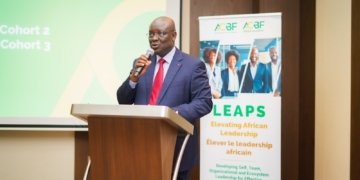
Olomo, head of economic policy and sustainable development at the African Union Commission, placed mindset at the center of that transformation during a webinar on financing Africa’s development organized by the African Capacity Building Foundation (ACBF) on Wednesday.

He joined Sarah Ssewanyana, executive director of Uganda’s Economic Policy Research Centre, Eugenia Kayitesi, executive director of Rwanda’s Institute of Policy Analysis and Research, and Zali B. Chikuba, executive director of the Zambia Institute for Policy Analysis and Research.

The discussion examined taxation, digital revenue systems, debt management and institutional capacity as African governments seek greater control over financing their development priorities.

Ssewanyana identified political economy and institutional quality as major constraints on domestic resource mobilization.

She said strong policies can lose effectiveness when institutions lack the capacity to enforce them.

She also urged governments to give small businesses room to grow before increasing their tax burden.

Her research in Uganda found that many businesses rely on personal savings and struggle to survive beyond their early years.

Ssewanyana pointed to digital tax administration as an opportunity to improve compliance and revenue collection.

Uganda has introduced electronic invoicing, digital tax stamps and other technology-based measures. She said these reforms require sustained public investment and strong institutions.

Kayitesi identified implementation as a central challenge and highlighted Rwanda’s use of electronic billing machines, e-filing and digital payments to expand tax administration.

She said the country has also integrated informal businesses into the tax system through simplified taxation brackets for small and medium enterprises.

Chikuba drew on Zambia’s debt experience to emphasize disciplined public spending and stronger risk management.

He said expenditure had outpaced domestic revenue as Zambia gained access to commercial debt markets.

“The best financing that you can ever deploy for development is domestic revenue,” Chikuba said.

Olomo extended the debt discussion to the continental level and called for a shift from debt sustainability to debt productivity.

He said African countries should direct borrowing toward productive investments that advance transformation under Agenda 2063.

Agenda 2063 sets out the African Union’s long-term vision for the continent’s economic transformation, integration and sustainable development. Its ambitions include building a prosperous and self-reliant Africa that mobilizes its resources to finance development and strengthen its position in the global economy.

Mindset Change

Olomo linked Africa’s financing ambitions to the way Africans perceive their continent, institutions and achievements. He said institutional transformation can shape public attitudes and support an African-led account of the continent’s history and development.

“That is what we call mindset change,” Olomo said. “Let’s see ourselves the way we are. We are a land of opportunity. We are a land of the future.”

He cited Nairobi’s emergence as a digital hub and the global influence of M-Pesa as examples of African innovation that can strengthen the continent’s development narrative.

He also called for education and public discourse that reflect African experiences and achievements.

Kayitesi connected the same shift to leadership and implementation, referring to Rwanda’s Africa Mindset Reset Forum and its focus on translating policies, strategies and development visions into results.

Fatou Diouf, ACBF’s head of communications and influencing, moderated the webinar and framed domestic resource mobilization around African agency.

“The question is no longer only how do we attract more financing to the continent, but how do we better mobilize, retain and use the resources we already have,” Diouf said.

Olomo tied that sense of agency to Africa’s perception of its own potential.

“Let us present ourselves also as a land of opportunity, as a land of the future, as a land that has the potential to transform the world,” he said.


 

Get the inside Story

Stay informed on the stories shaping Africa’s future. Get breaking news, in-depth analysis, opinions and exclusive insights from across the continent delivered to your inbox, free and unfiltered.


Get in touch for more:
Felix Tih
Editorial Director, Bantu Gazette
WhatsApp
LinkedIn
X (Twitter)
Instagram

Related Posts

Machines Can Now See, Analyze, Decide and Act, Rwanda Defense Official Warns Africa on Autonomous Weapons
Policy & Governance

Machines Can Now See, Analyze, Decide and Act, Rwanda Defense Official Warns Africa on Autonomous Weapons

August 19, 2026
Policy & Governance

Côte d’Ivoire Ambassador Highlights Growing Ties With Türkiye at Independence Day Celebration

August 13, 2026
Somalia Maritime Summit Adopts Ambitious Roadmap for Security, Governance and Blue Economy
Policy & Governance

Somalia Maritime Summit Adopts Ambitious Roadmap for Security, Governance and Blue Economy

August 9, 2026
Kenya President Announces Plan for Free Higher Education Starting in Sept. 2026
Policy & Governance

Kenya President Announces Plan for Free Higher Education Starting in Sept. 2026

August 6, 2026
Luanda Declaration Pushes African Leaders to Turn Blue Economy Plans into Action
Policy & Governance

Luanda Declaration Pushes African Leaders to Turn Blue Economy Plans into Action

July 26, 2026
West Africa Bloc Reiterates Commitment to Launch Single Currency in 2027
Policy & Governance

West Africa Bloc Reiterates Commitment to Launch Single Currency in 2027

July 25, 2026

Most Recent

Mindset Shift Could Unlock Africa’s Development Financing Potential
Policy & Governance

Mindset Shift Could Unlock Africa’s Development Financing Potential

by Felix Tih
August 26, 2026
0

Policy experts say stronger institutions, productive debt and a shift in mindset can help countries mobilize domestic resources to finance...

Read moreDetails
Kenya Approves First Locally Domiciled Exchange Traded Fund

Kenya Approves First Locally Domiciled Exchange Traded Fund

August 25, 2026
Kagame Urges African Countries to Take Active Role in Shaping AI Future

Kagame Urges African Countries to Take Active Role in Shaping AI Future

August 25, 2026
Ghana’s Bad-Loan Problem is Becoming a Financial-Stability Story

Ghana’s Bad-Loan Problem is Becoming a Financial-Stability Story

August 24, 2026
Entrepreneurs Battle for Top 10 Spots in Africa’s Business Heroes

Entrepreneurs Battle for Top 10 Spots in Africa’s Business Heroes

August 25, 2026
Benin Turns the ‘Door of No Return’ Into a Door of Return for the African Diaspora

Benin Turns the ‘Door of No Return’ Into a Door of Return for the African Diaspora

August 26, 2026
Addis Ababa ‘Walks the Talk’ Ahead of Major African Health Meeting

Addis Ababa ‘Walks the Talk’ Ahead of Major African Health Meeting

August 24, 2026
Mindset Shift Could Unlock Africa’s Development Financing Potential
Policy & Governance

Mindset Shift Could Unlock Africa’s Development Financing Potential

by Felix Tih
Reading Time: 3 mins read
August 26, 2026
0

Policy experts say stronger institutions, productive debt and a shift in mindset can help countries mobilize domestic resources to finance...

Read moreDetails
Kenya Approves First Locally Domiciled Exchange Traded Fund
Business, Trade & Economy

Kenya Approves First Locally Domiciled Exchange Traded Fund

by Waceke Nganga
Reading Time: 2 mins read
August 25, 2026
0

Capital Markets Authority clears WSA Banking Index fund, expected to list in the fourth quarter of 2026, giving investors broad...

Read moreDetails
Kagame Urges African Countries to Take Active Role in Shaping AI Future
Development & Impact

Kagame Urges African Countries to Take Active Role in Shaping AI Future

by Amani Mwakalebela
Reading Time: 2 mins read
August 25, 2026
0

Rwanda President Paul Kagame says Africa has the talent to help shape artificial intelligence and must not accept lagging behind...

Read moreDetails

Mindset Shift Could Unlock Africa’s Development Financing Potential

Policy experts say stronger institutions, productive debt and a shift in mindset can help countries mobilize domestic resources to finance the continent’s development

Mindset Shift Could Unlock Africa’s Development Financing Potential

When Patrick Ndzana Olomo described Africa as “sleeping on a gold mine,” he was pointing to a continent with vast resources and an opportunity to turn them into the foundation for its own development.

Olomo, head of economic policy and sustainable development at the African Union Commission, placed mindset at the center of that transformation during a webinar on financing Africa’s development organized by the African Capacity Building Foundation (ACBF) on Wednesday.

He joined Sarah Ssewanyana, executive director of Uganda’s Economic Policy Research Centre, Eugenia Kayitesi, executive director of Rwanda’s Institute of Policy Analysis and Research, and Zali B. Chikuba, executive director of the Zambia Institute for Policy Analysis and Research.

The discussion examined taxation, digital revenue systems, debt management and institutional capacity as African governments seek greater control over financing their development priorities.

Ssewanyana identified political economy and institutional quality as major constraints on domestic resource mobilization.

She said strong policies can lose effectiveness when institutions lack the capacity to enforce them.

She also urged governments to give small businesses room to grow before increasing their tax burden.

Her research in Uganda found that many businesses rely on personal savings and struggle to survive beyond their early years.

Ssewanyana pointed to digital tax administration as an opportunity to improve compliance and revenue collection.

Uganda has introduced electronic invoicing, digital tax stamps and other technology-based measures. She said these reforms require sustained public investment and strong institutions.

Kayitesi identified implementation as a central challenge and highlighted Rwanda’s use of electronic billing machines, e-filing and digital payments to expand tax administration.

She said the country has also integrated informal businesses into the tax system through simplified taxation brackets for small and medium enterprises.

Chikuba drew on Zambia’s debt experience to emphasize disciplined public spending and stronger risk management.

He said expenditure had outpaced domestic revenue as Zambia gained access to commercial debt markets.

“The best financing that you can ever deploy for development is domestic revenue,” Chikuba said.

Olomo extended the debt discussion to the continental level and called for a shift from debt sustainability to debt productivity.

He said African countries should direct borrowing toward productive investments that advance transformation under Agenda 2063.

Agenda 2063 sets out the African Union’s long-term vision for the continent’s economic transformation, integration and sustainable development. Its ambitions include building a prosperous and self-reliant Africa that mobilizes its resources to finance development and strengthen its position in the global economy.

Mindset Change

Olomo linked Africa’s financing ambitions to the way Africans perceive their continent, institutions and achievements. He said institutional transformation can shape public attitudes and support an African-led account of the continent’s history and development.

“That is what we call mindset change,” Olomo said. “Let’s see ourselves the way we are. We are a land of opportunity. We are a land of the future.”

He cited Nairobi’s emergence as a digital hub and the global influence of M-Pesa as examples of African innovation that can strengthen the continent’s development narrative.

He also called for education and public discourse that reflect African experiences and achievements.

Kayitesi connected the same shift to leadership and implementation, referring to Rwanda’s Africa Mindset Reset Forum and its focus on translating policies, strategies and development visions into results.

Fatou Diouf, ACBF’s head of communications and influencing, moderated the webinar and framed domestic resource mobilization around African agency.

“The question is no longer only how do we attract more financing to the continent, but how do we better mobilize, retain and use the resources we already have,” Diouf said.

Olomo tied that sense of agency to Africa’s perception of its own potential.

“Let us present ourselves also as a land of opportunity, as a land of the future, as a land that has the potential to transform the world,” he said.

 

Mindset Shift Could Unlock Africa’s Development Financing Potential

Policy experts say stronger institutions, productive debt and a shift in mindset can help countries mobilize domestic resources to finance the continent’s development

Mindset Shift Could Unlock Africa’s Development Financing Potential
Felix Tihby Felix Tih
August 26, 2026

When Patrick Ndzana Olomo described Africa as “sleeping on a gold mine,” he was pointing to a continent with vast resources and an opportunity to turn them into the foundation for its own development.

Olomo, head of economic policy and sustainable development at the African Union Commission, placed mindset at the center of that transformation during a webinar on financing Africa’s development organized by the African Capacity Building Foundation (ACBF) on Wednesday.

He joined Sarah Ssewanyana, executive director of Uganda’s Economic Policy Research Centre, Eugenia Kayitesi, executive director of Rwanda’s Institute of Policy Analysis and Research, and Zali B. Chikuba, executive director of the Zambia Institute for Policy Analysis and Research.

The discussion examined taxation, digital revenue systems, debt management and institutional capacity as African governments seek greater control over financing their development priorities.

Ssewanyana identified political economy and institutional quality as major constraints on domestic resource mobilization.

She said strong policies can lose effectiveness when institutions lack the capacity to enforce them.

She also urged governments to give small businesses room to grow before increasing their tax burden.

Her research in Uganda found that many businesses rely on personal savings and struggle to survive beyond their early years.

Ssewanyana pointed to digital tax administration as an opportunity to improve compliance and revenue collection.

Uganda has introduced electronic invoicing, digital tax stamps and other technology-based measures. She said these reforms require sustained public investment and strong institutions.

Kayitesi identified implementation as a central challenge and highlighted Rwanda’s use of electronic billing machines, e-filing and digital payments to expand tax administration.

She said the country has also integrated informal businesses into the tax system through simplified taxation brackets for small and medium enterprises.

Chikuba drew on Zambia’s debt experience to emphasize disciplined public spending and stronger risk management.

He said expenditure had outpaced domestic revenue as Zambia gained access to commercial debt markets.

“The best financing that you can ever deploy for development is domestic revenue,” Chikuba said.

Olomo extended the debt discussion to the continental level and called for a shift from debt sustainability to debt productivity.

He said African countries should direct borrowing toward productive investments that advance transformation under Agenda 2063.

Agenda 2063 sets out the African Union’s long-term vision for the continent’s economic transformation, integration and sustainable development. Its ambitions include building a prosperous and self-reliant Africa that mobilizes its resources to finance development and strengthen its position in the global economy.

Mindset Change

Olomo linked Africa’s financing ambitions to the way Africans perceive their continent, institutions and achievements. He said institutional transformation can shape public attitudes and support an African-led account of the continent’s history and development.

“That is what we call mindset change,” Olomo said. “Let’s see ourselves the way we are. We are a land of opportunity. We are a land of the future.”

He cited Nairobi’s emergence as a digital hub and the global influence of M-Pesa as examples of African innovation that can strengthen the continent’s development narrative.

He also called for education and public discourse that reflect African experiences and achievements.

Kayitesi connected the same shift to leadership and implementation, referring to Rwanda’s Africa Mindset Reset Forum and its focus on translating policies, strategies and development visions into results.

Fatou Diouf, ACBF’s head of communications and influencing, moderated the webinar and framed domestic resource mobilization around African agency.

“The question is no longer only how do we attract more financing to the continent, but how do we better mobilize, retain and use the resources we already have,” Diouf said.

Olomo tied that sense of agency to Africa’s perception of its own potential.

“Let us present ourselves also as a land of opportunity, as a land of the future, as a land that has the potential to transform the world,” he said.

 

Get the inside Story

Stay informed on the stories shaping Africa’s future. Get breaking news, in-depth analysis, opinions and exclusive insights from across the continent delivered to your inbox, free and unfiltered.


Get in touch for more:
Felix Tih
Editorial Director, Bantu Gazette
WhatsApp
LinkedIn
X (Twitter)
Instagram

Related Posts

Machines Can Now See, Analyze, Decide and Act, Rwanda Defense Official Warns Africa on Autonomous Weapons

Machines Can Now See, Analyze, Decide and Act, Rwanda Defense Official Warns Africa on Autonomous Weapons

by Mary Oduor
August 16, 2026
0

...

Côte d’Ivoire Ambassador Highlights Growing Ties With Türkiye at Independence Day Celebration

by Felix Tih
August 11, 2026
0

...

Somalia Maritime Summit Adopts Ambitious Roadmap for Security, Governance and Blue Economy

Somalia Maritime Summit Adopts Ambitious Roadmap for Security, Governance and Blue Economy

by Felix Tih
August 6, 2026
0

...

Kenya President Announces Plan for Free Higher Education Starting in Sept. 2026

Kenya President Announces Plan for Free Higher Education Starting in Sept. 2026

by Waceke Nganga
August 3, 2026
0

...

Luanda Declaration Pushes African Leaders to Turn Blue Economy Plans into Action

Luanda Declaration Pushes African Leaders to Turn Blue Economy Plans into Action

by Felix Tih
July 26, 2026
0

...

West Africa Bloc Reiterates Commitment to Launch Single Currency in 2027

West Africa Bloc Reiterates Commitment to Launch Single Currency in 2027

by Felix Tih
July 23, 2026
0

...

Mindset Shift Could Unlock Africa’s Development Financing Potential
Policy & Governance

Mindset Shift Could Unlock Africa’s Development Financing Potential

by Felix Tih
Reading Time: 3 mins read
August 26, 2026
0

Policy experts say stronger institutions, productive debt and a shift in mindset can help countries mobilize domestic resources to finance...

Read moreDetails
Kenya Approves First Locally Domiciled Exchange Traded Fund

Kenya Approves First Locally Domiciled Exchange Traded Fund

by Waceke Nganga
August 25, 2026
0

Capital Markets Authority clears WSA Banking Index fund, expected to list in the fourth quarter of 2026, giving investors broad...

Kagame Urges African Countries to Take Active Role in Shaping AI Future

Kagame Urges African Countries to Take Active Role in Shaping AI Future

by Amani Mwakalebela
August 25, 2026
0

Rwanda President Paul Kagame says Africa has the talent to help shape artificial intelligence and must not accept lagging behind...

Ghana’s Bad-Loan Problem is Becoming a Financial-Stability Story

Ghana’s Bad-Loan Problem is Becoming a Financial-Stability Story

by Felix Tih
August 24, 2026
0

Banks are repairing their balance sheets as the economy recovers, but an 18% nonperforming-loan ratio remains a threat to credit...

Entrepreneurs Battle for Top 10 Spots in Africa’s Business Heroes

Entrepreneurs Battle for Top 10 Spots in Africa’s Business Heroes

by Waceke Nganga
August 24, 2026
0

20 entrepreneurs from 12 African countries pitched their businesses in Nairobi, seeking Top 10 spots and a place in the...

Bantu Gazette is a pioneering news platform that champions Africa's development, culture, and heritage. We spotlight the continent's successes, address its challenges, and provide insightful coverage of events that shape its future.

Bantu Gazette is a pioneering news platform that champions Africa's development, culture, and heritage. We spotlight the continent's successes, address its challenges, and provide insightful coverage of events that shape its future.

Our Platforms

  • Bantu Magazine
  • Bantu Brief
  • Black Frame Studio

Our Services

  • Bantu Agency
  • Advertise
  • Partnerships

Our Services

  • Editorial Director
  • Opportunities
  • Contact

Bantu Gazette is a pioneering news platform that champions Africa's development, culture, and heritage. We spotlight the continent's successes, address its challenges, and provide insightful coverage of events that shape its future.

Our Platforms

  • Bantu Magazine
  • Bantu Brief
  • Black Frame Studio

Our Services

  • Bantu Agency
  • Advertise
  • Partnerships

Our Services

  • Editorial Director
  • Opportunities
  • Contact
Bantu Gazette
  • Energy & Trade
  • Finance
  • Health
  • Politics & Economy
  • Technology
  • Environment
  • Feature
  • Opinion
  • Changemakers
  • Tourism & Culture
  • Magazine