


Bantu Gazette

Bantu Gazette
  • Energy & Trade
  • Finance
  • Health
  • Politics & Economy
  • Technology
  • Environment
  • Feature
  • Opinion
  • Changemakers
  • Tourism & Culture
  • Sports
  • Magazine
Menu
  • Black Frame Studio
  • Magazine

Ethiopian PM Rules Out Conflict with Eritrea Over Sea Access

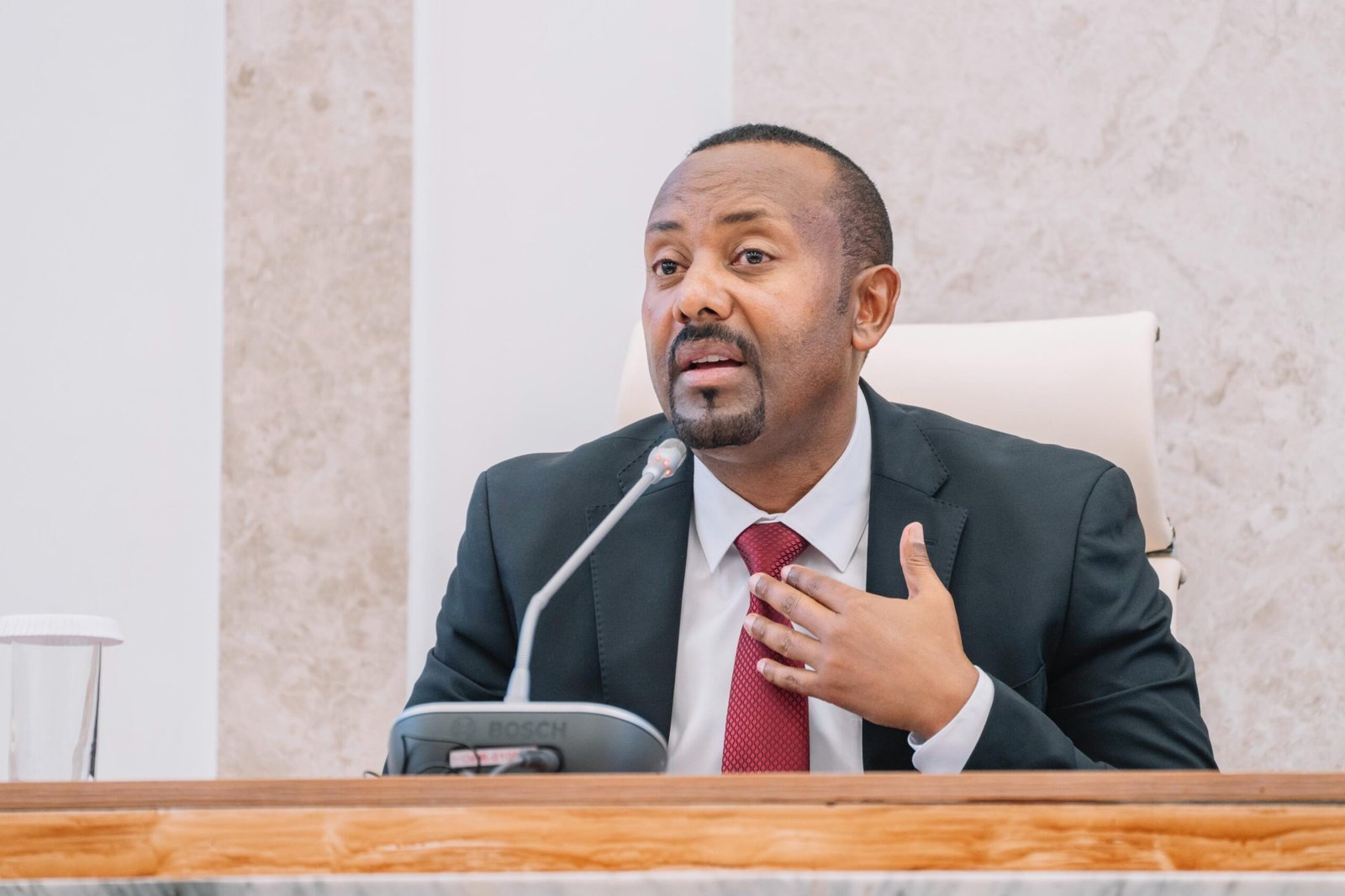
Ethiopian Prime Minister Abiy Ahmed

Felix Tihby Felix Tih
March 20, 2025
Reading Time: 5 mins read

Ethiopian PM Rules Out Conflict with Eritrea Over Sea Access

Ethiopian Prime Minister Abiy Ahmed

Ethiopian Prime Minister Abiy Ahmed

Felix Tihby Felix Tih
July 16, 2025
Reading Time: 5 mins read

ADDIS ABABA  (BG) – Ethiopian Prime Minister Abiy Ahmed said Thursday that his country has no intention of engaging in conflict with Eritrea over Red Sea access, emphasizing a preference for dialogue and negotiation.

At the same time, the government views access to the sea as vital to the country’s economic future. “Access to the Red Sea is nevertheless an existential matter for Ethiopia. What we want is to peacefully address our current challenges,” Abiy told Parliament.

Despite these assurances, tensions between the two nations have escalated following the 2022 Pretoria Agreement, which excluded Eritrea and left key political and security concerns unresolved.

Increased military activity near the border and strained diplomatic relations have raised fears of a potential conflict, underscoring the urgent need for de-escalation.

Eritrea has dismissed claims that it is preparing for war against Ethiopia. Foreign Minister Osman Saleh, in a briefing to diplomats in Asmara on March 18, stated that the Eritrean Defense Forces had redeployed to Eritrea’s internationally recognized borders after the end of the Tigray conflict in November 2022.

He argued that accusations of Eritrean involvement in Ethiopia’s internal affairs were false and aimed at shifting blame for Ethiopia’s domestic challenges.

Asmara also rejects Ethiopia’s push for Red Sea access, calling it a “misguided and outdated ambition” that threatens regional stability.

The Eritrean government has urged the international community to pressure Ethiopia to respect the sovereignty and territorial integrity of its neighbors.

Saleh further stated that Eritrea considers the Pretoria Agreement an internal Ethiopian matter and has no role in the ongoing disputes between the Interim Tigray Administration and the Tigray People’s Liberation Front (TPLF).

Historical Context and Growing Friction

Ethiopia and Eritrea have experienced decades of conflict and fragile peace. The two nations fought a brutal war from 1998 to 2000 over their shared border, and relations remained hostile until the 2018 peace deal.

That agreement was seen as a breakthrough, leading to Prime Minister Abiy receiving the Nobel Peace Prize in 2019. Yet, the relationship quickly soured. Economic and political cooperation failed to materialize, and Eritrea largely reverted to isolation.

The Tigray War (2020–2022) further complicated matters. Eritrea supported Ethiopia’s federal government in the fight against the Tigray People’s Liberation Front (TPLF), but the Pretoria Agreement that ended the conflict excluded Eritrea.

This omission was seen as a betrayal by Asmara, further straining ties. Ethiopia’s current efforts to secure sea access—an issue of existential importance for its economy—have only deepened mistrust.

Eritrea, which fought a 30-year war for independence from Ethiopia, remains highly sensitive to any rhetoric that suggests territorial ambitions.

Abiy addressed concerns on the matter, stating: “Ethiopia does not have any intention of engaging in conflict with Eritrea for the purpose of gaining access to the sea. Our desire is to engage in dialogue and discussion on this matter instead.”

Ethiopia’s Political Landscape and the Pretoria Agreement

Abiy has acknowledged both the successes and shortcomings of the Pretoria Agreement.

He noted that it has contributed to restoring infrastructure and providing services in Tigray but highlighted ongoing challenges, particularly with the Disarmament, Demobilization, and Reintegration (DDR) process.

“There are still issues that have not been adequately addressed, one of which is the Disengagement and Reintegration (DDR) process. This primarily affects the people of Tigray,” he said.

He also pointed to Ethiopia’s broader political challenges, arguing that the country’s political culture has historically been shaped by a cycle of destruction rather than continuity.

“Successive governments have historically sought to dismantle their predecessors rather than build upon existing structures,” he stated. This trend, coupled with the legacy of ideological divisions, has contributed to political instability and, at times, violent power struggles.

The Red Sea Access Debate and Military Concerns

Ethiopia’s landlocked status has long been a strategic disadvantage.

Its reliance on Djibouti for port access places economic pressure on the country, and Abiy has made it clear that securing direct access to the Red Sea is essential.

While Ethiopia has pursued negotiations for port access through leases in Djibouti and the de facto state of Somaliland, the rhetoric surrounding this issue has unsettled Asmara.

Eritrea views Ethiopia’s growing emphasis on sea access with suspicion. With Ethiopian troops reportedly increasing their presence in the north, Eritrea has mobilized its forces in response.

The risk of miscalculation or unintended escalation is rising, particularly given the history of sudden military confrontations between the two nations.

Humanitarian Risks and Regional Implications

A new conflict between Ethiopia and Eritrea would have devastating consequences. Both nations are still recovering from previous wars, and their economies remain fragile.

The Tigray War left hundreds of thousands dead, displaced millions, and crippled infrastructure.

Renewed fighting would worsen an already dire humanitarian situation, particularly in border regions where communities are vulnerable.

Eritrea, which enforces indefinite military conscription, would likely face internal strain in the event of another war. Meanwhile, Ethiopia is already dealing with instability in Oromia and Amhara, and opening a new front would further strain its resources. The potential for mass displacement, famine, and economic collapse is considerable.

Beyond the direct impact on Ethiopia and Eritrea, instability in the Horn of Africa could draw in regional and global actors.

Eritrea has strengthened its ties with Egypt and Somalia’s federal government, while Ethiopia maintains close relations with Djibouti and the de facto state of Somaliland.

Any escalation could destabilize trade routes in the Red Sea, a critical corridor for global commerce. The African Union, which played a key role in negotiating the Pretoria Agreement, must act swiftly to prevent further deterioration.

A Narrowing Window for Peace

There is still an opportunity to de-escalate tensions through diplomacy.

Ethiopia and Eritrea must engage in direct dialogue, whether through bilateral talks or mediation by regional organizations.

A security agreement that guarantees Eritrea’s sovereignty while addressing Ethiopia’s economic concerns could offer a path forward.

Confidence-building measures, such as reopening border crossings and resuming trade, could help ease tensions.

The history of conflicts between Ethiopia and Eritrea suggests that wars between the two nations do not resolve issues—they only deepen animosities and prolong suffering.

With tensions at their highest point in years, the critical question remains: Is this the last chance to step back from the brink and pursue a peaceful resolution?


Get the inside Story

Stay informed on the stories shaping Africa’s future. Get breaking news, in-depth analysis, opinions and exclusive insights from across the continent delivered to your inbox, free and unfiltered.


Get in touch for more:
Felix Tih
Editorial Director, Bantu Gazette
WhatsApp
LinkedIn
X (Twitter)
Instagram

Related Posts

Benin Finance Minister Wadagni Wins Presidency in Landslide
Politics & Economy

Benin Finance Minister Wadagni Wins Presidency in Landslide

April 14, 2026
Politics & Economy

AU, Côte d’Ivoire Launch Continental Education Accountability Framework

April 13, 2026
Liberia Cabinet Adopts Infrastructure Roadmap, Monrovia Redevelopment Plan
Politics & Economy

Liberia Cabinet Adopts Infrastructure Roadmap, Monrovia Redevelopment Plan

April 13, 2026
Namibia Deepens Regional Ties Through Trade and Energy
Politics & Economy

Namibia Targets 24,000 Jobs From $3.8 Billion Investment Pipeline

April 12, 2026
Rwanda Coffee Export Earnings Reach Record $150 Million in 2025
Politics & Economy

Uganda’s Coffee Exports hit $2.5 Billion in Year to February 2026

April 7, 2026
Togo Adopts New Competition, Consumer Protection Law to Modernize Economic Framework
Politics & Economy

Togo Adopts New Competition, Consumer Protection Law to Modernize Economic Framework

April 13, 2026

Most Recent

Gabon Bans Broiler Chicken Imports to Boost Local Output
Africa

Gabon Bans Broiler Chicken Imports to Boost Local Output

by Marcelo Edjang
April 15, 2026
0

Gabon’s government has set a January 2027 deadline to ban all broiler chicken imports as it pushes to build a...

Read moreDetails
Morocco’s Olive Harvest Hits Record 2 Million Tons Amid Heavy Rainfall

Morocco’s Olive Harvest Hits Record 2 Million Tons Amid Heavy Rainfall

April 14, 2026
Benin Finance Minister Wadagni Wins Presidency in Landslide

Benin Finance Minister Wadagni Wins Presidency in Landslide

April 14, 2026

AU, Côte d’Ivoire Launch Continental Education Accountability Framework

April 13, 2026
Kenya Manufacturers Warn Logistics Costs Undercut Intra-African Trade Gains

Kenya Manufacturers Warn Logistics Costs Undercut Intra-African Trade Gains

April 13, 2026
Liberia Cabinet Adopts Infrastructure Roadmap, Monrovia Redevelopment Plan

Liberia Cabinet Adopts Infrastructure Roadmap, Monrovia Redevelopment Plan

April 13, 2026
Namibia Deepens Regional Ties Through Trade and Energy

Namibia Targets 24,000 Jobs From $3.8 Billion Investment Pipeline

April 12, 2026
Gabon Bans Broiler Chicken Imports to Boost Local Output
Africa

Gabon Bans Broiler Chicken Imports to Boost Local Output

by Marcelo Edjang
Reading Time: 1 min read
April 15, 2026
0

Gabon’s government has set a January 2027 deadline to ban all broiler chicken imports as it pushes to build a...

Read moreDetails
Morocco’s Olive Harvest Hits Record 2 Million Tons Amid Heavy Rainfall
Africa

Morocco’s Olive Harvest Hits Record 2 Million Tons Amid Heavy Rainfall

by Samira Benhadda
Reading Time: 1 min read
April 14, 2026
0

Morocco recorded a harvest of 2 million tons of olives in the current agricultural season, a 111% increase over the...

Read moreDetails
Benin Finance Minister Wadagni Wins Presidency in Landslide
Politics & Economy

Benin Finance Minister Wadagni Wins Presidency in Landslide

by Felix Tih
Reading Time: 2 mins read
April 14, 2026
0

Romuald Wadagni, the technocrat who spent a decade reshaping Benin’s public finances, has won the country’s presidential election after securing...

Read moreDetails

Ethiopian PM Rules Out Conflict with Eritrea Over Sea Access

Ethiopian Prime Minister Abiy Ahmed

ADDIS ABABA  (BG) – Ethiopian Prime Minister Abiy Ahmed said Thursday that his country has no intention of engaging in conflict with Eritrea over Red Sea access, emphasizing a preference for dialogue and negotiation.

At the same time, the government views access to the sea as vital to the country’s economic future. “Access to the Red Sea is nevertheless an existential matter for Ethiopia. What we want is to peacefully address our current challenges,” Abiy told Parliament.

Despite these assurances, tensions between the two nations have escalated following the 2022 Pretoria Agreement, which excluded Eritrea and left key political and security concerns unresolved.

Increased military activity near the border and strained diplomatic relations have raised fears of a potential conflict, underscoring the urgent need for de-escalation.

Eritrea has dismissed claims that it is preparing for war against Ethiopia. Foreign Minister Osman Saleh, in a briefing to diplomats in Asmara on March 18, stated that the Eritrean Defense Forces had redeployed to Eritrea’s internationally recognized borders after the end of the Tigray conflict in November 2022.

He argued that accusations of Eritrean involvement in Ethiopia’s internal affairs were false and aimed at shifting blame for Ethiopia’s domestic challenges.

Asmara also rejects Ethiopia’s push for Red Sea access, calling it a “misguided and outdated ambition” that threatens regional stability.

The Eritrean government has urged the international community to pressure Ethiopia to respect the sovereignty and territorial integrity of its neighbors.

Saleh further stated that Eritrea considers the Pretoria Agreement an internal Ethiopian matter and has no role in the ongoing disputes between the Interim Tigray Administration and the Tigray People’s Liberation Front (TPLF).

Historical Context and Growing Friction

Ethiopia and Eritrea have experienced decades of conflict and fragile peace. The two nations fought a brutal war from 1998 to 2000 over their shared border, and relations remained hostile until the 2018 peace deal.

That agreement was seen as a breakthrough, leading to Prime Minister Abiy receiving the Nobel Peace Prize in 2019. Yet, the relationship quickly soured. Economic and political cooperation failed to materialize, and Eritrea largely reverted to isolation.

The Tigray War (2020–2022) further complicated matters. Eritrea supported Ethiopia’s federal government in the fight against the Tigray People’s Liberation Front (TPLF), but the Pretoria Agreement that ended the conflict excluded Eritrea.

This omission was seen as a betrayal by Asmara, further straining ties. Ethiopia’s current efforts to secure sea access—an issue of existential importance for its economy—have only deepened mistrust.

Eritrea, which fought a 30-year war for independence from Ethiopia, remains highly sensitive to any rhetoric that suggests territorial ambitions.

Abiy addressed concerns on the matter, stating: “Ethiopia does not have any intention of engaging in conflict with Eritrea for the purpose of gaining access to the sea. Our desire is to engage in dialogue and discussion on this matter instead.”

Ethiopia’s Political Landscape and the Pretoria Agreement

Abiy has acknowledged both the successes and shortcomings of the Pretoria Agreement.

He noted that it has contributed to restoring infrastructure and providing services in Tigray but highlighted ongoing challenges, particularly with the Disarmament, Demobilization, and Reintegration (DDR) process.

“There are still issues that have not been adequately addressed, one of which is the Disengagement and Reintegration (DDR) process. This primarily affects the people of Tigray,” he said.

He also pointed to Ethiopia’s broader political challenges, arguing that the country’s political culture has historically been shaped by a cycle of destruction rather than continuity.

“Successive governments have historically sought to dismantle their predecessors rather than build upon existing structures,” he stated. This trend, coupled with the legacy of ideological divisions, has contributed to political instability and, at times, violent power struggles.

The Red Sea Access Debate and Military Concerns

Ethiopia’s landlocked status has long been a strategic disadvantage.

Its reliance on Djibouti for port access places economic pressure on the country, and Abiy has made it clear that securing direct access to the Red Sea is essential.

While Ethiopia has pursued negotiations for port access through leases in Djibouti and the de facto state of Somaliland, the rhetoric surrounding this issue has unsettled Asmara.

Eritrea views Ethiopia’s growing emphasis on sea access with suspicion. With Ethiopian troops reportedly increasing their presence in the north, Eritrea has mobilized its forces in response.

The risk of miscalculation or unintended escalation is rising, particularly given the history of sudden military confrontations between the two nations.

Humanitarian Risks and Regional Implications

A new conflict between Ethiopia and Eritrea would have devastating consequences. Both nations are still recovering from previous wars, and their economies remain fragile.

The Tigray War left hundreds of thousands dead, displaced millions, and crippled infrastructure.

Renewed fighting would worsen an already dire humanitarian situation, particularly in border regions where communities are vulnerable.

Eritrea, which enforces indefinite military conscription, would likely face internal strain in the event of another war. Meanwhile, Ethiopia is already dealing with instability in Oromia and Amhara, and opening a new front would further strain its resources. The potential for mass displacement, famine, and economic collapse is considerable.

Beyond the direct impact on Ethiopia and Eritrea, instability in the Horn of Africa could draw in regional and global actors.

Eritrea has strengthened its ties with Egypt and Somalia’s federal government, while Ethiopia maintains close relations with Djibouti and the de facto state of Somaliland.

Any escalation could destabilize trade routes in the Red Sea, a critical corridor for global commerce. The African Union, which played a key role in negotiating the Pretoria Agreement, must act swiftly to prevent further deterioration.

A Narrowing Window for Peace

There is still an opportunity to de-escalate tensions through diplomacy.

Ethiopia and Eritrea must engage in direct dialogue, whether through bilateral talks or mediation by regional organizations.

A security agreement that guarantees Eritrea’s sovereignty while addressing Ethiopia’s economic concerns could offer a path forward.

Confidence-building measures, such as reopening border crossings and resuming trade, could help ease tensions.

The history of conflicts between Ethiopia and Eritrea suggests that wars between the two nations do not resolve issues—they only deepen animosities and prolong suffering.

With tensions at their highest point in years, the critical question remains: Is this the last chance to step back from the brink and pursue a peaceful resolution?

Ethiopian PM Rules Out Conflict with Eritrea Over Sea Access

Ethiopian Prime Minister Abiy Ahmed

Felix Tihby Felix Tih
March 20, 2025

ADDIS ABABA  (BG) – Ethiopian Prime Minister Abiy Ahmed said Thursday that his country has no intention of engaging in conflict with Eritrea over Red Sea access, emphasizing a preference for dialogue and negotiation.

At the same time, the government views access to the sea as vital to the country’s economic future. “Access to the Red Sea is nevertheless an existential matter for Ethiopia. What we want is to peacefully address our current challenges,” Abiy told Parliament.

Despite these assurances, tensions between the two nations have escalated following the 2022 Pretoria Agreement, which excluded Eritrea and left key political and security concerns unresolved.

Increased military activity near the border and strained diplomatic relations have raised fears of a potential conflict, underscoring the urgent need for de-escalation.

Eritrea has dismissed claims that it is preparing for war against Ethiopia. Foreign Minister Osman Saleh, in a briefing to diplomats in Asmara on March 18, stated that the Eritrean Defense Forces had redeployed to Eritrea’s internationally recognized borders after the end of the Tigray conflict in November 2022.

He argued that accusations of Eritrean involvement in Ethiopia’s internal affairs were false and aimed at shifting blame for Ethiopia’s domestic challenges.

Asmara also rejects Ethiopia’s push for Red Sea access, calling it a “misguided and outdated ambition” that threatens regional stability.

The Eritrean government has urged the international community to pressure Ethiopia to respect the sovereignty and territorial integrity of its neighbors.

Saleh further stated that Eritrea considers the Pretoria Agreement an internal Ethiopian matter and has no role in the ongoing disputes between the Interim Tigray Administration and the Tigray People’s Liberation Front (TPLF).

Historical Context and Growing Friction

Ethiopia and Eritrea have experienced decades of conflict and fragile peace. The two nations fought a brutal war from 1998 to 2000 over their shared border, and relations remained hostile until the 2018 peace deal.

That agreement was seen as a breakthrough, leading to Prime Minister Abiy receiving the Nobel Peace Prize in 2019. Yet, the relationship quickly soured. Economic and political cooperation failed to materialize, and Eritrea largely reverted to isolation.

The Tigray War (2020–2022) further complicated matters. Eritrea supported Ethiopia’s federal government in the fight against the Tigray People’s Liberation Front (TPLF), but the Pretoria Agreement that ended the conflict excluded Eritrea.

This omission was seen as a betrayal by Asmara, further straining ties. Ethiopia’s current efforts to secure sea access—an issue of existential importance for its economy—have only deepened mistrust.

Eritrea, which fought a 30-year war for independence from Ethiopia, remains highly sensitive to any rhetoric that suggests territorial ambitions.

Abiy addressed concerns on the matter, stating: “Ethiopia does not have any intention of engaging in conflict with Eritrea for the purpose of gaining access to the sea. Our desire is to engage in dialogue and discussion on this matter instead.”

Ethiopia’s Political Landscape and the Pretoria Agreement

Abiy has acknowledged both the successes and shortcomings of the Pretoria Agreement.

He noted that it has contributed to restoring infrastructure and providing services in Tigray but highlighted ongoing challenges, particularly with the Disarmament, Demobilization, and Reintegration (DDR) process.

“There are still issues that have not been adequately addressed, one of which is the Disengagement and Reintegration (DDR) process. This primarily affects the people of Tigray,” he said.

He also pointed to Ethiopia’s broader political challenges, arguing that the country’s political culture has historically been shaped by a cycle of destruction rather than continuity.

“Successive governments have historically sought to dismantle their predecessors rather than build upon existing structures,” he stated. This trend, coupled with the legacy of ideological divisions, has contributed to political instability and, at times, violent power struggles.

The Red Sea Access Debate and Military Concerns

Ethiopia’s landlocked status has long been a strategic disadvantage.

Its reliance on Djibouti for port access places economic pressure on the country, and Abiy has made it clear that securing direct access to the Red Sea is essential.

While Ethiopia has pursued negotiations for port access through leases in Djibouti and the de facto state of Somaliland, the rhetoric surrounding this issue has unsettled Asmara.

Eritrea views Ethiopia’s growing emphasis on sea access with suspicion. With Ethiopian troops reportedly increasing their presence in the north, Eritrea has mobilized its forces in response.

The risk of miscalculation or unintended escalation is rising, particularly given the history of sudden military confrontations between the two nations.

Humanitarian Risks and Regional Implications

A new conflict between Ethiopia and Eritrea would have devastating consequences. Both nations are still recovering from previous wars, and their economies remain fragile.

The Tigray War left hundreds of thousands dead, displaced millions, and crippled infrastructure.

Renewed fighting would worsen an already dire humanitarian situation, particularly in border regions where communities are vulnerable.

Eritrea, which enforces indefinite military conscription, would likely face internal strain in the event of another war. Meanwhile, Ethiopia is already dealing with instability in Oromia and Amhara, and opening a new front would further strain its resources. The potential for mass displacement, famine, and economic collapse is considerable.

Beyond the direct impact on Ethiopia and Eritrea, instability in the Horn of Africa could draw in regional and global actors.

Eritrea has strengthened its ties with Egypt and Somalia’s federal government, while Ethiopia maintains close relations with Djibouti and the de facto state of Somaliland.

Any escalation could destabilize trade routes in the Red Sea, a critical corridor for global commerce. The African Union, which played a key role in negotiating the Pretoria Agreement, must act swiftly to prevent further deterioration.

A Narrowing Window for Peace

There is still an opportunity to de-escalate tensions through diplomacy.

Ethiopia and Eritrea must engage in direct dialogue, whether through bilateral talks or mediation by regional organizations.

A security agreement that guarantees Eritrea’s sovereignty while addressing Ethiopia’s economic concerns could offer a path forward.

Confidence-building measures, such as reopening border crossings and resuming trade, could help ease tensions.

The history of conflicts between Ethiopia and Eritrea suggests that wars between the two nations do not resolve issues—they only deepen animosities and prolong suffering.

With tensions at their highest point in years, the critical question remains: Is this the last chance to step back from the brink and pursue a peaceful resolution?
Get the inside Story

Stay informed on the stories shaping Africa’s future. Get breaking news, in-depth analysis, opinions and exclusive insights from across the continent delivered to your inbox, free and unfiltered.


Get in touch for more:
Felix Tih
Editorial Director, Bantu Gazette
WhatsApp
LinkedIn
X (Twitter)
Instagram

Related Posts

Benin Finance Minister Wadagni Wins Presidency in Landslide

Benin Finance Minister Wadagni Wins Presidency in Landslide

by Felix Tih
April 14, 2026
0

...

AU, Côte d’Ivoire Launch Continental Education Accountability Framework

by Aissatou Fall
April 13, 2026
0

...

Liberia Cabinet Adopts Infrastructure Roadmap, Monrovia Redevelopment Plan

Liberia Cabinet Adopts Infrastructure Roadmap, Monrovia Redevelopment Plan

by Marina Bisse
April 13, 2026
0

...

Namibia Deepens Regional Ties Through Trade and Energy

Namibia Targets 24,000 Jobs From $3.8 Billion Investment Pipeline

by Naledi Kgosi
April 12, 2026
0

...

Rwanda Coffee Export Earnings Reach Record $150 Million in 2025

Uganda’s Coffee Exports hit $2.5 Billion in Year to February 2026

by Amani Mwakalebela
April 7, 2026
0

...

Togo Adopts New Competition, Consumer Protection Law to Modernize Economic Framework

Togo Adopts New Competition, Consumer Protection Law to Modernize Economic Framework

by Elise Ntebah
April 6, 2026
0

...

Gabon Bans Broiler Chicken Imports to Boost Local Output
Africa

Gabon Bans Broiler Chicken Imports to Boost Local Output

by Marcelo Edjang
Reading Time: 1 min read
April 15, 2026
0

Gabon’s government has set a January 2027 deadline to ban all broiler chicken imports as it pushes to build a...

Read moreDetails
Morocco’s Olive Harvest Hits Record 2 Million Tons Amid Heavy Rainfall

Morocco’s Olive Harvest Hits Record 2 Million Tons Amid Heavy Rainfall

by Samira Benhadda
April 14, 2026
0

Morocco recorded a harvest of 2 million tons of olives in the current agricultural season, a 111% increase over the...

Benin Finance Minister Wadagni Wins Presidency in Landslide

Benin Finance Minister Wadagni Wins Presidency in Landslide

by Felix Tih
April 14, 2026
0

Romuald Wadagni, the technocrat who spent a decade reshaping Benin’s public finances, has won the country’s presidential election after securing...

AU, Côte d’Ivoire Launch Continental Education Accountability Framework

by Aissatou Fall
April 13, 2026
0

The African Union Commission and Côte d'Ivoire have launched a national Spotlight report on foundational learning, positioning the country as...

Kenya Manufacturers Warn Logistics Costs Undercut Intra-African Trade Gains

Kenya Manufacturers Warn Logistics Costs Undercut Intra-African Trade Gains

by Amani Mwakalebela
April 13, 2026
0

The Kenya Association of Manufacturers (KAM) has warned that logistics costs across major African trade corridors remain so high and...

Next Post
Zimbabwe Sports Minister Kirsty Coventry Becomes First Woman to Lead IOC

Zimbabwe Sports Minister Kirsty Coventry Becomes First Woman to Lead IOC

AfCFTA Marks 7 Years Since Launch, Cites Major Progress Toward Single African Market

AfCFTA Marks 7 Years Since Launch, Cites Major Progress Toward Single African Market

Netumbo Nandi-Ndaitwah Sworn in as Namibia’s First Female President

Netumbo Nandi-Ndaitwah Sworn in as Namibia’s First Female President

L’autrice camerounaise Hemley Boum remporte le Prix des 5 Continents 2025

L'autrice camerounaise Hemley Boum remporte le Prix des 5 Continents 2025

Bantu Gazette is a pioneering news platform that champions Africa's development, culture, and heritage. We spotlight the continent's successes, address its challenges, and provide insightful coverage of events that shape its future.

Bantu Gazette is a pioneering news platform that champions Africa's development, culture, and heritage. We spotlight the continent's successes, address its challenges, and provide insightful coverage of events that shape its future.

Our Platforms

  • Bantu Magazine
  • Bantu Brief
  • Black Frame Studio

Our Services

  • Bantu Agency
  • Advertise
  • Partnerships

Our Services

  • Editorial Director
  • Opportunities
  • Contact

Bantu Gazette is a pioneering news platform that champions Africa's development, culture, and heritage. We spotlight the continent's successes, address its challenges, and provide insightful coverage of events that shape its future.

Our Platforms

  • Bantu Magazine
  • Bantu Brief
  • Black Frame Studio

Our Services

  • Bantu Agency
  • Advertise
  • Partnerships

Our Services

  • Editorial Director
  • Opportunities
  • Contact
Bantu Gazette
  • Energy & Trade
  • Finance
  • Health
  • Politics & Economy
  • Technology
  • Environment
  • Feature
  • Opinion
  • Changemakers
  • Tourism & Culture
  • Magazine