

KIGALI, Rwanda
Machines can now “see, analyze, decide and act” with diminishing human intervention, a Rwandan defense official warned Wednesday as security leaders gathered to assess the implications of autonomous weapons for Africa.
Col. Patrick Nyirishema, head of defense research and development at the Rwanda Defence Force, said advances in autonomous systems are increasingly allowing machines to perform functions with less human intervention.
He said developing talent is a starting point for African countries seeking to move from consuming imported technology to developing the capacity to shape it.
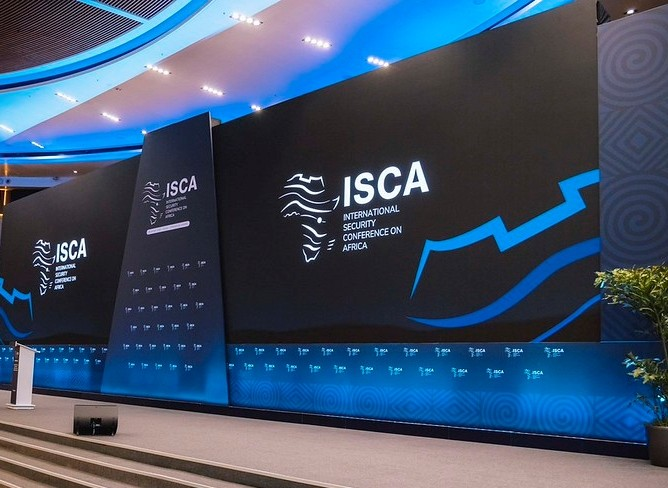
The International Security Conference on Africa, or ISCA, convened the Aug. 12 high-level discussion, bringing together more than 300 delegates from roughly 50 countries, including policymakers, military and security leaders, researchers, technology experts and development partners.
Two expert panels examined emerging threats, security transformation, governance, ethics, legal and policy frameworks, and Africa’s technological preparedness, aiming to develop policy recommendations to strengthen strategic autonomy and defense readiness.
The one-day event at the Kigali Convention Centre was held under the theme “The Rise of Autonomous Systems: Implications for Defence and Security in Africa.”
A Shifting Measure of Military Power
Rwanda’s foreign minister, Olivier Nduhungirehe, who delivered opening remarks, told delegates that the pace of technological change leaves no room for delay.
“Africa cannot afford to fall behind as these technologies continue to evolve,” he said, adding that countries must understand what the systems mean not only for security but for “sovereignty and strategic autonomy.”
Speaking during the panel discussions, retired Col. David Kanamugire, CEO of Rwanda’s National Cyber Security Authority, argued that the basis of military strength is shifting from troop numbers and industrial capacity toward the ability to build and shape autonomous technology.
“The question for Africa is, one, are we just going to continue to be a consumer of this technology? Or are we going to invest in capabilities that can help shape this technology that is going to be instrumental in the future?” he said.
Sovereignty as the Throughline
“As long as we do not control our territory, we will not be able to ensure security,” Mali’s foreign minister, Abdoulaye Diop said, linking autonomous systems to Africa’s wider pursuit of strategic autonomy, a concern he tied to terrorism, armed insurgencies and separatism across the continent.
ISCA Executive Director retired Lt. Gen. Frank Mushyo Kamanzi, who opened the discussions, said autonomous systems are no longer a future consideration.
“Autonomous systems, once considered the technology of the future, is now shaping strategic and operational realities of the present,” he said.
Governance and Technological Preparedness
The discussions also addressed Africa’s strategic responses to autonomous systems, including governance frameworks, military transformation, policy adaptation and capability development.
Rwanda’s defense minister, Juvenal Marizamunda, and Rwanda Defence Force Chief of Defence Staff Gen. Mubarakh Muganga were among the senior officials in attendance, alongside ministers and military leaders from across the continent.
ISCA is an international nongovernmental organization registered in Rwanda and inaugurated in May 2025. The Aug. 12 discussion followed the organization’s inaugural conference, held under the theme “Reshaping Africa’s Landscape in a Dynamic, Complex Global Environment.”
That conference established ISCA as a platform for African-led dialogue on security challenges ranging from terrorism and cyberthreats to political instability and transnational crime.