
Bantu Gazette

Bantu Gazette
  • Energy & Trade
  • Finance
  • Health
  • Politics & Economy
  • Technology
  • Environment
  • Feature
  • Opinion
  • Changemakers
  • Tourism & Culture
  • Sports
  • Magazine
Menu
  • Black Frame Studio
  • Magazine

Sanitation Data in Sub-Saharan Africa Faces Major Challenges

Study reveals gaps in data collection and use for non-sewered sanitation, despite increasing reliance on decentralized systems

Sanitation Data in Sub-Saharan Africa Faces Major Challenges

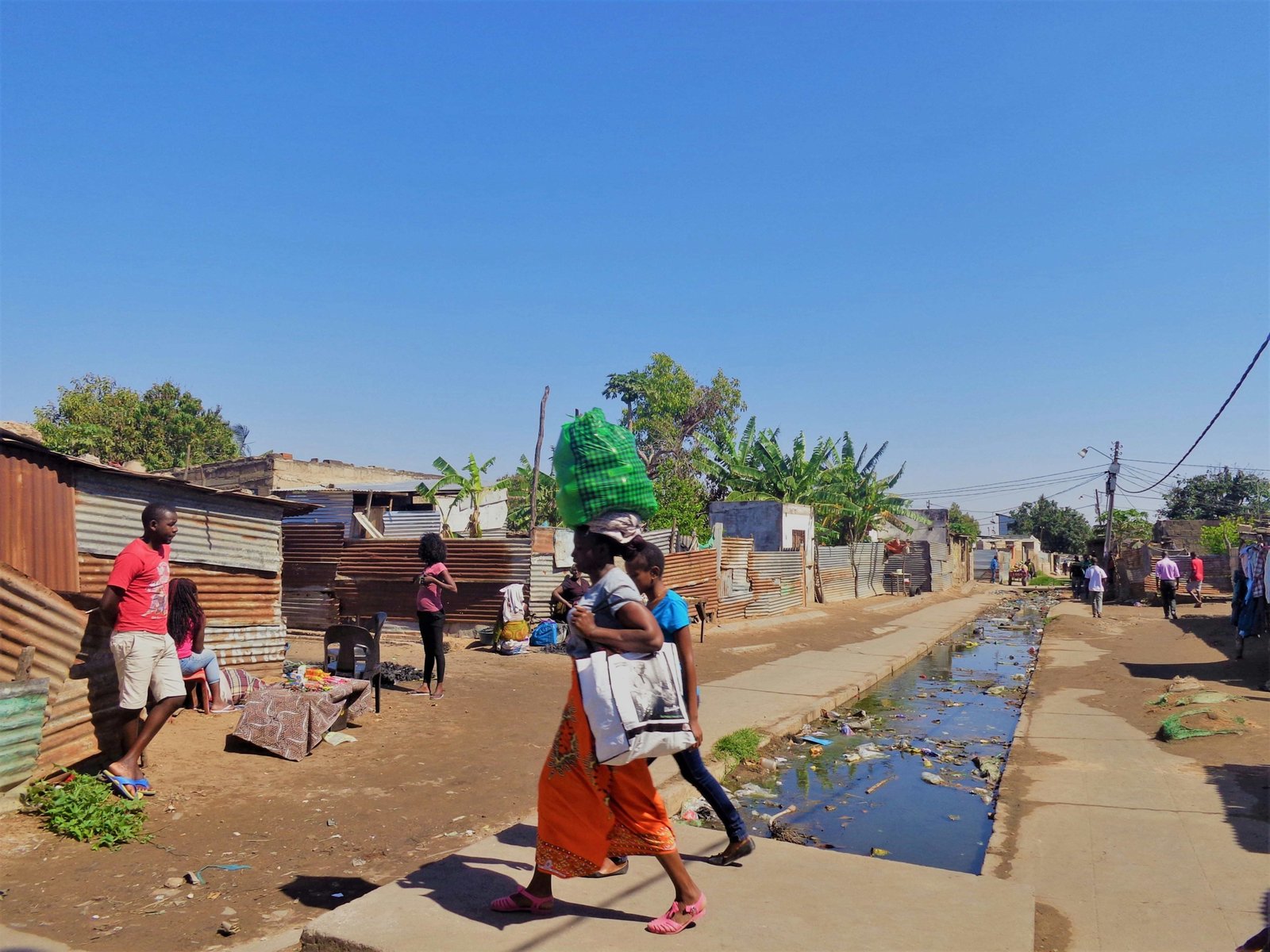
A woman walks past open wastewater in Maputo. (Photo by Farah Nabil)

Samira Benhaddaby Samira Benhadda
August 26, 2025
Reading Time: 2 mins read

Sanitation Data in Sub-Saharan Africa Faces Major Challenges

Study reveals gaps in data collection and use for non-sewered sanitation, despite increasing reliance on decentralized systems

Sanitation Data in Sub-Saharan Africa Faces Major Challenges

A woman walks past open wastewater in Maputo. (Photo by Farah Nabil)

Sanitation Data in Sub-Saharan Africa Faces Major Challenges

A woman walks past open wastewater in Maputo. (Photo by Farah Nabil)

Samira Benhaddaby Samira Benhadda
August 26, 2025
Reading Time: 2 mins read

Utilities and municipalities across sub-Saharan Africa continue to face major hurdles in managing data related to non-sewered sanitation, according to a new assessment.

The report, titled Data Systems for Non-Sewered Sanitation in Sub-Saharan Africa: Status, Challenges, and Recommendations, highlights weaknesses across data generation, analysis, and operational use that affect service delivery and planning.

“Data generation at the utility and municipality levels is driven mainly by reporting obligations rather than internal performance and operations management,” the report states.

That dependence on external requirements results in data that lacks alignment with local decision-making needs.

Limited expertise and the absence of defined performance indicators have contributed to a weak data culture, particularly among institutions responsible for non-sewered sanitation (NSS).

Tools such as mWater, KoboCollect, and Open Data Kit are used inconsistently, according to the report.

While some utilities combine digital and paper-based methods, others rely entirely on manual processes.

Only a handful have conducted comprehensive mapping of capture, containment, and treatment infrastructure.

In many cases, local agencies depend on data from national health or sanitation systems, which do not always provide the information they need.

The report describes data analysis as largely “project-based,” often conducted to satisfy donor or development partner requirements.

“Utilities and municipalities have limited to non-existent systematic data cleaning and validation processes,” the authors write.

Basic spreadsheet software remains the most common analytical tool. The absence of dedicated analytics teams also hampers efforts to produce timely insights.

Where monitoring and evaluation frameworks exist, they often omit components necessary for institutional learning.

“Utilities and municipalities in SSA tend to primarily implement M&E frameworks, leaving out the learning component,” the report explains. As a result, insights are rarely translated into operational improvements.

Some countries have begun addressing the gaps.

Kenya and Zambia have implemented centralized NSS data platforms to improve access and reduce duplication.

Utilities in several locations have also begun rolling out integrated enterprise resource planning systems, aiming to consolidate internal data and improve coordination across departments.

While many of these systems remain incompatible with external platforms, their adoption marks a shift toward institutional investment in data infrastructure.

These initiatives could offer models for strengthening sanitation data systems more broadly, especially as non-sewered solutions play a growing role in expanding access to basic services.


 

Get the inside Story

Stay informed on the stories shaping Africa’s future. Get breaking news, in-depth analysis, opinions and exclusive insights from across the continent delivered to your inbox, free and unfiltered.


Get in touch for more:
Felix Tih
Editorial Director, Bantu Gazette
WhatsApp
LinkedIn
X (Twitter)
Instagram

Related Posts

Benin Army Deploys Free Medical Care in Northern Communities Under Operation Mirador
Health

Benin Army Deploys Free Medical Care in Northern Communities Under Operation Mirador

April 6, 2026
Tanzania Accelerates Progress Toward Universal Health Coverage
Health

Tanzania Accelerates Progress Toward Universal Health Coverage

March 24, 2026
Nigeria Approves First National Policy on Cosmetics Safety
Health

Nigeria Approves First National Policy on Cosmetics Safety

March 15, 2026
Kenya Assesses Early Childhood Development in National Health Survey
Health

Kenya Assesses Early Childhood Development in National Health Survey

March 6, 2026
Urgent Call for Action to Combat Antimicrobial Resistance in Africa
Health

Angola Accelerates Final Steps to Eradicate Guinea Worm by 2030

March 4, 2026
Africa Urged to Tackle Illicit Tobacco Trade as Global Treaty Talks Close
Health

Africa Urged to Tackle Illicit Tobacco Trade as Global Treaty Talks Close

December 3, 2025

Most Recent

Benin Finance Minister Wadagni Wins Presidency in Landslide
Politics & Economy

Benin Finance Minister Wadagni Wins Presidency in Landslide

by Felix Tih
April 14, 2026
0

Romuald Wadagni, the technocrat who spent a decade reshaping Benin’s public finances, has won the country’s presidential election after securing...

Read moreDetails

AU, Côte d’Ivoire Launch Continental Education Accountability Framework

April 13, 2026
Kenya Manufacturers Warn Logistics Costs Undercut Intra-African Trade Gains

Kenya Manufacturers Warn Logistics Costs Undercut Intra-African Trade Gains

April 13, 2026
Liberia Cabinet Adopts Infrastructure Roadmap, Monrovia Redevelopment Plan

Liberia Cabinet Adopts Infrastructure Roadmap, Monrovia Redevelopment Plan

April 13, 2026
Namibia Deepens Regional Ties Through Trade and Energy

Namibia Targets 24,000 Jobs From $3.8 Billion Investment Pipeline

April 12, 2026
‘Two Days Without a Penny’: Ethiopia’s Fuel Crisis Through the Eyes of Drivers

‘Two Days Without a Penny’: Ethiopia’s Fuel Crisis Through the Eyes of Drivers

April 11, 2026
South Africa’s Kusile Power Station Reaches Full Capacity, Ending Years of Setbacks

South Africa’s Kusile Power Station Reaches Full Capacity, Ending Years of Setbacks

April 11, 2026
Benin Finance Minister Wadagni Wins Presidency in Landslide
Politics & Economy

Benin Finance Minister Wadagni Wins Presidency in Landslide

by Felix Tih
Reading Time: 2 mins read
April 14, 2026
0

Romuald Wadagni, the technocrat who spent a decade reshaping Benin’s public finances, has won the country’s presidential election after securing...

Read moreDetails
Politics & Economy

AU, Côte d’Ivoire Launch Continental Education Accountability Framework

by Aissatou Fall
Reading Time: 1 min read
April 13, 2026
0

The African Union Commission and Côte d'Ivoire have launched a national Spotlight report on foundational learning, positioning the country as...

Read moreDetails
Kenya Manufacturers Warn Logistics Costs Undercut Intra-African Trade Gains
Energy & Trade

Kenya Manufacturers Warn Logistics Costs Undercut Intra-African Trade Gains

by Amani Mwakalebela
Reading Time: 1 min read
April 13, 2026
0

The Kenya Association of Manufacturers (KAM) has warned that logistics costs across major African trade corridors remain so high and...

Read moreDetails

Sanitation Data in Sub-Saharan Africa Faces Major Challenges

Study reveals gaps in data collection and use for non-sewered sanitation, despite increasing reliance on decentralized systems

Sanitation Data in Sub-Saharan Africa Faces Major Challenges

A woman walks past open wastewater in Maputo. (Photo by Farah Nabil)

Utilities and municipalities across sub-Saharan Africa continue to face major hurdles in managing data related to non-sewered sanitation, according to a new assessment.

The report, titled Data Systems for Non-Sewered Sanitation in Sub-Saharan Africa: Status, Challenges, and Recommendations, highlights weaknesses across data generation, analysis, and operational use that affect service delivery and planning.

“Data generation at the utility and municipality levels is driven mainly by reporting obligations rather than internal performance and operations management,” the report states.

That dependence on external requirements results in data that lacks alignment with local decision-making needs.

Limited expertise and the absence of defined performance indicators have contributed to a weak data culture, particularly among institutions responsible for non-sewered sanitation (NSS).

Tools such as mWater, KoboCollect, and Open Data Kit are used inconsistently, according to the report.

While some utilities combine digital and paper-based methods, others rely entirely on manual processes.

Only a handful have conducted comprehensive mapping of capture, containment, and treatment infrastructure.

In many cases, local agencies depend on data from national health or sanitation systems, which do not always provide the information they need.

The report describes data analysis as largely “project-based,” often conducted to satisfy donor or development partner requirements.

“Utilities and municipalities have limited to non-existent systematic data cleaning and validation processes,” the authors write.

Basic spreadsheet software remains the most common analytical tool. The absence of dedicated analytics teams also hampers efforts to produce timely insights.

Where monitoring and evaluation frameworks exist, they often omit components necessary for institutional learning.

“Utilities and municipalities in SSA tend to primarily implement M&E frameworks, leaving out the learning component,” the report explains. As a result, insights are rarely translated into operational improvements.

Some countries have begun addressing the gaps.

Kenya and Zambia have implemented centralized NSS data platforms to improve access and reduce duplication.

Utilities in several locations have also begun rolling out integrated enterprise resource planning systems, aiming to consolidate internal data and improve coordination across departments.

While many of these systems remain incompatible with external platforms, their adoption marks a shift toward institutional investment in data infrastructure.

These initiatives could offer models for strengthening sanitation data systems more broadly, especially as non-sewered solutions play a growing role in expanding access to basic services.

 

Sanitation Data in Sub-Saharan Africa Faces Major Challenges

Study reveals gaps in data collection and use for non-sewered sanitation, despite increasing reliance on decentralized systems

Sanitation Data in Sub-Saharan Africa Faces Major Challenges

A woman walks past open wastewater in Maputo. (Photo by Farah Nabil)

Samira Benhaddaby Samira Benhadda
August 26, 2025

Utilities and municipalities across sub-Saharan Africa continue to face major hurdles in managing data related to non-sewered sanitation, according to a new assessment.

The report, titled Data Systems for Non-Sewered Sanitation in Sub-Saharan Africa: Status, Challenges, and Recommendations, highlights weaknesses across data generation, analysis, and operational use that affect service delivery and planning.

“Data generation at the utility and municipality levels is driven mainly by reporting obligations rather than internal performance and operations management,” the report states.

That dependence on external requirements results in data that lacks alignment with local decision-making needs.

Limited expertise and the absence of defined performance indicators have contributed to a weak data culture, particularly among institutions responsible for non-sewered sanitation (NSS).

Tools such as mWater, KoboCollect, and Open Data Kit are used inconsistently, according to the report.

While some utilities combine digital and paper-based methods, others rely entirely on manual processes.

Only a handful have conducted comprehensive mapping of capture, containment, and treatment infrastructure.

In many cases, local agencies depend on data from national health or sanitation systems, which do not always provide the information they need.

The report describes data analysis as largely “project-based,” often conducted to satisfy donor or development partner requirements.

“Utilities and municipalities have limited to non-existent systematic data cleaning and validation processes,” the authors write.

Basic spreadsheet software remains the most common analytical tool. The absence of dedicated analytics teams also hampers efforts to produce timely insights.

Where monitoring and evaluation frameworks exist, they often omit components necessary for institutional learning.

“Utilities and municipalities in SSA tend to primarily implement M&E frameworks, leaving out the learning component,” the report explains. As a result, insights are rarely translated into operational improvements.

Some countries have begun addressing the gaps.

Kenya and Zambia have implemented centralized NSS data platforms to improve access and reduce duplication.

Utilities in several locations have also begun rolling out integrated enterprise resource planning systems, aiming to consolidate internal data and improve coordination across departments.

While many of these systems remain incompatible with external platforms, their adoption marks a shift toward institutional investment in data infrastructure.

These initiatives could offer models for strengthening sanitation data systems more broadly, especially as non-sewered solutions play a growing role in expanding access to basic services.

 

Get the inside Story

Stay informed on the stories shaping Africa’s future. Get breaking news, in-depth analysis, opinions and exclusive insights from across the continent delivered to your inbox, free and unfiltered.


Get in touch for more:
Felix Tih
Editorial Director, Bantu Gazette
WhatsApp
LinkedIn
X (Twitter)
Instagram

Related Posts

Benin Army Deploys Free Medical Care in Northern Communities Under Operation Mirador

Benin Army Deploys Free Medical Care in Northern Communities Under Operation Mirador

by Joyce Waceke
April 6, 2026
0

...

Tanzania Accelerates Progress Toward Universal Health Coverage

Tanzania Accelerates Progress Toward Universal Health Coverage

by Amani Mwakalebela
March 24, 2026
0

...

Nigeria Approves First National Policy on Cosmetics Safety

Nigeria Approves First National Policy on Cosmetics Safety

by Marcelo Edjang
March 15, 2026
0

...

Kenya Assesses Early Childhood Development in National Health Survey

Kenya Assesses Early Childhood Development in National Health Survey

by Jane Mukami
March 6, 2026
0

...

Urgent Call for Action to Combat Antimicrobial Resistance in Africa

Angola Accelerates Final Steps to Eradicate Guinea Worm by 2030

by Naledi Kgosi
March 1, 2026
0

...

Africa Urged to Tackle Illicit Tobacco Trade as Global Treaty Talks Close

Africa Urged to Tackle Illicit Tobacco Trade as Global Treaty Talks Close

by Felix Tih
November 27, 2025
0

...

Benin Finance Minister Wadagni Wins Presidency in Landslide
Politics & Economy

Benin Finance Minister Wadagni Wins Presidency in Landslide

by Felix Tih
Reading Time: 2 mins read
April 14, 2026
0

Romuald Wadagni, the technocrat who spent a decade reshaping Benin’s public finances, has won the country’s presidential election after securing...

Read moreDetails

AU, Côte d’Ivoire Launch Continental Education Accountability Framework

by Aissatou Fall
April 13, 2026
0

The African Union Commission and Côte d'Ivoire have launched a national Spotlight report on foundational learning, positioning the country as...

Kenya Manufacturers Warn Logistics Costs Undercut Intra-African Trade Gains

Kenya Manufacturers Warn Logistics Costs Undercut Intra-African Trade Gains

by Amani Mwakalebela
April 13, 2026
0

The Kenya Association of Manufacturers (KAM) has warned that logistics costs across major African trade corridors remain so high and...

Liberia Cabinet Adopts Infrastructure Roadmap, Monrovia Redevelopment Plan

Liberia Cabinet Adopts Infrastructure Roadmap, Monrovia Redevelopment Plan

by Marina Bisse
April 13, 2026
0

Liberia’s Cabinet has approved an Infrastructure Policy Roadmap spanning 2026 to 2029 and endorsed a Greater Monrovia Urban Redevelopment Program,...

Namibia Deepens Regional Ties Through Trade and Energy

Namibia Targets 24,000 Jobs From $3.8 Billion Investment Pipeline

by Naledi Kgosi
April 12, 2026
0

Namibia has 15 investment projects worth N$63.5 billion ($3.8 billion) currently underway, with more than 24,000 jobs projected at full...

Next Post
Ethiopia, Dangote Group Sign $2.5B Fertilizer Complex Deal

Ethiopia, Dangote Group Sign $2.5B Fertilizer Complex Deal

Sidi Ould Tah, the New Face of the African Development Bank

‘Africa Is Watching. The Youth Are Waiting. It Is Time for Action’

Officials Urge Africa to Rely on Itself for Food Security

Officials Urge Africa to Rely on Itself for Food Security

Africa’s Food Systems Need Systemic Change, Not Piecemeal Fixes

Africa's Food Systems Need Systemic Change, Not Piecemeal Fixes

Bantu Gazette is a pioneering news platform that champions Africa's development, culture, and heritage. We spotlight the continent's successes, address its challenges, and provide insightful coverage of events that shape its future.

Bantu Gazette is a pioneering news platform that champions Africa's development, culture, and heritage. We spotlight the continent's successes, address its challenges, and provide insightful coverage of events that shape its future.

Our Platforms

  • Bantu Magazine
  • Bantu Brief
  • Black Frame Studio

Our Services

  • Bantu Agency
  • Advertise
  • Partnerships

Our Services

  • Editorial Director
  • Opportunities
  • Contact

Bantu Gazette is a pioneering news platform that champions Africa's development, culture, and heritage. We spotlight the continent's successes, address its challenges, and provide insightful coverage of events that shape its future.

Our Platforms

  • Bantu Magazine
  • Bantu Brief
  • Black Frame Studio

Our Services

  • Bantu Agency
  • Advertise
  • Partnerships

Our Services

  • Editorial Director
  • Opportunities
  • Contact
Bantu Gazette
  • Energy & Trade
  • Finance
  • Health
  • Politics & Economy
  • Technology
  • Environment
  • Feature
  • Opinion
  • Changemakers
  • Tourism & Culture
  • Magazine