

Bantu Gazette
  • Black Frame Studio
  • Magazine
No Result
View All Result
Bantu Gazette
  • Black Frame Studio
  • Magazine
No Result
View All Result
Bantu Gazette
No Result
View All Result

Young Innovators Are Ready : What it will take to scale youth-led solutions across the continent

Across the continent, youth-led innovation is solving real problems. What's missing is the infrastructure and investment to scale it.

Young Innovators Are Ready : What it will take to scale youth-led solutions across the continent

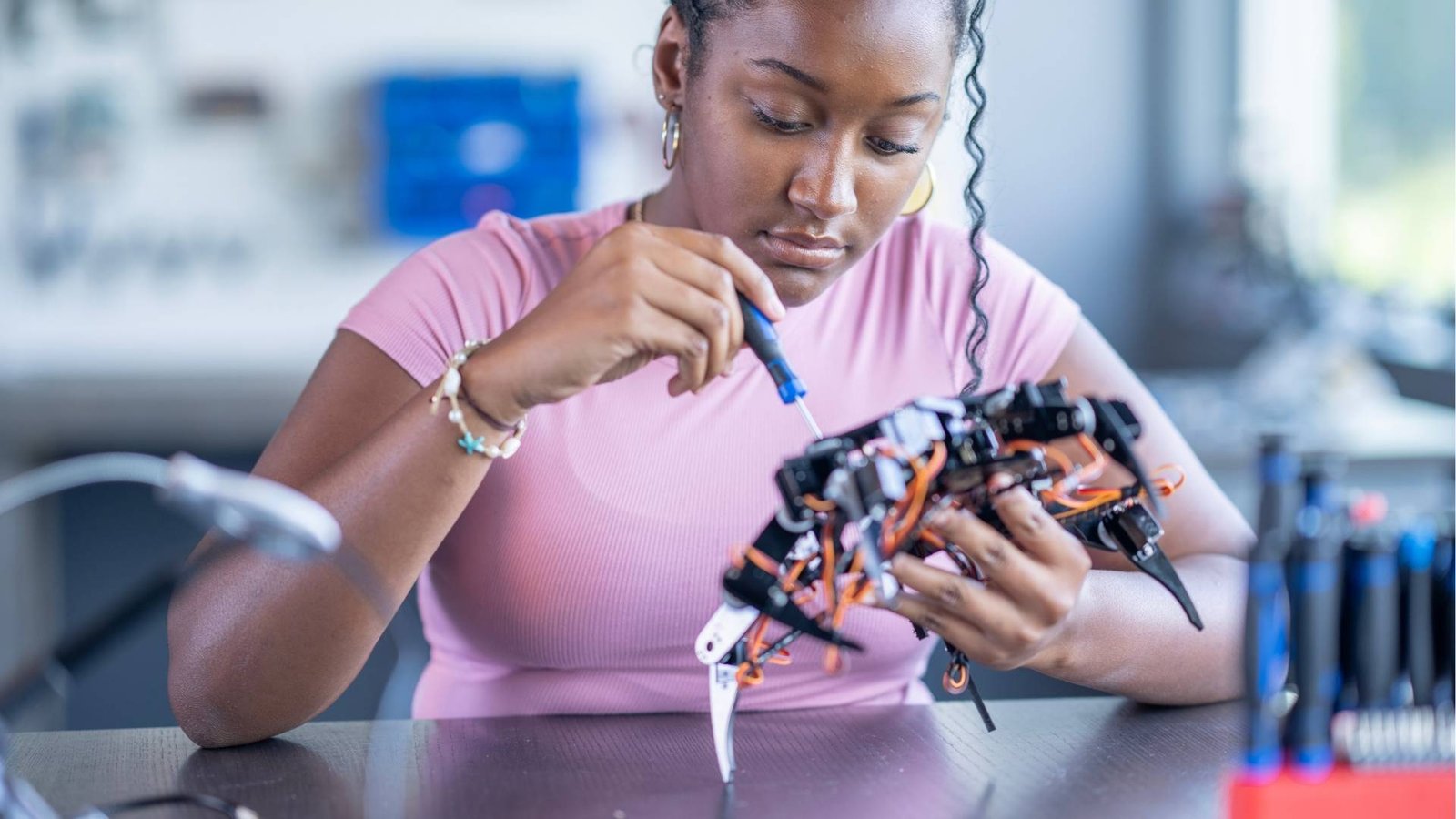
Focused and inquisitive, a young student assembles a robot in the classroom, where science meets innovation. Photo by FatCamera.

Yorokee Kapimbuaby Yorokee Kapimbua
April 19, 2025
Reading Time: 3 mins read

Young Innovators Are Ready : What it will take to scale youth-led solutions across the continent

Across the continent, youth-led innovation is solving real problems. What's missing is the infrastructure and investment to scale it.

Young Innovators Are Ready : What it will take to scale youth-led solutions across the continent

Focused and inquisitive, a young student assembles a robot in the classroom, where science meets innovation. Photo by FatCamera.

Young Innovators Are Ready : What it will take to scale youth-led solutions across the continent

Focused and inquisitive, a young student assembles a robot in the classroom, where science meets innovation. Photo by FatCamera.

Yorokee Kapimbuaby Yorokee Kapimbua
August 4, 2025
Reading Time: 3 mins read

From renewable energy startups in Kenya to fintech solutions in Nigeria, young Africans are designing tomorrow’s answers to today’s challenges. For every breakthrough that captures headlines, dozens of promising innovations remain trapped in pilot phases, starved of the resources and support systems needed to reach their full potential.

The statistics tell a sobering story. According to the International Labour Organization, young women in sub-Saharan Africa face unemployment rates that consistently exceed those of their male counterparts. In 2023, the gender gap widened further with roughly one in four young women finding themselves neither employed nor in education or training, compared to one in six young men. Behind these numbers lies untapped potential with brilliant minds whose innovations could reshape entire industries if given the chance.

The paradox remains stark. While Africa’s youth represent the continent’s greatest asset, structural barriers continue to block their path to meaningful economic participation. Young women face the steepest obstacles, encountering everything from limited access to capital to cultural biases that question their technical capabilities.

Rwanda’s deliberate investments in digital infrastructure have opened new pathways for women entering science, technology, engineering and mathematics fields. The results speak for themselves with young Rwandan women now launching tech companies at unprecedented rates. Across much of the continent, similar talent remains sidelined by systems that weren’t designed with inclusion in mind.

The momentum is already building. Zimbabwe’s Econet Wireless has demonstrated how mobile and financial services can transform underserved communities through innovations like EcoCash. In South Africa, SweepSouth built a platform connecting domestic workers with clients, providing thousands of women access to more flexible, better-paying opportunities. These success stories emerged from environments that provided the essential building blocks with access to capital, mentorship networks, and markets ready to embrace new solutions.

Strengthening this environment involves action in five main areas with education, access to finance, networking opportunities, a culture that values innovation, and increased engagement from the private sector. Prioritizing science and entrepreneurship education, expanding access to funding and mentorship, creating collaborative spaces and safeguarding intellectual property all play a role in building that foundation. Government involvement remains important, while more consistent participation from the private sector is necessary to expand reach and sustainability.

Industrial strategies that ignore gender disparities will inevitably underperform. Supporting childcare services, encouraging women’s leadership, and ensuring fair compensation are economic imperatives alongside matters of equity. Similarly, commitment to environmentally conscious industrialization, including renewable energy and circular economic practices, ensures that today’s solutions don’t become tomorrow’s problems.

The path forward requires policy frameworks that respond to realities on the ground rather than importing solutions designed for different contexts. What works in Silicon Valley may differ from what succeeds in Lagos or Johannesburg, while the underlying principles of access, support, and systematic thinking remain universal.

Without targeted intervention, Africa’s demographic dividend risks becoming a demographic burden. Young people excluded from meaningful economic participation don’t simply disappear as they find other outlets for their energy and ambition. The choice remains straightforward with investing in youth innovation now or paying the higher costs of exclusion later.

The work of organizations like the Centre for Policy Research AFRICA demonstrates that deliberate efforts to empower young innovators can reshape entire economies. Such efforts must scale beyond individual organizations to become systematic priorities for governments, businesses, and civil society.

Africa’s young innovators are ready. The question remains whether the continent will build the infrastructure to support them. The answer will determine individual futures alongside the trajectory of African development for generations to come.

The time for half-measures has passed. Africa’s innovation ecosystem needs comprehensive support that matches the scale of its potential. Young innovators have shown they can create solutions and now the continent must create the conditions for those solutions to thrive.




 Yorokee Kapimbua


Yorokee Kapimbua
is the Founder and chairman of the Centre for Policy Research AFRICA, an organization focused on evidence-based strategies for sustainable development and youth empowerment across Africa

Get the inside Story

Stay informed on the stories shaping Africa’s future. Get breaking news, in-depth analysis, opinions and exclusive insights from across the continent delivered to your inbox, free and unfiltered.


Related Posts

Ballots and Diversity: Electoral Power in a Changing Africa
Opinion

Ballots and Diversity: Electoral Power in a Changing Africa

September 25, 2025
Ghana’s Cedi Rally Shows Path Forward for Emerging Markets
Opinion

Ghana’s Cedi Rally Shows Path Forward for Emerging Markets

August 5, 2025
Women's Fight for Equity in Africa's Energy Sector
Opinion

Women’s Fight for Equity in Africa’s Energy Sector

August 25, 2025
Beyond the Broken Promise of Education
Opinion

Beyond the Broken Promise of Education

August 5, 2025
Coding Our Own Future Ending digital dependency starts with mental sovereignty - Bantu Gazette
Opinion

Coding Our Own Future: Ending digital dependency starts with mental sovereignty

August 4, 2025
Young Innovators Are Ready : What it will take to scale youth-led solutions across the continent
Opinion

The Weight of Success: How Africa’s Trade Future Can Break Family Cycles

August 5, 2025

Most Recent

Zimbabwe Emerges as Top Travel Spot for 2025
Tourism & Culture

Zimbabwe Emerges as Top Travel Spot for 2025

by Naledi Kgosi
November 10, 2025
0

Zimbabwe has been named the top travel destination for 2025 by Forbes, following a sharp rise in interest from international...

Read moreDetails
Kenya to Recruit 20,000 Teachers as Education Investments Pay Off

Kenya Introduces School Fees as Malawi Declares Free Education

November 10, 2025
Ethiopia Launches First Electronic Passport, Marking New Era in Secure Travel

Ethiopia’s New E-passport Earns Global Design Honor

November 10, 2025
South Africa’s G20 Presidency a Catalyst for Energy Investment in Africa

G20 Report Warns of Rising Inequality, Urges Global Action

November 5, 2025
Namibia Deepens Regional Ties Through Trade and Energy

Namibia Repays $750 Million Eurobond, Largest Debt Maturity in Its History

November 4, 2025
Mali Unveils 2nd Lithium Mine as Part of Economic Sovereignty Push

Mali Unveils 2nd Lithium Mine as Part of Economic Sovereignty Push

November 5, 2025
$1.5 Billion Fund Targets Infrastructure Projects Across Africa

$1.5 Billion Fund Targets Infrastructure Projects Across Africa

November 5, 2025
Zimbabwe Emerges as Top Travel Spot for 2025
Tourism & Culture

Zimbabwe Emerges as Top Travel Spot for 2025

by Naledi Kgosi
Reading Time: 1 min read
November 10, 2025
0

Zimbabwe has been named the top travel destination for 2025 by Forbes, following a sharp rise in interest from international...

Read moreDetails
Kenya to Recruit 20,000 Teachers as Education Investments Pay Off
Politics & Economy

Kenya Introduces School Fees as Malawi Declares Free Education

by Jane Mukami
Reading Time: 1 min read
November 10, 2025
0

Kenya will begin charging public senior secondary school students an annual fee of KSh 53,554 (approximately $414) starting in 2026,...

Read moreDetails
Ethiopia Launches First Electronic Passport, Marking New Era in Secure Travel
Tourism & Culture

Ethiopia’s New E-passport Earns Global Design Honor

by Maraki Desta
Reading Time: 1 min read
November 10, 2025
0

Ethiopia's recently introduced electronic passport has won the 2025 Red Dot Award for Brands and Communication Design, according to Selamawit...

Read moreDetails

Young Innovators Are Ready : What it will take to scale youth-led solutions across the continent

Across the continent, youth-led innovation is solving real problems. What's missing is the infrastructure and investment to scale it.

Young Innovators Are Ready : What it will take to scale youth-led solutions across the continent

Focused and inquisitive, a young student assembles a robot in the classroom, where science meets innovation. Photo by FatCamera.

From renewable energy startups in Kenya to fintech solutions in Nigeria, young Africans are designing tomorrow’s answers to today’s challenges. For every breakthrough that captures headlines, dozens of promising innovations remain trapped in pilot phases, starved of the resources and support systems needed to reach their full potential.

The statistics tell a sobering story. According to the International Labour Organization, young women in sub-Saharan Africa face unemployment rates that consistently exceed those of their male counterparts. In 2023, the gender gap widened further with roughly one in four young women finding themselves neither employed nor in education or training, compared to one in six young men. Behind these numbers lies untapped potential with brilliant minds whose innovations could reshape entire industries if given the chance.

The paradox remains stark. While Africa’s youth represent the continent’s greatest asset, structural barriers continue to block their path to meaningful economic participation. Young women face the steepest obstacles, encountering everything from limited access to capital to cultural biases that question their technical capabilities.

Rwanda’s deliberate investments in digital infrastructure have opened new pathways for women entering science, technology, engineering and mathematics fields. The results speak for themselves with young Rwandan women now launching tech companies at unprecedented rates. Across much of the continent, similar talent remains sidelined by systems that weren’t designed with inclusion in mind.

The momentum is already building. Zimbabwe’s Econet Wireless has demonstrated how mobile and financial services can transform underserved communities through innovations like EcoCash. In South Africa, SweepSouth built a platform connecting domestic workers with clients, providing thousands of women access to more flexible, better-paying opportunities. These success stories emerged from environments that provided the essential building blocks with access to capital, mentorship networks, and markets ready to embrace new solutions.

Strengthening this environment involves action in five main areas with education, access to finance, networking opportunities, a culture that values innovation, and increased engagement from the private sector. Prioritizing science and entrepreneurship education, expanding access to funding and mentorship, creating collaborative spaces and safeguarding intellectual property all play a role in building that foundation. Government involvement remains important, while more consistent participation from the private sector is necessary to expand reach and sustainability.

Industrial strategies that ignore gender disparities will inevitably underperform. Supporting childcare services, encouraging women’s leadership, and ensuring fair compensation are economic imperatives alongside matters of equity. Similarly, commitment to environmentally conscious industrialization, including renewable energy and circular economic practices, ensures that today’s solutions don’t become tomorrow’s problems.

The path forward requires policy frameworks that respond to realities on the ground rather than importing solutions designed for different contexts. What works in Silicon Valley may differ from what succeeds in Lagos or Johannesburg, while the underlying principles of access, support, and systematic thinking remain universal.

Without targeted intervention, Africa’s demographic dividend risks becoming a demographic burden. Young people excluded from meaningful economic participation don’t simply disappear as they find other outlets for their energy and ambition. The choice remains straightforward with investing in youth innovation now or paying the higher costs of exclusion later.

The work of organizations like the Centre for Policy Research AFRICA demonstrates that deliberate efforts to empower young innovators can reshape entire economies. Such efforts must scale beyond individual organizations to become systematic priorities for governments, businesses, and civil society.

Africa’s young innovators are ready. The question remains whether the continent will build the infrastructure to support them. The answer will determine individual futures alongside the trajectory of African development for generations to come.

The time for half-measures has passed. Africa’s innovation ecosystem needs comprehensive support that matches the scale of its potential. Young innovators have shown they can create solutions and now the continent must create the conditions for those solutions to thrive.



 Yorokee Kapimbua


Yorokee Kapimbua
is the Founder and chairman of the Centre for Policy Research AFRICA, an organization focused on evidence-based strategies for sustainable development and youth empowerment across Africa

Young Innovators Are Ready : What it will take to scale youth-led solutions across the continent

Across the continent, youth-led innovation is solving real problems. What's missing is the infrastructure and investment to scale it.

Young Innovators Are Ready : What it will take to scale youth-led solutions across the continent

Focused and inquisitive, a young student assembles a robot in the classroom, where science meets innovation. Photo by FatCamera.

Yorokee Kapimbuaby Yorokee Kapimbua
April 19, 2025

From renewable energy startups in Kenya to fintech solutions in Nigeria, young Africans are designing tomorrow’s answers to today’s challenges. For every breakthrough that captures headlines, dozens of promising innovations remain trapped in pilot phases, starved of the resources and support systems needed to reach their full potential.

The statistics tell a sobering story. According to the International Labour Organization, young women in sub-Saharan Africa face unemployment rates that consistently exceed those of their male counterparts. In 2023, the gender gap widened further with roughly one in four young women finding themselves neither employed nor in education or training, compared to one in six young men. Behind these numbers lies untapped potential with brilliant minds whose innovations could reshape entire industries if given the chance.

The paradox remains stark. While Africa’s youth represent the continent’s greatest asset, structural barriers continue to block their path to meaningful economic participation. Young women face the steepest obstacles, encountering everything from limited access to capital to cultural biases that question their technical capabilities.

Rwanda’s deliberate investments in digital infrastructure have opened new pathways for women entering science, technology, engineering and mathematics fields. The results speak for themselves with young Rwandan women now launching tech companies at unprecedented rates. Across much of the continent, similar talent remains sidelined by systems that weren’t designed with inclusion in mind.

The momentum is already building. Zimbabwe’s Econet Wireless has demonstrated how mobile and financial services can transform underserved communities through innovations like EcoCash. In South Africa, SweepSouth built a platform connecting domestic workers with clients, providing thousands of women access to more flexible, better-paying opportunities. These success stories emerged from environments that provided the essential building blocks with access to capital, mentorship networks, and markets ready to embrace new solutions.

Strengthening this environment involves action in five main areas with education, access to finance, networking opportunities, a culture that values innovation, and increased engagement from the private sector. Prioritizing science and entrepreneurship education, expanding access to funding and mentorship, creating collaborative spaces and safeguarding intellectual property all play a role in building that foundation. Government involvement remains important, while more consistent participation from the private sector is necessary to expand reach and sustainability.

Industrial strategies that ignore gender disparities will inevitably underperform. Supporting childcare services, encouraging women’s leadership, and ensuring fair compensation are economic imperatives alongside matters of equity. Similarly, commitment to environmentally conscious industrialization, including renewable energy and circular economic practices, ensures that today’s solutions don’t become tomorrow’s problems.

The path forward requires policy frameworks that respond to realities on the ground rather than importing solutions designed for different contexts. What works in Silicon Valley may differ from what succeeds in Lagos or Johannesburg, while the underlying principles of access, support, and systematic thinking remain universal.

Without targeted intervention, Africa’s demographic dividend risks becoming a demographic burden. Young people excluded from meaningful economic participation don’t simply disappear as they find other outlets for their energy and ambition. The choice remains straightforward with investing in youth innovation now or paying the higher costs of exclusion later.

The work of organizations like the Centre for Policy Research AFRICA demonstrates that deliberate efforts to empower young innovators can reshape entire economies. Such efforts must scale beyond individual organizations to become systematic priorities for governments, businesses, and civil society.

Africa’s young innovators are ready. The question remains whether the continent will build the infrastructure to support them. The answer will determine individual futures alongside the trajectory of African development for generations to come.

The time for half-measures has passed. Africa’s innovation ecosystem needs comprehensive support that matches the scale of its potential. Young innovators have shown they can create solutions and now the continent must create the conditions for those solutions to thrive.


 Yorokee Kapimbua


Yorokee Kapimbua
is the Founder and chairman of the Centre for Policy Research AFRICA, an organization focused on evidence-based strategies for sustainable development and youth empowerment across Africa

Get the inside Story

Stay informed on the stories shaping Africa’s future. Get breaking news, in-depth analysis, opinions and exclusive insights from across the continent delivered to your inbox, free and unfiltered.


Related Posts

Ballots and Diversity: Electoral Power in a Changing Africa

Ballots and Diversity: Electoral Power in a Changing Africa

by Vitalis Manjong
September 23, 2025
0

...

Ghana’s Cedi Rally Shows Path Forward for Emerging Markets

Ghana’s Cedi Rally Shows Path Forward for Emerging Markets

by Godfred Nana Yaw Amoako
June 30, 2025
0

...

Women's Fight for Equity in Africa's Energy Sector

Women’s Fight for Equity in Africa’s Energy Sector

by Lydia Kapangila
May 5, 2025
0

...

Beyond the Broken Promise of Education

Beyond the Broken Promise of Education

by Bappa Eliane
May 5, 2025
0

...

Coding Our Own Future Ending digital dependency starts with mental sovereignty - Bantu Gazette

Coding Our Own Future: Ending digital dependency starts with mental sovereignty

by Angella Ndaka PhD
April 19, 2025
0

...

Young Innovators Are Ready : What it will take to scale youth-led solutions across the continent

The Weight of Success: How Africa’s Trade Future Can Break Family Cycles

by Nwokedi Ifeanyi Joseph
April 19, 2025
0

...

Zimbabwe Emerges as Top Travel Spot for 2025
Tourism & Culture

Zimbabwe Emerges as Top Travel Spot for 2025

by Naledi Kgosi
Reading Time: 1 min read
November 10, 2025
0

Zimbabwe has been named the top travel destination for 2025 by Forbes, following a sharp rise in interest from international...

Read moreDetails
Kenya to Recruit 20,000 Teachers as Education Investments Pay Off

Kenya Introduces School Fees as Malawi Declares Free Education

by Jane Mukami
November 10, 2025
0

Kenya will begin charging public senior secondary school students an annual fee of KSh 53,554 (approximately $414) starting in 2026,...

Ethiopia Launches First Electronic Passport, Marking New Era in Secure Travel

Ethiopia’s New E-passport Earns Global Design Honor

by Maraki Desta
November 10, 2025
0

Ethiopia's recently introduced electronic passport has won the 2025 Red Dot Award for Brands and Communication Design, according to Selamawit...

South Africa’s G20 Presidency a Catalyst for Energy Investment in Africa

G20 Report Warns of Rising Inequality, Urges Global Action

by Naledi Kgosi
November 5, 2025
0

The G20 Global Inequality Report, presented Tuesday to President Cyril Ramaphosa in Cape Town, outlines a stark portrait of inequality...

Namibia Deepens Regional Ties Through Trade and Energy

Namibia Repays $750 Million Eurobond, Largest Debt Maturity in Its History

by Amani Mwakalebela
November 4, 2025
0

Namibia has fully repaid its $750 million Eurobond issued in 2015, the country’s largest-ever debt maturity, according to a government...

Next Post
Young Innovators Are Ready : What it will take to scale youth-led solutions across the continent

The Weight of Success: How Africa's Trade Future Can Break Family Cycles

Coding Our Own Future Ending digital dependency starts with mental sovereignty - Bantu Gazette

Coding Our Own Future: Ending digital dependency starts with mental sovereignty

En Côte d’Ivoire, le FEMUA bat son plein autour du civisme et de la musique urbaine

En Côte d’Ivoire, le FEMUA bat son plein autour du civisme et de la musique urbaine

Nigeria Launches BisonFly Project to Cut Costs on Government Air Travel

The editorial platform of Bantu Agency.

The editorial platform of Bantu Agency.

Our Platforms

  • Bantu Magazine
  • Bantu Brief
  • Black Frame Studio

Our Services

  • Bantu Agency
  • Advertise
  • Partnerships

Our Services

  • Editorial Director
  • Opportunities
  • Contact

The editorial platform of Bantu Agency.

Our Platforms

  • Bantu Magazine
  • Bantu Brief
  • Black Frame Studio

Our Services

  • Bantu Agency
  • Advertise
  • Partnerships

Our Services

  • Editorial Director
  • Opportunities
  • Contact
Bantu Gazette
  • Energy & Trade
  • Finance
  • Health
  • Politics & Economy
  • Technology
  • Environment
  • Feature
  • Opinion
  • Changemakers
  • Tourism & Culture
  • Magazine