

NAIROBI
Kenya became the focus of a major public health debate after a US-backed Ebola quarantine facility proposed for Laikipia Air Base in Nanyuki triggered protests, a High Court blocking order and a national conversation about consent, sovereignty and international health partnerships. The regional outbreak heightened the stakes for all involved.
Kenya raised its national preparedness and emergency response posture in May 2026 following an outbreak of the Bundibugyo strain of Ebola Virus Disease in Uganda and the Democratic Republic of Congo (DRC). The World Health Organization (WHO) declared the outbreak a Public Health Emergency of International Concern on May 17, while Africa CDC followed on May 18 with a Public Health Emergency of Continental Security declaration.
As of June 2, WHO reported 367 confirmed cases and 72 confirmed deaths in DRC, alongside 15 confirmed cases and one death in Uganda. The Bundibugyo strain has no approved vaccine or licensed therapeutics, unlike the Zaire strain. Previous Bundibugyo outbreaks recorded case fatality rates ranging from 30% to 50%, according to WHO.
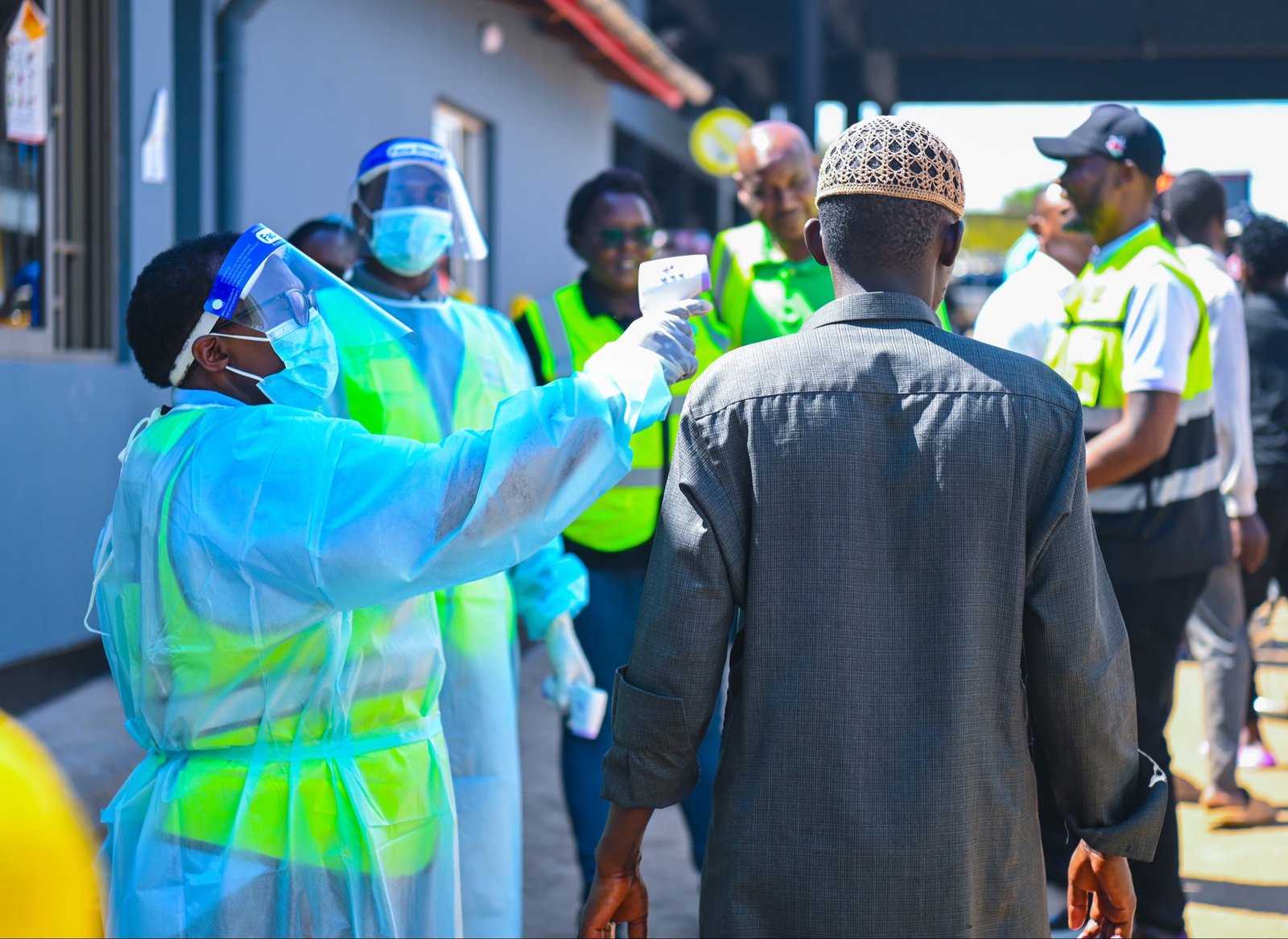
Kenya’s Ministry of Health moved quickly to strengthen preparedness. Four national reference laboratories operated around the clock to support Ebola testing capacity, while isolation and holding facilities were activated at designated referral hospitals and border locations.
By June 5, Kenya had screened more than 80,000 travelers at points of entry, according to Health Cabinet Secretary Aden Duale. The ministry also reported that 56 samples collected from individuals with travel history to DRC and Uganda had all tested negative.
What Kenya Has Already Built
The Ministry of Health mobilized a national response as the regional threat intensified. Duale told Parliament on June 3 that the Public Health Emergency Operations Center had been activated and that the repurposed Mpox task force was overseeing the Ebola response.
Rapid Response Teams, including 85 trained personnel from the Africa Volunteer Health Corps, were placed on standby for deployment. Enhanced screening was introduced at high-risk entry points including Busia, Malaba, Suam and Jomo Kenyatta International Airport.
More than 1,000 healthcare workers underwent Ebola preparedness training, while a reserve team of 241 experts in epidemiology, laboratory services and emergency response remained on standby. Isolation and treatment facilities were designated across the country, including at Kenyatta National Hospital and the National Police Service Hospital. The ministry also investigated 22 Ebola alerts, all of which tested negative.
The Laikipia Proposal
In late May, the United States confirmed plans to establish a quarantine facility at Laikipia Air Base to receive American citizens and personnel exposed to Ebola in the region. The White House described it as a facility to be built, staffed, and operated entirely by US personnel, while Kenya’s Ministry of Health confirmed on May 27 that discussions with the United States and other partners were underway.
The proposal immediately drew scrutiny. The Kenya Medical Practitioners, Pharmacists and Dentists Union called for full public disclosure of the arrangement, while civil society organizations filed a lawsuit.
On May 29, Justice Patricia Nyaundi of the Milimani High Court issued a conservatory order restraining the government from establishing or permitting any Ebola quarantine, isolation or treatment facility in Kenya under an arrangement with the United States or another foreign government pending an inter-parties hearing.
Demonstrations against the facility took place in Nanyuki on June 1, and the conservatory orders were later extended.
The Positions on the Table
President William Ruto defended the arrangement during a media roundtable in Wajir County on June 1.
“When President Trump asked the government of Kenya to support them by having a centre at Laikipia Air Base, I gave the okay because it was an agreement and a partnership with friends who have worked with Kenya for 30 or 40 years,” he said.
Ruto argued that the proposed facility would form part of a broader preparedness system that already includes isolation and treatment centers across the country. In a post on X on June 2, he said the facility was “neither unique nor exceptional” and would serve both Kenyans and Americans.
The US Embassy in Nairobi also defended the proposal, describing the bio-isolation facility as part of a wider effort to prevent the spread of disease and reduce health risks in the region. The embassy said it would not pose a risk to nearby communities.
Opponents framed their objections in constitutional and public health terms. The Katiba Institute, which filed the court petition, argued that the arrangement raised concerns about public health, constitutional governance and national sovereignty, and that it had proceeded without public participation or parliamentary oversight.
A bioethics expert quoted by ACI Africa described the proposal as “ethical dumping,” arguing that wealthy countries should not manage health risks abroad that they would be unwilling to accept at home.
What the Public Said
A GeoPoll survey conducted between May 29 and May 31 among 691 respondents examined awareness of the outbreak, views on the proposed facility and attitudes toward Kenya-US health cooperation. The findings were published on June 3.
Awareness of both the outbreak and the proposed facility was widespread, with 97% of respondents reporting having heard of the Ebola outbreak and 92% saying they were already aware of the Laikipia proposal before the survey.
Opposition to the facility was substantial, with 71% of respondents opposing it and 61% expressing strong opposition. The most commonly cited concern was the risk of disease spread into Kenya, while sovereignty concerns also featured prominently among respondents’ reasons for opposition.
At the same time, support for broader Kenya-US health cooperation remained intact. Fifty-four percent said they supported cooperation on infectious disease preparedness generally, compared with 28% who opposed it, suggesting that objections were directed at the proposed facility rather than at bilateral health cooperation itself.
Perhaps the survey’s most significant finding was that 93% of respondents believed communities near the proposed facility should be consulted before any implementation proceeds.
The Framework Kenya Needs
Kenya trained healthcare workers, activated laboratories, designated isolation facilities, screened tens of thousands of travelers and investigated Ebola alerts, demonstrating both institutional capacity and a functioning preparedness system.
The controversy surrounding the Laikipia proposal highlighted a separate issue, namely the absence of a clear framework governing how foreign governments may operate on Kenyan territory during a declared health emergency.
Such a framework could define expectations around transparency, clarify the role of affected communities and establish the processes through which international health partnerships are implemented in Kenya. Parliament is the institution best placed to lead that work.
The debate over Laikipia has already generated substantial evidence for such an effort. Court proceedings, concerns raised by medical professionals, survey findings and public demonstrations have all pointed to the same conclusion.
Kenya’s response to the regional Ebola outbreak demonstrated that the country has the capacity to prepare for a health emergency. The questions raised by the proposed facility suggest that the next step is to ensure there is a clear framework to guide international partners’ participation when one occurs.