
ADDIS ABABA
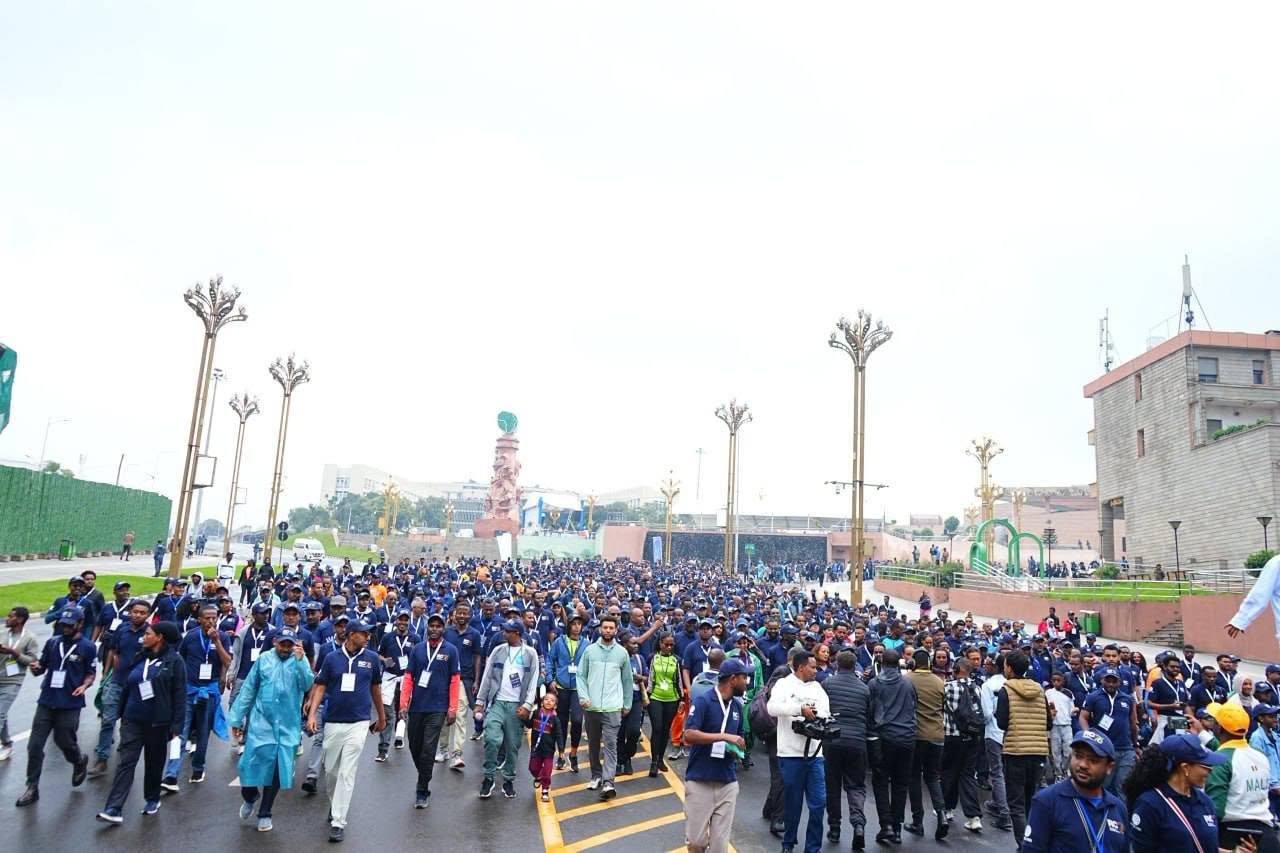
Health ministers, senior government officials, athletes, children and local residents took to the streets of Addis Ababa on Sunday for “Walk the Talk: The Health for All Challenge,” turning a message about healthier living into action ahead of a major gathering of African health leaders.
The walk was held one day before the 76th session of the World Health Organization Regional Committee for Africa begins in the Ethiopian capital.
Promoting physical activity and healthier lifestyles was at the heart of the event, which also sought to raise awareness about preventing noncommunicable diseases.
Ethiopian Health Minister Dr. Mekdes Daba, who joined the walk, said the event demonstrated the importance of translating health commitments into action and encouraging healthier lifestyles.
Participants set out from the Adwa Victory Memorial and followed pedestrian routes through Addis Ababa before concluding near Ghion Park.
From African health ministers and senior officials to athletes, children and local residents, people from different walks of life joined the event. Ethiopian Athletics Federation President Commander Sileshi Sihine was among the prominent athletes who participated.
WHO Regional Director for Africa Professor Mohamed Yakub Janabi said the event represented more than a symbolic walk.
“Thank you to everyone who joined us for the #RC76AFRO Walk the Talk #HealthForAll Challenge in Addis Ababa,” Janabi wrote on X on Sunday. “Today’s walk is more than an event. It is a commitment to healthier lives. Let’s keep moving and turn today’s challenge into a daily habit.”
“Walk the Talk: The Health for All Challenge” is a WHO initiative promoting physical activity, healthy lifestyles and health for people of all ages and abilities.
The walk also served as a prelude to four days of discussions on some of Africa’s most pressing health challenges.
The 76th session of the WHO Regional Committee for Africa is scheduled for Aug. 25-28 in Addis Ababa, bringing together health ministers and senior officials from the African Region’s 47 member states.
Delegates are expected to discuss and endorse regional health policies, strategies and plans aimed at improving health outcomes across the continent.
The Regional Committee for Africa is WHO’s main governing body in the region, bringing member states together annually to set priorities and consider policies and strategies addressing public health challenges.
Disease prevention is expected to feature in the discussions. WHO’s Disease Prevention Cluster is set to showcase progress toward eliminating multiple diseases and efforts by countries to improve health outcomes across Africa.
Ebola outbreak raises the stakes
The gathering comes as countries on the continent continue to confront infectious disease outbreaks alongside the growing burden of noncommunicable diseases.
Among the challenges is the Bundibugyo Ebola outbreak in the Democratic Republic of Congo (DRC), where authorities have sought international support for the response.
The Congolese government requested vaccines (Ervebo) from the global Ebola vaccine stockpile managed by the International Coordinating Group on Vaccine Provision for use in the response.
Ervebo is licensed and recommended for outbreaks caused by Zaire ebolavirus, rather than Bundibugyo virus. The proposed use of the vaccine against Bundibugyo therefore includes research intended to determine whether it can provide protection against the virus.
According to information provided about the response, the ICG authorized an initial release of 70,000 doses – 20,000 for a Phase 3 clinical trial and 50,000 for frontline and health workers in accordance with recommendations from WHO’s Strategic Advisory Group of Experts on Immunization.
Africa CDC and WHO have said they are supporting the Congolese government’s efforts to protect affected communities, save lives and bring the outbreak under control while generating evidence that could strengthen preparedness for future outbreaks.
Against that broader health backdrop, the Addis Ababa meeting will give African health leaders an opportunity to move from the symbolism of Sunday’s walk to the more difficult work of turning regional health commitments into policy and action.