

Bantu Gazette

Bantu Gazette
  • Energy & Trade
  • Finance
  • Health
  • Politics & Economy
  • Technology
  • Environment
  • Feature
  • Opinion
  • Changemakers
  • Tourism & Culture
  • Sports
  • Magazine
Menu
  • Black Frame Studio
  • Magazine

Global Forum in Rwanda Urges Immediate Action on Rising Noncommunicable Diseases Crisis

Global Forum in Rwanda Urges Immediate Action on Rising Noncommunicable Diseases Crisis
Felix Tihby Felix Tih
February 13, 2025
Reading Time: 4 mins read

Global Forum in Rwanda Urges Immediate Action on Rising Noncommunicable Diseases Crisis

Global Forum in Rwanda Urges Immediate Action on Rising Noncommunicable Diseases Crisis
Felix Tihby Felix Tih
July 20, 2025
Reading Time: 4 mins read

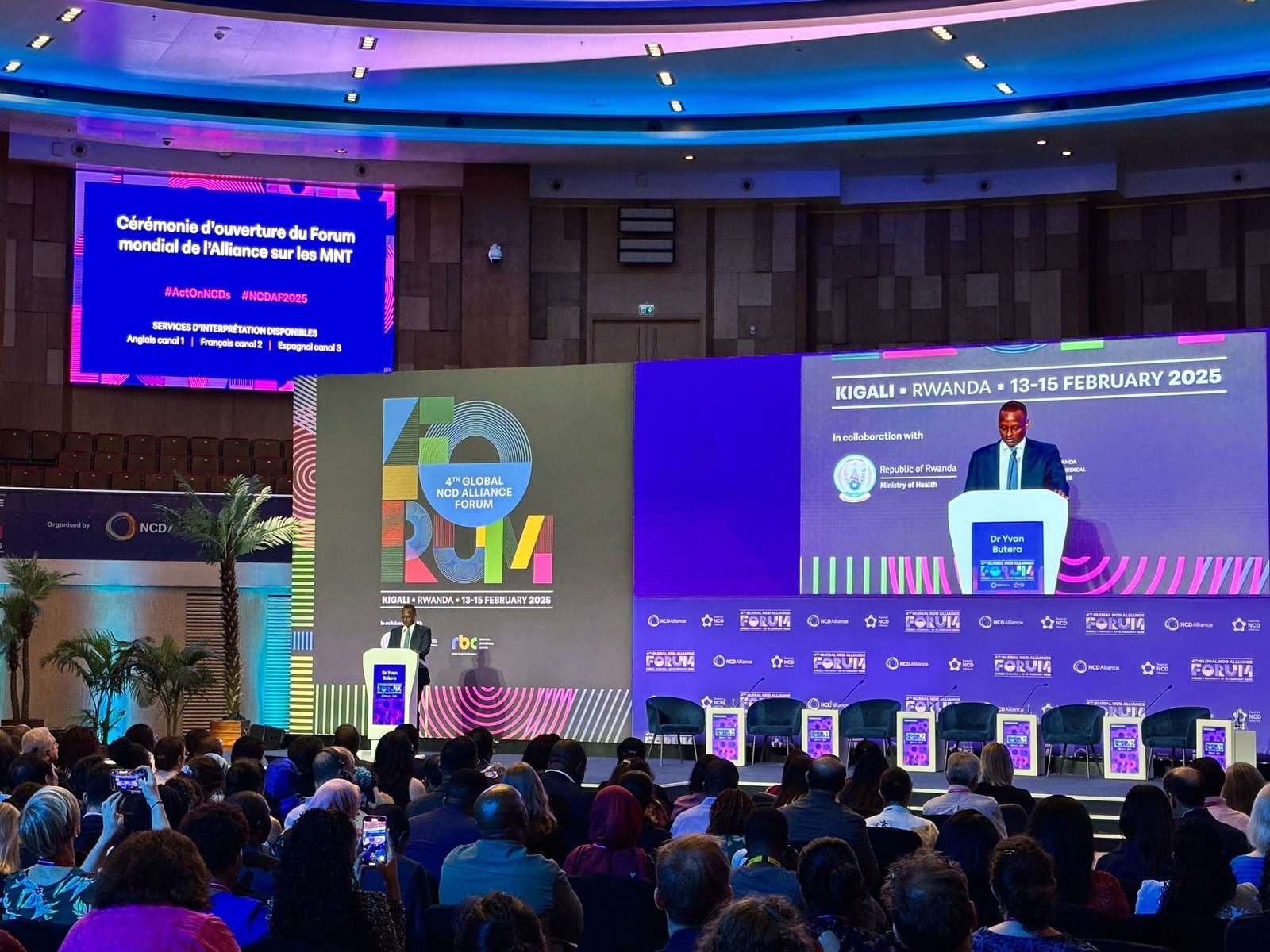
KIGALI, Rwanda (Bantu Gazette) — For the first time, Africa is hosting the Global Noncommunicable Diseases (NCD) Alliance Forum, a high-level gathering of 700 advocates, experts, and ministerial representatives from more than 66 countries, aimed at addressing the growing NCD crisis and driving global action.

The fourth edition of the forum, from 13th to 15th February, comes at a crucial time as global health financing is under strain due to the U.S. freezing aid and withdrawing from the World Health Organization (WHO).

At the opening ceremony, Rwanda’s Minister of State for Health, Dr. Yvan Butera, emphasized the urgency of tackling noncommunicable diseases, which account for 74% of global deaths.

“Tackling NCDs requires innovation, investment, and global collaboration. Every effort counts,” he said.

Rwanda has taken decisive steps, focusing on NCD prevention—including recent taxation measures on harmful products such as tobacco.

Butera said NCD prevention is where Rwanda began its fight against NCDs.

The Rising Burden of NCDs in a Polycrisis Era

The forum takes place against a backdrop of mounting health challenges.

“We live in an era of polycrisis, with pandemics, climate change, conflicts and humanitarian crises locking horns across the globe,” said Katie Dain, CEO of the NCD Alliance. “At the centre of this storm are people living with NCDs.”

The statistics paint a sobering picture: 1 billion people live with obesity, 1.3 billion with hypertension, 1 billion with mental health disorders, and 500 million with diabetes and chronic respiratory diseases, according to the NCD Alliance.

“In the five short years since we last held the Forum in Sharjah in the UAE, we have lost 215 million people to NCDs. To put that in context, that is the population of Nigeria,” Dain said.

Beyond the sheer numbers, many African countries face a dual burden of infectious and non-communicable diseases.

While the continent has made strides in HIV treatment, longer lifespans mean that people with HIV now face increasing risks of NCDs, such as cardiovascular disease, diabetes, and neurocognitive disorders.

Rwanda’s Leadership in NCD Prevention and Universal Health Coverage

Rwanda stands out as a regional leader in healthcare access and system reform.

“We recognise NCDs as a priority health issue in Rwanda and across the sub-Saharan Africa region, where NCDs now account for more than a third of total deaths, a jump from 24% in 2000,” said Dr. Francois Uwinkindi, division manager for noncommunicable diseases at the Rwanda Biomedical Center.

He highlighted Rwanda’s proactive approach, which includes integrated primary care for NCDs, early screening and detection programs, and a robust community-based health insurance scheme that covers more than 90% of the population.

Notably, Rwanda has made healthcare more accessible for vulnerable groups, particularly in rural communities that previously faced geographical barriers to care.

The Global Health Equity Gap: The Cancer Crisis in Africa

Prisca Githuka, chairperson of the Cancer Survivors Association of Kenya, brought attention to stark inequities in global healthcare.

“The cancer care continuum in many lower- and middle-income countries is vastly different to that which people in the global north have access to,” she stressed.

She stated that while essential medicines like morphine are readily available in the Global North, many cancer patients in other regions endure treatment without it, often lacking access to radiotherapy or chemotherapy.

“The lives of people in the Global South are just as valuable as those in the North,” Githuka said, calling for greater investments in cancer care infrastructure.

Solutions, Partnerships, and the Path Forward

Progress is being made. The PEN-Plus model, an integrated care system for severe NCDs like type 1 diabetes, childhood heart disease, and sickle cell disease, is gaining momentum.

According to the NCD Alliance, Rwanda has scaled this model nationwide, training hundreds of health workers to improve NCD care.

Encouragingly, all 47 WHO African region member states have endorsed PEN-Plus as their official strategy.

Dr. Gina Agiostratidou, program director at the Helmsley Charitable Trust, stressed the role of partnerships in sustaining progress.

“Philanthropy will always play an important part in global health. Regardless of the shifting environment, Helmsley remains committed to driving sustainable, life-changing progress for people living with NCDs around the world,” she said.

In September 2025, Heads of State and Government will establish a new vision for preventing and controlling NCDs by 2030 and 2050 through a political declaration to be determined at the UN General Assembly.

“The NCD community is impatient for change,” Dain said. “This year’s Forum and upcoming High-Level Meeting is our opportunity to make it happen.”

The Kigali forum signals a defining moment in the global fight against NCDs. With rising health inequities, financing challenges, and policy setbacks, bold leadership is needed now more than ever.

Rwanda’s initiative-taking approach—focusing on prevention, taxation, and universal health coverage—offers a blueprint for Africa and beyond.

As the world prepares for the UN High-Level Meeting on NCDs, it’s time to move from talk to action, ensuring NCDs receive the political attention and funding they demand.

Get the inside Story

Stay informed on the stories shaping Africa’s future. Get breaking news, in-depth analysis, opinions and exclusive insights from across the continent delivered to your inbox, free and unfiltered.


Get in touch for more:
Felix Tih
Editorial Director, Bantu Gazette
WhatsApp
LinkedIn
X (Twitter)
Instagram

Related Posts

Africa Urged to Tackle Illicit Tobacco Trade as Global Treaty Talks Close
Health

Africa Urged to Tackle Illicit Tobacco Trade as Global Treaty Talks Close

December 3, 2025
Urgent Call for Action to Combat Antimicrobial Resistance in Africa
Health

Eswatini Launches New Epidemic Surveillance Guidelines

December 26, 2025
Botswana Launches Medical Delivery Drones to Improve Rural Health Access
Health

Botswana Launches Medical Delivery Drones to Improve Rural Health Access

December 3, 2025
Africa HealthTech Summit Pushes Policy Reform for Innovation
Health

Africa HealthTech Summit Pushes Policy Reform for Innovation

October 16, 2025
Health Taxes Shape Africa’s Path to Sustainable Financing
Health

Health Taxes Shape Africa’s Path to Sustainable Financing

October 13, 2025
Ghana Renews Mercy Ships Partnership to Boost Surgical Care
Health

Ghana Renews Mercy Ships Partnership to Boost Surgical Care

September 17, 2025

Most Recent

Dakar’s Streets Overflow as Lions of Teranga Parade African Cup of Nations Trophy
Sports

Dakar’s Streets Overflow as Lions of Teranga Parade African Cup of Nations Trophy

by Aissatou Fall
January 20, 2026
0

Dakar’s streets erupted in jubilation Tuesday as Senegal’s national soccer team, the Lions of Teranga, paraded their newly won African...

Read moreDetails
Nigeria Backs Reforms to Spur Job Creation, Regional Growth

Nigeria Backs Reforms to Spur Job Creation, Regional Growth

January 20, 2026
Rwanda Defence Force Engineers Begin Joint Housing Repairs in Jamaica

Rwanda Defence Force Engineers Begin Joint Housing Repairs in Jamaica

January 20, 2026
Ethiopia to Host COP 32 After Securing African Support in Belém

Ethiopia Clears Fourth Review as Economic Reforms Exceed Targets

January 20, 2026
Liberia’s Infrastructure Push Spotlights Digital Connectivity

Liberia’s Infrastructure Push Spotlights Digital Connectivity

January 20, 2026

South Africa’s President Approves Pay Increase for Public Office Bearers

January 20, 2026
Could Morocco Cite CAF Rules to Challenge AFCON Final Result?

Could Morocco Cite CAF Rules to Challenge AFCON Final Result?

January 19, 2026
Dakar’s Streets Overflow as Lions of Teranga Parade African Cup of Nations Trophy
Sports

Dakar’s Streets Overflow as Lions of Teranga Parade African Cup of Nations Trophy

by Aissatou Fall
Reading Time: 1 min read
January 20, 2026
0

Dakar’s streets erupted in jubilation Tuesday as Senegal’s national soccer team, the Lions of Teranga, paraded their newly won African...

Read moreDetails
Nigeria Backs Reforms to Spur Job Creation, Regional Growth
Politics & Economy

Nigeria Backs Reforms to Spur Job Creation, Regional Growth

by Felix Tih
Reading Time: 2 mins read
January 20, 2026
0

Unlocking sustainable growth in Africa depends on how effectively policy reform, private capital and regional integration are aligned to create...

Read moreDetails
Rwanda Defence Force Engineers Begin Joint Housing Repairs in Jamaica
Politics & Economy

Rwanda Defence Force Engineers Begin Joint Housing Repairs in Jamaica

by Jane Mukami
Reading Time: 1 min read
January 20, 2026
0

Engineers from the Rwanda Defence Force have begun joint reconstruction work with counterparts from the Jamaica Defence Force in Montego...

Read moreDetails

Global Forum in Rwanda Urges Immediate Action on Rising Noncommunicable Diseases Crisis

Global Forum in Rwanda Urges Immediate Action on Rising Noncommunicable Diseases Crisis

KIGALI, Rwanda (Bantu Gazette) — For the first time, Africa is hosting the Global Noncommunicable Diseases (NCD) Alliance Forum, a high-level gathering of 700 advocates, experts, and ministerial representatives from more than 66 countries, aimed at addressing the growing NCD crisis and driving global action.

The fourth edition of the forum, from 13th to 15th February, comes at a crucial time as global health financing is under strain due to the U.S. freezing aid and withdrawing from the World Health Organization (WHO).

At the opening ceremony, Rwanda’s Minister of State for Health, Dr. Yvan Butera, emphasized the urgency of tackling noncommunicable diseases, which account for 74% of global deaths.

“Tackling NCDs requires innovation, investment, and global collaboration. Every effort counts,” he said.

Rwanda has taken decisive steps, focusing on NCD prevention—including recent taxation measures on harmful products such as tobacco.

Butera said NCD prevention is where Rwanda began its fight against NCDs.

The Rising Burden of NCDs in a Polycrisis Era

The forum takes place against a backdrop of mounting health challenges.

“We live in an era of polycrisis, with pandemics, climate change, conflicts and humanitarian crises locking horns across the globe,” said Katie Dain, CEO of the NCD Alliance. “At the centre of this storm are people living with NCDs.”

The statistics paint a sobering picture: 1 billion people live with obesity, 1.3 billion with hypertension, 1 billion with mental health disorders, and 500 million with diabetes and chronic respiratory diseases, according to the NCD Alliance.

“In the five short years since we last held the Forum in Sharjah in the UAE, we have lost 215 million people to NCDs. To put that in context, that is the population of Nigeria,” Dain said.

Beyond the sheer numbers, many African countries face a dual burden of infectious and non-communicable diseases.

While the continent has made strides in HIV treatment, longer lifespans mean that people with HIV now face increasing risks of NCDs, such as cardiovascular disease, diabetes, and neurocognitive disorders.

Rwanda’s Leadership in NCD Prevention and Universal Health Coverage

Rwanda stands out as a regional leader in healthcare access and system reform.

“We recognise NCDs as a priority health issue in Rwanda and across the sub-Saharan Africa region, where NCDs now account for more than a third of total deaths, a jump from 24% in 2000,” said Dr. Francois Uwinkindi, division manager for noncommunicable diseases at the Rwanda Biomedical Center.

He highlighted Rwanda’s proactive approach, which includes integrated primary care for NCDs, early screening and detection programs, and a robust community-based health insurance scheme that covers more than 90% of the population.

Notably, Rwanda has made healthcare more accessible for vulnerable groups, particularly in rural communities that previously faced geographical barriers to care.

The Global Health Equity Gap: The Cancer Crisis in Africa

Prisca Githuka, chairperson of the Cancer Survivors Association of Kenya, brought attention to stark inequities in global healthcare.

“The cancer care continuum in many lower- and middle-income countries is vastly different to that which people in the global north have access to,” she stressed.

She stated that while essential medicines like morphine are readily available in the Global North, many cancer patients in other regions endure treatment without it, often lacking access to radiotherapy or chemotherapy.

“The lives of people in the Global South are just as valuable as those in the North,” Githuka said, calling for greater investments in cancer care infrastructure.

Solutions, Partnerships, and the Path Forward

Progress is being made. The PEN-Plus model, an integrated care system for severe NCDs like type 1 diabetes, childhood heart disease, and sickle cell disease, is gaining momentum.

According to the NCD Alliance, Rwanda has scaled this model nationwide, training hundreds of health workers to improve NCD care.

Encouragingly, all 47 WHO African region member states have endorsed PEN-Plus as their official strategy.

Dr. Gina Agiostratidou, program director at the Helmsley Charitable Trust, stressed the role of partnerships in sustaining progress.

“Philanthropy will always play an important part in global health. Regardless of the shifting environment, Helmsley remains committed to driving sustainable, life-changing progress for people living with NCDs around the world,” she said.

In September 2025, Heads of State and Government will establish a new vision for preventing and controlling NCDs by 2030 and 2050 through a political declaration to be determined at the UN General Assembly.

“The NCD community is impatient for change,” Dain said. “This year’s Forum and upcoming High-Level Meeting is our opportunity to make it happen.”

The Kigali forum signals a defining moment in the global fight against NCDs. With rising health inequities, financing challenges, and policy setbacks, bold leadership is needed now more than ever.

Rwanda’s initiative-taking approach—focusing on prevention, taxation, and universal health coverage—offers a blueprint for Africa and beyond.

As the world prepares for the UN High-Level Meeting on NCDs, it’s time to move from talk to action, ensuring NCDs receive the political attention and funding they demand.
Global Forum in Rwanda Urges Immediate Action on Rising Noncommunicable Diseases Crisis

Global Forum in Rwanda Urges Immediate Action on Rising Noncommunicable Diseases Crisis
Felix Tihby Felix Tih
February 13, 2025

KIGALI, Rwanda (Bantu Gazette) — For the first time, Africa is hosting the Global Noncommunicable Diseases (NCD) Alliance Forum, a high-level gathering of 700 advocates, experts, and ministerial representatives from more than 66 countries, aimed at addressing the growing NCD crisis and driving global action.

The fourth edition of the forum, from 13th to 15th February, comes at a crucial time as global health financing is under strain due to the U.S. freezing aid and withdrawing from the World Health Organization (WHO).

At the opening ceremony, Rwanda’s Minister of State for Health, Dr. Yvan Butera, emphasized the urgency of tackling noncommunicable diseases, which account for 74% of global deaths.

“Tackling NCDs requires innovation, investment, and global collaboration. Every effort counts,” he said.

Rwanda has taken decisive steps, focusing on NCD prevention—including recent taxation measures on harmful products such as tobacco.

Butera said NCD prevention is where Rwanda began its fight against NCDs.

The Rising Burden of NCDs in a Polycrisis Era

The forum takes place against a backdrop of mounting health challenges.

“We live in an era of polycrisis, with pandemics, climate change, conflicts and humanitarian crises locking horns across the globe,” said Katie Dain, CEO of the NCD Alliance. “At the centre of this storm are people living with NCDs.”

The statistics paint a sobering picture: 1 billion people live with obesity, 1.3 billion with hypertension, 1 billion with mental health disorders, and 500 million with diabetes and chronic respiratory diseases, according to the NCD Alliance.

“In the five short years since we last held the Forum in Sharjah in the UAE, we have lost 215 million people to NCDs. To put that in context, that is the population of Nigeria,” Dain said.

Beyond the sheer numbers, many African countries face a dual burden of infectious and non-communicable diseases.

While the continent has made strides in HIV treatment, longer lifespans mean that people with HIV now face increasing risks of NCDs, such as cardiovascular disease, diabetes, and neurocognitive disorders.

Rwanda’s Leadership in NCD Prevention and Universal Health Coverage

Rwanda stands out as a regional leader in healthcare access and system reform.

“We recognise NCDs as a priority health issue in Rwanda and across the sub-Saharan Africa region, where NCDs now account for more than a third of total deaths, a jump from 24% in 2000,” said Dr. Francois Uwinkindi, division manager for noncommunicable diseases at the Rwanda Biomedical Center.

He highlighted Rwanda’s proactive approach, which includes integrated primary care for NCDs, early screening and detection programs, and a robust community-based health insurance scheme that covers more than 90% of the population.

Notably, Rwanda has made healthcare more accessible for vulnerable groups, particularly in rural communities that previously faced geographical barriers to care.

The Global Health Equity Gap: The Cancer Crisis in Africa

Prisca Githuka, chairperson of the Cancer Survivors Association of Kenya, brought attention to stark inequities in global healthcare.

“The cancer care continuum in many lower- and middle-income countries is vastly different to that which people in the global north have access to,” she stressed.

She stated that while essential medicines like morphine are readily available in the Global North, many cancer patients in other regions endure treatment without it, often lacking access to radiotherapy or chemotherapy.

“The lives of people in the Global South are just as valuable as those in the North,” Githuka said, calling for greater investments in cancer care infrastructure.

Solutions, Partnerships, and the Path Forward

Progress is being made. The PEN-Plus model, an integrated care system for severe NCDs like type 1 diabetes, childhood heart disease, and sickle cell disease, is gaining momentum.

According to the NCD Alliance, Rwanda has scaled this model nationwide, training hundreds of health workers to improve NCD care.

Encouragingly, all 47 WHO African region member states have endorsed PEN-Plus as their official strategy.

Dr. Gina Agiostratidou, program director at the Helmsley Charitable Trust, stressed the role of partnerships in sustaining progress.

“Philanthropy will always play an important part in global health. Regardless of the shifting environment, Helmsley remains committed to driving sustainable, life-changing progress for people living with NCDs around the world,” she said.

In September 2025, Heads of State and Government will establish a new vision for preventing and controlling NCDs by 2030 and 2050 through a political declaration to be determined at the UN General Assembly.

“The NCD community is impatient for change,” Dain said. “This year’s Forum and upcoming High-Level Meeting is our opportunity to make it happen.”

The Kigali forum signals a defining moment in the global fight against NCDs. With rising health inequities, financing challenges, and policy setbacks, bold leadership is needed now more than ever.

Rwanda’s initiative-taking approach—focusing on prevention, taxation, and universal health coverage—offers a blueprint for Africa and beyond.

As the world prepares for the UN High-Level Meeting on NCDs, it’s time to move from talk to action, ensuring NCDs receive the political attention and funding they demand.

Get the inside Story

Stay informed on the stories shaping Africa’s future. Get breaking news, in-depth analysis, opinions and exclusive insights from across the continent delivered to your inbox, free and unfiltered.


Get in touch for more:
Felix Tih
Editorial Director, Bantu Gazette
WhatsApp
LinkedIn
X (Twitter)
Instagram

Related Posts

Africa Urged to Tackle Illicit Tobacco Trade as Global Treaty Talks Close

Africa Urged to Tackle Illicit Tobacco Trade as Global Treaty Talks Close

by Felix Tih
November 27, 2025
0

...

Urgent Call for Action to Combat Antimicrobial Resistance in Africa

Eswatini Launches New Epidemic Surveillance Guidelines

by Jane Mukami
November 26, 2025
0

...

Botswana Launches Medical Delivery Drones to Improve Rural Health Access

Botswana Launches Medical Delivery Drones to Improve Rural Health Access

by Jane Mukami
November 24, 2025
0

...

Africa HealthTech Summit Pushes Policy Reform for Innovation

Africa HealthTech Summit Pushes Policy Reform for Innovation

by Jane Mukami
October 13, 2025
0

...

Health Taxes Shape Africa’s Path to Sustainable Financing

Health Taxes Shape Africa’s Path to Sustainable Financing

by Felix Tih
October 7, 2025
0

...

Ghana Renews Mercy Ships Partnership to Boost Surgical Care

Ghana Renews Mercy Ships Partnership to Boost Surgical Care

by Cynthia N. Ganchok
September 17, 2025
0

...

Dakar’s Streets Overflow as Lions of Teranga Parade African Cup of Nations Trophy
Sports

Dakar’s Streets Overflow as Lions of Teranga Parade African Cup of Nations Trophy

by Aissatou Fall
Reading Time: 1 min read
January 20, 2026
0

Dakar’s streets erupted in jubilation Tuesday as Senegal’s national soccer team, the Lions of Teranga, paraded their newly won African...

Read moreDetails
Nigeria Backs Reforms to Spur Job Creation, Regional Growth

Nigeria Backs Reforms to Spur Job Creation, Regional Growth

by Felix Tih
January 20, 2026
0

Unlocking sustainable growth in Africa depends on how effectively policy reform, private capital and regional integration are aligned to create...

Rwanda Defence Force Engineers Begin Joint Housing Repairs in Jamaica

Rwanda Defence Force Engineers Begin Joint Housing Repairs in Jamaica

by Jane Mukami
January 20, 2026
0

Engineers from the Rwanda Defence Force have begun joint reconstruction work with counterparts from the Jamaica Defence Force in Montego...

Ethiopia to Host COP 32 After Securing African Support in Belém

Ethiopia Clears Fourth Review as Economic Reforms Exceed Targets

by Maraki Desta
January 20, 2026
0

Ethiopia has completed the fourth joint review of its economic reform program, with results surpassing expectations and unlocking $261 million...

Liberia’s Infrastructure Push Spotlights Digital Connectivity

Liberia’s Infrastructure Push Spotlights Digital Connectivity

by Seraphine Biyogo
January 20, 2026
0

President Joseph Nyuma Boakai has called for coordinated investment in Liberia’s infrastructure, including digital systems, during the opening of the...

Next Post
South Africa’s G20 Presidency a Catalyst for Energy Investment in Africa

South Africa’s G20 Presidency a Catalyst for Energy Investment in Africa

Eswatini to Expand Electricity Access for 200,000 People

Eswatini to Expand Electricity Access for 200,000 People

Ahunna Eziakonwa, Assistant Secretary-General and Director of UNDP’s Regional Bureau for Africa

‘We Must Commit to Making Peace Processes Transformative’

Le PNUD propose des options pour un développement inclusif en Afrique centrale et de l’Ouest

Le PNUD propose des options pour un développement inclusif en Afrique centrale et de l’Ouest

Bantu Gazette is a pioneering news platform that champions Africa's development, culture, and heritage. We spotlight the continent's successes, address its challenges, and provide insightful coverage of events that shape its future.

Bantu Gazette is a pioneering news platform that champions Africa's development, culture, and heritage. We spotlight the continent's successes, address its challenges, and provide insightful coverage of events that shape its future.

Our Platforms

  • Bantu Magazine
  • Bantu Brief
  • Black Frame Studio

Our Services

  • Bantu Agency
  • Advertise
  • Partnerships

Our Services

  • Editorial Director
  • Opportunities
  • Contact

Bantu Gazette is a pioneering news platform that champions Africa's development, culture, and heritage. We spotlight the continent's successes, address its challenges, and provide insightful coverage of events that shape its future.

Our Platforms

  • Bantu Magazine
  • Bantu Brief
  • Black Frame Studio

Our Services

  • Bantu Agency
  • Advertise
  • Partnerships

Our Services

  • Editorial Director
  • Opportunities
  • Contact
Bantu Gazette
  • Energy & Trade
  • Finance
  • Health
  • Politics & Economy
  • Technology
  • Environment
  • Feature
  • Opinion
  • Changemakers
  • Tourism & Culture
  • Magazine